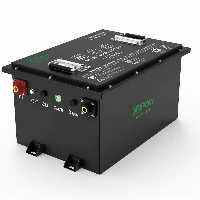
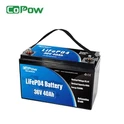
When winter arrives, many golf cart owners start worrying about one thing: Can lithium golf cart batteries freeze? On cold mornings when the temperature suddenly drops-your cart loses power, the range becomes shorter, or the battery refuses to charge-it's easy to assume the battery might be "frozen." In reality, lithium batteries work very differently from lead-acid batteries. They rarely experience physical freezing, but low temperatures do affect performance, range, and charging safety.
This article explains in the simplest and most practical way what happens to lithium golf cart batteries in cold weather, whether they can freeze, how low temperatures influence charging, and how to protect them during winter. With the right knowledge and maintenance, your golf cart can continue to operate smoothly and safely-no matter how cold it gets.

How Cold Temperatures Affect Lithium Golf Cart Batteries?
Lithium golf cart batteries won't physically freeze like lead-acid batteries under normal cold conditions. However, extremely low temperatures can reduce their performance and make charging unsafe. To prevent damage, the Battery Management System will automatically stop charging and protect the cells.
1. Freezing Probability and Fundamental Differences
- Lithium-ion batteries (such as the commonly used LiFePO4 batteries) use an organic solvent-based electrolyte with a freezing point well below that of the water-based electrolyte in lead-acid batteries-typically below -40°C. Physical "freezing" is almost impossible under daily outdoor low temperatures (e.g., -20°C).
- In a discharged state, lead-acid batteries may experience electrolyte freezing and expansion at temperatures below -7°C, which can crack the battery casing. By contrast, the primary issue with lithium batteries in low temperatures is electrochemical performance degradation, rather than structural freezing.
2. Core Impacts of Low Temperatures on Lithium Batteries
- Reduced Capacity and Output: When temperatures drop below 0°C, the migration rate of lithium ions slows down and internal resistance increases, leading to a significant reduction in available battery capacity. This may result in insufficient vehicle power and shortened range, with the impact worsening as temperatures drop further.
- Heightened Charging Risks: Charging at low temperatures can easily cause lithium metal to deposit on the negative electrode (lithium plating). The formation of lithium dendrites may pierce the battery separator, leading to short circuits and posing serious safety hazards. This is the core reason why BMS prohibits charging at low temperatures.
- BMS Protection Mechanisms: The BMS of most lithium golf cart batteries will restrict or cut off charging when temperatures fall below 0°C. Some high-end battery packs are also equipped with self-heating functions to ensure charging safety in low-temperature conditions.
3. Safe Temperature Ranges and Practical Recommendations
| Scenario | Temperature Range | Key Operations |
|---|---|---|
| Discharging (Driving) | -20°C ~ 60°C | Performance degradation in low temperatures is normal; avoid prolonged driving in extreme low temperatures. |
| Charging | 0°C ~ 45°C | Charging is prohibited below 0°C; move the battery to a warm environment to raise its temperature before charging. |
| Long-term Storage | 0°C ~ 20°C | Maintain a 40%–60% state of charge, check voltage regularly, and avoid storing the battery fully charged or completely discharged. |
4. Key Points for Winter Use and Storage
- Preheat Before Charging: If the battery is exposed to low temperatures, move it indoors (above 10°C) and let it sit for 2–4 hours to allow the cell temperature to rise before charging. Forced charging at low temperatures is strictly prohibited.
- Battery Level Management: For long-term storage, keep the battery at a 40%-50% state of charge. The BMS will automatically maintain the cell voltage within a safe range (e.g., 3.3V–3.8V per cell) to reduce aging and risks.
- Insulation Measures: In extremely cold regions, use a battery insulation cover or choose battery packs with self-heating functions to avoid prolonged exposure to temperatures below -20°C.
- Charger Selection: Use a smart charger specifically designed for lithium batteries. Do not use the equalization/float charging mode intended for lead-acid batteries, as mismatched voltage can cause battery damage.
5. Common Misconceptions and Risk Warnings
- Misconception: "If the battery shows no power, it must be frozen." The "false power cutoff" in low temperatures is mostly a BMS protection mechanism and can be restored after temperature rises-it is not physical freezing.
- Risk Warning: Forced charging or "jumper activation" at low temperatures can lead to lithium plating and internal short circuits. Such damage is generally not covered under most manufacturers' warranty policies.
what happens if a lithium battery freezes?
If a lithium battery is "frozen" (operating below the freezing point), the electrolyte becomes more viscous and the internal resistance rises sharply, causing a significant drop in available capacity and output power.
The most dangerous scenario is charging below 0 °C, which can trigger lithium plating-metallic lithium crystals form inside the cell, pierce the separator, and lead to permanent battery damage or even fire hazards.
Specific behaviors of lithium batteries at extremely low temperatures
- Temporary performance degradation: Below 0 °C, the chemical reactions inside the battery slow down. As a result, phones or devices may lose power very quickly, or suddenly shut down when high current is required.
- Charging at low temperatures is strictly prohibited: This is the most critical rule. When the battery temperature drops below 0 °C, lithium ions cannot properly intercalate into the anode. Instead, they deposit on the anode surface and form metallic lithium dendrites. These needle-like structures can pierce the internal separator, causing micro short circuits.
- Physical damage risks: Although lithium battery electrolytes typically do not fully freeze until around –40 °C to –60 °C, material contraction can occur well before reaching these extreme temperatures, potentially leading to casing cracks or electrolyte leakage.
Cold-Weather Maintenance Tips
- Bring batteries indoors: In extremely cold environments, store drones, power tools, or spare batteries indoors or inside insulated thermal bags.
- Warm up before charging: If a battery has been exposed to freezing conditions outdoors, let it rest indoors for at least 2 hours to ensure the internal temperature returns to room temperature before connecting the charger.
- Self-heating through light discharge: Before use, apply a small current load (such as turning the device on in standby mode). The battery's internal resistance will generate heat, helping to "warm up" the battery and improve performance under higher loads.
Conclusion
Lithium golf cart batteries do not require protection against freezing under normal low temperatures, but attention must be paid to the impact of low temperatures on performance and charging safety. Adhering to BMS guidelines and winter maintenance procedures is essential to ensure battery lifespan and safe operation.