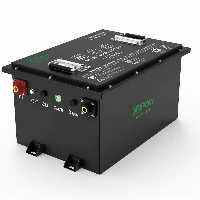
The response time of a BMS is a key metric for evaluating a battery system's safety performance and real-time control capability.
In battery energy storage and power systems, safety and stability are always the primary goals for designers.
Imagine this: When an AGV (Automated Guided Vehicle) starts, if the BMS responds too quickly without a filtering algorithm, it may trigger frequent "false shutdown" protections. On the other hand, in an energy storage station, if the short-circuit response is delayed by even 1 millisecond, it could cause the entire set of MOSFETs to burn out. How should we strike a balance between these requirements?
As the brain of the battery, the BMS's reaction speed-its response time-directly determines the system's survivability under extreme operating conditions.
Whether dealing with instantaneous short circuits or managing fine voltage fluctuations, even a millisecond difference in response time can be the dividing line between safe operation and equipment failure.
This article will delve into the composition and influencing factors of BMS response time, and explore how it ensures the stability of complex systems such as LiFePO4 batteries.
What Is BMS Response Time?
BMS Response Time refers to the interval between the battery management system detecting an abnormal condition (such as overcurrent, overvoltage, or short circuit) and executing a protective action (such as disconnecting a relay or cutting off the current).
It is a key metric for measuring the safety and real-time control capability of a battery system.
Components of Response Time
The total response time of a BMS typically consists of three stages:
- Sampling Period: The time it takes for sensors to collect current, voltage, or temperature data and convert it into digital signals.
- Logic Processing Time: The time for the BMS processor (MCU) to analyze the collected data, determine whether it exceeds safety thresholds, and issue protective commands.
- Actuation Time: The time for actuators (such as relays, MOSFET driver circuits, or fuses) to physically disconnect the circuit.

How fast should a BMS respond?
The response time of a BMS is not fixed; it is tiered according to the severity of faults to provide more precise protection.
Reference Table for Core Response Times
For LiFePO4 or NMC systems, the BMS must follow the protection logic of "fast to slow."
| Fault Type | Recommended Response Time | Protection Purpose |
|---|---|---|
| Short-Circuit Protection | 100 µs – 500 µs (microsecond-level) | Prevent cell fire and MOSFET driver breakdown |
| Secondary Overcurrent (Overload) | 10 ms – 100 ms | Allow instantaneous startup current while preventing overheating |
| Overvoltage/Undervoltage (Voltage Protection) | 500 ms – 2000 ms (second-level) | Filter noise from load fluctuations and prevent false shutdown |
| Overtemperature Protection | 1 s – 5 s | Temperature changes slowly; second-level response prevents thermal runaway |
Factors Influencing BMS Response Time
The response speed of a Battery Management System is the result of the combined action of physical-layer sampling, logic-layer processing, and execution-layer operations.
1. Hardware Architecture and Analog Front End (AFE)
The hardware determines the "lower limit" of response speed.
- Sampling Rate: The AFE (Analog Front End) chip monitors individual cell voltages and currents at a certain frequency. If the sampling period is 100 ms, the BMS can only detect issues after at least 100 ms.
- Hardware Protection vs. Software Protection: Advanced AFE chips integrate "hardware direct control protection" functions. In the event of a short circuit, the AFE can bypass the MCU (microcontroller) and directly shut off the MOSFET. This analog hardware protection typically operates at the microsecond (µs) level, while digital protection through software algorithms operates at the millisecond (ms) level.
2. Software Algorithms and Firmware Logic
This is the most "flexible" part of the response time.
- Filtering & Debouncing: To prevent false triggers from current noise (such as instantaneous surges during motor startup), BMS software usually implements a "confirmation delay." For example, the system may only execute a shutdown after detecting overcurrent three consecutive times. The more complex the algorithm and the higher the filtering count, the greater the stability-but the longer the response time.
- MCU Processing Performance: In complex systems, the MCU must calculate SOC, SOH, and execute sophisticated control strategies. If the processor is overloaded or the protection command priorities are not properly managed, logic delays can occur.
3. Communication Latency
In distributed or master-slave BMS architectures, communication is often the biggest bottleneck.
- Bus Load: Voltage sampling data is usually transmitted from slave modules (LECUs) to the master module (BMU) via the CAN bus. If the CAN bus is heavily loaded or communication conflicts occur, fault information may be delayed by tens of milliseconds.
- Challenges of Wireless BMS: BMS using wireless transmission (such as Zigbee or proprietary wireless protocols) reduces wiring complexity, but in high-interference environments, retransmission mechanisms can increase response time uncertainty.
4. Actuators and Physical Links
This is the final step where a signal is converted into physical action.
MOSFET vs. Relay (Contactor):
- MOSFET: An electronic switch with extremely fast cutoff speed, typically within 1 ms.
- Relay/Contactor: A mechanical switch affected by the electromagnetic coil and contact travel, with typical operation times of 30–100 ms.
- Loop Impedance and Capacitive Load: Inductance and capacitance in the high-voltage loop can cause electrical transients, affecting the actual time required to cut off the current.
Comparison Table of Factors Affecting BMS Response Time
| Stage | Key Influencing Factor | Typical Time Scale | Core Impact Logic |
|---|---|---|---|
| 1. Hardware Sampling | AFE Sampling Rate | 1 ms – 100 ms | Physical "refresh rate"; the slower the sampling, the later faults are detected |
| 2. Logic Judgment | Hardware Hard Protection | < 1 ms (µs level) | Analog circuit triggers directly without the CPU, fastest response |
| Software Filtering Algorithms | 10 ms – 500 ms | "Confirmation period" to prevent false triggers; more checks increase delay | |
| 3. Data Transmission | CAN Bus / Communication Delay | 10 ms – 100 ms | Queuing time for signals from slave modules to master in distributed systems |
| 4. Actuation | MOSFET (Electronic Switch) | < 1 ms | Millisecond-level cutoff, suitable for low-voltage systems requiring ultra-fast response |
| Relay (Mechanical Switch) | 30 ms – 100 ms | Physical contact closure/opening requires time; suitable for high-voltage, high-current applications |
How BMS Response Time Affects lifepo4 battery Stability?
Lithium iron phosphate batteries are known for their high safety and long lifespan, but their stability heavily depends on the response time of the BMS.
Because the voltage of LFP batteries changes very gradually, warning signs are often not obvious. If the BMS responds too slowly, you might not even notice when the battery is experiencing a problem.
The following outlines the specific impact of BMS response time on the stability of LiFePO4 batteries:
1. Transient Stability in Response to Sudden Voltage Spikes or Drops
One notable feature of LiFePO4 batteries is that their voltage remains extremely stable between 10%–90% state of charge (SOC), but it can change sharply at the end of charge or discharge.
- Overcharge Protection Response: When a single cell approaches 3.65V, its voltage can rise very quickly. If the BMS response time is too long (e.g., over 2 seconds), the cell may instantaneously exceed the safety threshold (e.g., above 4.2V), causing electrolyte decomposition or damage to the cathode structure, which can significantly shorten the battery's cycle life over time.
- Overdischarge Protection Response: Similarly, at the end of discharge, the voltage can drop rapidly. A slow response may allow the cell to enter the overdischarge region (<2.0V), leading to dissolution of the copper foil current collector, resulting in permanent battery failure that cannot be recovered.
2. Microsecond-Level Short-Circuit Protection and Thermal Stability
Although LiFePO4 batteries have better thermal stability than NMC (ternary lithium) batteries, short-circuit currents can still reach several thousand amperes.
- Winning in Milliseconds: The ideal short-circuit response time should be between 100–500 microseconds (µs).
- Hardware Protection Stability: If the response is delayed beyond 1 ms, the extremely high Joule heat may cause the MOSFET inside the BMS to burn out or fuse, resulting in protection circuit failure. In this case, current continues to flow, which can lead to battery swelling or even fire.
3. Stability of System Dynamic Energy Balance
In large LiFePO4 energy storage systems, response time affects the smoothness of power output.
- Power Derating: When the temperature approaches a critical point (e.g., 55°C), the BMS must issue derating commands in real time. If the command response is delayed, the system may hit the "hard cutoff" threshold, causing the entire energy storage station to shut down abruptly instead of gradually reducing power. This can lead to severe fluctuations in the grid or at the load side.
4. Chemical Stability During Low-Temperature Charging
LiFePO4 batteries are highly sensitive to low-temperature charging.
- Lithium Plating Risk: Charging below 0°C can cause lithium metal to accumulate on the anode surface (lithium plating), forming dendrites that may puncture the separator.
- Monitoring Delay: If the temperature sensors and BMS processor do not respond promptly, high-current charging may begin before the heating elements raise the battery to a safe temperature, leading to irreversible capacity loss.


How Copow BMS Response Time Ensures Battery Safety in Complex Systems?
In complex battery systems, the response time of the Battery Management System is not only a safety parameter but also the system's 'neural reaction speed.
For example, the high-performance Copow BMS employs a tiered response mechanism to ensure stability under dynamic and complex loads.
1. Millisecond/Microsecond-Level: Transient Short-Circuit Protection (Last Line of Defense)
In complex systems, short circuits or instantaneous surge currents can lead to catastrophic consequences.
- Extreme Speed: Copow BMS's intelligent protection mechanism can respond within 100–300 microseconds (µs).
- Safety Significance: This speed is far faster than the melting time of physical fuses. It cuts off the circuit through a high-speed MOSFET array before the current rises enough to cause fire or puncture the cell separator, preventing permanent hardware damage.

"As shown in the figure above (waveform measured in our lab), when a short circuit occurs, the current spikes within an extremely short time. Our BMS can accurately detect this and trigger hardware protection, completely cutting off the circuit within approximately 200 μs. This microsecond-level response protects the power MOSFETs from breakdown and prevents the battery cells from being subjected to high-current surges, ensuring the safety of the entire battery pack."
2. Hundred-Millisecond-Level: Adaptive Dynamic Load Protection
Complex systems often involve high-power motor startups or inverter switching, generating very short-duration normal surge currents.
- Tiered Decision-Making: The BMS uses intelligent algorithms to determine within 100–150 milliseconds (ms) whether the current is a "normal startup surge" or a "true overcurrent fault."
- Balancing Stability: If the response is too fast (microsecond-level), the system may frequently trigger unnecessary shutdowns; if too slow, the cells may be damaged due to overheating. Copow's hundred-millisecond-level response ensures electrical safety while preventing false trips caused by noise.
3. Second-Level: Full-System Thermal and Voltage Management
In complex large-scale systems, due to numerous sensors and long communication links, the BMS response time encompasses the entire system's closed-loop control.
- Preventing Thermal Runaway: Temperature changes have inertia. Copow batteries' BMS synchronizes data from multiple cell groups in real time with a monitoring cycle of 1–2 seconds.
- Communication Coordination: The BMS communicates in real time with the system controller (VCU/PCS) using protocols such as CAN or RS485. This second-level synchronization ensures that when voltage deviations are detected, the system smoothly reduces power output (derating) instead of cutting off immediately, avoiding shocks to the grid or motors.
Real-world case
"When collaborating with a leading North American golf cart customizer, we encountered a typical challenge: during hill starts or full-load acceleration, the motor's instantaneous surge current often triggered the BMS's default protection.
Through technical diagnostics, we optimized the secondary overcurrent confirmation delay of this batch of Li-ion battery BMS from the default 100 ms to 250 ms.
This fine-tuning effectively filtered out harmless current spikes during startup, completely resolving the customer's "deep-throttle trip" issue, while still ensuring safe shutdown under sustained overload. This customized "dynamic-static" logic greatly enhanced the battery's reliability on challenging terrains, outperforming competing products."

To meet the specific needs of different customers, Copow offers customized BMS solutions to ensure that our lithium iron phosphate (LiFePO4) batteries operate safely and reliably in your region.

Key Response Metrics Reference for Copow BMS
| BMS Layer | Response Time Range | Core Function |
|---|---|---|
| Hardware Layer (Transient) | 100–300 µs | Short-circuit cut-off to prevent cell explosion |
| Software Layer (Dynamic) | 100–150 ms | Distinguish between load surge and actual overcurrent |
| System Layer (Coordinated) | 1–2 s | Temperature monitoring, voltage balancing, and alarms |
Recommended Response Parameters Table for LiFePO4 BMS
| Protection Type | Recommended Response Time | Significance for Stability |
|---|---|---|
| Short-Circuit Protection | 100 µs – 300 µs | Prevent MOSFET damage and instantaneous battery overheating |
| Overcurrent Protection | 1 ms – 100 ms | Allows transient startup current while protecting the circuit |
| Overvoltage/Undervoltage | 500 ms – 2 s | Filters voltage noise and ensures measurement accuracy |
| Balancing Activation | 1 s – 5 s | LiFePO4 voltage is stable; requires longer observation to confirm voltage difference |

Conclusion: Balance is Key
BMS response time is not "the faster, the better"; it is a delicate balance between speed and robustness.
- Ultra-fast responses (microsecond-level) are essential for handling sudden physical faults like short circuits and preventing thermal runaway.
- Tiered delays (millisecond- to second-level) help filter system noise and distinguish normal load fluctuations, preventing false shutdowns and ensuring continuous system operation.
High-performance BMS units, such as the Copow series, achieve this "swift in action, stable at rest" protection logic through a multi-layer architecture combining hardware sampling, algorithmic filtering, and coordinated communication.
Understanding the logic behind these timing parameters when designing or selecting a system is not only crucial for battery protection but also for ensuring the long-term reliability and economic efficiency of the entire power system.
Has your lifepo4 battery also experienced unexpected shutdowns due to current fluctuations? Our technical team can provide you with a free consultation on BMS response parameter optimization. Speak with an engineer online.
FAQ
How to Reduce Fretting Corrosion in Low-Current BMS Sense Connections Over Vehicle Lifetime?
To minimize fretting corrosion in low-current BMS sense lines, the most effective approach is to use gold-plated connectors, as gold's chemical stability prevents the formation of non-conductive oxide layers.
If tin plating is used, you must apply specialized synthetic lubricant (such as fluorinated grease) to exclude oxygen and dampen vibrations, while strengthening harness anchoring to minimize physical movement. In short: prefer gold over tin, always lubricate tin, and ensure rigid fixation.