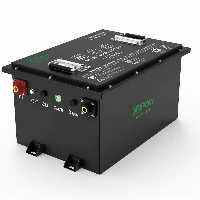
Lithium marine batteries are increasingly gaining favor among boat owners, but are they really worth it?
This article provides a comprehensive look at the advantages and value of lithium marine batteries, helping you determine whether they're the right fit for your boating needs.

Why Are More Boat Owners Switching to Lithium Batteries?
Marine lithium batteries offer high energy density and stable voltage, which helps reduce vessel weight and speed up charging. With their long cycle life and smart BMS, these batteries deliver excellent discharge performance while significantly lowering the total cost of ownership over time, making maritime operations more efficient and economical.
- Exceptional Performance and Power Output
- Higher Charging Efficiency and Faster Speed
- Ultra-Long Service Life and Cycle Capability
- Lightweight Design
- Intelligent Management and Safety
- Eco-Friendly and Maintenance-Free

More Usable Power Throughout the Discharge Cycle
Lithium batteries feature an exceptionally flat discharge voltage curve, especially in LiFePO4 models. They maintain a consistently high rated voltage throughout the discharge process until the capacity is nearly exhausted.
This ensures that whether you are powering a marine trolling motor or running onboard electronics, your motors and instruments receive constant, robust power delivery without experiencing the performance drops or equipment shutdowns that typically occur when a battery is half-discharged. Furthermore, lithium batteries offer a superior Depth of Discharge (DOD), allowing you to safely use 80% to 100% of their total capacity without compromising their lifespan.

Faster Charging Times
Marine lithium batteries feature extremely low internal resistance and ultra-high charge acceptance. Throughout the charging process, they maintain a stable, high-current input; even when the state of charge exceeds 90%, they continue charging at high speed.
Benefiting from this chemical characteristic, lithium batteries support charging rates of up to 1C or higher, meaning that under ideal conditions, the battery can be recharged from fully depleted to full capacity in just 1–2 hours.
Furthermore, their energy conversion efficiency is exceptionally high, approaching 99%, ensuring that nearly all input current is converted into stored chemical energy, making the charging process more efficient and energy-saving.
Longer Cycle Life
These batteries are highly durable, maintaining a long cycle life even when frequently discharged to near-complete depletion. Furthermore, manufacturers of LiFePO4 marine batteries typically equip them with a Battery Management System, commonly referred to in the industry as a "protective case." This system continuously monitors the voltage and temperature of each individual cell, preventing risks such as overcharging, over-discharging, and overheating. Consequently, these batteries offer exceptional reliability, safeguarded at both the chemical and electronic levels.
Lighter Weight and Better Performance
It all comes down to lithium's extraordinary energy density. On a chemical level, lithium is the lightest metal in nature, allowing LiFePO4 batteries to deliver the same amount of power as lead-acid batteries while being only one-third to one-half the size and weight. This massive weight reduction does more than just lighten the boat's load-it boosts speed, improves fuel efficiency, and lets boat owners fit a much larger battery bank into limited space for longer trips on the water.
Furthermore, lithium batteries have very low internal resistance, so they generate almost no wasted heat even under heavy loads. When you start up high-power equipment like a trolling motor or onboard AC, the current is released instantly and steadily, avoiding the sudden voltage drops that often cause performance issues in lead-acid systems.
Built-in Battery Management System
Lithium cells are prone to irreversible chemical damage or even safety risks under extreme conditions such as overcharging, over-discharging, short circuits, or high temperatures. A Battery Management System provides real-time monitoring of the voltage and temperature of every single cell. During navigation, the BMS automatically balances cell power levels to ensure the entire battery pack maintains consistent performance.
When encountering abnormal currents, such as the surge from starting a high-power trolling motor, it can instantly cut off the circuit to protect the vessel and extend the battery's lifespan.
Are Lithium Batteries Worth the Higher Upfront Cost?
We understand that many boat owners have concerns regarding the price. It is true that the upfront cost of lithium batteries is higher than that of lead-acid batteries. However, when you look at the big picture over the entire lifespan of the battery, you will find that it is actually a long-term investment with a very impressive return.
A high-quality lithium battery can reliably run for over 10 years under normal use, whereas lead-acid batteries often need to be replaced every 2 or 3 years. This means that over the same ten-year period, you would likely end up paying for three or four sets of lead-acid batteries, not to mention the labor and time costs involved in repeated removals and installations.
Even more critical is the efficiency. Lithium batteries support a much deeper depth of discharge and have higher energy efficiency, meaning almost every watt-hour you pay for is actually put to work. To avoid damage, you often cannot deeply discharge a lead-acid battery, leaving much of its capacity "untouched." The result is a battery that looks large on paper, but provides significantly less usable power.
In short, lithium batteries may cost more today, but they save you much more tomorrow.
How Long Do Lithium Marine Batteries Really Last?
LiFePO4 batteries are currently the most common and stable type used on boats. Under normal conditions, they can easily last 8 to 15 years, with a cycle life ranging from 3,000 to 6,000 cycles. If you manage the charging and discharging properly, getting over ten years of service is well within reach.
While Ternary Lithium (NMC) offers higher energy density, its cycle life is relatively shorter, typically lasting around 5 to 8 years with only 1,000 to 2,000 cycles, making it less common for marine use.
If you invest in a reputable brand of LiFePO4 batteries equipped with a sophisticated BMS, and avoid overcharging or over-discharging in your daily routine, a ten-year lifespan is a realistic expectation, not just marketing hype.
What Size Lithium Battery Do You Need for Your Boat?
Stop worrying about battery models for a second and calculate your power consumption first. The first question you need to ask yourself is, "How much electricity do I actually use in a day?"
If you have a small boat and primarily use it to start the engine, run lights and a fish finder, and occasionally use a trolling motor, then a 12V 100Ah–150Ah LiFePO4 battery is plenty.
However, if you have a trolling motor that runs for half the day, that changes things:
- 12V Trolling Motor: 100Ah–200Ah.
- 24V System: You'll need two 12V 100Ah batteries in series, or a single 24V 100Ah+ unit.
- 36V High-Power Trolling Motor: Requires three 12V 100Ah batteries or even higher capacity.
For a recreational cruiser equipped with amenities like a fridge, water pump, lights, navigation, and an audio system, we recommend considering the 200Ah–400Ah range, depending on whether you're just out for the weekend or off-grid for longer periods.
If you're on a catamaran, houseboat, or a long-range vessel with a solar setup, you should be looking at 400Ah and up, or even 600Ah–1000Ah.
Do Lithium Batteries Need a Special Charger?
Yes, they do.
Lithium batteries-especially LiFePO4 batteries-are best paired with a dedicated lithium battery charger. The reason is simple: the charging curve of a lead-acid charger is completely different from that required by a lithium battery. Lead-acid batteries need a long float stage, while lithium batteries neither require nor tolerate prolonged high-voltage float charging.
If you consistently use a standard lead-acid charger to charge a lithium battery, the result may range from incomplete charging and reduced lifespan to frequent BMS protection triggers and charging interruptions.
That said, it doesn't mean the battery will be damaged the moment you connect it. If your charger meets the following three conditions, it can still be used safely:
- It has a Lithium / LiFePO4 mode;
- The charging voltage is controlled between 14.2V and 14.6V (for a 12V system);
- It does not enforce extended high-voltage float charging.
Problems are more likely to occur when using older three-stage lead-acid chargers or chargers with equalization, repair, or desulfation modes-especially if the charging voltage exceeds the battery's rated upper limit, as this significantly increases the risk.
| Feature | Lead-Acid Profile | LiFePO₄ Profile |
| Float Charge | Required to counter self-discharge | Not recommended; can stress the cells |
| Equalization | High voltage used to mix electrolyte | Dangerous; can trigger BMS overvoltage |
| Target Voltage | Variable (temp compensated) | Constant (usually 14.4V – 14.6V) |
How to Monitor a Lithium Marine Battery System?
Once you have a lithium marine battery, you basically don't need to monitor each individual cell-the BMS takes care of real-time monitoring. By checking the total voltage, state of charge, and any alarm notifications, you can easily tell whether the battery is healthy.
The most common methods are:
Through the BMS display or app
Most lithium batteries come with a built-in BMS or support external monitoring systems. You can use a display screen or a mobile app to see real-time information such as battery voltage, current, remaining capacity, and temperature. For example, before running a trolling motor, you can quickly check whether the battery has enough charge and whether the temperature is within a safe range.
Voltage monitoring
Individual cells are considered normal when their voltage is between 3.2V and 3.65V (LiFePO4). The battery pack's total voltage can also give you a rough idea of its remaining capacity. Note that voltage alone is just a reference and not as accurate as SOC, but it's sufficient for everyday checks.
Remaining capacity / SOC
The BMS provides a percentage of remaining charge, which is the most intuitive way to gauge battery status. For instance, if the SOC reads 80%, the battery still has plenty of usable energy; below 20%, it's time to recharge.
Alarm notifications
The BMS automatically monitors for abnormal conditions such as overcharge, over-discharge, overcurrent, or high temperature. When any issue occurs, it will trigger an alarm or cut off the power. By paying attention to these alerts, you can quickly determine the battery's condition.
Who Should Consider Switching to Lithium Marine Batteries?
It is perfectly natural to feel confused by the wide range of lithium batteries on the market. Upgrading from lead-acid is a major investment that must be weighed against your specific energy requirements and navigation habits. To help you decide, we have categorized boaters into the following profiles. You can use these to identify which solution best fits your lifestyle.
If you only take your small boat out occasionally, perhaps for weekend near-shore fishing or short recreational trips, and have modest power needs and a limited budget, lead-acid batteries are perfectly adequate. However, if you seek hassle-free operation and a virtually maintenance-free experience, switching to lithium batteries can significantly ease your entire boating journey.
For avid enthusiasts who frequent the waters, making several long-distance trips a week, enjoying night fishing, or relying heavily on electric trolling motors, lithium batteries are the ideal choice. Their high energy density and stable performance allow you to stay on the water longer with greater peace of mind.
For commercial vessels, such as tourist speedboats, charter fishing boats, or rental fleets, choosing lithium batteries is almost mandatory. Commercial operations prioritize reliability above all; a dead battery leading to customer complaints or interrupted voyages can result in significant losses, and lithium batteries minimize this risk to the greatest extent.
Finally, if you are a tech enthusiast or simply seeking the ultimate driving experience, wanting faster acceleration, lighter handling, a cleaner cabin layout, or if your boat is equipped with a solar system requiring maximum charging efficiency and range, lithium batteries offer distinct and compelling advantages in every one of these areas.
FAQ
Can You Charge Lithium Marine Batteries with an Alternator?
Lithium marine batteries can be charged using an alternator, but it is essential to use a dedicated lithium-compatible voltage regulator or charger to prevent overcharging.
Can Lithium Marine Batteries Be Used for Engine Starting?
Lithium marine batteries can be used for engine starting, provided their rated current is sufficiently high.
Can Lithium Marine Batteries Be Connected in Series?
They can be connected in series, but it is essential to ensure that the battery models, voltages, and capacities are identical to guarantee safety.
Can a Boat Alternator Safely Charge a Lithium Marine Battery?
Marine generators can be used to charge lithium-ion batteries; however, this process must be managed through a DC-DC charger or a dedicated voltage regulation system. Direct connection is not recommended, as it may lead to overvoltage, unstable charging, or potential damage to the battery.