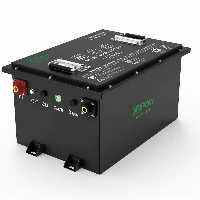
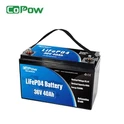
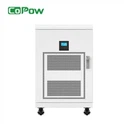
The long lifespan of LiFePO4 batteries is a key pillar that secures their leading position in the energy storage sector. Under standard operating conditions, LiFePO4 batteries typically offer 3,000 to 6,000 charge-discharge cycles, corresponding to a service life of 8 to 15 years, with durability far exceeding that of traditional lead-acid and NMC (Nickel-Manganese-Cobalt) lithium batteries.
This outstanding electrochemical stability makes them the preferred choice for solar energy storage, golf cart, Forklift, RV power systems, and industrial-grade emergency backup power.
From quick runtime calculation formulas to an in-depth 10-year total cost of ownership analysis, this article provides a comprehensive guide to mastering LiFePO4 battery longevity.
We explore how temperature control, depth of discharge (DoD), and storage voltage impact battery degradation, while showcasing how Copow's professional-grade power solutions extend service life in harsh environments. By implementing scientific management strategies, you can effectively increase cycle counts and ensure maximum ROI for every watt invested.

How Long Does a LiFePO4 Battery Last Per Charge?
The runtime of a LiFePO4 battery per charge depends on the battery's capacity and the power of the connected load.
Battery capacity is typically measured in ampere-hours (Ah) or watt-hours (Wh), while load power is measured in watts (W).
Thanks to the exceptionally flat discharge curve of LiFePO4 batteries, they can usually deliver over 90% of their rated capacity without a significant voltage drop. This provides much longer actual runtime compared with lead-acid batteries, which are generally recommended to be discharged only up to 50% of their capacity.
1. The Quick Calculation Formula
To estimate how long your battery will last, you can use these two basic formulas:
If you know the Power (Watts):

If you know the Current (Amps):

Note: Watt-hours (Wh) are calculated by multiplying ampere-hours (Ah) by voltage. For example, a 12-volt battery with a capacity of 100 Ah stores 1,200 Wh of energy.
2. Practical Case Calculation
For example, consider a common 12V 100Ah (1,200Wh) LiFePO4 battery. Assuming we use 90% of its capacity, that is 1,080 Wh:
| Device Type | Power (W) | Estimated Runtime (hours) |
|---|---|---|
| LED Light | 10 | Approximately 108 |
| Car Refrigerator | 50 | Approximately 21.6 |
| Laptop | 60 | Approximately 18 |
| CPAP Machine | 40 | Approximately 27 |
| Home TV | 100 | Approximately 10.8 |
| Rice Cooker / Microwave | 1,000 | Approximately 1 |
⭐Not sure if that's easy to grasp? Here's a reference table showing the runtime of Copow golf cart batteries.

related article: How Long Does Golf Cart Battery Last? 2026
LiFePO4 Battery Lifespan: Cycle Life, Years of Use, and Key Factors
When it comes to the lifespan of LiFePO4 batteries, the key factors are cycle life, years of use, and various elements that affect their longevity. We have compiled popular information from online sources to present a clear and precise overview. Keep reading to learn more.
1. Cycle Life of LiFePO4 Battery
The cycle life of a LiFePO4 battery refers to a full process of discharging the battery from 100% to 0% and then recharging it back to 100%.
Typical Standard: Under standard laboratory conditions (25°C, 0.5C charge/discharge rate), LiFePO4 batteries can typically achieve 3,000 to 6,000 cycles.
Comparative Advantages:
- Lead-acid batteries: 300–500 cycles
- NCM (Nickel Cobalt Manganese) batteries: 1,000–2,000 cycles
related article: LifePo4 vs Lithium Ion: Easy to Understand Comparison
End of Life: Reaching the rated number of cycles does not mean the battery will suddenly fail; it indicates that its maximum capacity has declined to 80% of the original capacity.
| Battery Type | Cycle Life | Description |
|---|---|---|
| LiFePO4 (Lithium Iron Phosphate) | 3,000 – 6,000 cycles | Under standard lab conditions (25°C, 0.5C charge/discharge rate); at the end of rated cycles, capacity drops to 80% of original. |
| Lead-acid | 300 – 500 cycles | Short cycle life, suitable for short-term backup power. |
| NCM (Nickel Cobalt Manganese) | 1,000 – 2,000 cycles | Moderate cycle life; capacity fades faster than LiFePO4. |
2. Service Life of LiFePO4 Battery
Even if a battery is not used frequently, most types will naturally degrade over time. However, LiFePO4 stands out with its highly stable chemical properties, giving it an exceptionally long service life.
| Application Scenario | Charge/Discharge Frequency | Expected Calendar Life | Notes |
|---|---|---|---|
| Solar Energy Storage Systems | Daily deep cycle | ~10 years | Stable chemistry allows reliable daily cycling. |
| RVs / Intermittent Use | Occasional use | 15+ years | Minimal cycling; aging mainly from time. |
| Standby / Backup Power | Rarely cycled | 12–15 years | Mostly affected by calendar aging rather than cycling. |
| Residential / Small-scale Applications | Few cycles per week | 10–12 years | Lifespan influenced by temperature and maintenance. |
| Marine / Boats | Weekly or multiple cycles per week | 8–12 years | Requires corrosion-resistant battery housing; deep cycles slightly reduce lifespan. |
| Drones / UAVs | Daily or multiple flights | 2–5 years | High discharge rates and weight constraints reduce calendar life. |
| Golf Carts | Daily use | 6–10 years | Moderate cycles; long calendar life if properly maintained. |
| Forklifts / Industrial Vehicles | Daily heavy use | 5–10 years | Frequent deep cycles; temperature control extends life. |
| Robotic Vacuum Cleaners / Floor Scrubbers | Daily short cycles | 3–7 years | Low capacity per cycle; calendar aging more significant. |
| Portable Electronics / UPS Units | Occasional short cycles | 8–12 years | Stable chemistry ensures long shelf life. |

3. Four Key Factors Affecting Lifespan
Although LiFePO4 batteries are highly durable, the following factors determine whether they last 5 years or 15 years:
Depth of Discharge (DoD)
This is the most critical factor affecting battery life.
100% DoD: Fully discharging the battery results in a cycle life of around 2,500–3,000 cycles.
80% DoD: Leaving 20% of the charge unused can increase cycle life to over 5,000 cycles.
Conclusion: Avoiding deep discharge is the key to extending battery life.
related article: What Is The 80/20 Rule For Lithium Batteries?
Temperature Management
LiFePO4 batteries are highly sensitive to temperature.
- High temperatures above 45°C accelerate the degradation of internal electrolytes.
- Charging at low temperatures below 0°C can cause lithium plating inside the battery, resulting in permanent damage. Battery management systems with heating functions are essential in cold environments.
Charge and Discharge Current
Slower charging extends battery life. Charging at half the maximum current over two hours generates less heat and reduces internal resistance compared to fast charging in one hour, protecting the battery.
Storage Voltage
When storing the battery for long periods, avoid keeping it fully charged or fully discharged. The optimal storage charge level is typically between 40% and 60%.
What is the lifespan (cycle life) of a LiFePO4 battery at 100% DoD?
Typically, a LiFePO4 battery has a cycle life of approximately 2,500 to 5,000 cycles at 100% Depth of Discharge (DoD).
While this is far more durable than traditional lead-acid batteries (which offer about 300–500 cycles), frequently draining the battery completely will still wear it out faster than shallow charging and discharging. If you can limit the discharge depth to around 80%, the cycle life can easily exceed 6,000 cycles or more, often resulting in a lifespan of over 10 years.
NMC vs LiFePO4: How does battery cycle life differ at 10°C, 25°C, and 35°C with 100% DoD?
| Temperature (°C) | LiFePO4 Cycles (100% DoD) | NMC Cycles (100% DoD) | Notes |
| 10°C (Cool) | 2,000 - 3,000 | 800 - 1,200 | Internal resistance increases; NMC degrades slightly faster. |
| 25°C (Standard) | 3,500 - 6,000+ | 1,000 - 2,000 | Ideal operating temperature; LiFePO4 shows a massive advantage. |
| 35°C (Warm) | 2,500 - 4,000 | 500 - 1,000 | Heat accelerates chemical breakdown; NMC life shortens drastically. |
Occasional 0.5C Discharge: How Does It Affect LiFePO4 Battery Cycle Life?
For a LiFePO4 battery, an occasional 0.5C discharge (meaning the battery is fully discharged over 2 hours) is considered a very moderate operation, and its negative impact on cycle life is virtually negligible.
LiFePO4 is renowned for its excellent rate performance; most high-quality cells have a standard recommended discharge rate between 0.5C and 1C. Unlike continuous high-rate discharges (such as 2C or higher), which cause internal heating and polarization, 0.5C generates very little heat and remains well within the battery's chemical stability limits.
In fact, as long as the battery temperature remains within a normal range (around 25°C), the cycle life at a 0.5C discharge rate will still maintain high levels of several thousand cycles-nearly identical to the performance seen at a lower 0.1C rate. Ultimately, Depth of Discharge (DoD) and ambient temperature are far more critical factors affecting lifespan than a 0.5C discharge rate.
How many cycles do CATL LiFePO4 batteries last at 80% depth of discharge?
As a global leader in battery manufacturing, CATL (Contemporary Amperex Technology Co., Limited) produces LiFePO4 cells with exceptionally robust performance. At 80% Depth of Discharge (DoD), their cycle life typically reaches between 4,000 to over 6,000 cycles.
Due to CATL's optimizations in material modification and manufacturing processes, their cells exhibit very slow degradation even under relatively deep cycling. If charged and discharged at 80% DoD once a day, these batteries can generally last 12 to 15 years before the capacity drops to about 80% of its initial value. Of course, actual lifespan is also influenced by charge rates and ambient temperature (ideally maintained around 25°C); proper heat dissipation and sound charge/discharge management will push the battery toward its upper lifespan limits.
It is important to note that CATL does not typically produce finished battery packs directly; they primarily manufacture the LiFePO4 cells. Companies like Copow utilize these high-quality cells from major manufacturers like CATL and BYD in their own lithium battery products.
what is the lifespan of a typical residential battery backup system?
1. Battery Chemistry Comparison (100% DoD)
| Feature | LiFePO4 (LFP) | NMC (Lithium Ternary) | Deep-Cycle Lead-Acid |
| Design Life | 10 - 20 Years | 5 - 10 Years | 3 - 5 Years |
| Cycle Life | 4,000 - 8,000+ Cycles | 1,000 - 2,500 Cycles | 300 - 800 Cycles |
| Safety/Stability | Extremely High (Stable) | Moderate (Fire Risk) | High (Gassing Issues) |
| Optimal Temp | 15°C - 35°C | 10°C - 30°C | 20°C - 25°C |
| Typical Use Case | Tesla PW3, Enphase, Copow | Early Portable Power | Legacy Off-grid Systems |
2. Popular Residential Storage Brands (2026 Data)
Different brands utilize BMS and thermal control to differentiate their warranties and real-world durability:
| Brand/Model | Battery Type | Cycles/Warranty | Capacity Guarantee | Note |
| Tesla Powerwall 3 | LiFePO4 | 10 Years / 3,200 Cycles | 70% | High power; great for high-load starts. |
| Enphase IQ 10C | LiFePO4 | 15 Years / 6,000 Cycles | 60% | Micro-inverter architecture; no single point of failure. |
| Copow (CATL Cells) | LiFePO4 | 10 Years / 6,000 Cycles | 80% | Uses Tier-1 cells; excellent cycle performance. |
| EcoFlow (Delta Pro) | LiFePO4 | 10 Years / 3,000+ Cycles | 80% | High mobility; suitable for light home backup. |
How a Dedicated LiFePO4 BMS Extends Battery Cycle Life by Up to 30%?
The long lifespan potential of LiFePO4 batteries relies heavily on the advanced management provided by a BMS. Through precise control of electrochemical performance, a lifepo4 battery BMS can extend cycle life by over 30%!. This is not just data optimization-it is the full unlocking of the battery cells' true potential.
1. Precise Cell Balancing (Preventing the "Weakest Link" Effect)
A battery pack consists of multiple cells connected in series. Due to manufacturing variations, the cells always exhibit slight differences in charge capacity.
- Risks without a BMS: During charging, the cell with the highest charge reaches full first and may become overcharged; during discharging, the weakest cell depletes first, leading to over-discharge. This creates a vicious cycle that can cause the entire battery pack to fail prematurely.
- Role of the BMS: Through passive balancing (dissipating excess energy) or active balancing (transferring excess energy to weaker cells), the BMS ensures all cells operate in sync. Studies show that an effective balancing strategy can extend the overall battery pack life
2. Strict Voltage Window Control (Protecting the Chemical Structure)
LiFePO4 batteries are extremely sensitive to voltage.
- Preventing Overcharge: Even a slight increase of 0.05V above the recommended 3.65V accelerates internal chemical degradation by roughly 30%. The BMS cuts off current before reaching critical voltage levels.
- Preventing Deep Discharge: Long-term discharge to 0% can dissolve the copper current collector. The BMS typically sets the discharge cutoff at 10%–20%, increasing cycle life from around 2,500 cycles to over 5,000 cycles.
3. Dynamic Thermal Management (Controlling Aging Rate)
Temperature is the "silent killer" of lithium batteries.
- High-Temperature Control: For every 10°C increase in ambient temperature, internal chemical degradation roughly doubles. The BMS monitors real-time temperature and protects the battery through current limiting or activating cooling fans when overheating occurs.
- Low-Temperature Charging Protection: Charging below 0°C can cause lithium plating, leading to permanent capacity loss. Smart BMS units include low-temperature charge protection to prevent this irreversible physical damage.
4. Optimized Charge and Discharge Strategies (Reducing Internal Stress)
A LFP BMS is more than a simple "switch"-it incorporates intelligent algorithms:
- Soft Start and Current Limiting: When powering high-load devices (e.g., air conditioners, microwaves), the BMS controls surge current to reduce mechanical stress on the electrodes.
- State of Health (SOH) Monitoring: The BMS uses a coulomb counter to track real-time battery degradation and dynamically adjusts the optimal charge/discharge curves, keeping the battery operating within a "comfortable zone."
related article: BMS Response Time Explained: Faster Isn't Always Better

LiFePO4 Fast Charging Explained: How Daily 15-Minute Charging Affects Battery Lifespan?
Fast charging of LiFePO4 batteries is a chemical gamble that trades lifespan for efficiency. Under high voltage, lithium ions fail to intercalate in time and deposit on the anode, while high temperatures tear apart the electrode's microstructure.
This "violent charging" is degrading the battery from a robust long-term asset into a short-lived consumable. If fast charging is performed daily, you are effectively sacrificing over 60% of the battery's theoretical lifespan, causing its capacity to plummet prematurely.
Proper Charging Guidelines for LiFePO4 Batteries
An effective fast-charging strategy should follow the core principles of "range control, temperature regulation, and current tapering."
First, the charging range should be maintained between 20% and 80%. Batteries in very low or very high states of charge enter a high-voltage polarization region, and strictly controlling the range helps prevent the loss of active materials caused by polarization.
Second, ambient temperature is a key factor affecting charging efficiency and safety. The battery should operate within an optimal temperature range of 15°C–35°C to maintain ideal chemical activity and reduce the risk of thermal runaway.
During the charging process, a smart battery management system (BMS) should be used to implement stepped current tapering. As the state of charge (SOC) increases, the system automatically reduces the charging rate (C-rate) to mitigate lithium plating and thermal damage caused by high current.
Finally, periodic low-rate slow charging (AC charging) is recommended. Using a small current over an extended period allows the BMS to more effectively perform cell balancing, correct voltage differences between cells, maintain pack uniformity, and extend the overall lifespan of the battery pack.

How Extreme Cold and Heat Affect LiFePO4 Battery Life and Cycle Performance?
In many cases, the impact of temperature on LiFePO4 batteries can be divided into two main aspects: performance degradation at low temperatures and structural damage at high temperatures.
At low temperatures, the viscosity of the electrolyte increases and ion mobility decreases, directly causing a significant rise in internal resistance and a substantial reduction in available capacity. Additionally, charging at low temperatures results in lithium ions diffusing more slowly than they deposit on the anode, leading to irreversible dendritic lithium formation. This not only reduces the amount of active material but also increases the risk of internal short circuits caused by punctured separators.

At high temperatures, although instantaneous electrochemical activity may increase, the rate of electrolyte decomposition accelerates, and the protective layer on the anode surface thickens excessively. These chemical changes cause permanent increases in internal resistance and may lead to cell swelling due to gas generation from electrolyte decomposition.
In summary, the chemical stability and cycle life of LiFePO4 batteries are highly dependent on temperature control. When operating conditions consistently deviate from the recommended range of 15°C–35°C, the rate of degradation increases significantly. Studies show that under continuous extreme temperature conditions, the effective cycle life can decrease to less than 50% of the rated value.
related article: Charging Lithium Battery With Lead Acid Charger: The Risks
Solid-State LiFePO4 Batteries Explained: How Close Is LFP to Its Energy Density Limit?
The energy density of Lithium Iron Phosphate (LFP) batteries is transitioning from structural optimization to material system innovation. Current liquid-state LFP cells are approaching a physical limit of 250 Wh/kg, with approximately 90% of their technical potential already realized.
All-solid-state technology reduces battery mass by removing liquid electrolytes and separators, while enabling the use of lithium metal anodes. This advancement is projected to increase the energy density upper limit of LFP to over 350 Wh/kg.
This technical path addresses the range limitations of LFP while maintaining its inherent safety and cost advantages, ensuring the market competitiveness of the LFP system in the solid-state battery era.

LiFePO4 Battery Lifecycle Cost Analysis: 10-Year Ownership and Second-Hand Value
It is well known that LiFePO4 batteries have lower long-term ownership costs compared to most other battery types. However, many people still have a vague understanding of what "ownership cost" entails. To clarify, we have outlined why LiFePO4 batteries are more cost-effective than lead-acid and other lithium batteries over a 10-year usage cycle.
10 kWh LiFePO4 Battery 10-Year Lifecycle Cost
| Cost Item | Description | Estimated Amount (USD) |
|---|---|---|
| Initial Purchase (CAPEX) | Around $150/kWh including BMS and enclosure | $1,500 |
| Installation & Soft Costs | Off-grid/on-grid inverter connection and permits (20% of CAPEX) | $300 |
| Operations & Maintenance (OPEX) | Electricity losses and routine inspections over 10 years | $150 |
| Total Cost of Ownership (TCO) | Cumulative investment over 10 years | $1,950 |
| Levelized Cost of Electricity (LCOE) | Considering 80% depth of discharge and 3,500 cycles | ~$0.08 /kWh |
Asset Value After 10 Years
In the USD-denominated market, the second-hand value of LiFePO4 batteries is strongly influenced by regional recycling incentives and technology premiums.
| Condition | 10-Year Assessment | Estimated Residual Value (USD) |
|---|---|---|
| State of Health (SOH) | Remaining capacity typically 75%–80% | - |
| Second-Hand Resale Value | Sold to DIY community or small-scale farm energy users | $300–$450 |
| End-of-Life Recycling Value | Recovery of lithium, aluminum, copper (currently low profitability for LFP recycling) | $80–$120 |

Why Choose Copow LiFePO4 Batteries for Longer Lifespan and Durability?
Choosing Copow LiFePO4 batteries is not only due to the inherent advantages of LFP technology but also because of their deep optimization in safety, intelligent management, and core manufacturing processes.
1. Premium Core Cells (Grade A Cells)
Copow insists on using Grade A automotive-grade cells from top global brands such as CATL and EVE.
- Long Lifespan Guarantee: Compared to standard cells, Copow batteries typically offer over 6,000 cycles at 80% depth of discharge, with a service life of 10–15 years.
- Performance Consistency: Automotive-grade standards ensure lower internal resistance and highly uniform individual cells, preventing premature capacity degradation in the pack due to the "weakest-link effect."

2. Smarter "Brain": Proprietary BMS
Copow's motto is "Safer and Smarter." Its built-in, self-developed intelligent Battery Management System (BMS) provides multi-layered protection:
- Precise Balancing: Actively or passively balances individual cell voltages in real-time, extending the battery pack's cycle life by approximately 30%.
- Extreme Environment Adaptation: Equipped with low-temperature charge protection and optional self-heating, automatically protecting the battery in subzero conditions to prevent irreversible lithium plating damage.
- Quadruple Protection: Closely monitors overcharge, over-discharge, short circuits, and overheating.

3. Strong R&D Background (Experienced Team)
Copow boasts a highly experienced R&D team:
- Technical Lineage: Core team members come from industry leaders such as CATL and BYD, with over 20 years of experience in lithium battery development.
- Global Recognition: Products are certified by UL, CE, UN38.3, MSDS, and other authoritative international standards, and are sold in over 40 countries. They have earned an excellent market reputation in RVs, marine vessels, and golf carts.

4. Exceptional Durability Design
- Shock and Drop Resistance: Internal structure uses metal plates or steel frames, specifically designed for high-vibration environments such as golf carts and marine vessels, offering greater stability than standard plastic housings with foam padding.
- High-Level Protection: Many models provide IP67 waterproofing, making them ideal for fishing, sailing, and other humid or saltwater environments.
How Do Different Battery Capacities Affect Real-World Usage Hours?
The relationship between battery capacity and device runtime is quite intuitive-just like a larger water tank provides a longer flow of water, a bigger battery allows a device to run longer.
Assuming the device's power remains constant, the greater the battery capacity, the longer it can operate. The basic calculation is simple: divide the battery's total energy by the device's power, or divide the battery capacity by the load current. For example, a 100Ah Copow battery connected to a device drawing 10A would ideally last 10 hours.
However, in real-world operation, we cannot rely solely on this theoretical value. Some energy is lost during inverter conversion, and to protect the battery, it is usually not fully discharged.
Additionally, environmental temperature can affect battery performance. Therefore, when estimating actual runtime, it's common to apply an 80–90% adjustment to the theoretical calculation, giving a result that more closely reflects real operational conditions.
Conclusion
The long lifespan of LiFePO4 batteries is a core pillar of their leadership in the energy storage sector. With a potential of 3,000 to 6,000 cycles, Lithium Iron Phosphate batteries far exceed lead-acid batteries in both service life and Levelized Cost of Electricity (LCOE).
From precise runtime calculations to scientific charge-discharge management, understanding their electrochemical characteristics is key to extending the battery's value.
To maximize battery life, it is recommended to follow the "80/20 rule" and maintain operating temperatures within the ideal range.
By combining Grade A standard cells with a proprietary intelligent BMS, Copow Battery not only eliminates losses caused by cell inconsistency but also effectively increases cycle life by 30%. Choosing a high-quality LiFePO4 solution means ensuring more durable power security and a higher return on investment.
FAQ
what feature of a lifepo4 battery affects how often it needs to be replaced?
For LiFePO4 batteries, the key factor that determines how frequently they need to be replaced is still cycle life.
Core Feature: Exceptional Cycle Life
- Definition: This refers to the number of full charge/discharge cycles a battery can undergo before its capacity drops below a certain level.
- Comparison: While standard lithium batteries typically offer 500–1,000 cycles, LiFePO4 batteries usually provide 2,000 to 6,000+ cycles.
- Impact: This high cycle count allows them to last 8 to 15 years in many applications, significantly reducing replacement frequency.
Discharge Depth (DoD)
- Feature: How deeply you drain the battery affects its longevity.
- Impact: Frequently discharging to 100% will result in a shorter lifespan (closer to 2,000 cycles), whereas staying within a shallower range (e.g., 80% DoD) can extend the life to 5,000+ cycles.
Thermal and Chemical Stability
- Feature: LiFePO4 has a very stable chemical structure that resists "thermal runaway."
- Impact: It degrades much slower than other batteries at higher temperatures, though charging in below-freezing temperatures can cause permanent damage and lead to premature replacement.
what's the lifespan of a typical residential backup power system?
The lifespan of a typical residential backup power system generally ranges from 10 to 25 years, depending on the type of equipment and the quality of maintenance.
is there a noticeable difference in battery health over time between different chemistries?
Comparison of Battery Chemistries.
| Comparison Feature | Lithium Iron Phosphate (LFP) | Ternary Lithium (NMC) | Lead-Acid Battery |
|---|---|---|---|
| Typical Cycle Life | 3,000 – 8,000 cycles | 1,000 – 2,500 cycles | 300 – 500 cycles |
| Design Lifespan | 15 – 20 years | 8 – 12 years | 3 – 5 years |
| Thermal Safety | Extremely high (stable structure) | Moderate (sensitive to high temperatures) | Low |
| Main Advantages | Ultra-long lifespan, high safety | Compact size, lightweight | Very low initial cost |
how do different battery capacities translate to real-world usage hours?
The relationship between battery capacity and actual usage time depends on the battery's total usable energy (kWh) divided by the total power load of household appliances (kW), while also taking into account approximately 10%–15% energy conversion losses.
Formula for Real-World Runtime

for frequent travelers, which battery features ensure the longest standby time?
For frequent travelers, the key to ensuring long standby time is choosing a battery with a high capacity (mAh), high energy density, a low self-discharge rate, and an efficient Power Management IC (BMS).
How Many Cycles Can a LiFePO4 Battery Last at 100% Depth of Discharge?
At a 100% depth of discharge (DoD), high-quality lithium iron phosphate (LiFePO4) batteries typically achieve a cycle life of over 2,500 to 4,000 cycles, while standard-grade products usually reach around 2,000 cycles.
How Temperature Affects LFP Battery Cycle Life at 100% Depth of Discharge (10°C, 25°C, 35°C)
At 100% depth of discharge (DoD), temperature significantly affects the cycle life of lithium iron phosphate (LFP) batteries:
25°C (Optimal Room Temperature)
- High-quality cells show the most stable performance.
- Cycle life typically reaches 3,500 to 4,000 cycles.
10°C (Low Temperature)
- Internal resistance increases, temporarily reducing available capacity.
- Chemical side reactions slow down, so theoretical cycle life remains around 2,500 to 3,000 cycles.
- Important: High-current charging at low temperatures must be avoided to prevent lithium plating, which can cause permanent damage.
35°C (High Temperature)
- Heat accelerates electrolyte decomposition and thickening of the SEI layer on electrodes.
- Chemical degradation nearly doubles, reducing cycle life to around 2,000 cycles.
Overall Observation
- Any deviation from the optimal 25°C environment challenges long-term durability.
- High temperatures have a much greater negative impact on lifespan than low temperatures.
Do Different Battery Chemistries Affect Long-Term Battery Health?
The battery's chemistry ultimately determines its durability. Among the mainstream options today, lithium iron phosphate is widely recognized as the long-life champion, thanks to its extremely stable internal structure. Even with daily deep charge and discharge cycles, these batteries maintain high activity, typically achieving 3,000 to 6,000 cycles or more, and frequent full-charge storage has minimal impact on lifespan.
Ternary lithium batteries, while offering higher energy density-meaning more energy stored in the same volume-have slightly weaker thermal stability. Their cycle life generally ranges from 1,000 to 2,000 cycles, requiring precise temperature management during use and careful avoidance of full discharge or prolonged full-charge storage.
By comparison, lead-acid batteries are far less durable. Their internal plates are prone to irreversible sulfation, water naturally evaporates, and their cycle life is usually only a few hundred cycles. Moreover, if stored discharged for long periods, lead-acid batteries can easily become permanently damaged.
What Battery Features Determine How Often It Needs Replacement?
How often a battery needs to be replaced mainly depends on three practical factors.
First is the battery's chemistry, which determines how many charge-discharge cycles it can inherently endure.
Second is usage habits-how much energy is drawn each time; deeper discharges cause more noticeable wear.
Third is the operating temperature, as extreme heat or cold accelerates the aging of internal materials.
Together, these three factors determine the battery's overall health and directly affect whether it needs replacement every three years or can last ten.
Which LiFePO4 Battery Lasts the Longest?
While there is no single brand with the longest lifespan, high-end lithium iron phosphate batteries can achieve a cycle life of 6,000 to 10,000 cycles or more thanks to their high-quality cells and well-designed battery management systems. Among them, leading companies such as CATL, BYD, and EVE have a distinct advantage in controlling long-term degradation.
How Long Do Industrial LiFePO4 Batteries Last?
Industrial-grade LiFePO4 batteries have a service life of 10 to 20 years and can withstand 6,000 to over 10,000 charge cycles.
Is There a Noticeable Difference in Battery Health Over Time Between Different Chemistries?
Yes, different battery chemistries exhibit variations in their health status over the long term, primarily in terms of degradation rate, stability, and service life.
For example, LiFePO4 batteries degrade more slowly, have a longer cycle life, and maintain their capacity more stably over time; ternary lithium batteries have a higher energy density but degrade more rapidly under high-temperature or high-cycle conditions; whereas lead-acid batteries degrade the fastest, have a short cycle life, and experience a rapid decline in capacity.