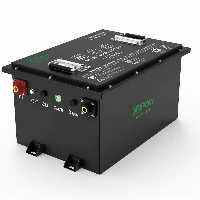
A 24V battery system may seem simple, but even a small wiring mistake can turn your battery bank into a dangerous "time bomb" or an expensive failure. Whether you're upgrading the power for solar storage, an RV, or a small to medium-sized boat, correctly connecting 12V batteries to create a reliable 24V system is crucial.
In this guide, we will explain in detail the series and parallel connection methods, common mistakes, and how to build a safe, powerful, and durable 24V battery system.

What Is a Series Connection?
A series connection means electrical components are connected one after another in a single path, so the electric current can only flow through them in one continuous line. The same current passes through every component, and if one component stops working or the connection breaks, the entire circuit stops working because the path is interrupted.
What Is a Parallel Connection?
A parallel connection means electrical components are connected side by side, each having its own path to the power source. Every component gets the same voltage, and the total current is split among them. If one component stops working, the others keep working because their paths are still complete.
Preparations of wiring 12v batteries to make 24v
Before wiring 12V batteries into a 24V system, make sure all batteries are identical in type, size, age, and capacity, have the proper connectors and insulated tools ready, work in a well-ventilated area, and always wear gloves and safety goggles to prevent short circuits or accidents.
Ensure All Batteries Are Identical
Before wiring, make sure to check:
- Battery model and type (e.g., lead-acid, lithium iron) and size
- Service life (do not mix old and new batteries)
- Capacity (Ah) is the same
- Reason: Mixing different batteries can cause uneven charging, reduced efficiency, and even damage to the batteries.
Prepare Tools and Materials
Before wiring, have the following ready:
- Connectors and insulated cables: Ensure they can handle the current
- Wrench: To tighten battery terminals
- Battery monitor or multimeter: To test voltage after wiring
- Insulated gloves and safety goggles: To protect yourself
Safety Precautions
Batteries store a large amount of energy, and improper handling can cause short circuits or explosions:
- Work in a well-ventilated area
- Use insulated tools to avoid terminal short circuits
- Wear gloves and safety goggles
- Do not let metal tools touch both positive and negative terminals at the same time
How to connect 2 12v batteries to make 24v?***
To connect two 12V batteries to make 24V, simply connect the positive (+) terminal of the first battery to the negative (-) terminal of the second battery, then use the remaining free terminals as the 24V positive and negative output.
Step 1: Place the Batteries
Place the two 12V batteries side by side and label them as Battery A and Battery B.
Each battery has two terminals: positive (+) and negative (-).
Step 2: Connect in Series
Use a battery cable to connect the positive (+) terminal of Battery A → the negative (-) terminal of Battery B.
This is called a "series connection," which adds the voltages of the two batteries together.
- Note: Do not connect incorrectly, or it may cause a short circuit.
Step 3: Output Terminals
Now you have a 24V power source with two free terminals:
- Negative (-) terminal of Battery A → serves as the 24V system negative
- Positive (+) terminal of Battery B → serves as the 24V system positive
These two terminals are what you use to connect a load (such as a motor, inverter, etc.) or to parallel with other 24V battery banks.
Step 4: Safety Check
- Ensure the battery cables are firmly secured to prevent loosening.
- Make sure no exposed metal is touching anything to avoid short circuits.
- Measure the voltage across the two terminals with a multimeter; it should be approximately 24V.

How to connect 4 12v batteries to make 24v?
Assume you have four 12V 100Ah batteries, labeled A, B, C, and D.
Step 1: Grouping
- Group 1: A and B
- Group 2: C and D
Step 2: Series Connection for Each Group
Group A in series:
- Connect the positive terminal (+) of A to the negative terminal (-) of B.
- The negative terminal (-) of A and the positive terminal (+) of B become the main 24V output terminals for this group.
Group C in series:
- Connect the positive terminal (+) of C to the negative terminal (-) of D.
- The negative terminal (-) of C and the positive terminal (+) of D become the main 24V output terminals for this group.
- At this point, you now have two independent 24V battery groups.
Step 3: Parallel Connection of the Two Groups
- Connect the positive terminals of both groups together → all positives connected.
- Connect the negative terminals of both groups together → all negatives connected.

How to connect 6 12v batteries to make 24v?
To create a 24V system from 6 12V batteries, you simply connect pairs in series and then link these series groups in parallel.
1. Grouping
With 6 batteries, the procedure is:
Divide the batteries into three groups, each group having two batteries in series:
Group 1: Battery A + Battery B → Series → 24V output
- Connection: A's positive terminal → B's negative terminal
- The negative terminal of B is the negative of Group 1, A's positive is the positive of Group 1
- Group 2: Battery C + Battery D → Series → 24V output
- Group 3: Battery E + Battery F → Series → 24V output
Now you have three sets of 24V output.
2. Parallel
Connect the three sets of 24V outputs in parallel
Connection:
- All three positive terminals → connected together
- All three negative terminals → connected together
This keeps the voltage at 24V, but the capacity (Ah) is increased threefold.
Tips: First, connect every two batteries in series and check to confirm 24V, then connect the positive terminals of these groups together and the negative terminals together to ensure the voltage is correct and avoid wiring mistakes.

How to connect 8 12v batteries to make 24v?
Divide the 8 batteries into four groups, connect two batteries in series in each group to make 24V, then connect the positive terminals of all four groups together and the negative terminals together in parallel; the voltage remains 24V, and the capacity is quadrupled.

Securing and Completing Your 24V Battery System
After connecting the batteries, the next steps are to check, test, and secure the system to ensure it's safe and reliable:
Check the connections
- Make sure the positive and negative terminals of each series group are correct.
- Ensure all positive terminals of the parallel groups are connected together, and all negative terminals are connected together.
Measure the voltage
- Use a multimeter to check the total voltage of the battery bank and confirm it matches the target voltage (24V).
- If the voltage is incorrect, troubleshoot which group is connected wrongly.
Secure the batteries and wires
- Use cable ties or brackets to hold the batteries in place and prevent movement.
- Organize the wires to avoid short circuits.
Connect the load or charger
- Before connecting to a charger or load, double-check for safety.
- Power on gradually and observe for any overheating or sparks.
Is posible to connect 3 12v batteries to make 24v?
Three 12V batteries cannot be connected to make a 24V power supply.
If you connect them in series, the total voltage will be 36V; if you try to parallel them with the existing two 12V batteries forming a 24V system, the voltage mismatch can cause sparks and damage the batteries.
The safe approach is to keep two 12V batteries in series to make 24V, or buy two new 12V batteries to form a separate 24V battery bank-never mix them together.
Why Only Series Connection Creates 24V?
When you connect batteries in series, their voltages add up. For example:
One battery = 12V
Two batteries in series: 12V + 12V = 24V
Three batteries in series: 12V + 12V + 12V = 36V
Because the current must flow through each battery in order, the voltage acts like a "cumulative push," so the total voltage equals the sum of each battery's voltage.
If the batteries are connected in parallel, the voltage does not add up. It stays the same as a single battery, 12V, but the current capacity increases, meaning it can supply more current without changing voltage.
How Many 12V Batteries Do You Need for a 24V System?
For a 24V system, if you are using 12V batteries, you only need to connect two 12V batteries in series, because in a series connection, the voltages add up: 12V + 12V = 24V. No matter how many batteries you use, as long as the total voltage equals the system voltage, it will work. The simple calculation formula is:
Number of batteries needed = System voltage ÷ Voltage of a single battery = 24V ÷ 12V = 2.
So why do some people say you can connect four 12V batteries to make a 24V power supply? Wouldn't that exceed the voltage limit?
If someone says they use 4 × 12V batteries to make a 24V system, they usually mean connecting them two in series, then the two series groups in parallel:
Each pair of batteries in series → 24V
Then the two 24V series groups are connected in parallel → voltage remains 24V, but the capacity (current or amp-hours, Ah) doubles
The benefits are:
The voltage meets the 24V system requirement
The current capacity is larger, allowing the load to run longer or handle higher current
In simple terms: series determines voltage, parallel determines capacity. So using 4 batteries to make a 24V system isn't "over the limit"; it just increases the system's current capacity.
Common Mistakes When Building a 24V Battery System
Even a minor wiring mistake can turn a simple 24V battery system into an expensive or hazardous problem.
Using Undersized Wires - Wires too thin to carry the current → overheating, voltage drop, potential fire hazard.
Loose or Improperly Torqued Connections - Connections not tightened properly → arcing, heat, equipment damage, or fire.
Skipping Overcurrent Protection (Fuses/Breakers) - No fuses or breakers installed → excessive current can damage wires or equipment.
Wrong Series/Parallel Wiring
- Incorrect series or parallel connections → wrong voltage or unbalanced capacity, damaging batteries.
- Mixing batteries of different capacities or ages → stronger batteries overcharge weaker ones, causing permanent damage.
Poor Battery Ventilation & Spacing - Batteries too close together or poorly ventilated → excessive heat, shortened lifespan, or BMS throttling.
Inadequate Grounding - Improper grounding → exposed metal parts can become live, creating shock hazards.
Ignoring Manufacturer Specifications - Not following manufacturer instructions → voided warranty, unsafe system.
Conclusion
A reliable 24V battery system is about more than just connecting batteries; it's fundamentally about safety, stability, and maximizing performance. By understanding the difference between series and parallel connections, carefully preparing your batteries and tools, and avoiding common wiring mistakes, you can build a system with the correct voltage, sufficient current capacity, and long-lasting durability.
Always ensure connections are secure, maintain proper ventilation and grounding, and follow the manufacturer's instructions to protect both your equipment and yourself. With the right approach, your 24V battery system will provide efficient and reliable power for solar storage, RVs, or boats for years to come.