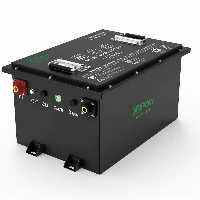
Wondering if a marine battery can power your car? With advances in lithium battery technology, it's actually possible.
High-performance lithium marine batteries can deliver up to 2000A of cold cranking current. That's enough not only to start boats with ease, but also, in freezing conditions, to temporarily power a car engine.
However, this should only be considered a temporary solution-marine and car batteries differ significantly in design philosophy, weight, terminals, and usage habits. More importantly, car batteries should never be used in boats, as the risks are extremely high.
Next, we'll take a closer look at marine and car batteries, highlighting their key differences to help you make smarter choices.

What Are Marine Batteries?
Marine batteries are specially designed to power all kinds of vessels, from small recreational boats to large yachts, commercial ships, and specialized workboats. Some are even used in hybrid boats.
There are three main types of marine batteries. The most common is the deep-cycle battery, which delivers steady power over a long period. Starter batteries, on the other hand, provide a quick burst of current to get the engine running. Dual-purpose batteries combine both functions, allowing them to start the engine and power onboard equipment at the same time.
It's easy to confuse marine batteries with car batteries since both can start engines. But boats and cars operate in very different environments. Using the wrong battery can reduce performance-or even create safety risks-so it's best not to swap them.
What Is a Car Battery?
Once you understand how marine batteries work, automotive batteries are much easier to grasp. They're rechargeable too, but their main job is simple: to deliver a quick burst of power when you start the engine.
Beyond starting the engine, car batteries also keep essential electronics running, such as lights, radios, and other onboard systems.
You'll find them in a wide range of vehicles, from passenger cars and light trucks to motorcycles and even some small electric vehicles.
Marine vs Car Batteries: Key Differences
So, what's the real difference between marine batteries and car batteries? Let's take a closer look.
| Comparison | Marine Battery | Car Battery |
|---|---|---|
| Primary Purpose | Starts the boat engine, provides steady power for onboard systems, some can do both simultaneously | Starts the car engine and powers small electronics like lights or radio |
| Internal Structure | Thicker plates, reinforced structure, extra separators and supports to resist vibration and impact | Thinner plates, lightweight structure, not designed for heavy stress |
| Installation | Requires straps or specialized clamps at multiple points, placed in dry, ventilated location; water-resistant but not submersible | Simple installation in engine bay with brackets or clamps; enclosed environment protects from water |
| Terminal Connections | Thick, corrosion-resistant terminals with waterproof covers, reinforced nuts, or locks | Simple bolt terminals made from lead or tin-plated copper; prone to loosening or corrosion |
| Cold Cranking Amps (CCA) | Generally slightly lower than car batteries; some lithium models up to 2,000A | High-current bursts; typical 400–700A, large-displacement or diesel vehicles over 800A |
| Weight | Heavier due to reinforced internal structure, separators, and supports | Lighter, simple internal design |
| Cost | Higher due to thicker materials, shock-resistant separators, precise manufacturing; longer lifespan (6–10 years) | Lower, standardized production; shorter lifespan |
| Customizability | Highly flexible; capacity, size, shape, terminals, protection, and configurations can be tailored | Standardized for specific vehicle models; only model selection possible |
Purpose and Performance
Marine batteries have three main jobs. First, they start the ship's engine. Second, they provide steady power for all the electrical equipment on board. Third, some types can do both at the same time-start the engine while powering the ship's systems.
Car batteries, on the other hand, have a simpler role. Their main job is to start the engine. Sometimes, they also power small electronics like the radio or interior lights.
You might be thinking, "Wait-can't a marine battery start an engine too?" True, it can. But marine batteries are heavier, more expensive, and built to deliver cold-cranking amperage-perfect for starting a ship's engine in chilly conditions. In a car, though, it's definitely overkill.
Internal Structure
Marine batteries are built for life on the water, so their design is very different from car batteries-both inside and out. After all, cruising over choppy waves is nothing like driving on a smooth road.
Take deep-cycle lead-acid marine batteries, for example. They use thicker lead plates, which help them handle repeated charging and discharging. At the same time, this stronger structure makes them more resistant to constant vibration and impact.
Lithium marine batteries are different, but they're built with the same idea in mind. Even with a sealed design, they include internal supports to keep everything in place and reduce damage caused by movement.
Car batteries, on the other hand, are much simpler. They use thinner plates and a more lightweight internal structure, since they're not designed to handle the same level of stress.
Installation Method
If you've ever swapped a car battery, you know there isn't much space for it, and the process is pretty simple. Slide the battery into the engine bay, secure it with brackets or clamps, and you're done. The engine bay is enclosed, so the battery is safe from water.
Marine batteries, however, are a whole different ballgame. On a boat that's constantly rocking, an unsecured battery can slide, fall, or even bump into other equipment-definitely a safety risk.
That's why marine batteries need straps or specialized clamps to hold them at multiple points. They should also sit in a dry, well-ventilated spot.
Keep in mind, they're water-resistant. A little splash is fine, but don't expect them to go for a swim!
Terminal Connections
Marine battery terminals are thicker and tougher than car battery terminals.
The sea air is full of salt spray and moisture. Both are highly concentrated and extremely corrosive. Combine that with rough waves, and exposed terminals can fail fast-or even become completely unusable. That's why marine terminals usually come with waterproof covers, reinforced nuts, or special locks.
The terminals themselves are made from corrosion-resistant materials, keeping moisture and vibration at bay. This ensures a solid connection and prevents common headaches like poor contact or oxidation.
Car battery terminals are much simpler. They're usually just bolt terminals made from lead or tin-plated copper.
If you put a car battery on a boat, its terminals can come loose, corrode over time, or worse-cause a fire.
Add to that the small, inflexible design of car battery terminals, and it's easy to see why they struggle to meet the durability and protection needs on a boat.
Cold Cranking Amps (CCA)
Cold Cranking Amps, or CCA, measures a battery's ability to start an engine in cold weather. Car batteries are built for high-current bursts, so they have a high CCA. A typical passenger car battery ranges from 400 to 700 amps, and some high-displacement or diesel vehicle batteries can go over 800 amps.
Marine batteries also handle cold starts, but most have a slightly lower CCA compared to car batteries. Lithium marine batteries are a different story. Take the CoPow 24V lithium marine battery, for example-it can deliver up to 2,000 amps of cold cranking current. That's enough to start a boat easily, even in extremely cold conditions.
Weight
Marine batteries are definitely heavier than car batteries. The plates are thicker, the structure is reinforced, and extra separators and supports make sure nothing inside comes loose, even when the boat rocks.
Car batteries, by contrast, have a much simpler internal design. They don't need all that extra reinforcement.
Cost
It's no secret that marine batteries cost more than car batteries.
Take a standard marine battery as an example. It uses thicker plates and includes shock-resistant separators inside. Right from the start, this means higher material costs compared to an automotive battery.
On top of that, the manufacturing process is more demanding. Manufacturers reinforce the internal structure, add extra sealing to prevent leaks, and carry out strict quality checks. All of this results in a battery that is built to last.
For example, CoPow lithium marine batteries use lithium iron phosphate (LiFePO4) technology. This type of battery is known for its high safety and long lifespan, typically lasting between 6 and 10 years.
These are advantages that standard car batteries simply can't match.
Customizability
Marine batteries are built around usage, while car batteries are standardized for specific vehicle models.
From the very beginning, car batteries are essentially "locked in" by manufacturers. Their size, capacity, terminal layout, voltage, and even mounting method all follow strict standards. Cars are mass-produced, highly standardized products, so no automaker is going to customize a battery for individual needs. For most drivers, it's simply a matter of choosing the right model-not designing one.
Marine batteries work very differently.
Boats operate in a much wider range of conditions. There are small fishing boats, leisure yachts, commercial vessels, and high-end boats packed with electronic equipment. Different boats-and even the same boat used for different purposes-can have completely different power demands.
Because of this, marine batteries are not built around fixed specifications. Instead, they are designed around real-world use.
This also means far greater flexibility. Capacity can be expanded as needed, configurations can be adjusted, and the size and shape can be tailored to fit different battery compartments. In some cases, entire multi-battery systems can be built.
Terminals and connections can be matched to specific equipment, while protection levels and internal structures can be reinforced for harsh environments.
Perhaps more importantly, marine batteries offer a wider range of options. Starter batteries, deep-cycle batteries, dual-purpose batteries, and even complete lithium systems can all be selected and combined based on actual usage needs.

Can You Use a Marine Battery in a Car?
A few years ago, we definitely wouldn't have recommended this. But times have changed, and now it's actually possible to use a marine battery as a car battery in some cases.
Thanks to advances in lithium marine battery technology, these batteries can now deliver even higher cold cranking amps than a standard car battery. For example, the CoPow 12V 100Ah lithium marine battery can reach a cold cranking current of 2000A.
One day, if your car battery dies and you happen to have a lithium marine battery on hand, it could temporarily power your engine. That said, this should only be considered a stopgap solution. Even with its impressive starting power, it's still significantly heavier than a typical automotive battery.
Can You Use a Car Battery for Marine Applications?
While a marine battery can, in some cases, temporarily power a car, the reverse is absolutely out of the question: a car battery just can't handle a boat.
Even ignoring other issues, the battery life alone makes it impractical. You might not even be halfway through your voyage before the battery runs out, leaving the boat stranded in the middle of the endless sea, with nothing but water and solitude all around. Just imagining it is enough to make your heart sink.
Final Thoughts
All in all, while marine and car batteries share some similarities in starting an engine, that doesn't mean they can be used interchangeably. Car batteries, in particular, should never be used in boats-this is a rule any professional would stand by.
On the other hand, with rapid advances in lithium battery technology, it's now possible to use a marine lithium battery to provide cold-start power for a car engine. This can be especially helpful in freezing conditions. That said, for everyday use, we still recommend using a battery specifically designed for your vehicle to ensure both safety and consistent performance.
If you'd like to learn more about marine battery applications, feel free to reach out to CoPow-we'll respond within 24 hours. Have a great day!
FAQ / People Also Ask
Is a marine battery better than a car battery?
It's not a matter of one being better than the other-marine and car batteries are designed for different uses.
Car batteries are primarily built to start car engines. Marine batteries, on the other hand, not only start boat engines but also provide steady power to onboard electrical equipment.
In certain situations, some deep-cycle lithium starter batteries can even temporarily provide starting power for a car engine.
Why are marine batteries more expensive?
Marine batteries are built to withstand harsh marine conditions. From their rugged internal structure to reinforced casings, they're tougher than standard car batteries.
Not only do they deliver stronger performance and longer runtime, but they also remain reliable even in the harshest conditions at sea.
How long do marine batteries last?
On average, a single lithium marine battery lasts between 6 and 10 years.
Want to learn more? Check out our guide: "Marine Battery Basics: Types, Size and Buying Tips."