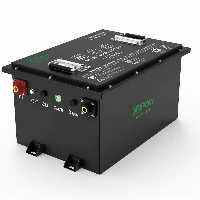
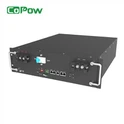
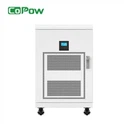
Typically, building a 48V LiFePO4 battery pack requires 16 cells connected in series. Although mathematically, a 15-cell series (15S) has a nominal voltage of exactly 15*3.2v=48.0v, in practical industrial standards for energy storage and solar systems, a 16-cell series (16S) configuration is generally used. Its nominal voltage is 16*3.2v=51.2v.
Although both are called "48V batteries," the 16-series configuration is now the standard. This is because most 48V inverters and charging devices are designed to operate most efficiently with a 51.2V system. Even when the battery is nearly depleted, a 16S pack can maintain a higher voltage, reducing the likelihood of triggering the inverter's low-voltage warning.
number of cells in 48v lifepo4 battery
| Configuration | Nominal Voltage | Fully Charged (100%) | Discharge Cut-off (Low) | Industry Status |
| 15 Cells (15S) | 48.0V | 54.0V | 42.0V | Older/Less Common |
| 16 Cells (16S) | 51.2V | 57.6V | 44.8V | Modern Standard |
This article provides an in-depth analysis of the core technologies and mainstream architectures of 48V LiFePO4 batteries. By comparing the performance differences between 15S and 16S configurations, we clarify the optimal selection for different scenarios. At the same time, we systematically outline the voltage range, BMS compatibility, and key safety considerations for assembly. Finally, we reveal how Copow 48V batteries have become an industry highlight thanks to their outstanding performance.

Understanding LiFePO4 Battery Voltage and Configuration Basics
To fully appreciate this battery's performance, we must first cover the fundamentals of LiFePO4 chemistry.
What Is a LiFePO4 (Lithium Iron Phosphate) Battery?
In the evolution of 48V standardized battery packs, Lithium Iron Phosphate has distinguished itself through its stable 3.2V voltage platform.
Unlike common lithium chemistries, its electrochemical structure remains highly stable even under extreme conditions, fundamentally eliminating the risk of thermal runaway. This provides a safe, cost-effective, and sustainable energy solution for sectors requiring long-term reliability, such as electric forklifts and residential energy storage systems.
Series vs. Parallel Battery Connections: Key Differences Explained
In short: Series for voltage, Parallel for capacity.
Series Connection
- Operation: Connect the positive terminal of one battery to the negative terminal of the next.
- Core Change: Voltage increases, while capacity (Ah) remains the same.
- Analogy: Think of it like a relay race; each battery adds its own voltage "strength" to the total.
Formulas:
- Total Voltage (V_total) = V₁ + V₂ + ... + Vₙ
- Total Capacity (Ah_total) = Ah of a single battery
- Use Case: Ideal when higher voltage is needed to power high-demand equipment (e.g., connecting four 12V batteries in series to create a 48V system).
Parallel Connection
- Operation: Connect all positive terminals together and all negative terminals together.
- Core Change: Capacity (Ah) increases, while voltage remains the same.
- Analogy: Think of it like parallel water pipes; the water flow (current) increases, but the water pressure (voltage) stays constant.
Formulas:
- Total Voltage (V_total) = Voltage of a single battery
- Total Capacity (Ah_total) = Ah₁ + Ah₂ + ... + Ahₙ
- Use Case: Ideal when you need longer runtime. For example, connecting two 100Ah batteries in parallel creates a 200Ah battery bank.

15S vs 16S Configuration: Which Is Better for Your 48V LifePo4 Battery?
Mainstream 48V Lithium Iron Phosphate battery systems have largely transitioned to a 16S (51.2V) configuration to achieve optimal voltage coupling with standard inverters and electrical equipment.
In contrast, while a 15S (48V) configuration offers a slight advantage in material costs, it often requires compromises in depth of discharge (DoD), system compatibility, and overall energy efficiency.
One point that many people overlook is that the voltage curve of a 16S configuration closely aligns with legacy 48V lead-acid systems. This high compatibility allows inverters to consistently operate within the optimal voltage range.
To explain: the full-charge voltage of lead-acid batteries typically ranges from 54V to 56V, whereas a 16S LiFePO4 battery is usually around 57.6V at full charge, with only minor fluctuations. In other words, the voltage curve of a 16S battery almost perfectly overlaps with that of lead-acid batteries, which means inverters don't need to undergo complicated adaptations to new charging algorithms.
By comparison, although a 15S battery is nominally 48V, its overall voltage is lower. During later stages of discharge, the inverter is more likely to "mistakenly" detect low power and cut off output prematurely. The result is that the battery still has energy left, but the system no longer allows its use.
Specifically, the full-charge voltage of a 15S battery is only 54V. The calculation is as follows:
- Nominal voltage per cell: 3.2V × 15 = 48V
- Full-charge voltage per cell: 3.6V × 15 = 54V
This means that from the start, a 15S battery has a smaller voltage margin than a 16S battery.
Moreover, its voltage drops faster during discharge-not that the battery physically loses energy more quickly, but because its overall voltage is lower, it reaches the inverter's low-voltage cutoff earlier at the same discharge ratio.
For example, if an inverter's low-voltage protection is set at 45V, a 15S battery may quickly drop to 47V and then approach 45V shortly after. At this point, the inverter will consider the voltage too low and cut off power for safety, even though the battery may still have 10–15% of its energy remaining.
From the perspective of energy density and cost efficiency, a 16S system has one more cell than a 15S system. This means that for the same capacity (Ah), a 16S system can provide roughly 6.7% more stored energy (Wh).
The total energy of a battery is calculated as: Wh = Voltage (V) × Capacity (Ah). Assuming both systems have a capacity of 100Ah:
15S:
- Nominal voltage: 48V
- 48V × 100Ah = 4800Wh
16S:
- Nominal voltage: 51.2V
- 51.2V × 100Ah = 5120Wh
Difference:
- 5120 − 4800 = 320Wh
- 320 ÷ 4800 ≈ 6.7%
As we can see, with the same 100Ah capacity, the 16S system actually stores more energy.
The benefits don't stop there. Most importantly, the 16S system operates at lower current. Why is lower current beneficial? Lower current means less heat generation, lower cable losses, more stable connections, and a safer system overall.
Currently, most mainstream server rack batteries and energy storage systems (for example, Copow, Growatt, and Victron solutions) default to a 16S configuration. This shows that 16S is a market-verified technology. More importantly, using a 16S system makes it easier to find ready-made equipment and solutions-you have multiple BMS models to choose from and can easily upgrade firmware.
Whether for home solar energy storage, boats, or higher-power applications like golf carts or forklifts, a 16S configuration ensures stable power output and longer system life.
Detailed Explanation of the Voltage Range of a 48V LiFePO4 Battery Pack
A 48V LiFePO4 battery isn't actually "only" 48V. Although the industry commonly refers to it as 48V, it is made up of 16 cells at 3.2V each, giving it a true nominal voltage of 51.2V. In fact, its safe operating range is from 44V to 58.4V, with 51.2V being the optimal working voltage.
Voltage Range
In practical applications, the battery pack operates mainly within three voltage ranges:
- Fully Charged: When each cell reaches its charging cutoff voltage of 3.65V, the total voltage of the pack reaches approximately 58.4V.
- Discharge Lower Limit: To prevent over-discharge and damage to the cells, the cutoff voltage of individual cells is usually set between 2.5V and 2.8V. This means that when the pack voltage drops to around 40V to 44.8V, power supply should be stopped.
- Efficient Operating Plateau: This is one of the most notable advantages of LiFePO4 batteries. For most of the time, when the state of charge is between 20% and 90%, the voltage remains stable between 51.2V and 53.6V. This minimal voltage fluctuation provides a highly stable power environment for connected devices.
| Status | Single Cell Voltage (V) | Total Pack Voltage (16S) | Description |
| Charge Limit | 3.65V | 58.4V | Maximum safety limit. BMS will cut off here. |
| Fully Charged | 3.40V - 3.45V | 54.4V - 55.2V | Resting voltage after a full charge. |
| Nominal Voltage | 3.20V | 51.2V | The "working platform" where the battery spends most time. |
| Low Battery | 3.00V | 48.0V | Remaining capacity is around 10-15%. |
| Discharge Cut-off | 2.50V - 2.80V | 40.0V - 44.8V | Battery is empty. BMS stops output to prevent damage. |

How to Choose the Right BMS for a 48V LiFePO4 Battery System?
Now that we have settled on LiFePO4 technology for our 48V battery, we certainly cannot overlook another crucial component. As the perfect companion to a LiFePO4 battery, the Battery Management System is just as important as the quality of the cells themselves. However, when assembling a 16S standard battery, choosing the right BMS can be a headache for many. Here are some useful tips we offer to our customers.
1. Core Parameters
Series Count (S): The standard for a 48V LiFePO4 system is 16 cells in series. Make sure the BMS supports 16S (some universal models may support adjustable ranges such as 8–24S).
Rated Current (A):
- Continuous Discharge Current: Must exceed the maximum load current. For example, if using a 5000W inverter:
 With a safety margin, you should choose a 150A or 200A BMS.
 - Continuous Charge Current: Ensure it can handle the maximum output of your charger or solar controller.
2. Balancing Method
- Passive Balancing: Cheap and common. It dissipates excess energy as heat. The balance current is very small (approx. 50–100mA). Best for new, well-matched cells.
- Active Balancing: Transfers energy from high-voltage cells to low-voltage cells. For DIY packs or large capacities (over 200Ah), it is highly recommended to choose a BMS with 0.6A – 2A Active Balancing to keep cells healthy over time.
3. Smart Features & Communication
- Standard BMS: Provides protection only; no data display. Good for budget builds.
- Smart BMS: * Bluetooth/App: Allows you to monitor individual cell voltages, temperature, and SOC on your phone.
- Communication Protocols (CAN/RS485): If using a name-brand inverter, choose a BMS that supports closed-loop communication. This allows the battery to "talk" to the inverter for optimized charging.
4. Critical Protection Functions
- Low-Temperature Protection: LiFePO4 batteries cannot be charged below 0°C. If your battery is in a cold environment, ensure the BMS has a temperature sensor and a low-temp charge cutoff.
- Pre-charge Circuit: When connecting to large inverters, the initial spark can damage the BMS or inverter. High-end BMS units include a pre-charge resistor to handle this safely.
Quick Advice: Calculate your maximum appliance power first to pick the current (Amps), then decide if you want an App (Smart BMS) for easy troubleshooting.

Safety Precautions and Tool Checklist for Assembling a 48V LiFePO4 Battery Pack
Are you planning to assemble a 48V LiFePO4 battery pack using a 16S configuration? Here is a safety guide for proper operation. Although LiFePO4 batteries are known for their high safety, we still recommend proceeding with caution-not only to protect personal safety, but also to prevent potential damage to the battery system.
Safety Risks During Assembly
The potential energy in a 16-cell series setup is significant. If an accidental short circuit occurs between the positive and negative terminals, the instantaneous current discharge will generate extreme heat. This surge is powerful enough to melt metal busbars or tools immediately and can lead to a serious fire.
Core Safety Guidelines
- Insulate Your Tools: Ensure that all metal tools, such as wrenches and screwdrivers, have insulated handles before beginning work.
- Wear Protective Gear: Use safety goggles and insulated gloves to protect against potential electrical arcing or sparks.
- Remove Metallic Objects: Do not wear watches, rings, or necklaces during assembly to prevent accidental contact with battery terminals.
- Follow Installation Sequences: Connect the cells strictly according to the wiring diagram. Measure the voltage after each series connection and double-check polarities before tightening any terminals.
Tool Checklist
| Tool | Purpose | Recommended Spec |
| Multimeter | Check cell voltage, internal resistance, and balance wire order. | High-precision digital type. |
| Torque Wrench | Tighten busbar bolts to prevent overheating from loose connections. | Usually set to 4-6 N·m. |
| Insulated Tools | Minimize the risk of a short if a tool is dropped. | Wrenches/sockets with insulated coating. |
| Hydraulic Crimper | Crimp large copper lugs for the main battery cables. | Fits 25mm² - 50mm² (4 AWG - 1/0 AWG) wires. |
| DC Power Supply | Used for "Top Balancing" before final assembly. | Adjustable 0-60V / 10A+. |
| Heat Gun | For shrinking insulation tubing and heat-shrink wrap. | Standard 300°C+ heat gun. |

Choose CoPow 48V LiFePO4 Batteries – Plug & Play, No DIY Required!
Frankly speaking, assembling a fully functional 48V battery on your own can be extremely complicated. It requires professional knowledge and carries the risk of potential damage.
If you feel the same way, you might want to consider Copow's ready-made 48V LiFePO4 batteries-we've already prepared everything for you.
Advantages of Ready-Made lifepo4 Batteries
- Plug & Play: The battery arrives pre-assembled, with cells laser-welded and the BMS programmed at the factory. Users only need to connect it to an inverter, fundamentally avoiding wiring errors or short-circuit risks during assembly.
- Reliable Protection and Monitoring: The integrated smart management system automatically regulates overcharge, over-discharge, and operating temperature. Many models support Bluetooth connectivity, allowing users to monitor the status of each cell series through a mobile app, without needing specialized testing equipment.
- Robust Construction: Cells are enclosed in custom metal or plastic casings, providing a more stable physical structure than DIY packs and better resistance to vibration and handling.
- After-Sales Guarantee: Compared to purchasing loose cells and components, ready-made batteries come with full-system warranty coverage.
Suitable Applications
For forklift batteries or golf cart LiFePO4 upgrades, this solution saves time while providing more reliable safety and performance assurance.
Conclusion: How to Build an Efficient and Reliable 48V LiFePO4 Battery System
Based on the discussion above, you should now have a clear understanding of how many LiFePO4 cells are required for a 48V battery system. The 16S configuration is currently the most popular choice, while 15S remains a viable alternative. Ultimately, the right option depends on your specific application.
However, as a manufacturer deeply specialized in the LiFePO4 battery industry, we strongly recommend adopting the 16S configuration for your 48V battery system.
Key Takeaways Recap
- Standard Selection: The 16S (51.2V) configuration has become the industry standard due to its superior compatibility, higher energy density, and seamless ability to replace traditional lead-acid systems.
- Management System: The BMS serves as the command center. Features like active balancing, temperature protection, and communication protocol support directly determine the battery pack's lifespan and stability.
- Safety Awareness: During a DIY build, short-circuit prevention must always be the top priority. For users lacking professional tools or assembly experience, choosing an integrated, factory-tested solution like CoPow is the best way to mitigate risk and achieve rapid deployment.
Your Next Steps
Once you have decided on your 48V lithium battery upgrade, it is recommended to cross-check the maximum continuous discharge current against the power requirements (wattage) of your load devices.
If you have any questions regarding matching BMS parameters or selecting the correct cable gauges, Copow can provide specific calculation support for you.
related article: How Many LiFePO4 Cells For 24V Battery?
FAQ
How to Configure a 48V LiFePO4 Battery in Series?
Configuring a 48V LiFePO4 battery pack is actually quite straightforward. The core principle is to increase the voltage by connecting batteries end to end in series. If you have four 12V batteries, you can build a 48V system by following these steps:
Connection Steps
- Prepare the cables: Use sufficiently thick cables to ensure they can safely handle the expected current.
- Series connection: Starting with the first battery, connect its negative terminal to the positive terminal of the second battery. Then connect the negative terminal of the second battery to the positive terminal of the third battery. Finally, connect the negative terminal of the third battery to the positive terminal of the fourth battery.
- Identify the output terminals: At this point, the remaining positive terminal of the first battery and the remaining negative terminal of the fourth battery become the main positive and negative terminals of the entire 48V system.
can 4x 12v 100ah lifepo4 batteries be connected in series for 48v system?
Absolutely. You can connect four 12V 100Ah LiFePO4 batteries in series (connecting positive to negative) to create a 48V 100Ah system.
However, two points are critical before you proceed:
First, since each battery has its own independent BMS (Battery Management System), you must ensure the manufacturer explicitly states they support "up to 4S" (4 in series) configurations; otherwise, the higher voltage could damage the internal BMS components.
Second, before wiring them together, make sure to fully charge each battery individually so their voltages are perfectly matched (ideally within a 0.05V difference). This prevents the "bottleneck effect," where an unbalanced cell causes the entire system to cut off early or underperform.
What is the nominal voltage of a 16S LiFePO4 battery pack?
Its nominal voltage is typically 51.2V, calculated as 16 × 3.2V, which is the standard configuration used in modern 48V energy storage systems.