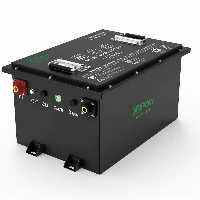
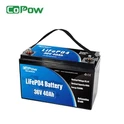
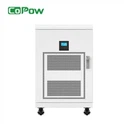
In the professional angling community of 2026, the 24V lithium trolling motor battery is no longer a novelty but an essential gear that determines whether you can truly hold your own on the water. If you are still enduring two lead-acid batteries weighing over 100 pounds each that suffer from voltage instability by afternoon, you are essentially sacrificing your most valuable fishing time to accommodate outdated tools.
This guide breaks down the top batteries worth buying in 2026. Drawing on field tests conducted by professional Florida guides, it shows you how to avoid buying traps that look cheap but die young, helping you unlock your boat's full potential.

Why Choose Lithium Over Lead-Acid for a 24V Trolling Motor?
Lithium batteries, especially LiFePO4, offer overwhelming advantages over lead-acid batteries. The most immediate difference is weight: a 24V lithium pack weighs only one-third as much as a lead-acid set of the same capacity. This not only reduces draft and increases boat speed but also makes handling and installation effortless.
In terms of performance, lead-acid batteries suffer significant voltage drops as they discharge, weakening motor thrust, whereas lithium batteries maintain a stable voltage output throughout, allowing your 24V motor to run at full power until the battery is completely depleted.
Although the upfront cost of lithium is higher, it supports 3,000 to 5,000 or more deep cycles compared to just a few hundred for lead-acid. This means you might need to replace lead-acid batteries 5 to 10 times over the same service life, making lithium more cost-effective in the long run. Additionally, features like low self-discharge, maintenance-free operation, and built-in BMS safety protection provide greater peace of mind.

Recommended Capacity for Different Boat Sizes
Since 24V systems typically pair with medium- to large-outboard motors producing 70 to 80 pounds of thrust, and these motors consume significantly more power than 12V systems, it is crucial to plan your battery capacity carefully based on your actual needs.
1. Small Boats & Kayaks (12-14 ft)
- Recommended Capacity: 24V 50Ah
- Best For: Lightweight hulls with low resistance. Provides 4–6 hours of runtime for short or half-day trips.
2. Medium Bass Boats / Aluminum Boats (16-18 ft)
- Recommended Capacity: 24V 60Ah – 100Ah
- Best For: The "sweet spot" for 24V systems. 100Ah is the safest choice for a full day of fishing (8+ hours).
3. Large Professional Fishing Boats (19 ft+)
- Recommended Capacity: 24V 100Ah – 150Ah
- Best For: Heavy boats susceptible to wind and current. High capacity ensures you can hold your position (Anchor Mode) all day without running out of juice.
Recommended Reading: What Size Lithium Battery For 24V Trolling Motor?

Best 24V Lithium Trolling Motor Battery – Top Picks 2026
By 2026, 24V LiFePO4 battery technology will have become highly mature. For anglers who demand high performance and long battery life, several brands currently stand out in the market.
If you need specialized equipment, consider Copow, a manufacturer dedicated to trolling motor batteries. For everyday use, there are also many excellent consumer-focused brands worth exploring.
1. Copow 24V 100Ah LiFePO4 Battery
In 2026, Copow (a premium brand under Huanduy) stands out for its exceptional safety standards and intelligent control systems.
- Core Strength: Equipped with a self-developed Smart Battery Management System providing four layers of protection: overcharge, over-discharge, short circuit, and thermal protection.
- Key Highlight: It features a rugged, IP67-rated waterproof casing, making it perfect for both freshwater and harsh saltwater environments. Plus, with integrated Bluetooth monitoring, you can track the precise status of every cell via a mobile app.
- Verdict: The top choice for anglers seeking "all-day power" combined with maximum safety and high cost-performance.
2. Dakota Lithium 24V 60Ah
If weight is your absolute priority, Dakota Lithium remains a leader in power-to-weight ratios.
- Core Strength: One of the most energy-dense batteries on the market, with this 60Ah unit weighing in at only about 25 lbs.
- Key Highlight: Backed by a legendary 11-year warranty, showing immense confidence in its longevity. Its voltage curve is incredibly flat, providing consistent thrust even at the last 10% of capacity.
3. Battle Born 24V 50Ah (BB5024)
As a veteran in the lithium industry, Battle Born represents the highest manufacturing standards in the USA.
- Core Strength: Extreme reliability. Designed for rigorous use, its high-end BMS allows for safe charging and discharging even in challenging temperatures.
- Key Highlight: Uses cylindrical cells with superior vibration resistance, ensuring stable performance even on high-speed bass boats hitting heavy chop.
4. LiTime 24V 100Ah TM (Trolling Motor Series)
LiTime is the go-to for budget-conscious anglers, and their TM (Trolling Motor) Series is specifically optimized for marine use.
- Core Strength: Optimized for high instantaneous discharge, easily handling the current spikes when switching to high-speed settings on your motor.
- Key Highlight: Highly competitive pricing combined with essential features like low-temperature charging protection for peace of mind in cold climates.

How Long Will a 24V Lithium Trolling Motor Battery Last?
The specific runtime of a 24V lithium battery depends mainly on its amp-hour capacity and the current draw at your chosen speed setting. Taking a mainstream 100Ah lithium battery as an example, if you troll in low-speed mode with a current draw of around 5A, it can theoretically run continuously for 20 hours. If you push the power to half throttle, raising the current to about 25A, it still provides stable thrust for approximately 4 hours.
In terms of long-term lifespan, lithium batteries perform exceptionally well. High-quality units from brands like Copow or Battle Born support 3,000 to 5,000 charge-discharge cycles. Assuming you go fishing twice a week on average, it is normal for a single battery pack to last 10 to 15 years.
Common Mistakes When Buying a 24V Lithium Battery
When shopping for a 24V lithium battery, it is easy to be swayed by surface-level specs and overlook critical technical details. To avoid overspending or buying incompatible gear, watch out for these common pitfalls:
1. Prioritizing Price Over BMS Quality
This is the most frequent error. The Battery Management System is the "brain" of a lithium battery, and budget brands often cut corners here. Premium brands like Copow feature high-end BMS units with low-temperature charging protection, over-current safeguards, and cell balancing. A cheap BMS can lead to permanent damage if charged in freezing weather or cause the battery to shut down during sudden motor acceleration.
2. Mistaking Lithium Ah for Lead-Acid Ah
Many beginners buy capacity based on their old lead-acid habits. While lead-acid batteries can typically only safely use 50% of their capacity, lithium batteries can safely deliver nearly 100% depth of discharge. This means a 24V 60Ah or 80Ah lithium battery can often outlast two 100Ah lead-acid batteries in parallel. Buying too much capacity adds unnecessary cost and extra weight to your boat.
3. Ignoring Continuous Discharge Current
A 24V trolling motor pulls significant current at full throttle. Some low-end lithium batteries may claim 100Ah capacity but have a BMS limited to 50A continuous output. If your motor requires 60A at peak speed, the battery will frequently trip and shut off. Always verify that the battery's continuous discharge rating exceeds your motor's max amp draw.
4. Using a Lead-Acid Charger
This is a leading cause of shortened lifespan. Lead-acid chargers often use charging profiles (like desulfation modes) with voltages too high for lithium cells. You must use a LiFePO4-specific charger to ensure the voltage is precise (typically 28.8V for 24V systems) and to properly trigger the BMS balancing function.
5. Forgetting Physical Dimensions and Terminals
While a single 24V lithium battery is more compact than two 12V lead-acid batteries, the terminal types (M8 vs. M6 bolts) or the casing size might not fit your existing battery box. Always measure your compartment space and check if your cable lugs need upgrading before hitting "buy."
Case Study: Why Florida Flats Guide Captain Chris Switched to the Copow 24V
The Frustration: "Like Dragging an Anchor"
Captain Chris, a full-time fishing guide in the Florida Keys, was fed up with the "heavy" feel of his 18-foot skiff. To power his 24V 80lb thrust Minn Kota, he had two massive Group 31 lead-acid batteries buried in the aft compartment.
"In the Keys, every inch of draft counts," Chris explains. "With over 130 lbs of lead sitting in the back, plus a full livewell and clients, I was constantly scraping bottom in the shallow flats where the Redfish tail. Worse, by 2:00 PM when the wind kicked up, the voltage would drop and the motor would get sluggish. I was literally fighting the tide with a dying battery."
The Upgrade: A Single Copow 24V 100Ah Unit. In early 2025, Chris ripped out the 130-lb lead-acid setup and replaced it with a single Copow 24V 100Ah LiFePO4 battery, weighing only 45 lbs.
The Real-World Difference:
- The "Draft" Factor: "The stern sat nearly 2 inches higher in the water immediately. That's the difference between getting stuck on a sandbar and stealthily poling into the heart of a honey hole. it changed where I could actually take my clients."
- Consistent Power in the Mangroves: Unlike his old batteries that faded as the day went on, the Copow held a steady 26V+ output from 8:00 AM until his last cast. "Even when the afternoon breeze picks up, the motor still has 100% of its torque. It doesn't 'die' before I do."
- The Heat Test: Florida's humidity and heat are battery killers. Chris noted that the Copow's BMS handled deck temperatures over 95°F without a single thermal shutdown-a common issue he'd seen other guides struggle with when using cheaper "no-name" lithium brands.
- From "Guessing" to "Knowing": "I used to guess my runtime by the sound of the motor's hum. Now, I just glance at the Copow Bluetooth App on my phone. If it says 22%, I know exactly how much time I have left before we need to head to the ramp."
The Bottom Line: For Chris, the switch wasn't about the "tech"-it was about reliability and weight. "I shed 85 lbs and gained 4 hours of extra fishing time. In this business, if your trolling motor dies, the trip is over. Since switching to Copow, I haven't had to cut a single charter short."
FAQs About 24V Lithium Trolling Motor Batteries
Can I connect two 12V lithium batteries in series?
You can connect two 12V lithium batteries in series, but only if they are the same brand, model, and capacity, and their built-in Battery Management System explicitly supports series connection to avoid damaging the cells or triggering safety risks due to voltage imbalance.
Is 100Ah enough for a full fishing day?
For most 24V trolling motor systems, a 100Ah lithium battery is more than enough to power a full fishing day (8–10 hours), as its nearly 100% depth of discharge provides double the usable energy of a lead-acid battery of the same rating, unless you are running at full throttle against heavy winds and currents all day.
Can I use a regular lead-acid charger?
It is not recommended to use a regular lead-acid charger because its charging profile and desulfation mode can damage lithium cells; you must use a charger specifically labeled for LiFePO4 to ensure the battery is safely charged at a precise voltage (typically 28.8V) and to properly activate the BMS cell-balancing function.