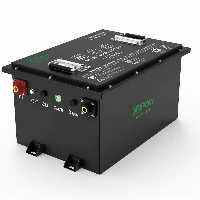
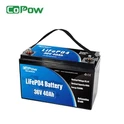
A deep-cycle battery is essentially a rugged rechargeable battery built for long-term, steady power delivery rather than the quick burst of energy needed to start an engine. Because its internal structure features thick and dense plates, you can frequently drain it down to 20% or 30% of its capacity and recharge it without causing damage. This durability makes it the core energy source for solar storage, RV trips, boating, and golf carts.
This article breaks down everything you need to know about deep-cycle batteries, including their different types, technical specs, and how they truly differ from standard starter batteries. With these practical comparisons and tips, I hope to help you choose the best power solution for your RV or home backup system.

what is deep cycling?
Deep cycling refers to a battery usage pattern in which a large portion of the battery's capacity is discharged before it is fully recharged. In most cases, 50% to 80% or even more of the battery's energy is used before the battery is charged back to full, and this complete discharge–recharge process is defined as one deep cycle.
- "Deep" refers to a large depth of discharge. For example, if a battery is discharged until only 20% of its capacity remains, this is considered deep discharge.
- "Cycle" refers to one complete process of discharging and then recharging the battery.
- Comparison: Conventional automotive starting batteries are designed only for shallow cycling. If they are frequently subjected to deep cycling, they will fail very quickly. In contrast, deep-cycle batteries are specifically engineered to withstand hundreds or even thousands of deep charge–discharge cycles.
Types of Deep Cycle Batteries
Deep cycle batteries are mainly divided into two major categories: lead-acid batteries and lithium batteries.
- Lead-acid batteries include Flooded Lead-Acid (FLA) batteries, which are the most cost-effective but require regular watering and ventilation for maintenance; AGM batteries, which are maintenance-free and offer excellent shock resistance; and Gel batteries, which are highly heat-tolerant.
- In the lithium battery category, Lithium Iron Phosphate (LiFePO4) batteries offer the best performance, longest cycle life, and lightest weight, making them the premium choice among deep cycle batteries.
Flooded Lead-Acid (FLA) Batteries
These are the most common type of deep cycle batteries, with plates fully submerged in liquid electrolyte.
- Advantages: Lowest initial cost and very mature technology.
- Disadvantages: Require regular topping up with distilled water; generate gases during charging and must be used in well-ventilated areas; must never be installed upside down.
- Best Uses: Fixed solar energy storage systems and golf carts.
AGM Batteries (Absorbent Glass Mat)
A type of sealed lead-acid battery, with the electrolyte absorbed in fiberglass mats between the plates.
- Advantages: Maintenance-free (no watering required); leak-proof and can be installed at an angle; charges faster than FLA batteries; excellent shock resistance.
- Disadvantages: More expensive than Flooded Lead-Acid batteries; sensitive to overcharging.
- Best Uses: RVs, boats (especially for trolling motors), and emergency starting applications.
Gel Batteries (Gel Cell)
The electrolyte is mixed with silica to form a jelly-like gel.
- Advantages: Extremely durable, performs best in high-temperature environments; very low self-discharge rate; strong recovery capability after deep discharge.
- Disadvantages: Requires strict charging specifications and must use a dedicated gel battery charger, otherwise it can be easily damaged; relatively expensive.
- Best Uses: Off-grid solar systems in extremely hot regions, deep-sea exploration.
Lithium Iron Phosphate (LiFePO4) Batteries
Currently the "ceiling" of deep cycle batteries, rapidly replacing lead-acid batteries.
Advantages:
- Extremely Long Lifespan: Up to 3,000–5,000 cycles (compared to 300–800 for lead-acid).
- Lightweight: Only about one-third the weight of lead-acid batteries.
- Deep Discharge: Can be discharged to 100% without damage (lead-acid batteries are recommended not to exceed 50%).
- Disadvantages: High initial cost; requires heating protection when charging in low-temperature environments.
- Best Uses: High-end RV conversions, home backup power, long-term off-grid living, golf cart batteries, electric forklift batteries, trolling motor batteries, and marine batteries.
related article: What Is Lifepo4 Battery?
Differences Between Different Types of Deep Cycle Batteries
| Type | Maintenance Requirement | Cycle Life | Weight | Initial Cost |
|---|---|---|---|---|
| FLA (Flooded Lead-Acid) | High (requires watering) | Average | Heavy | Low |
| AGM | None (maintenance-free) | Better | Heavy | Medium |
| Gel | None (maintenance-free) | Excellent (heat-tolerant) | Heavy | Medium-High |
| LiFePO4 (Lithium) | None (smart monitoring) | Outstanding | Light | High |

Deep Cycle Battery vs. Starting Battery
Starting batteries are like "sprinters," delivering a quick burst of power, while deep cycle batteries are "marathon runners," built to provide steady energy over long periods.
Their design purposes are entirely different, so it's important to distinguish between them when choosing the right battery.
1. Starting Battery: Instant Power Boost
Starting batteries (also called SLI batteries) contain many thin plates inside. This design provides a large surface area in a very short time, allowing the battery to deliver the hundreds of amps of current needed to start an engine.
- Achilles' Heel: Once the engine starts, the alternator immediately begins recharging the battery. If the battery is discharged beyond 20%, its thin internal plates can quickly get damaged, warp, or even break off.
2. Deep Cycle Battery: Enduring Stamina
Deep cycle batteries use thick solid lead plates (or high-performance lithium cells) inside. They are not designed for a quick surge of current but for steady energy output over extended periods.
- Strength: Even if the battery is discharged down to just 20% of its capacity, it can still be safely recharged. This makes it ideal as a power source for solar energy storage, RV living, or electric boats.
3. What Is a Dual-Purpose Battery?
If space is limited (such as on a small boat), the market offers dual-purpose batteries. These batteries attempt to strike a balance between starting power and cycle life. While they don't perform as exceptionally as specialized batteries in either category, they can be very practical for certain light-duty applications.
Common Misconception: Can You Use a Deep Cycle Battery to Start a Car?
The answer is: yes, but it's not recommended. Although a deep cycle battery can provide enough current to start most engines, it is not designed for this purpose. Repeated high-current discharges will accelerate its aging. Conversely, never use a regular car battery to power an RV's fridge or lights, as it will fail completely after just a few uses.
The Components of Deep-Cycle Batteries
The construction of a deep cycle battery is similar to that of a regular battery, but it is specially reinforced with thicker and denser materials to handle long-duration power output.
1. Plates
This is the biggest difference between deep cycle batteries and starting batteries.
- Characteristics: Deep cycle batteries use thicker, heavier lead plates, while lithium batteries use more stable lithium iron phosphate cells.
- Function: The thick plates contain more active material, enabling them to withstand the chemical stress of deep discharges and preventing physical deformation or damage when the battery is drained.
2. Separators
- Characteristics: Located between the positive and negative plates, separators are typically made of microporous plastic, fiberglass (AGM), or silica gel (Gel).
- Function: Their main purpose is to prevent the positive and negative plates from touching and causing a short circuit, while still allowing ions in the electrolyte to flow freely to facilitate the chemical reaction.
3. Electrolyte
- Characteristics: In lead-acid batteries, it is usually a sulfuric acid solution; in lithium batteries, it is a lithium salt-based solvent.
- Function: The electrolyte serves as the medium for energy transfer. During discharge, it reacts with the plates to generate current; during charging, the reaction is reversed, storing energy.
4. Container / Case
- Characteristics: Usually made of reinforced polypropylene or plastic.
- Function: It protects the internal components, prevents electrolyte leakage, and resists external shocks and vibrations. Since deep cycle batteries are often used in bumpy environments like boats or RVs, their cases are typically more robust than those of regular batteries.

Uses of Deep Cycle Batteries
The core purpose of deep cycle batteries is to provide long-lasting, reliable power for off-grid systems, vehicles, and industrial equipment. Their most common applications include solar and wind energy storage, RVs and boats, golf carts and forklifts, as well as backup power systems. Thanks to their ability to withstand deep discharges, they are a key component for achieving long-term energy self-sufficiency.
1. Renewable Energy Storage
This is currently the fastest-growing sector.
- Home Solar Systems: Store electricity generated by solar panels during the day for use at night or on cloudy days.
- Off-Grid Cabins: In remote areas without grid access, deep cycle batteries serve as the sole source of power.
2. Recreation & Outdoor
- RVs/Caravans: Power onboard refrigerators, microwaves, lighting, air conditioning, and outlets.
- Marine: Besides supplying power to electronic navigation instruments, they are specifically used for trolling motors, which require several hours of steady energy.
3. Electric Vehicles
- Golf Carts: One of the most classic applications of deep cycle batteries.
- Forklifts & Floor Scrubbers: Industrial-grade deep cycle batteries provide power for entire shifts of these heavy-duty machines.
- Electric Wheelchairs: Deliver long-distance, reliable operation for mobility-impaired users.
4. Emergency & Industrial Backup
- UPS Systems: Provide continuous power to computer servers, medical equipment, or home disaster-prevention systems during outages.
- Traffic Signals: Ensure orderly urban traffic flow even during power failures.
Selection Recommendations for Different Types of Deep Cycle Batteries
| Application Scenario | Recommended Battery Type | Reason |
|---|---|---|
| Occasional Camping / Marine Use | AGM Battery | Maintenance-free, shock-resistant, and cost-effective. |
| Long-Term RV Living / Heavy Solar | Lithium Battery (LiFePO4) | Lightweight, long cycle life, and up to 100% depth of discharge. |
| Fixed Low-Cost Energy Storage | Flooded Lead-Acid Battery (FLA) | Lowest cost, but requires regular watering and ventilation. |
are deep cycle batteries rechargeable?
Deep cycle batteries are fully rechargeable.In fact, their core design is meant for repeated charging and deep discharging.
Unlike regular car starting batteries, which need to be fully recharged immediately after discharge by the alternator, deep cycle batteries can be drained to 20% or even lower and then recharged without significant damage.
Depending on the battery type, they can typically undergo hundreds or even thousands of charge-discharge cycles.

How Long Do Deep Cycle Batteries Last?
The lifespan of a deep cycle battery primarily depends on its chemical type.
- Lead-acid batteries typically last three to six years, with a design life corresponding to approximately 300 to 1,000 charge-discharge cycles.
- In contrast, lithium iron phosphate batteries perform far better, with a typical lifespan of 10 to 15 years and over 3,000 cycles.
The actual lifespan of a battery is heavily influenced by the depth of discharge; frequent deep discharges, extreme environmental temperatures, and irregular charging habits can significantly accelerate aging.
To maximize service life, it is recommended to maintain moderate discharge levels and ensure a cool, well-ventilated environment during use.
| Battery Type | Typical Lifespan | Charge-Discharge Cycles | Depth of Discharge (DoD) | Environmental Sensitivity | Notes / Usage Tips |
|---|---|---|---|---|---|
| Lead-Acid | 3–6 years | 300–1,000 cycles | Recommended ≤50% | Sensitive to extreme heat/cold | Frequent deep discharges or irregular charging accelerates aging. Keep ventilated. |
| AGM (Sealed Lead-Acid) | 4–7 years | 400–1,200 cycles | Recommended ≤50% | Moderate heat tolerance | Maintenance-free, avoid overcharging; ventilation still recommended. |
| Gel | 5–8 years | 500–1,500 cycles | Can tolerate deeper discharges | High heat tolerance | Requires strict charging specs; avoid overcharging to prevent damage. |
| LiFePO4 (Lithium Iron Phosphate) | 10–15 years | 3,000+ cycles | Can safely discharge to 100% | Performs well in various temps | Long lifespan and lightweight; use heating protection in low temperatures. |
related article: How To Maintain Golf Cart Batteries?
how many amp hours in a deep cycle battery?
The amp-hour (Ah) rating of deep cycle batteries does not have a fixed value, as their capacity range is very wide. Common individual deep cycle batteries typically range from 30 Ah to 300 Ah, with 100 Ah being the most common standard.
The specific amp-hour rating directly determines how much energy the battery can store and how long it can power devices. When selecting a battery, users need to calculate based on the load power and required runtime.
Additionally, connecting multiple batteries in parallel can increase the total amp-hour capacity, providing greater energy storage.
| Battery Capacity (Ah) | Typical Range | Most Common Standard | Notes |
|---|---|---|---|
| Deep Cycle Batteries | 30–300 Ah | 100 Ah | Determines how much energy the battery can store and the runtime it can provide. Multiple batteries can be connected in parallel to increase total capacity. |
related article: How Many Batteries Does A Golf Cart Take?
how many volts should a deep cycle battery have?
The voltage of a deep cycle battery depends on its nominal voltage and its current state of charge.
A common 12-volt lead-acid deep cycle battery typically measures around 12.7 volts when fully charged and at rest, and drops to about 10.5 volts when fully discharged. While charging, the voltage may rise to 13.8–14.4 volts.
For 24-volt or 48-volt systems, the corresponding voltage values increase proportionally. Monitoring voltage is a key method for assessing remaining battery capacity, and consistently low voltage below the nominal rating often indicates that the battery needs recharging or is aging.
| System Voltage | Fully Charged (Resting) | Fully Discharged | Charging Voltage |
|---|---|---|---|
| 12V | ~12.7 V | ~10.5 V | 13.8–14.4 V |
| 24V | ~25.4 V | ~21.0 V | 27.6–28.8 V |
| 48V | ~50.8 V | ~42.0 V | 55.2–57.6 V |
how long can a deep cycle battery last without charging?
The length of time a deep cycle battery can maintain its charge without recharging depends on its self-discharge rate and environmental temperature.
- Under normal conditions, Flooded Lead-Acid (FLA) batteries can typically be stored at room temperature for about three to six months.
- High-performance sealed AGM or Gel batteries, due to their lower self-discharge rates, can often be stored for six to twelve months.
- LiFePO4 batteries lose charge very slowly and can usually remain unused for over a year while retaining most of their capacity.
However, prolonged periods without charging can cause the battery voltage to drop too low and trigger irreversible sulfation reactions, severely reducing battery lifespan.
Therefore, it is recommended to perform a compensating charge every three to six months to maintain the stability of the battery's internal chemical structure.
| Battery Type | Typical Storage Duration (Room Temperature) | Notes / Recommendations |
|---|---|---|
| Flooded Lead-Acid (FLA) | 3–6 months | Regular compensating charge every 3–6 months to prevent sulfation and voltage drop. |
| AGM / Gel Batteries | 6–12 months | Lower self-discharge; still recommended to recharge every 3–6 months. |
| LiFePO4 (Lithium Iron Phosphate) | 12+ months | Very low self-discharge; maintain occasional charge every 3–6 months for stability. |
related article: Charging Lithium Battery With Lead Acid Charger: The Risks
Are golf cart batteries deep cycle batteries?
The vast majority of golf cart batteries are indeed deep cycle batteries.
Golf carts require batteries to provide a continuous and stable current to drive the motor over long distances, and each use typically involves a significant depth of discharge.
This operating pattern perfectly aligns with the design purpose of deep cycle batteries. Unlike car starting batteries, which focus on instant power bursts, golf cart batteries use thicker plate structures, allowing them to withstand hundreds of charge-discharge cycles without significant damage.
Although newer options such as lithium batteries are also available on the market, regardless of the chemical composition, they are classified functionally as deep cycle power systems designed to provide long-lasting endurance.

Are electric forklift batteries deep cycle batteries?
Electric forklift batteries are fully classified as deep cycle batteries.
Industrial forklifts rely on batteries to continuously power heavy motors and hydraulic systems throughout an entire work shift, and they are typically recharged only after the battery has been significantly discharged.
This long-duration, steady discharge pattern necessitates deep cycle technology. Inside, forklift batteries feature extremely thick and heavy lead plates designed to withstand thousands of deep discharge cycles without physical degradation.
Their construction and durability far exceed those of standard consumer deep cycle batteries. These batteries not only serve as the energy core of the forklift but also provide essential counterweight for vehicle balance due to their substantial mass, making them a classic example of a heavy-duty deep cycle power system.
Are marine batteries deep cycle batteries?
Marine batteries are not entirely equivalent to deep cycle batteries, as they are classified into three types based on their purpose: starting, deep cycle, and dual-purpose.
While many boats are indeed equipped with deep cycle batteries to provide sustained power for onboard lights, sonar, and trolling motors, engine ignition typically relies on dedicated starting batteries.
Common dual-purpose marine batteries offer a compromise-they provide some starting capability while tolerating a certain degree of deep discharge, but their cycle life is generally shorter than that of pure deep cycle batteries.
Therefore, when purchasing, it is essential to check the battery's labeled function to ensure its design matches the actual power requirements on the boat.
Are trolling motor batteries deep cycle batteries?
Trolling motor batteries must be deep cycle batteries.
Since trolling motors require continuous and steady thrust over long periods on the water, rather than the short bursts of power needed for engine starting, only the thick plate structure of deep cycle batteries can withstand hours of uninterrupted current output.
Standard starting batteries will quickly be damaged and lose their storage capacity after just a few deep discharges if used for trolling motors.
For optimal performance, anglers typically choose specially designed deep cycle lead-acid batteries or lighter LFP batteries with longer cycle life to ensure the motor can operate reliably throughout the day.
Do RV batteries use deep cycle batteries?
RV batteries indeed use deep cycle batteries as their core power source.
Household systems inside the RV, such as refrigerators, lighting, water pumps, and audio systems, require the battery to provide continuous current for hours or even days without being connected to an external power source. This long-duration power demand can only be met by the thick plate structure of deep cycle batteries.
While the RV's engine starting still relies on standard starter batteries, the auxiliary batteries for onboard living must be able to withstand repeated deep discharge and recharge cycles; otherwise, regular batteries would fail completely after just a few deep cycles.
To enhance runtime and reduce weight, an increasing number of modern RVs are opting for high-performance lithium iron phosphate deep cycle batteries.
Do energy storage systems also use deep cycle batteries?
Energy storage systems also rely on deep cycle batteries as their core components.
Whether it's a residential rooftop solar system or a large-scale industrial energy storage station, the primary task is to store electricity when it is abundant and release it steadily and continuously at night or during power outages.
This high-frequency, deep charge-discharge pattern can only be handled by deep cycle batteries. Due to the demanding requirements for cycle life and energy density, the market has largely shifted from traditional lead-acid deep cycle batteries to higher-performance lithium iron phosphate (LiFePO4) batteries.
These batteries, with their thick plates or advanced electrochemical designs, ensure stable energy storage even after thousands of cycles, making them a key technology for achieving energy self-sufficiency and grid peak-shaving.
conclusion
Within the entire family of deep cycle batteries, lead-acid batteries are the cost-saving option for today, while lithium iron phosphate batteries are the worry-free solution for the future. In the wave of energy transition, choosing a deep cycle battery is no longer simply a matter of chemical type-it has become a precise balancing act of efficiency, weight, and long-term value.
FAQ
what is a deep cycle car battery?
A deep-cycle car battery is different from a standard starter battery; it is specifically designed to provide sustained and stable current output over a long period.
Think of a standard starter battery as a "sprinter"-it can deliver a massive burst of current instantly to start an engine but cannot withstand deep discharging. In contrast, a deep-cycle battery is more like a "marathon runner."
It features thicker, sturdier internal plates that allow the battery to be repeatedly discharged to low levels (typically 50% to 80%) without easily damaging its physical structure. These batteries are commonly found in recreational vehicles (RVs), boats, and golf carts, or used as auxiliary batteries for high-end car audio systems and portable fridges.
How Do You Recharge a Deep Cycle Battery?
The key to charging deep-cycle batteries is to use a compatible charger and follow the correct charging curve:
1. First, identify the battery type and select the appropriate smart charger.
2. When connecting the cables, connect the positive terminal first, followed by the negative terminal, ensuring a secure connection.
During charging, use a constant-current-to-constant-voltage method. Lead-acid batteries require a full charging cycle, whereas LiFePO4 batteries do not require prolonged float charging once they reach the set voltage.
The charging environment should be well-ventilated, and extreme temperatures (high or low) should be avoided. When the charger indicates the battery is fully charged, disconnect it immediately to prevent prolonged overcharging. Performing a full charge-discharge cycle periodically helps maintain the battery's health.