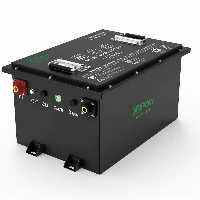
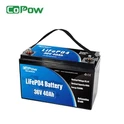
For 24V lithium trolling motor batteries, the 60-100Ah range is the most popular choice. If you are just engaging in casual fishing for a few hours in calm waters, a 60Ah battery is sufficient. However, if you need to be out on the water all day, contend with strong winds and rough waves, or participate in competitions, 100Ah is the standard configuration.
Of course, since you have chosen a 24V system, you have two options: use a single 24V monolithic lithium battery (which offers simpler wiring and saves space) or connect two 12V lithium batteries in series.
This article will guide you from the basics of series connections to real-world runtime testing, helping you avoid costly purchasing pitfalls and precisely identify the power solution best suited to your boat type and fishing style.

Understanding How a 24V Trolling Motor Battery System Works
Understanding how the 24V outboard motor system truly operates isn't just about squeezing more power from the engine; it's fundamentally about ensuring peace of mind when we head out to sea.
Creating a 24V System Using Two 12V Batteries in Series
In trolling motor applications, the most common way to achieve a 24V setup is by connecting two identical 12V batteries in series.
- The Connection: You connect the positive (+) terminal of the first battery to the negative (-) terminal of the second battery. The remaining positive and negative terminals are then connected to your trolling motor.
- The Physics: Connecting in series increases the voltage while the capacity (Ah) remains the same.
- Example: Two 12V 100Ah lithium batteries in series will result in a 24V 100Ah system, not 200Ah.
- Why Do This? Compared to a 12V system, a 24V system draws less current for the same amount of power. This reduces heat buildup in the wiring and increases the motor's overall efficiency.
Why is Voltage Matching Essential?
Trolling motors are engineered to operate within a specific input voltage range. If you have a 24V motor, your system must maintain approximately 24V (lithium batteries typically sit between 26V and 28V when fully charged).
- Circuit Compatibility: Internal components, such as control boards, MOSFETs, and wire windings, are rated for 24V pressure.
- Optimal Performance: The motor can only reach its rated thrust at the correct voltage. Insufficient voltage leads to a significant drop in power or a motor that fails to start.
- Lithium Consistency: When using two batteries in series, their voltages must be perfectly balanced. If one battery has a higher voltage than the other, the BMS (Battery Management System) may trigger a shutdown to protect the cells, causing your motor to cut out.
The Risks of Incorrect Matching
Attempting to run a 24V motor with the wrong voltage (such as using a 12V battery or a 36V system) presents serious risks:
Under-voltage (Running at 12V):
- The motor may fail to turn entirely.
- If it does run, it may draw excessive current to compensate for insufficient power, leading to overheated cables and potential damage to the motor brushes.
Over-voltage (Running at 36V+):
- Instant Failure: This will likely fry the sensitive electronic control modules inside the motor head.
- Warranty Voidance: Most major brands (like Minn Kota or MotorGuide) will deny warranty claims for overvoltage damage.
Battery Damage: Mixing an old battery with a new one, or combining batteries with different capacities (Ah) in a series string, can cause the "weaker" battery to over-discharge, leading to permanent damage or a potential fire hazard.

How Many Amp Hours (Ah) Do You Really Need?
The 100Ah model is currently the top choice for many anglers, offering just enough power for a moderate 6- to 8-hour fishing day. It handles demanding tasks like holding position against strong winds or slow trolling without breaking a sweat.
If you usually fish for just a morning or evening session in calm local reservoirs or lakes, an entry-level 50Ah to 60Ah battery is perfectly suitable-it's lightweight to carry and budget-friendly.
However, if you're a pro who frequently relies on GPS anchoring to hold steady in raging currents and high winds, you should opt for high-capacity options like 125Ah or even 150Ah to avoid the embarrassment of running out of power before heading back.
When crunching the numbers, keep this in mind: a 24V system motor at full speed consumes roughly 30-50 A per hour. By estimating your typical throttle usage, you can easily calculate your expected runtime.
Runtime Estimates for Common Battery Sizes (50Ah, 100Ah, 150Ah)
There is no one-size-fits-all answer when selecting battery capacity; the key lies in your personal fishing style. Since everyone's fishing rhythm and water conditions differ, you need to choose the 24V lithium battery specification that best suits your actual on-water habits.
Who is 50Ah for?
A 50Ah lithium battery is the top choice for lightweight setups and kayak enthusiasts. If you have a small boat or typically fish in calm inland lakes for shorter sessions (about 3-4 hours), 50 Ah is plenty. Its greatest advantage is the minimal weight, which significantly reduces the load on your transom or battery compartment. However, if you plan to use "Spot-Lock" in heavy wind or chop for an entire day, 50Ah might leave you with some battery anxiety by afternoon.
Who is 100Ah for?
100Ah is the "Gold Standard" and the most popular choice for 24V trolling motor systems. It is ideal for the vast majority of anglers who own 16-20-foot aluminum or fiberglass boats. This capacity supports 8-10 hours of typical fishing activity in moderate wind conditions for most people. If you aren't sure which size you need, 100Ah is the safest bet-it offers the perfect balance between weight, physical size, and runtime, making it the best value for your money.
Is 150Ah Overkill?
For the average hobbyist, 150Ah might be overkill, but for professional anglers or those in extreme conditions, it is a necessity. If you frequently navigate large rivers with swift currents, open waters with heavy swells, or need to fish for two consecutive days without a charge, 150Ah (or higher) provides absolute peace of mind. While it is heavier and takes up more space, it ensures your motor stays powered even after hours of high-throttle use. For a casual weekend angler, this extra capacity might just be unnecessary weight unless you are chasing total "power independence."
| Battery Capacity (Ah) | Ideal User / Scenario | Estimated Runtime | Key Advantage |
| 50Ah - 60Ah | Entry-level / Casual Anglers | 3 - 4 Hours (Calm Waters) | Ultralight and budget-friendly; perfect for short morning or evening sessions. |
| 100Ah | The Gold Standard / Most Anglers | 6 - 8 Hours (Moderate Intensity) | The perfect balance of performance and weight; sufficient for a full day of regular fishing. |
| 125Ah - 150Ah | Pro Anglers / Tournament Use | 8 - 10+ Hours (Extreme Conditions) | Massive power reserves to support long-term GPS anchoring and heavy wind resistance. |

Factors That Affect Battery Size Selection
The rated capacity is just a starting point. In real-world on-water conditions, multiple variables work together to determine exactly how much battery capacity you actually need.
- Boat Weight & Windage: Heavier fiberglass boats or those with T-tops (acting as sails) require more thrust. If you often fight wind or use Spot-Lock, aim for 100Ah or higher.
- Water Conditions: Strong river currents or tidal flows draw constant power. A 50Ah battery may drain by midday in these conditions, whereas 100Ah+ provides all-day security.
- Fishing Duration: For a standard 6–8-hour trip, 100 Ah is the "sweet spot." For multi-day trips without a charger or pro-tournaments, 150Ah is the best insurance.
- Space & Weight: A single 24V unit saves space and simplifies wiring. Two 12V batteries in series can help balance weight distribution in narrow hulls.
- BMS Discharge Rate: Ensure the battery's BMS supports your motor's max continuous draw (usually 50A). If the BMS is too weak, the battery will trip at high speeds.
Common Mistakes When Choosing a 24V Lithium Battery
When choosing a 24V lithium battery, many anglers get confused by the surface-level specifications. In reality, there are several common pitfalls; understanding and avoiding them in advance can save you thousands of dollars in unnecessary expenses.
- Ignoring BMS Discharge Rates: Many batteries have the right Ah, but a BMS continuously discharges below 50A. This causes the battery to trip and shut down when you run your motor at high speeds.
- Skipping Low-Temp Protection: Charging lithium below 0°C (32°F) causes permanent damage. If you fish in cold climates, a battery with a Low-Temp Cut-off or a self-heating function is non-negotiable.
- Mixing Brands or Ages: If wiring two 12V batteries in series, they must be identical in brand, capacity, and age. Mixing leads to voltage imbalance and premature battery failure.
- Using Old Lead-Acid Chargers: Lead-acid chargers don't have the correct profile to reach 100% charge, and their "desulfation mode" can actually damage a lithium BMS. Always use a dedicated LiFePO4 charger.
- Improper Mounting: Because lithium is so light, it tends to bounce in rough water. Without a secure battery tray or tie-down, you risk loose connections, terminal arcing, or casing cracks.
Copow 24V Lithium Batteries for Trolling Motors
The Copow 24V Lithium Battery is engineered specifically for performance-driven anglers, making it an ideal solution for upgrading the power of outboard motors. At its core, it utilizes premium LiFePO4 cells, delivering over 4,000 charge cycles. Its lightweight design and stable current output ensure your boat responds more sensitively and precisely during acceleration or when holding position against strong winds.
Tailored to the demands of 24V motors, Copow's built-in Battery Management System supports continuous high-current discharge exceeding 50A, guaranteeing that you won't experience sudden power cuts even at maximum throttle. Designed for real-world marine environments, its housing offers excellent waterproof and shockproof protection. Certain models also feature low-temperature charging protection, allowing you to charge safely on cold mornings without damaging the battery.
Whether you prefer a single 24V battery to save cabin space or need massive capacity for long-distance trips, Copow's high energy density and multi-year warranty provide peace of mind, letting you stay on the water with confidence and zero range anxiety.
Conclusion
When making your final decision on a battery for a 24V outboard motor, remember that capacity isn't just about range-it's your safety margin on the water. If you're paddling a kayak or running a small boat and value portability, a 50-60Ah battery will comfortably power for 3–4 hours on the water.
For most anglers seeking reliability and versatility, 100Ah is the go-to choice; it provides solid confidence for 8–10 hours even in moderately rough conditions, making it a truly all-around solution. Professional anglers or those frequently operating in strong currents, high winds, or multi-day trips should opt for 150Ah or higher to ensure ample power under extreme demands.
Whether you choose a single 24V battery or wire two 12V units in series, the key to avoiding costly mistakes is to verify that the BMS supports sufficient continuous current and includes low-temperature charging protection. Systems like Copow, engineered specifically for marine use, deliver over 50A of continuous discharge and comprehensive safety features, eliminating range anxiety so you can focus entirely on fishing.
The logic is straightforward: match the battery spec to your boat type, typical water conditions, and trip duration. Once you've made the right choice, all that's left is to cast your line and enjoy the water.
FAQ
How Many Amp Hours Do You Need for a 24V Trolling Motor?
Under normal conditions, a 24V 50Ah battery is generally sufficient for daily use. However, for more demanding applications-such as serious fishing-a 24V 100Ah battery is often a better choice. In fact, many users find that a 100Ah or higher-capacity battery is more suitable for achieving 6 to 8 hours of stable runtime.
As a general guideline, battery capacity can be estimated using the formula: Battery Capacity (Ah) = Current (A) × Usage Time (h)
Is a 50Ah Battery Enough for a 24V Trolling Motor?
For a 24V trolling motor, a 50Ah battery may be sufficient for light, occasional use. However, whether it is truly adequate depends on the intensity and duration of operation. If you are using the motor casually for short outings, a 50Ah battery can meet your needs. But for longer trips or more demanding usage, it may not provide enough runtime-and in some cases, it may not even last long enough to get you back.