Finding the best golf cart battery is no longer just about getting the vehicle moving; it is about unlocking its full potential through smarter power and long-term reliability. As golf carts evolve from simple course transport into high-performance neighborhood electric vehicles, their core component-the battery-is undergoing a massive technological transformation.
In this comprehensive guide, we will break down the most common battery types, explore why lithium batteries dominate the 2026 market, and review top brands like CoPow and Eco Battery to help you make the smartest investment for your ride.
The Three Most Common Types of Golf Cart Batteries
In the world of golf carts, your choice of battery directly impacts the vehicle's range, maintenance costs, and overall lifespan. The following are the three most common types of golf cart batteries currently on the market:
1. Lead-Acid Batteries
This is the most traditional and widely used type, often referred to as "deep-cycle lead-acid batteries." Their technology is very mature, and their primary advantage is the extremely low initial purchase cost, making them serviceable by almost any golf cart repair shop. However, their downsides are significant: they are very heavy, which adds strain to the vehicle, and they require regular maintenance, such as topping off with distilled water. If not maintained properly-such as through over-discharging or forgetting to add water-their lifespan will shorten considerably, typically lasting only 2 to 5 years.
2. AGM Batteries
AGM (Absorbent Glass Mat) batteries are an upgraded version of the traditional lead-acid battery. They feature a sealed design, which means no regular water maintenance is required and there is no risk of acid leakage. Due to their compact internal structure, AGM batteries offer better shock resistance and charge slightly faster than standard lead-acid batteries. While their initial price is higher than conventional lead-acid options, they are an excellent balanced choice for users who want a "set it and forget it" solution or those driving on bumpy terrain.
3. Lithium-Ion Batteries
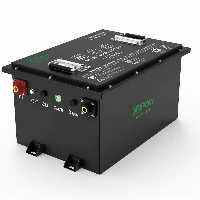
Lithium batteries are the premium choice in the golf cart industry and are rapidly replacing traditional options. Their core advantages are extremely light weight and an exceptionally long lifespan, often lasting over 10 years. Lithium batteries support "opportunity charging" without any "memory effect," and they provide consistent power output throughout the discharge cycle, meaning the cart won't slow down as the battery gets low. Although the upfront cost is the highest, lithium batteries are often the most cost-effective long-term solution when considering the zero maintenance, lower electricity costs, and extended replacement cycle.

What Are the Benefits of Choosing a Lithium Golf Cart Battery?
Choosing lithium batteries as the power source for your golf cart is the best way to boost vehicle performance, reduce long-term costs, and enjoy a modern driving experience.
Exceptional Lifespan: The cycle life of a lithium battery is typically 5 to 10 times longer than that of a lead-acid battery. This means that under normal use, a lithium battery can last over 10 years, eliminating the need for expensive replacements every 2 to 3 years.
Significant Weight Reduction: Lithium batteries are over 70% lighter than lead-acid batteries. This massive weight reduction minimizes wear and tear on tires, brakes, and suspension systems while making the cart faster and more agile.
Zero Daily Maintenance: Unlike lead-acid batteries that require regular acid checks and distilled water refills, lithium batteries are completely sealed. You don't have to clean up acid corrosion or worry about ruining the battery through neglect-it is truly "plug and play."
Faster Charging Speeds: Lithium batteries are highly efficient and can usually reach a full charge in just 2 to 3 hours, whereas lead-acid batteries often take 8 hours or more. Additionally, they support "opportunity charging," meaning you can top them up during a lunch break to significantly extend your daily range.
Consistent Power Output: This is one of the most noticeable advantages. Whether the battery is at 100% or 10%, it provides full power. Your golf cart won't lose speed or struggle on hills just because the battery charge is getting low.
Superior Long-Term Economy: While the initial purchase price is higher, lithium batteries are actually much cheaper over time. When you factor in the 10-year lifespan, zero maintenance costs, and lower energy loss, the average annual cost is far lower than that of lead-acid alternatives.

Top Golf Cart Batteries for 2026: Reviews & Comparisons
In 2026, the golf cart battery market has fully entered the "Lithium Era," with leading brands competing on intelligence, range, and adaptability to extreme environments.
Here is a review and comparison of the top golf cart batteries for 2026, featuring industry leaders and standout innovators:
1. Eco Battery (Best Overall Performance)
Eco Battery continues to hold a top spot in 2026, largely due to its unparalleled "turnkey" installation experience.
- Key Features: They offer complete, model-specific kits (for Club Car, EZGO, Yamaha) that include the charger, digital display, and mounting hardware.
- Performance: Known for an exceptional Bluetooth monitoring system and high continuous discharge currents, making them ideal for upgraded, high-speed carts.
- Verdict: While it carries a premium price tag, its durability and robust customer support make it the go-to for high-end users.
2. CoPow / Huanduy (Leader in Intelligence & Customization)
CoPow (manufactured by Huanduy) has become a major market force in 2026, recognized for integrating automotive-grade technology into the golf cart sector.
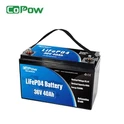
- Key Features: CoPow batteries utilize Grade A EVE cells and are equipped with a sophisticated Smart BMS.
- Advantages: Their products support a peak discharge current of up to 600A, ensuring that 4-to-6-passenger carts never lose power even on steep inclines. They also feature IP67 waterproof ratings, real-time monitoring via a dedicated Bluetooth app, and an external LCD for instant status checks.
- Verdict: CoPow is the ideal choice for those seeking heavy-duty performance and military-grade reliability. With a design life of 10 years, it offers some of the best long-term value in the industry.
3. RoyPow (Market Share Champion)
As an OEM partner for many major cart manufacturers, RoyPow remains a dominant player in 2026 due to its sheer reliability and accessibility.
- Key Features: Their S-Series and P-Series batteries are the industry standard for stability, commonly found in commercial fleet operations.
- Advantages: Excellent compatibility with almost all third-party controllers. The P-Series is specifically designed for heavy loads and rugged terrain, providing impressive torque.
- Verdict: If you want a brand proven by millions of users worldwide, RoyPow is the most "tried and true" option.
4. Vatrer Power (Best Value for Money)
In 2026, Vatrer has captured a large share of the DIY and budget-conscious market with an aggressive pricing strategy and solid specs.
- Key Features: For the same Amp-Hour (Ah) capacity, Vatrer is typically 15–20% more affordable than Tier 1 brands.
- Performance: They offer fast-charging capabilities and a significantly improved app interface for 2026 that makes monitoring intuitive.
- Verdict: For owners primarily using carts in flat neighborhoods or standard golf courses, Vatrer provides the best balance of cost and performance.
Key Factors to Consider When Buying a Golf Cart Battery
When buying a golf cart battery, you need to look beyond the price tag and focus on vehicle compatibility and the long-term ownership experience.
Voltage Matching: First, confirm your cart's system voltage (typically 36V, 48V, or 72V). If switching to lithium, the modern trend is to replace multiple small batteries with a single large unit (e.g., one 48V lithium battery replacing six 8V lead-acid batteries) to simplify wiring and shed weight.
Rated Capacity (Ah): This determines your driving range. Generally, 100Ah is sufficient for about 36 holes of golf. If you use your cart for long-distance commuting or in large gated communities, consider 105Ah or higher.
Discharge Capability: For modified, high-speed, or heavily loaded (4-6 passengers) carts, pay close attention to the "Peak Discharge Current." High-performance batteries like CoPow support up to 600A peaks, ensuring the cart won't stall when climbing steep hills or accelerating from a dead stop.
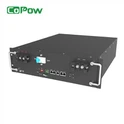
Battery Management System (BMS): The BMS is the "brain" of a lithium battery. A quality BMS prevents overcharging, over-discharging, short circuits, and overheating. Leading 2026 models often feature Smart BMS with Bluetooth connectivity, allowing you to check remaining capacity and battery health via a smartphone app.
Fit and Installation: Verify the dimensions of your battery tray. Choosing brands that offer "Plug-and-Play" installation kits (including brackets, spacers, and cables) will save you significant time and frustration.
Climate Adaptability: If you live in a cold climate, ensure the battery has a "Low-Temperature Self-Heating" function. Lithium batteries cannot charge below 0°C (32°F); a heating element ensures the battery remains functional throughout the winter.
Warranty and Support: A battery is a long-term investment. Prioritize brands that offer 5 to 10-year warranties and have a solid reputation for technical support (such as CoPow) to ensure peace of mind.

Final Thoughts: Choosing the Best Battery for Your Needs
In 2026, choosing the right battery for your golf cart is no longer just a minor performance tweak-it is a complete reinvention of your driving experience. While lead-acid batteries have served faithfully for decades, the full arrival of the lithium era marks the end of frequent maintenance and fluctuating power.
By investing in a top-tier power solution like CoPow or Eco Battery, you are acquiring far more than just an energy storage device; you are securing a commitment to efficiency, freedom, and foresight. You are trading shorter charging windows for longer horizons and a lighter chassis for sharper, more agile handling.
Do not let outdated battery technology limit your journey. Choose the power source that best fits your needs, and ensure that every departure is met with confidence and every mile is driven with relentless momentum.