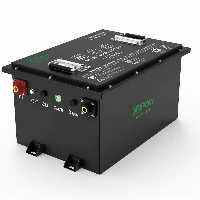
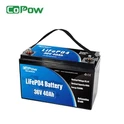
Is a 100Ah golf cart battery truly enough to handle a busy day? In a 48-volt system, the real-world performance of that 4.8 kilowatt-hours often determines whether you cruise effortlessly for 50 kilometers or end up pushing your cart halfway.
By tracking real cases of the Copow 100Ah lithium battery, this article contrasts the vast gaps between lithium and lead-acid batteries in depth of discharge, weight, and lifespan. We break down the true range limits of a 100Ah capacity under various terrains and loads to help you make the smartest decision for your power upgrade.

What Does 100Ah Really Mean for a Golf Cart?
Think of 100Ah as the fuel tank capacity for your golf cart. If your motor draws 50 amps per hour, this battery will keep you running for two continuous hours. While this capacity is usually enough to complete 36 holes or cover 40 to 50 kilometers, the real-world difference between old lead-acid batteries and modern lithium ones is huge.
The key lies in how much power you can actually use with confidence. Although a lead-acid battery is labeled 100Ah, you typically need to recharge it once it reaches 50% to avoid damaging it. Lithium batteries are much tougher; nearly all of that 100Ah is usable, and even when only 10% remains, your cart still runs with plenty of power.
How Far Can a 100Ah Battery Take Your Golf Cart?
A 48V 100Ah lithium battery pack can provide roughly 30 to 40 miles (48 to 64 kilometers) of range on flat terrain.
1. "Effective Stamina" Defined by Battery Type
Even if both are labeled 100Ah, lithium and lead-acid batteries perform very differently in the real world. Lead-acid batteries are limited by "Depth of Discharge" (DoD), where voltage drops significantly after using about 50%, leaving the cart sluggish on hills-essentially cutting your practical range in half. Lithium batteries, however, can provide stable power through 90% or more of their capacity. Plus, since lithium is often 200+ lbs lighter than lead-acid, this "weight loss" allows the cart to travel much further.
2. Voltage Platforms and Total Energy
Range isn't just about Ah (capacity); it's about the total energy stored. The formula for total energy is

(where V is voltage and Q is charge in Amp-hours). A 48V 100Ah system holds 4.8 kWh of energy, whereas a 36V 100Ah system holds only 3.6 kWh. Higher voltage systems carry more "fuel" in the tank, allowing for longer distances at the same current draw.
3. Terrain and Load Burdens
Power consumption fluctuates wildly based on your environment. Driving on flat, manicured turf or pavement is highly efficient. However, if you are frequently traversing steep hills or carrying four adults with heavy golf bags, the current draw spikes, and your 100Ah range could shrink by 30% to 50%.
4. Driving Habits and Speed
Frequent stopping and starting is a major "range killer." The motor requires a massive surge of current to get moving from a standstill compared to maintaining a steady cruise. If you have a "lead foot" or engage in constant stop-and-go driving, you will drain those 100 Amp-hours much faster than you would at a moderate, consistent pace.
Is 100Ah Enough for a 36V or 48V Golf Cart?
If you choose lithium batteries, 100Ah is the gold standard for personal use. In a 48-volt system, it stores 4.8 kilowatt-hours of energy, while a 36-volt system holds 3.6 kilowatt-hours. For a 48-volt lithium golf cart, this capacity easily covers two rounds of 18 holes, or about 50 to 60 kilometers. Plus, since lithium batteries are lightweight, the motor works less hard, and you will hardly notice any drop in power even when the battery is nearly empty.
However, using a 100Ah lead-acid battery feels much tighter. Lead-acid batteries have a limitation: to avoid damaging them, you should typically only use up to 50% of their capacity. This means that although labeled as 100Ah, only 50Ah is practically usable. If you are carrying full passenger loads or climbing steep hills, you might start worrying about running out of power before getting home. This is especially true for 36-volt systems; due to the lower voltage, climbing hills consumes current faster, causing that 100Ah capacity to deplete much more quickly.
100Ah Lithium vs 100Ah Lead-Acid: Big Difference
Even though both labels say 100Ah, in the world of golf carts, it is essentially a showdown between a "half-empty tank" and "real-deal energy."
- Usable Capacity: Lead-acid only gives you 50% (degrading quickly if pushed further), meaning you only get 50Ah. Lithium provides 95% of its capacity. Range is effectively doubled.
- Weight Gap: Lithium is over 200 lbs (100 kg) lighter. It's like kicking two adult passengers out of the cart, making it faster and more efficient.
- Power Delivery: Lead-acid suffers from "voltage sag" on hills, slowing the cart down. Lithium maintains steady voltage for consistent climbing power even at 10% charge.
- Lifespan & Cost: Lead-acid lasts 2–3 years and requires constant watering. Lithium lasts 10+ years with zero maintenance.
Who Should Choose a 100Ah golf cart Battery?
The people best suited for a 100Ah battery are easy to identify. If you only play golf occasionally or use your cart as a neighborhood runabout, this capacity will easily last you several days.
If you are tired of lead-acid batteries losing power before you have gone far and want a worry-free solution that eliminates the fear of being stranded halfway, this is the right choice. Or, if you prefer a nimble ride and do not want to lug around hundreds of pounds of batteries, the light weight and strong performance of a 100Ah lithium pack will make you feel the investment was well worth it.
- Standard Golfers: If you typically play 18 to 36 holes in a day, a 100Ah lithium battery is more than enough. It ensures you can finish your rounds and still have plenty of juice to drive back to the parking lot or your home.
- Community Commuters: If your cart is primarily used for getting around large neighborhoods, retirement communities, or resorts (traveling under 20–30 miles per day), 100Ah is the most cost-effective choice. You aren't paying for extra capacity or weight you don't need.
- Performance Seekers: For those looking to upgrade from heavy lead-acid batteries to improve hill-climbing power and acceleration. A 100Ah lithium kit can instantly shed over 200 lbs from your cart, making it feel brand new.
- The "Set It and Forget It" Crowd: If you're tired of checking water levels and cleaning terminal corrosion every month, 100Ah lithium is ideal. With a 10-year lifespan and zero maintenance, it's a favorite for residential owners.
When Should You Upgrade to 150Ah or 200Ah Instead?
While 100Ah is the go-to choice for most people, there are definitely situations where you should consider stepping up to 150Ah or even 200Ah.
- All-Day Commercial Use: If your cart is used in large resorts, gated scenic areas, or rental fleets-operating for over 8 hours a day or covering more than 50 miles (80 km)-a 150Ah or 200Ah battery ensures you won't have to stop for a midday charge.
- Extreme Terrain Challenges: If you live in a very hilly community or play on courses with constant steep inclines, the motor draws massive current during climbs. A higher capacity battery provides a more stable range and can typically handle higher continuous discharge rates without overheating.
- Heavy Multi-Passenger Vehicles: Six-seater or eight-seater "limo carts" are much heavier. When fully loaded with passengers, they consume 1.5 to 2 times the power of a standard two-seater. To maintain a reasonable driving radius, 150Ah or 200Ah is the standard for these heavy-duty carts.
- High-Power Accessories: If your cart is tricked out with high-wattage sound systems, intense LED light bars, or even a portable fridge or AC unit, these electronics constantly "steal" energy while you drive. Increasing battery capacity is the smartest way to offset this extra drain.
Real-World Example: 100Ah golf cart Battery in Daily Use
User: Steve, a resident of a golf community in Florida. He uses his cart daily for 18-hole rounds and as his primary mode of transportation within the neighborhood. Equipment: A standard 48V golf cart (originally equipped with six 8V lead-acid batteries). Solution: Upgraded to four Copow 12V 100Ah Lithium batteries connected in series.
1. Energy Calculation: How Big is Your "Fuel Tank"?
By connecting four Copow batteries in series, the total voltage is 48V with a capacity of 100Ah.

Compared to lead-acid batteries, Copow LiFePO4 batteries have a Depth of Discharge (DoD) of 90%-100%. This means Steve can use almost all 4.8 kWh of energy, whereas lead-acid batteries can typically only use 50% without risking permanent damage.
2. Daily Usage Scenario Analysis
| Activity | Distance Traveled | Estimated Energy Consumed |
| Morning: 18-hole Golf Round | ~6 miles (10 km) | ~1.8 kWh |
| Noon: Lunch and neighborhood errands | ~3 miles (5 km) | ~0.8 kWh |
| Afternoon: Grocery shopping/Visiting friends | ~3 miles (5 km) | ~0.8 kWh |
| Total Daily Usage | ~12 miles (20 km) | ~3.4 kWh |
Remaining Capacity: After a day of high-frequency use, Steve's Copow battery pack still has approximately 30% charge remaining. Even without an immediate charge, he has full confidence the cart will last until the next morning.
Conclusion - Is 100Ah Enough for You?
Ultimately, a 100Ah battery is more than just a number on a spec sheet; it is the turning point that truly brings your golf cart to life. With old lead-acid batteries, you were constantly worrying about the gauge and fearing a breakdown halfway, but Copow's lithium solution lets you harness the full, real-world potential of that 100Ah capacity.
For most people using their cart for neighborhood trips or playing golf, swapping in this battery is not just replacing a part-it is a performance investment that delivers peace of mind from start to finish.
Once you realize you no longer have to mess with battery water every month or worry about losing power on hills, you will see that a Copow battery saves you more than just maintenance costs; it gives you back the simple joy of driving whenever and wherever you want.
FAQ
What Is the Difference Between 100Ah and 150Ah Golf Cart Batteries?
A 150Ah battery offers approximately 50% more energy capacity than a 100Ah battery. Under the same voltage and operating conditions, it delivers longer runtime and more stable voltage output, especially under heavy loads or when climbing hills. However, a 150Ah battery is typically larger, heavier, and more expensive.
What Is the Difference Between 50Ah and 100Ah Lithium Batteries for Golf Carts?
A 100Ah battery offers twice the energy capacity of a 50Ah battery. Under the same voltage and operating conditions, it can deliver roughly twice the runtime, making it a better choice for golf carts that require longer operation or handle higher loads, such as climbing hills or carrying multiple passengers.
In contrast, a 50Ah battery is lighter, more compact, and more affordable, making it better suited for short-distance or light-duty applications; however, its runtime is more limited.
What Is the Difference Between 100Ah and 105Ah Lithium Batteries?
The difference between 100Ah and 105Ah lithium-ion batteries is very small, with a capacity difference of only about 5%.