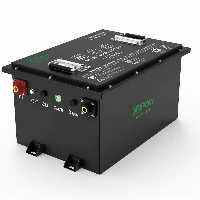
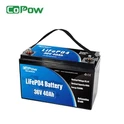
As we all know, 12V batteries are commonly used for starting cars, powering RVs, small fishing boats, and small-scale solar energy storage systems. So, how long do they actually last? What is their physical lifespan? And how long does a single charge last?
12V batteries primarily include 12V flooded lead-acid batteries, 12V AGM lead-acid batteries, 12V gel batteries, 12V traction-type gel batteries, 12V LiFePO₄ batteries, 12V ternary lithium batteries, and the newly launched 12V sodium-ion batteries.
Among these, 12V flooded lead-acid batteries and 12V lithium iron phosphate (LiFePO4) batteries are the two most widely used types and represent the primary direction of transition from lead-acid to lithium-ion batteries. Below is a comparison chart of the service life of each type of 12V battery for your reference:
| 12V Battery Type | Lifespan | Cycle Life | Main Characteristics |
|---|---|---|---|
| 12V Flooded Lead-Acid Battery | 2–5 years | 200–500 cycles | Low cost and widely available, but requires regular maintenance and has poor deep-cycle capability. |
| 12V AGM Lead-Acid Battery | 4–7 years | 300–700 cycles | Maintenance-free, vibration-resistant, and suitable for RVs, marine applications, and backup power systems. |
| 12V Gel Battery | 5–8 years | 500–1,000 cycles | Better deep-cycle performance than standard lead-acid batteries and suitable for solar storage and off-grid applications. |
| 12V Traction Gel Battery | 10–15+ years | 1,000–1,500 cycles | Uses thicker plates and a deep-cycle design for frequent cycling and long-term industrial applications. |
| 12V LiFePO4 Battery (Lithium Iron Phosphate) | 8–15 years | 2,000–6,000+ cycles | Long service life, high usable capacity, low maintenance, excellent safety, and increasingly popular for RV, marine, solar, and power applications. |
| 12V NMC Lithium Battery (Nickel Manganese Cobalt) | 5–10 years | 1,000–3,000 cycles | Higher energy density than LiFePO4, but with lower thermal stability and safety margins. |
| 12V Sodium-Ion Battery | 8–15 years | 3,000+ cycles | Excellent low-temperature performance, high safety, and potential cost advantages; still in the commercialization stage. |

How Long Does A 12V Battery Last On A Single Charge?
We've just discussed the service life of a 12V battery. We've also learned that many of you are interested in its runtime. Next, we'll provide a detailed explanation:
You can use the following formula to estimate runtime: Runtime ≈ Battery Capacity (Ah) × Voltage (V) × Utilization Rate ÷ Device Power (W).
A 12V, 100Ah battery has a theoretical energy storage capacity of approximately 12V × 100Ah = 1,200 Wh (watt-hours). If connected to a 100W device, it can theoretically run for 1,200 Wh ÷ 100W ≈ 12 hours. Taking into account energy losses during actual use, you can expect approximately 10–11 hours of runtime. This applies when using a 12V lithium-ion battery (lithium iron phosphate battery). If you are using a lead-acid battery, the runtime will be even shorter.
A 12V flooded lead-acid battery will last only about 6–7 hours, while 12V gel and AGM deep-cycle batteries perform slightly better, lasting approximately 7–9 hours.
How Long Can A 12V Battery Run Different Devices?
The runtime values below are based on a 12V 100Ah battery; for batteries of different capacities, the values must be adjusted proportionally.
For example, the theoretical runtime of a 12V 200Ah battery is approximately twice that of a 12V 100Ah battery. However, actual runtime may also be affected by factors such as inverter efficiency, ambient temperature, battery age, and depth of discharge.
| Device | Power Consumption | Lead-Acid Battery Runtime | AGM/Gel Battery Runtime | LiFePO4 Battery Runtime |
|---|---|---|---|---|
| LED Lights | 5–20W | 50–120 hours | 70–150 hours | 100–200 hours |
| WiFi Router | 10–15W | 40–70 hours | 60–90 hours | 80–120 hours |
| Phone Charging Station | 5–20W | 50–150 charges | 80–200 charges | 150–300 charges |
| Laptop | 40–70W | 8–12 hours | 12–18 hours | 15–25 hours |
| Tablet | 10–20W | 30–60 hours | 50–100 hours | 80–150 hours |
| LED TV | 50–100W | 6–12 hours | 10–15 hours | 12–25 hours |
| Refrigerator (RV/Marine) | 40–80W (average) | 10–15 hours | 15–25 hours | 20–40 hours |
| Portable Freezer | 50–100W | 8–12 hours | 12–18 hours | 18–30 hours |
| Ventilation Fan | 20–50W | 15–40 hours | 25–60 hours | 40–80 hours |
| CPAP Machine | 30–60W | 10–20 hours | 15–30 hours | 20–40 hours |
| Water Pump | 50–150W | 4–10 hours | 8–15 hours | 10–25 hours |
| Marine Fish Finder | 5–20W | 50–150 hours | 80–200 hours | 100–250 hours |
| Trolling Motor (Low Speed) | 100–300W | 2–6 hours | 3–8 hours | 4–10 hours |
| Electric Winch | 500–1500W | Short-term use only | Short-term use only | Short-term use only |
| Small Inverter (300W Load) | 300W | 1–2 hours | 2–3 hours | 3–4 hours |
| Microwave Oven | 800–1200W | Not Recommended | Less than 1 hour | 30–60 minutes |
| Coffee Maker | 800–1500W | Not Recommended | Less than 1 hour | 30–60 minutes |
| Air Conditioner (Small RV AC) | 800–1500W+ | Not Suitable | Not Suitable | Requires Large Battery Bank |
What Factors Affect The Lifespan Of A 12V Battery?
Let's continue to look at the factors that affect the service life of a 12V battery:
1. Operating Temperature
Different types of 12V batteries react differently to temperature. Take 12V LiFePo4 batteries used in fishing boats, for example: their operating temperature range is -20°C to 60°C, and they are virtually unaffected by temperature.
However, for lead-acid batteries, this issue is magnified. If temperatures are too high, the rate of internal chemical reactions accelerates, and self-discharge occurs more rapidly, leading to electrolyte evaporation, plate corrosion, and ultimately permanent capacity loss. Additionally, during the winter, both the power output and capacity of lead-acid batteries decrease.
2. Depth of Discharge (DoD)
Even if different types of batteries have the same capacity, you may need to treat them differently, as the amount of capacity used each time directly affects their cycle life.
For lead-acid batteries (including flooded, AGM, and gel batteries), the industry generally recommends that the depth of discharge should not exceed 50%. If a battery is used too frequently and is often discharged to less than 20% of its capacity, this will accelerate plate sulfation, leading to a permanent decrease in battery capacity.
However, for 12V LiFePO4 batteries used in RVs, you have more flexibility. You can safely use 80% to 90% of the rated capacity without affecting the battery's performance, thereby eliminating range anxiety.
3. Charging Practices
12V lead-acid batteries should be charged using a dedicated lead-acid charger, and 12V lithium batteries should be charged using a dedicated lithium battery charger. Never mix the two, as doing so will damage the batteries.
It is important to note that once a lead-acid battery is fully charged, the power should be disconnected immediately to avoid overcharging, which can shorten the battery's service life.
4. Usage Frequency and Charge Cycles
Lead-acid batteries have a charge-discharge cycle count of only 300–1,000 cycles, while lfp batteries can reach 2,000–5,000 cycles or even more. The higher the cycle count, the longer the battery life. For solar energy storage systems, RVs, and marine systems that require daily cycling, cycle count is often more critical than calendar life.
5. Battery Chemistry and Construction
It goes without saying that the type of battery is a key factor in determining its lifespan.
6. Maintenance and Installation
Maintenance is essential for 12V batteries. While lead-acid batteries may require more attention, lithium batteries also need to be inspected regularly.
7. Standby Time and Parasitic Drain
If the battery is not charged to at least 50% before long-term storage, it will naturally discharge to 0%, resulting in over-discharge. Over-discharge can shorten the battery's lifespan, and lithium-ion batteries are no exception.
How Can You Extend The Life Of A 12V Battery?
Based on the factors above that affect the lifespan of a 12V battery, it's clear what steps should be taken. We've summarized them for you:
1. Avoid Deep Discharge
2. Use The Correct Charger
3. Keep The Battery At A Proper State Of Charge
4. Control Operating Temperature
5. Perform Regular Maintenance
6. Prevent Corrosion And Poor Connections
7. Avoid Long-Term Overcharging
How Do You Know When A 12V Battery Needs To Be Replaced?
We can assess this based on the following factors: capacity degradation, output performance, state of charge, and physical condition:
1. Reduced Runtime Or Capacity Loss
This is the most straightforward way to tell: if a fully charged 12V battery can no longer power the same device as it used to, it means the battery's capacity has significantly decreased.
2. Battery Voltage Drops Too Quickly
If you notice an abnormal drop in voltage in a 12V battery during discharge, you should take note, as this may indicate a problem with its storage capacity.
3. Difficulty Holding A Charge
A 12V battery that has just been fully charged-even though it clearly still has plenty of charge left and hasn't been used much-has somehow lost its charge on its own. This is something to watch out for.
Common symptoms include:
- A noticeable drop in battery charge after being parked for a few days;
- Longer charging times but shorter usage times;
- The charger quickly indicates a full charge, but the actual capacity is insufficient.
4. Frequent Charging Is Required
As a battery ages, its energy storage capacity gradually decreases, requiring more frequent recharging. For example, a brand-new 12V battery will initially last a long time on a single charge, but after one year, the runtime per charge will be significantly shorter.
5. Slow Or Weak Power Output
In applications requiring high current output-such as starting a car, powering electric boats, and operating electric equipment-batteries may experience insufficient output capacity as they age.
Common issues include:
- Difficulty starting the vehicle.
- Lack of acceleration in the motor.
- The inverter frequently triggers low-voltage protection.
- Reduced operating time for marine motors.
6. Physical Damage Or Abnormal Appearance
If the battery shows signs of obvious damage, you should consider replacing it.
For example:
- A bulging lead-acid battery casing
- Electrolyte leakage
- Severe corrosion of the terminals
- Abnormal battery overheating
Conclusion
We hope that this overview has given you a deeper understanding of 12V batteries. The service life, single-charge runtime, and actual performance of a 12V battery depend not only on voltage and capacity but are also influenced by factors such as battery type, usage patterns, charging and discharging habits, and operating environment.
Thanks to their higher cycle life, stronger discharge capacity, lower maintenance requirements, and more stable output performance, LiFePO4 batteries have become the mainstream choice for RVs, boats, solar energy storage, and other deep-cycle applications.
CoPow is a professional 12V LiFePO4 battery manufacturer. If you would like to learn more, please feel free to contact us at any time. Our battery R&D engineers will respond to your message within 24 hours.