Everyone says that lithium iron phosphate batteries are great, but what exactly makes them so good? Do they really have no drawbacks?
To avoid running into pitfalls, it's important to gain a comprehensive understanding of their pros and cons-not just focus on the positives-and then compare them with other battery types. Only after careful consideration can we reach a conclusion about which type of battery to choose.
This article is written to provide you with a solid basis for making that decision.

What Is A LiFePO4 Battery?
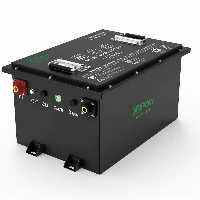
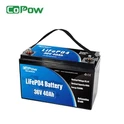
Lithium iron phosphate (LFP) batteries are a type of lithium-ion battery that uses lithium iron phosphate (LiFePO₄) as the cathode material and graphite as the anode material; they represent an important branch of lithium-ion battery technology.
Unlike common ternary lithium batteries (NMC/NCA), LiFePO4 batteries do not rely on metal elements such as nickel and cobalt; instead, they use more stable and abundant materials such as iron and phosphorus. This gives LiFePO₄ batteries significant advantages in terms of safety, cycle life, and long-term stability.
The consistent performance of lithium iron phosphate batteries relies heavily on the intelligent management provided by the battery management system. The BMS monitors battery voltage, temperature, current, and state of charge, and performs functions such as overcharge protection, over-discharge protection, overcurrent protection, short-circuit protection, temperature protection, and cell balancing.
For high-performance applications, such as golf carts, forklifts, energy storage systems, and marine batteries, simply selecting LiFePO₄ cells is not enough. The structural design of the battery pack, BMS strategies, cell consistency, thermal management design, and manufacturing processes all directly impact the final performance.

Advantages Of LiFePO4 Batteries
As a cutting-edge battery technology, its advantages have been widely recognized:
Extremely Durable
LiFePO4 batteries are renowned for their long service life.
Even standard LiFePO4 battery cells can withstand more than 3,000–5,000 charge-discharge cycles, with a service life of at least 8 years. With advances in cell technology, today's LiFePO₄ cells (such as those from CATL and EVE Energy) have a cycle life exceeding 6,000 cycles and a service life of up to 10 years.
Whether you use them as 12V RV batteries, 24V marine batteries, or 48V golf cart batteries, LiFePO4 batteries are a top-tier choice that outlast other battery types.
The actual usable capacity is close to the theoretical capacity.
To give an example, with a lead-acid battery, if you don't want it to wear out too quickly, you should stop using it once it reaches about 70% capacity and let the battery rest, because it has a very low tolerance for deep discharge.
With LiFePO4 batteries, however, you can use up to 90% of their capacity-20% to 30% more than lead-acid batteries. This means that when driving a golf cart, the runtime will be extended by 2 to 4 hours without affecting the battery's lifespan.
More Stable Power Output
As we all know, lead-acid batteries lose power over time, especially when the charge level drops below 40%. You may notice that electric vehicles such as boats and golf carts struggle to accelerate.
This is because, as a lead-acid battery discharges, its voltage continuously drops while its internal resistance steadily increases.
When the motor requires a high current output, the battery terminal voltage drops, preventing the controller from continuously supplying sufficient power to the motor, which results in progressively weaker performance. In contrast, LiFePO4 batteries have a flatter discharge curve; even when the charge level drops to 10%, the output voltage remains close to that of a fully charged battery, ensuring consistently strong performance.
Safer
The safety of LiFePO4 batteries stems from their cathode material, thermal stability, structural design, and intelligent battery management system. While ternary lithium batteries may pose a risk of fire or explosion, lithium iron phosphate batteries do not have this issue.
This characteristic makes LiFePO4 batteries particularly well-suited for applications where people are in close proximity to the batteries and ventilation is limited, such as RV living battery systems, off-grid energy storage systems, small boats, golf carts (e.g., EZGO, Club Car), electric forklifts, as well as residential, commercial, and industrial energy storage equipment, robots, and robotic vacuum cleaners.
Lighter
Take a 24V lithium iron phosphate marine battery as an example: it is about 65% lighter than a 24V lead-acid battery, typically weighing only around 22 kg. For fishing boats, the lighter weight frees up more space and allows for greater power output; for off-grid living enthusiasts, it makes transportation much easier. Lithium iron phosphate batteries with lightweight casings can reduce weight by as much as 70%.
Easier Maintenance
We all know that using LiFePO4 batteries means no more worries about topping off electrolyte or cleaning corroded terminals, but just how convenient is it? Is it really completely maintenance-free?
Let's hear what our customer MIMI (a user of a small off-grid solar system in Queensland, Australia) has to say: " When I used lead-acid batteries, I had to frequently check the electrolyte level, clean corrosion off the terminals, and pay special attention to whether the batteries were over-discharged. If I was away from my vacation cottage for several weeks in a row, I was always worried that I'd come back to find the batteries had discharged below 0%, causing permanent capacity loss.
But after switching to lfp batteries, maintenance has become much simpler-no more need to top off distilled water or perform equalization charging.
Now, I just check the charge level, temperature, and operating status on my phone from time to time, and occasionally verify that the connections are secure.
Of course, LiFePO4 batteries aren't completely maintenance-free. Since summers in Queensland can get quite hot, I still make sure to install the batteries in a well-ventilated area away from direct sunlight, and I charge them to about 50% before long-term storage. But compared to before, maintenance has gone from a frequent chore to a minor task that takes just a few minutes to check every now and then."
Fewer line losses mean more efficient power transmission.
This applies to small-scale solar energy storage systems and off-grid living. As many people may know, line losses in a 24V battery are much lower than in a 12V battery.
This means more electrical energy can actually be delivered to appliances such as refrigerators, televisions, routers, fans, computers, rice cookers, and microwaves. While this is an optimization at the voltage level, the type of battery also plays a significant role.
LiFePO4 batteries maintain a more stable voltage plateau during discharge. Even when more than half of the battery's capacity has been depleted, the output voltage remains steady. This means the inverter receives a more stable DC input, resulting in a more stable AC output.
For appliances with high startup currents-such as refrigerator compressors, water pumps, rice cookers, and microwaves-there will be no startup difficulties or power shortages due to momentary voltage drops, and the inverter won't even trigger a low-voltage alarm or shut down automatically.
Higher Charging Efficiency
LiFePO4 batteries charge much faster than lead-acid batteries because they can handle higher charging currents, which only gradually decrease once the state of charge reaches over 90%-much like a "big eater."
In contrast, the charging process for lead-acid batteries is more complex; particularly in the later stages of charging, they enter an absorption charging phase. At this point, the charging current drops rapidly, and it takes a long time to fully charge the final 20% of the battery capacity.
As a result, most lead-acid batteries require 8 hours to charge, while lithium-ion batteries take only 1–3 hours.
For operators of golf cart fleets and electric forklift fleets, this significantly reduces downtime. They simply need to fully charge the batteries during breaks before resuming operations.
Lower Self-Discharge Rate
When batteries are stored for long periods, many people overlook the fact that they naturally discharge.
This is why many boat owners, after storing their batteries for a long time during the winter, find that they are completely dead when they try to use them in the spring-or even unable to be charged (because the battery management system's low-voltage protection feature has been triggered).
LiFePO4 batteries have a self-discharge rate of only 2% to 3%, so even after six months of storage, they will not lose much charge. Of course, before storage, the batteries should be charged to 50% capacity.
More Environmentally Friendly
LiFePO4 batteries use lithium iron phosphate as the cathode, graphite as the anode, an organic lithium salt electrolyte, and a polyolefin (PE/PP) separator. They contain no lead, cadmium, or mercury and pose no risk of acid leakage, resulting in a lower environmental impact.
Although its recycling system is not yet as well-developed as that for lead-acid batteries, it is still more in line with the principles of sustainable development than other types of batteries.
Supports Higher Discharge Rates
The discharge rate determines the amount of power a battery can deliver in a short period of time. A 100Ah battery does not necessarily mean it can continuously output a 100A current.
It is important to understand the concept of the C-rate, which indicates a battery's discharge capacity relative to its rated capacity.
For example:
- Under 1C discharge conditions: A 100Ah battery can continuously deliver a current of 100A.
- 2C discharge: A 100Ah battery can continuously deliver a current of 200A;
- At a 0.5C discharge rate: a 100Ah battery can only sustain a current of 50A.
Due to the relatively slow rate of internal chemical reactions, lead-acid batteries are not suitable for sustained high-rate discharge. The sustained discharge capacity of many standard lead-acid batteries is only about 0.2C to 0.3C, meaning that a 100Ah lead-acid battery can only deliver a stable current of 20A to 30A over the long term.
In contrast, LiFePO4 batteries utilize a different electrochemical system, featuring lower internal resistance, faster lithium-ion migration, and a more stable crystal structure, enabling them to support higher-rate charging and discharging.
Take a common 100Ah LiFePO4 battery as an example:
- Standard energy-storage LiFePO4 batteries support a sustained discharge rate of 1C, meaning a continuous output of approximately 100A;
- high-performance LiFePO4 batteries designed for propulsion can support continuous discharge at 2C or even higher rates.
- Short-term peak output can reach 3C, 5C, or even higher.
In golf cart applications, LiFePO4 batteries can maintain stable voltage output over extended periods.
Similarly, in marine applications, electric boat propellers and trolling motors experience instantaneous current spikes when starting or shifting to high speeds. If the battery's discharge capacity is insufficient, the propeller may fail to reach its designed power output; however, high-rate LiFePO4 batteries can respond quickly to load changes, providing a more stable power supply to the motor.
This also applies to high-power inverter systems (such as those in RVs and off-grid solar systems): when a 3,000-watt inverter is connected to a 12-volt battery, the theoretical operating current may exceed 200 amps. If the battery cannot provide sufficient current, the system is prone to low-voltage protection, inverter shutdown, or even failure to start.
Wider Operating Temperature Range
Lithium iron phosphate batteries can operate normally within a temperature range of -20°C to 60°C, which means they will not overheat, let alone explode, nor will they cause equipment to shut down due to high temperatures.
In environments below zero degrees Celsius, the performance of lithium iron phosphate batteries may be somewhat affected, but with a preheating function, they can still discharge and charge normally.
For example, electric forklifts operating in cold storage facilities require this type of battery to ensure the smooth operation of the warehouse and to enable frozen goods to enter the cold chain transportation process in a timely manner.

Disadvantages Of LiFePO4 Batteries
Every type of battery has its drawbacks, and lithium iron phosphate batteries are no exception. Let's take a look at what those drawbacks are:
Higher Price
A single lithium iron phosphate battery costs as much as two or three lead-acid batteries. For example, a 48-volt lithium iron phosphate battery for a golf cart costs at least $800. In contrast, while lead-acid batteries are indeed more economical initially, they may end up costing more over the long term. We should understand that what seems free is often the most expensive.
In low-temperature environments, an automatic heating module must be installed.
Lithium iron phosphate batteries cannot be charged directly in low-temperature environments; they must first be heated to room temperature before they can be charged normally. Otherwise, the battery management system's low-temperature charging protection will be triggered frequently, which may even result in battery damage. An automatic heating module can resolve this issue, but it entails additional costs.
Excessive smart features aren't necessarily a good thing.
You'll need to familiarize yourself with and adapt to the battery management system and Bluetooth monitoring app-just like the transition from feature phones to smartphones. This takes time; it might seem difficult at first, but once you experience their convenience, I'm sure everyone will come to accept them.
When selecting a lithium iron phosphate battery, you should pay special attention to the design of the battery management system to ensure that its protective features don't become a burden. We've seen far too many customers experience frequent power cuts due to improperly set protection thresholds in the battery management system-even though the batteries themselves were in perfect working order.
Its energy density is slightly lower than that of other lithium-ion batteries.
The advantages of LiFePO4 batteries lie primarily in their exceptionally long service life and safety. In terms of energy density, it ranges from approximately 140 to 170 Wh/kg.
This means that when space and weight are limited, their energy storage capacity may be slightly inferior to that of some high-energy-density lithium-ion batteries.
Therefore, in applications where extreme lightweight design and ultra-long runtime are prioritized, LiFePO4 batteries are not the optimal choice. However, they are particularly well-suited for vehicles and equipment that require high durability, such as RVs, small boats, solar energy storage systems, golf carts, and electric forklifts.

LiFePO4 Battery vs Lead-Acid Battery vs Other Lithium Batteries
The table below provides a comprehensive comparison of LiFePO4 batteries, lead-acid batteries, and other lithium-ion batteries (primarily ternary lithium NMC/NCA) across multiple dimensions, including chemical composition, performance, safety, lifespan, cost, and application scenarios.
| Comparison Item | LiFePO₄ Battery (Lithium Iron Phosphate) | Lead-Acid Battery | Other Lithium Batteries (NMC/NCA, etc.) |
|---|---|---|---|
| Battery Type | Lithium-ion battery using lithium iron phosphate as the cathode material | Traditional rechargeable battery using lead dioxide and lead electrodes | Lithium-ion battery using nickel-based cathode materials such as NMC (Nickel Manganese Cobalt) or NCA (Nickel Cobalt Aluminum) |
| Cell Voltage | 3.2V nominal | 2.0V nominal | Around 3.6–3.7V nominal |
| Common Battery Pack Voltage | 12V / 24V / 36V / 48V / 72V | 12V / 24V / 36V / 48V | 12V / 24V / 48V and higher voltage systems |
| Energy Density | Approximately 140–170 Wh/kg | Approximately 30–50 Wh/kg | Approximately 200–300+ Wh/kg |
| Weight Advantage | Typically 50–70% lighter than equivalent lead-acid batteries | Heavy and bulky | The lightest option due to the highest energy density |
| Size Advantage | Requires significantly less space than lead-acid | Large physical size and low space efficiency | Most compact for the same energy capacity |
| Cycle Life | Usually 3,000–6,000+ cycles; premium cells can exceed this | Usually 300–1,000 cycles | Usually 1,000–3,000 cycles |
| Typical Service Life | Around 8–10+ years with proper use | Around 2–5 years | Around 5–8 years |
| Usable Capacity (Depth of Discharge) | Typically 80–95% usable capacity | Recommended around 50% DoD to protect battery life | Usually 80–90% usable capacity |
| Deep Discharge Capability | Excellent; tolerates frequent deep cycling | Poor; deep discharge causes sulfation and permanent damage | Good, but frequent deep discharge reduces lifespan |
| Charging Efficiency | Around 95%+ | Around 70–85% | Around 90–95% |
| Charging Speed | Fast charging capability, supports high charging current | Slow charging | Fast charging, especially high-performance cells |
| Discharge Rate Capability | High; many cells support 1C continuous discharge and higher | Low; commonly around 0.2C–0.3C continuous discharge | Very high; widely used in high-performance applications |
| High Current Output | Excellent for motors, inverters, and heavy loads | Limited; voltage drops quickly under high loads | Excellent, especially for EV applications |
| Voltage Stability During Discharge | Very stable voltage curve, maintains performance until low SOC | Voltage gradually decreases, resulting in reduced power output | Stable voltage performance |
| Low Temperature Performance | Moderate; charging below 0°C requires protection | Poor; capacity drops significantly in cold environments | Generally better than LiFePO₄, but still affected by low temperatures |
| High Temperature Performance | Excellent thermal stability | Heat accelerates aging and water loss | More sensitive to high temperatures |
| Safety Level | Very high; one of the safest lithium chemistries | Relatively safe but has risks of acid leakage and corrosion | Lower safety margin compared with LiFePO₄ |
| Thermal Stability | Excellent; stable phosphate-based chemistry | Not affected by lithium thermal runaway | Requires advanced thermal management and protection |
| Fire Risk | Very low when properly designed with a reliable BMS | Low, but short circuits and hydrogen gas risks exist | Higher thermal runaway risk compared with LiFePO₄ |
| Maintenance Requirements | Almost maintenance-free | May require watering, terminal cleaning, and equalization | Maintenance-free |
| Self-Discharge Rate | Around 2–3% per month | Around 3–5% per month | Around 2–3% per month |
| Long-Term Storage Capability | Excellent; suitable for backup energy storage | Poor; prone to sulfation during long storage | Good |
| Environmental Impact | Does not rely on cobalt or nickel; easier material supply chain | Contains lead and sulfuric acid, requiring recycling | Contains nickel/cobalt materials with more complex recycling |
| Manufacturing Cost | Medium | Lowest | Highest |
| Initial Purchase Cost | Higher than lead-acid but lower than premium lithium batteries | Lowest upfront cost | Highest upfront cost |
| Total Cost of Ownership (TCO) | Usually the lowest due to long lifespan and low maintenance | Higher over lifetime due to frequent replacement | Higher due to premium materials and management requirements |
| Battery Management System (BMS) | Required for overcharge, over-discharge, temperature, and current protection | Usually does not require a complex BMS | Requires advanced BMS and safety controls |
| Cell Consistency Requirements | High | Relatively low | Very high |
| Transportation Requirements | Must comply with lithium battery shipping regulations | Easier transportation requirements | Must comply with lithium battery regulations |
| Frequent Cycling Applications | Excellent | Not recommended | Good |
| High Power Applications | Excellent | Average | Excellent |
| Long-Term Energy Storage | Excellent | Acceptable | Less suitable compared with LiFePO₄ |
| Lightweight Applications | Good | Poor | Excellent |
| Main Advantages | Long lifespan, high safety, stable performance, low lifetime cost | Low price, mature technology, wide availability | Highest energy density and strongest performance |
| Main Disadvantages | Lower energy density than NMC/NCA; limited charging below freezing temperatures | Heavy, short lifespan, low efficiency | Higher cost and greater safety management requirements |
| Typical Applications | RVs, marine batteries, golf carts, solar storage, forklifts, home energy storage | Automotive starting batteries, backup systems, low-cost equipment | Electric vehicles, drones, aerospace, high-performance devices |
| Best Choice For | Users who need reliability, long service life, safety, and frequent cycling | Users prioritizing low upfront cost | Users prioritizing maximum range and performance |
How Do LiFePO4 Batteries Perform In Cold Weather?
Although lithium iron phosphate batteries generally perform better than lead-acid batteries in low-temperature environments, they are not entirely unaffected by temperature.
Low temperatures primarily affect the rate of chemical reactions inside the battery, which in turn causes changes in the battery's charging and discharging capabilities, capacity delivery, and charging efficiency.
Lithium iron phosphate batteries can operate at discharge temperatures as low as -20°C (approximately -4°F), but at this temperature, their actual usable capacity and maximum output current will decrease.
Users may notice that the battery capacity is not fully utilized as it is at room temperature, high-current output capability is reduced, and the voltage drops more rapidly.
However, the greatest limitation of LiFePO4 batteries at low temperatures is not discharge, but charging. When the temperature is below 0°C (32°F), charging the battery without preheating it may cause lithium-ion precipitation, thereby shortening the battery's lifespan.
Tips For Using LiFePO4 Batteries In Cold Temperatures
In low-temperature environments, special care must be taken during both discharge and charge cycles; one cannot apply the same logic used at room temperature.
1. Choose a lithium iron phosphate battery with low-temperature protection
The battery management system included with the battery must have low-temperature protection, preferably optimized. This system can monitor cell temperature in real time and automatically stop charging when the temperature falls below the safe charging range. This is particularly important for users who may be careless.
2. Equipped with a Self-Heating System
In countries such as Canada, the northern United States, Iceland, Finland, Sweden, Norway, Estonia, Latvia, Lithuania, and Russia, if you plan to use LiFePO4 batteries, the golf cart batteries, marine batteries, and RV batteries you purchase should all be equipped with a self-heating function.
LiFePO4 batteries with self-heating capabilities use an internal heating film to raise the cell temperature, ensuring that the battery can be charged safely in cold environments.
If the battery does not have a self-heating function, we recommend that you charge it during the day after sunrise, when temperatures are higher.
3. Store the Battery Properly During Winter
When winter arrives and you need to store marine, RV, or golf cart batteries for an extended period, we recommend charging them to 40% to 60% capacity before storage to prevent excessive self-discharge. Check the mobile app once a month to monitor the battery's remaining charge. If the charge drops below 20%, recharge it promptly.
How To Determine If A LiFePO4 Battery Is Right For You?
If you're still unsure whether you should spend a lot of money on a lithium iron phosphate battery, consider the following points to help you make your own decision:
| Factor | Questions To Consider | LiFePO4 Is Suitable If... |
|---|---|---|
| Application | What will you use the battery for? | You need power for RVs, boats, golf carts, solar systems, forklifts, or off-grid applications. |
| Usage Frequency | How often will the battery be charged and discharged? | You use the battery frequently and need a long cycle life. |
| Power Demand | Do your devices require high current output? | You need stable power for motors, inverters, and high-power equipment. |
| Battery Life | Do you want a battery that lasts for many years? | You want thousands of charge cycles and fewer replacements. |
| Weight & Space | Is reducing battery weight important? | You need a lighter battery with more usable energy in limited space. |
| Charging Speed | Do you need faster charging? | You want shorter charging times and higher charging efficiency. |
| Temperature Conditions | Will the battery operate in cold or hot environments? | You choose a battery with proper temperature protection, especially for cold climates. |
| Maintenance | Do you want a low-maintenance solution? | You prefer a battery without watering, acid leakage, or regular maintenance. |
| System Compatibility | Can your charger and equipment support lithium batteries? | Your system supports LiFePO₄ charging requirements or can be upgraded. |
| Budget | Are you focusing on initial cost or long-term value? | You care about long-term savings rather than the lowest upfront price. |
Conclusion
Although LiFePO4 batteries are not the one-size-fits-all solution for every application, their exceptional safety, exceptionally long cycle life, stable power output, and low maintenance requirements have made them one of the most widely used lithium-ion battery technologies today.
Of course, LiFePO4 batteries also have some limitations, such as higher initial purchase costs, the need for additional heating protection when charging in low-temperature environments, and an energy density that is slightly lower than that of some high-performance lithium-ion batteries.
As a LiFePo4 batteries manufacturer, CoPow not only offers standardized battery products but also provides in-depth customization based on customer needs.
Whether customers require marine batteries, golf cart batteries, solar energy storage systems, forklift batteries, trolling motor batteries, or industrial batteries, we can tailor solutions to their specific requirements. We welcome you to contact us.