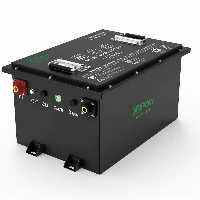
The service life of marine batteries ranges from 3 to over 10 years. So, what exactly are the differences in service life among various types of marine batteries? This article will explain them one by one.

Average Marine Battery Lifespan by Type
First, it is important to understand that marine batteries are primarily classified in two ways: by application and by chemical composition. Next, we will analyze these two types separately.
1. Depending on the application, marine batteries can be divided into three types: marine starting batteries, deep-cycle marine batteries, and dual-purpose marine batteries. Each type of battery has a specific service life.
Starting Battery: Used to start the boat's engine, with a service life of 3–5 years, corresponding to 50–150 charge-discharge cycles.
Deep-Cycle Battery: Used to power the boat's electrical equipment; its service life depends on the battery type. For lead-acid deep-cycle marine batteries, the service life is approximately 3–6 years.
In another scenario, if lithium-ion batteries composed of lithium iron phosphate (LiFePO₄) cells are used, the service life can reach 8–10 years, as they can withstand 3,000–5,000 charge-discharge cycles; high-performance models can even exceed 2,000–6,000 cycles.
Marine dual-purpose batteries: These batteries can both start the engine and power onboard equipment. They have a service life of approximately 3 to 6 years and offer excellent value for money.
| Battery Type | Main Function | Service Life (Years) | Cycle Life (Approx.) |
|---|---|---|---|
| Starting Battery | Engine starting | 3–5 Years | 50–150 Cycles |
| Deep-Cycle Battery (Lead-Acid) | Power onboard equipment | 3–6 Years | 300–1,000 Cycles |
| Deep-Cycle Battery (LiFePO₄) | Power onboard equipment | 8–10 Years | 3,000–5,000+ Cycles |
| Dual-Purpose Battery | Engine start + equipment power | 3–6 Years | 200–800 Cycles |
2. In terms of chemical composition, marine batteries are primarily divided into lead-acid batteries and lithium-ion batteries.
Lead-acid batteries: Flooded-type. This is the most common type of lead-acid battery, with a service life of 2–5 years, depending on usage intensity.
AGM batteries: As an upgraded version of flooded-type batteries, AGM batteries have a longer service life, ranging from a minimum of 3 years to a maximum of 6 years.
Gel batteries: This is an upgraded version of AGM batteries and the lead-acid battery with the longest service life, lasting 4–7 years or more.
Lithium-ion Batteries: LiFePO4 batteries are currently the longest-lasting marine batteries and the safest option, with a service life of 8–15 years. They are becoming increasingly popular in yachts, fishing boats, and sailboats.
Ternary Lithium Batteries: Although the service life of this type of lithium battery is not as long as that of lithium iron phosphate batteries, it offers certain advantages in terms of energy density and weight, making it an ideal choice for specific applications. Its service life ranges from 5 to 10 years.
| Battery Type | Service Life (Years) | Chemical Composition / Category |
|---|---|---|
| Flooded Lead-Acid Batteries | 2–5 Years | Lead-Acid |
| AGM Batteries | 3–6 Years | Lead-Acid |
| Gel Batteries | 4–7+ Years | Lead-Acid |
| Lithium Iron Phosphate (LiFePO₄) | 8–15 Years | Lithium-Ion |
| Ternary Lithium Batteries | 5–10 Years | Lithium-Ion |

What Affects Marine Battery Lifespan?
The service life of marine batteries depends primarily on their chemical composition, depth of discharge (DOD), charging and discharging practices, and temperature control in the operating environment.
Specifically, there are three primary influencing factors:
First is usage habits.
Frequently discharging the battery completely (deep discharge) or leaving it uncharged for long periods of time will cause its performance to deteriorate more quickly; conversely, properly managing the depth of discharge and recharging it promptly can extend the battery's service life.
Second is environmental factors.
High temperatures can accelerate battery degradation, humid environments can cause terminal corrosion, and low temperatures can reduce the battery's discharge efficiency; all of these factors can affect the battery's actual service life.
Third is the level of maintenance.
Do you check the voltage regularly? Do you keep the terminals clean? Is the battery stored properly? All of these factors affect the battery's condition.
With proper maintenance, battery life can be extended; without it, even the most expensive batteries may fail prematurely.

How to Tell How Much Life Your Marine Battery Has Left?
The service life of marine batteries is typically assessed by testing the voltage changes and capacity of lead-acid batteries and by checking the number of charge-discharge cycles for lithium-ion batteries.
You can estimate marine battery life by monitoring three key indicators: voltage performance, capacity loss, and cycle count.
- For lead-acid batteries, Check the battery's open-circuit voltage when fully charged, and observe how the voltage changes under load.
If the battery cannot reach its normal fully charged voltage, or if the voltage drops rapidly while powering equipment, this likely indicates that the battery has aged.
A shorter runtime than before is also a sign of reduced battery capacity.
Once the battery capacity drops below 80% of its original rated value, it means the battery is nearing the end of its service life.
- For LiFePO4 batteries, voltage alone is not sufficient to accurately determine a battery's remaining lifespan, as the discharge curve is very gradual. The most accurate method is to check the cycle count data in the battery's built-in Battery Management System. By comparing the actual number of cycles used with the manufacturer's rated battery lifespan (e.g., 4,000 cycles), you can estimate the battery's remaining lifespan more precisely.

How to Extend Marine Battery Lifespan?
Proper power usage, timely charging, temperature control, and proper storage are key to extending the service life of marine batteries.
Usage Precautions for Lead-Acid or AGM Batteries
Avoid Deep Discharge: Each time you use the battery, do not let it discharge beyond 50% of its capacity; in other words, do not let the battery run completely out of power.
Charge Promptly: After each voyage, please fully recharge the battery immediately to prevent sulfation. Sulfation is an irreversible aging process caused by prolonged undercharging, which leads to a decrease in battery capacity.
Usage Precautions for LiFePO4 Batteries
Deep Discharge Tolerance with Limits: Although lithium iron phosphate batteries can handle deeper discharge cycles, they should not be left at 100% charge or fully discharged for extended periods.
Ambient Temperature is Critical: Do not place the battery in high-temperature areas inside the cabin, and do not charge it in environments where the temperature is below freezing, as this may damage the battery.
Terminal and Wiring Maintenance
Inspect Terminal Connections: Please check the battery terminals regularly to ensure they are secure, and clean any oxidation from the terminals to reduce the battery's internal resistance and prevent unnecessary power loss.
Off-Season Maintenance
Disconnect Parasitic Loads: When the device is not in use, please turn off all low-power devices to prevent the battery from gradually draining.
Trickle Charging or Smart Maintenance: Please charge the battery regularly according to its type, or use a smart maintenance charger to monitor its condition, to prevent damage caused by low voltage resulting from self-discharge.

Signs Your Marine Battery Is Near the End of Its Lifespan
Clear signs of marine battery failure include: difficulty starting the engine, malfunctions in electronic equipment caused by unstable voltage, a significant reduction in runtime, and physical changes such as overheating, bulging, or the emission of unusual odors.
1. Weak Cranking or Slow Engine Start
Here are the most common warning signs: If you notice that the engine sounds sluggish when starting, or if the crankshaft speed is noticeably lower than usual, it is likely because the battery is struggling to provide the required cold cranking amps (CCA).
2. Erratic Electronic Performance
A malfunction in electronic equipment is a significant warning sign. If your sonar, GPS, fish finder, or cabin lights begin to flicker or dim, or if high-power equipment such as a winch suddenly restarts while in use, this indicates that the stability of your battery voltage may have been compromised.
3. Rapid Charging and Drastic Runtime Drop
If the time it takes for the charger to indicate "fully charged" has significantly decreased compared to before, yet the battery drains quickly during use (for example, the runtime of the electric motor has been cut in half), this indicates that the battery's effective capacity has severely declined and it can no longer store a significant amount of charge.
4. Physical Deformity or Unpleasant Odors
Check the battery for bulging, swelling, leakage, or severe corrosion around the terminals.
If the battery emits a rotten egg smell (i.e., hydrogen sulfide gas) during charging or discharging, this indicates that the battery may be overheating or severely sulfated. This is a dangerous sign, and the battery must be replaced immediately.
5. Abnormal Voltage Readings
When testing with a multimeter, if a fully charged 12 V lead-acid battery consistently reads below 12.4 V after being left idle, or if it fails to reach the target voltage no matter how long it is charged, this indicates that its chemical performance has deteriorated.
For lithium iron phosphate batteries, if the BMS (Battery Management System) frequently triggers low-voltage disconnection protection, this indicates that the battery cells are no longer balanced or are in an unhealthy state.

Best Charging Practices to Protect Battery Lifespan
To maximize the service life of marine batteries, it is essential to use a smart charger compatible with the battery type for timely charging, and to avoid storing batteries for extended periods in a fully discharged state or charging them under extreme temperature conditions.
For lead-acid or AGM batteries, a smart charger that supports a three-stage charging curve must be used to ensure that sulfation on the plates is completely eliminated during the absorption stage. Once the battery is fully charged, the charger will automatically switch to low-voltage float mode to prevent electrolyte loss.
For LiFePO4 batteries, never enable the automatic desulfation or pulse repair functions; cell voltage must be strictly maintained between 3.6V and 3.65V.
Never perform high-current charging at temperatures below freezing, as this will cause lithium deposition inside the battery, resulting in permanent damage.
Regardless of the type of battery installed on board, it should be fully charged immediately upon returning from a voyage; never allow the battery to remain in a fully discharged state overnight. Prolonged undercharging will significantly shorten the battery's service life.
Furthermore, a higher charging current is not necessarily better. The safest practice is to limit the current to between 0.2C and 0.3C of the battery's capacity, as excessive current generates significant internal heat, which accelerates the aging of the internal separator and active materials.
Storage Tips to Prevent Shortening Battery Lifespan
When marine batteries are not in use, ensure they are stored safely, keep the terminals clean, and disconnect all electrical loads. Depending on the battery type, maintain an appropriate state of charge: for lead-acid batteries, keep them fully charged; for lithium batteries, maintain a charge level between 40% and 60%. Store the batteries in a cool, dry place and perform periodic maintenance charges.
Following these steps will effectively prevent battery damage and extend its service life.
Before long-term storage, all loads must be disconnected and the cables removed to prevent parasitic currents from gradually draining the battery.
- Lead-acid batteries should be stored at full charge and recharged approximately every 30 days.
- LiFePO4 batteries should be maintained at 40%-60% state of charge to slow down cell aging.
The storage environment for batteries is also critical. Please choose a cool, dry, and well-ventilated location. Never place batteries directly on cold concrete floors or near high-temperature heat sources.
When handling batteries, be sure to use professional carrying handles or pallets. Never grip the terminals to move them, as this may cause damage to the internal plates or crack the casing.
Routine maintenance includes using a baking soda solution to remove oxidation from the terminals and applying insulating grease to reduce contact resistance. For flooded lead-acid batteries, the electrolyte level should be checked regularly to ensure the plates are not exposed to air, as this may cause irreversible chemical damage.
FAQ/People Also Ask
What are the signs that a marine battery needs replacement?
Replace your marine battery immediately if any of the following conditions occur:
- Performance issues: Weak engine cranking, frequent restarting of electronic devices, unstable voltage, or a significant reduction in runtime after a full charge.
- Physical damage: Swelling or bulging of the casing, severe corrosion of the terminals, or a rotten egg odor (indicating the presence of hydrogen sulfide gas).
Can a marine battery's lifespan be extended with proper care?
By recharging marine batteries promptly and regularly after deep discharge, employing a smart three-stage charging algorithm, strictly controlling ambient temperature, and keeping the battery disconnected during long periods of inactivity, their actual service life can be extended to twice as long-or even longer-compared to situations where proper maintenance is lacking.
What factors can shorten the lifespan of a marine battery?
Over-discharging, prolonged storage in a discharged state, overcharging or undercharging caused by using incompatible chargers, and forcing charge-discharge cycles under extreme high temperatures or sub-freezing conditions are the primary causes of a drastic reduction in the service life of marine batteries.
How should I dispose of an old marine battery safely?
The safest and most legal way to dispose of old marine batteries is to take them to a local auto parts retailer, recycling center, or battery dealer. These establishments typically operate dedicated battery recycling programs that safely recover hazardous materials such as lead, acid, and lithium, thereby preventing environmental pollution.