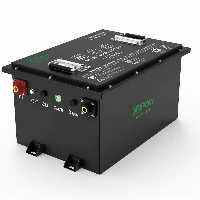
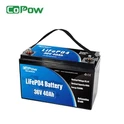
You might have a 24V trolling motor and be planning to buy a 100Ah battery, but you're not sure if it will last a whole day-or you might even be worried that the battery will run out halfway through your trip, right in the middle of the lake.
In that case, not only would you be unable to enjoy your fishing trip to the fullest, but your ability to return safely to shore would also be in question. Furthermore, the power consumption of trolling motors can be inconsistent-sometimes they last 10 hours, while other times they only last 3 to 4 hours.
So, is a 24V 100Ah battery really enough? This article will provide a detailed analysis.
Short answer: A 24V 100Ah lithium-ion battery (used for marine electric motors) provides 4 to 8 hours of runtime per charge and has a service life of 8 to 10 years under normal operating conditions.

What type of battery is the 100Ah battery used in a 24V trolling motor?
Before discussing how long a 24V 100Ah battery can power a trolling motor, we first need to understand the specifics of 100Ah batteries used for 24V trolling motors.
Currently, the main options include LiFePO4 batteries, AGM deep-cycle batteries, and gel batteries, with lead-acid and lithium-ion batteries serving as the core technologies.
So, how long does each of these last on a single charge? Let's take a look.
Ideally:
| Battery Type | Usable Energy | Runtime (Low Speed) | Runtime (Medium Speed) | Runtime (High Speed) | Voltage Stability |
|---|---|---|---|---|---|
| LiFePO4 Lithium Battery | 2.3–2.5kWh | 10–14 hours | 6–9 hours | 3–5 hours | Very Stable |
| AGM Deep Cycle Battery | 1.2–1.5kWh | 5–8 hours | 3–5 hours | 1.5–3 hours | Moderate Voltage Drop |
| Gel Deep Cycle Battery | 1.2–1.5kWh | 5–7 hours | 3–5 hours | 1.5–2.5 hours | Relatively Stable |
At different thrust levels:
| Trolling Motor Thrust | Estimated Power Draw | LiFePO4 Runtime | AGM Runtime | Gel Runtime |
|---|---|---|---|---|
| 55 lb thrust | 600–800W | 3–4 hours | 1.5–2.5 hours | 1.5–2.5 hours |
| 70 lb thrust | 800–1,000W | 2.5–3.5 hours | 1.2–2 hours | 1.2–2 hours |
| 80 lb thrust | 1,000–1,200W | 2–2.5 hours | 1–1.5 hours | 1–1.5 hours |
| 100 lb thrust | 1,300–1,600W | 1.5–2 hours | 0.8–1.2 hours | 0.8–1.2 hours |
| 112 lb thrust | 1,500–1,800W | 1.3–1.7 hours | 0.7–1 hour | 0.7–1 hour |
Based on different speeds:
| Usage Condition | LiFePO4 Runtime | AGM Runtime | Gel Runtime |
|---|---|---|---|
| Low Speed | 10–14 hours | 5–8 hours | 5–7 hours |
| Medium Speed | 6–9 hours | 3–5 hours | 3–5 hours |
| Full Throttle | 1.3–4 hours | 0.7–2.5 hours | 0.7–2.5 hours |
How Long Does a 24V Lithium Trolling Motor Battery Last?
Under normal conditions, a 24V 100Ah lithium-ion battery for a trolling motor can last 8–10 years.
This is because the lithium-ion batteries in question use LiFePO4 technology, which offers an exceptionally long cycle life. Take CoPow as an example: the battery cells it uses come from CATL, BYD, and EVE Energy, all of which are Grade A cells with over 6,000 charge-discharge cycles.
Even if you are an avid offshore angler, it would take several years to exhaust those 6,000 charge-discharge cycles.
What Is the Average Runtime of a 24V Trolling Motor Battery?
Lithium-ion batteries represent the primary direction for upgrading lead-acid batteries, so it is essential to deepen our understanding of their runtime capabilities. Therefore, we will discuss the runtime of lithium-ion batteries separately here.
For a trolling motor battery equipped with a 24V 100Ah lithium-ion battery, a single full charge will provide 5 to 10 hours of continuous operation at normal speeds (approximately 2–5 mph).
For example, a 24V trolling motor with 80 pounds of thrust draws 50 amps of current when running at full speed, which means a 100Ah lithium battery would be depleted within 2 hours.
However, anglers rarely run at full speed for extended periods. In most cases, the motor uses no more than 20% to 40% of its power, with the current not exceeding 50 amps-typically ranging between 5 and 15 amps. Under these conditions, the battery that would have been depleted in 2 hours can last for 4 hours.
24V 100Ah Lithium Trolling Motor Runtime Chart by Thrust
| Motor Thrust | Speed Setting | Typical Current Draw | Estimated Runtime (24V 100Ah Lithium) | Typical Use Case |
|---|---|---|---|---|
| 40–55 lb | Low | 5–8A | 12–18 Hours | Kayaks, slow trolling |
| 40–55 lb | Medium | 15–20A | 4.5–6 Hours | Casual fishing |
| 55–80 lb | Low | 8–12A | 8–12 Hours | Spot-lock, positioning |
| 55–80 lb | Medium | 25–35A | 2.8–4 Hours | Bass fishing |
| 55–80 lb | Full Speed | 45–55A | 1.7–2.3 Hours | Wind/current resistance |
| 80–100 lb | Low | 10–15A | 6–9 Hours | Large aluminum boats |
| 80–100 lb | Medium | 35–45A | 2–3 Hours | Heavy fishing loads |
| 80–100 lb | Full Speed | 50–70A | 1–1.6 Hours | Offshore/heavy current |

How Battery Capacity (Ah) Affects 24V Runtime?
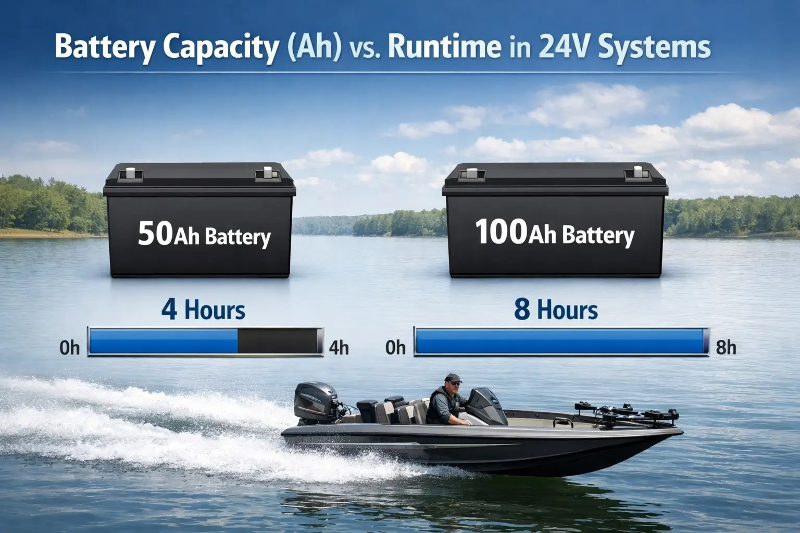
Under a constant 24V system, a higher amp-hour rating means more total energy storage, naturally allowing the motor to run longer. For instance, a 100Ah battery pack theoretically offers twice the runtime of a 50Ah one, which is crucial for anglers who need to cover long distances or hold position against strong winds and currents.
Capacity doesn't just determine how long you can run; it also impacts the motor's performance. Larger-capacity batteries experience slower internal voltage drops under high-current demands, such as full-speed operation, helping maintain stronger thrust more consistently.
However, it's important to note that battery type directly affects usable capacity. With a 100Ah lead-acid battery, depth-of-discharge limits mean you can safely use only about 50Ah. In contrast, lithium batteries allow you to utilize nearly the entire rated capacity.
24V 50Ah vs 100Ah vs 150Ah vs 200Ah Runtime Comparison
| Battery Capacity | Estimated Runtime | Best For | Typical Boat Type |
|---|---|---|---|
| 24V 50Ah | 1–3 Hours | Short fishing trips | Kayaks, small jon boats |
| 24V 100Ah | 4–8 Hours | Most anglers | Bass boats, aluminum fishing boats |
| 24V 150Ah | 6–10 Hours | Windy lakes, extended fishing | Medium to large boats |
| 24V 200Ah | 8–14+ Hours | Full-day fishing, heavy current | Large boats, professional fishing |
Recommended Reading: What Size Lithium Battery For 24V Trolling Motor?
How Much Power Does a 24V Trolling Motor Consume?
The power consumption of a 24V outboard motor depends primarily on thrust and gear setting. Current draw (measured in amperes) is a key indicator: during low-speed cruising or when using the GPS anchoring function to maintain position, the motor is highly efficient, consuming only 5 to 10 amperes. However, if the throttle is pushed to maximum to combat strong winds or for high-speed travel, power consumption rises sharply.
For a typical 80-pound-thrust motor, peak current ranges from 45 to 56 amps, meaning that running at full speed for one hour will consume approximately 50 amp-hours of battery capacity.
In terms of power, based on the formula P = V * I (power = voltage × current), a 24V system drawing 50 amps has an instantaneous power output of approximately 1,200 watts.
In contrast, a 12V system would need to double its current to achieve the same power, whereas a 24V system can deliver greater thrust at a lower current, thereby reducing cable heating and improving overall operational efficiency, which is its primary advantage.
Recommended Reading:
Is a 100Ah Battery Enough for a Trolling Motor?
How Long Will a 100Ah Battery Run a Trolling Motor?

Lithium vs Lead-Acid – Which Lasts Longer in a 24V System?
In terms of cycle life, high-quality LiFePO4 batteries can deliver 3,000 to 5,000 charge-discharge cycles, whereas deep-cycle lead-acid or AGM batteries typically last only 300 to 500 cycles, even under ideal conditions.
In terms of actual usable capacity per trip, due to chemical limitations, we do not recommend discharging lead-acid batteries beyond 50% of their capacity, as this would severely impact battery life.
This means that a 100Ah lead-acid battery can actually only provide about 50Ah of usable capacity.
In contrast, lithium-ion batteries can be deeply discharged without damage. Therefore, a lithium battery with the same rated capacity can provide nearly twice the actual runtime.
Additionally, lithium batteries offer the advantage of constant voltage. When the charge drops from 100% to 5%, a 24V motor can still maintain maximum thrust throughout the entire range, whereas the voltage of a lead-acid battery gradually decreases as it discharges, leaving the motor without power when it is most needed in the afternoon.

How Cold Weather Affects 24V Battery Runtime?
For 24V LiFePO4 lithium-ion batteries, although they perform better than lead-acid batteries in low-temperature environments, issues such as capacity loss, reduced output capacity, and charging limitations remain unavoidable.
The fundamental reason is that low temperatures slow down the movement of lithium ions within the battery: as the ambient temperature drops, the electrolyte becomes more viscous, increasing internal resistance and thereby reducing the efficiency of chemical reactions.
For 24V batteries, this effect is directly reflected in runtime: a 24V 100Ah LiFePO4 battery has a theoretical energy storage capacity of approximately 2400Wh (24V × 100Ah) at a normal temperature of 25°C, capable of delivering 2400Wh of energy.
However, if the ambient temperature drops to around 0°C, the battery capacity typically decreases by 20% to 30%. This means that, under these conditions, the actual available energy is approximately 1,680 Wh.
In environments as cold as -10°C or even -20°C, the capacity loss becomes even more pronounced; some LiFePO4 batteries may only be able to deliver 50% to 70% of their rated capacity.
In addition to capacity loss, low temperatures also cause a drop in battery voltage. When a 24V battery discharges at high current in cold conditions, it can result in reduced thrust from the trolling motor.
Many users mistakenly believe the battery is faulty, but in reality, it is merely a temporary voltage drop caused by the cold. This occurs because the battery's internal resistance increases at low temperatures, leading to energy loss during sustained high-power output.
For example, a 30A load may operate stably in summer, but in winter, the same 30A load will cause the battery to lose voltage more rapidly. Frequent cycling and sudden high currents will further shorten the battery's runtime.
Consequently, the actual runtime of the same 24V battery under high-load conditions in winter may be 30% or more below the theoretical value, and the situation is even more severe for lead-acid batteries.
Here is a tip: If you want to maximize the runtime of your 24V battery in winter, we recommend:
1. Avoid exposing the battery to sub-freezing temperatures for extended periods.
2. Use an insulated battery box.
3. Use LiFePO4 batteries with a heating function.
4. Avoid continuous high-speed operation at low temperatures.
5. Allow the battery to warm up before charging.
6. Maintain a high SOC during winter to avoid deep discharge.
7. When storing batteries long-term, keep the charge level between 40% and 60%.

Real-World Runtime Examples (With Simple Calculations)
Assume you are on a full-day walleye fishing trip at Rice Lake, Ontario, Canada. You are driving an 18-foot aluminum fishing boat equipped with an 80 lb-thrust 24V trolling motor, powered by a set of 24V 100Ah LiFePO4 batteries.
In actual use, your power consumption typically breaks down as follows:
- Morning: You run at speed 3 (low speed) for about 4 hours of slow trolling. The motor draws around 5A, consuming a total of 5A × 4h = 20Ah.
- Midday: Strong westerly winds, common on Canadian lakes, pick up. To hold your position over a fishing spot, you engage GPS anchor mode for about 3 hours. The motor continuously adjusts, drawing an average of 15A, for a total of 15A × 3h = 45Ah.
- Evening: Before heading back, you spot fish near a shallow area and use speed 8 (high speed) for 30 minutes. The motor draws 40A, consuming 40A × 0.5h = 20Ah.
The total power consumption for the day is 20 + 45 + 20 = 85 Ah. Since a 100 Ah lithium iron phosphate battery is being used, approximately 15% of the battery capacity remains, which is sufficient to safely return to the dock.
However, if a lead-acid battery of the same capacity were used, its recommended depth of discharge is only 50% (i.e., only 50 Ah can be used). In this scenario, if GPS anchoring operations are conducted in the afternoon, the battery charge would be severely insufficient, resulting in a significant reduction in motor thrust.

Why Your 24V Battery May Not Last as Long as Expected?
Now, let's answer the question posed at the beginning: Why can some people use their 24V 100Ah trolling motor battery for a long time, while others drain it in just a few hours? This mainly depends on the following factors:
Environmental Resistance
Headwinds, strong currents, and dense vegetation can all hinder your progress.
Boat Load
The heavier the load on the boat-including people, equipment, and luggage-the more power it will consume.
Battery Type
An inherent drawback of lead-acid batteries is that capacity loss is unavoidable in cold temperatures.
Incorrect Charger Use
Using a lead-acid battery charger to charge a lithium battery will damage the lithium battery. Of course, lead-acid batteries also require a dedicated charger.

How to Extend the Runtime of Your 24V Trolling Motor Battery?
To extend the service life of a 24V traction motor battery, the key lies in minimizing power loss and performing proper maintenance. Here are some of the most effective tips:
1. Optimize Operation and Load
- Avoid running at full throttle: keep the throttle between 50% and 70%. Power consumption at full throttle is often several times higher than at moderate speeds, yet the increase in boat speed is negligible.
- Reduce the boat's weight: Remove unnecessary equipment and drain excess water from the livewell. The lighter the boat, the less propulsion power is required.
- Remove debris: Aquatic vegetation tangled around the propeller creates significant drag. If you notice a loss of power, remove it immediately.
2. Hardware Efficiency
- Upgrade the wiring: Use the correct, heavy-gauge marine wire (such as 6 AWG or thicker). Thinner wire causes voltage drops, resulting in energy loss as heat.
- Clean the terminals: Keep the battery terminals dry and clean, as corrosion creates resistance, a silent "battery killer."
3. Battery Health Management
- Charge Immediately: After returning from a trip, charge the battery immediately; never leave the battery in a discharged state for an extended period.
- Temperature Control: During winter, store the battery indoors, as extremely cold weather can significantly reduce the usable capacity of lead-acid batteries.
- Choose the Right Charger: Ensure the charger you select is specifically designed for your battery type (lithium-ion or AGM). Avoid using incompatible chargers, as they may fail to fully charge the battery.
Conclusion
For amateur anglers, a 24V 100Ah trolling motor battery is generally sufficient to meet their needs for a day out on the water. However, for professional anglers, this entry-level setup may prove inadequate, as they often require a variety of specialized equipment while fishing-such as GPS, fish finders, radar, lighting systems, and livewell circulation systems-not to mention the impact of water currents.
Additionally, it's important to note that insufficient runtime isn't necessarily caused by the trolling motor battery itself. Factors such as ambient temperature, aging wiring, and unclean propellers can all affect overall performance. Therefore, we recommend considering these factors comprehensively when making a purchase to ensure the battery meets more than just basic needs.
If you have specific customization requirements for this battery, you can also contact CoPow to have a trolling motor battery tailored to your needs. As a professional marine battery manufacturer, CoPow has completed over 50 in-depth customization projects in this field.
FAQ
How Many Amps Does a 24V Trolling Motor Draw?
When selecting the amp-hour capacity for a 24V trolling motor battery, we first need to understand the trolling motor's power consumption on your boat. You can check the manual or consult customer service directly.
Once you have the power consumption specifications for the trolling motor, consider the following questions: Do I go out fishing often? Do I fish for a full day each time? Is the lake well-stocked with fish? Do the fish put up a strong fight? In short, we need to assess how long each fishing trip typically lasts.
Finally, by combining the trolling motor's power consumption range with your trip duration, you can determine the capacity of the 24V trolling motor battery you need to purchase.
Of course, if you have other considerations, feel free to contact us directly. As a professional trolling motor manufacturer, we will provide you with expert and practical advice.
The following are approximate capacity ranges for your reference.
| Use Case | Motor Thrust (lbs) | Typical Current (A) | Runtime | Recommended Battery Capacity |
|---|---|---|---|---|
| Light Leisure (Short Fishing Trips) | 40–55 lbs | 20–30 A | 1–2 hours | 24V 50Ah |
| Standard Use (Most Users) | 55–80 lbs | 30–45 A | 2–4 hours | 24V 100Ah (Most Recommended) |
| High Load (Large Boats/Strong Currents) | 80–100 lbs | 45–60 A | 3–5 hours | 24V 150Ah–200Ah |
| Extended Operation (All-Day/Commercial) | 80–100+ lbs | 50–70 A | 5–8 hours | 24V 200Ah+ or Parallel |
will a 24v trolling motor run on 12v?
Generally speaking, 24V trolling motors can operate on 12V, but this is only a temporary solution, and we do not recommend using them this way for extended periods.
Not only will you be able to use only 20% to 30% of the 24V motor's thrust, but doing so may also damage the expensive trolling motor. If you really have no other options, you can try using a step-up converter.
Recommended Reading: How Long Does a 24V Battery Last?