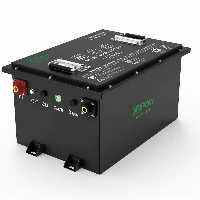
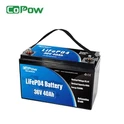
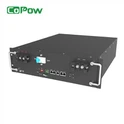
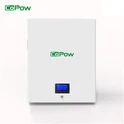
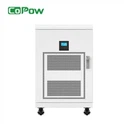
Choosing a forklift battery is actually simpler than it seems. In most cases, it comes down to two options: lead-acid and lithium-ion.
If you're currently using lead-acid batteries, you've probably experienced that frustrating feeling of your operations being slowed down by the battery itself. This issue becomes even more noticeable in two-shift or three-shift warehouse environments. Every charge can take 8 to 10 hours, and even after the battery is fully charged, you still need to wait for it to cool down before it can be used again.
What does this mean in practice? It means you either have to stop operations and wait for the battery to recover, or invest in additional batteries for rotation-adding both cost and management complexity. In simple terms, your equipment ends up waiting for the battery, instead of the battery supporting your efficiency.
On the other hand, lithium-ion batteries-especially lithium iron phosphate (LiFePO4)-are rapidly gaining ground. They are designed to address many of the pain points associated with lead-acid batteries: faster charging, no cooling time, opportunity charging, and significantly reduced maintenance.
In high-intensity operations, lithium-ion is no longer just a better option-it is increasingly becoming the more practical one. In fact, over the next few years, lithium batteries are likely to replace lead-acid batteries as the primary power source for forklifts.
So the question is: how big is the difference between these two battery types in real-world use? And how should you choose based on your specific operation?
Let's take a closer look and compare them side by side.⬇

How are lead-acid forklift batteries?
Lead-acid battery technology dates back to 1859, making it a relatively mature but long-established solution. Despite its long history, there have been few significant technological breakthroughs in the past decade. Issues such as short lifespan, susceptibility to damage, the presence of toxic materials, bulkiness, and complex maintenance still remain.
Faced with these limitations, engineers have increasingly turned to more advanced lithium-ion solutions. In today's industrial environment, lead-acid batteries are largely seen as a compromise-chosen mainly to save on costs at the expense of user experience. Most warehouse managers and businesses have already completed the transition to lithium-ion batteries.
Are lithium forklift batteries really as good as the rumors say?
Lithium battery technology dates back to 1991, but not all lithium batteries are suitable for forklifts. When we refer to lithium forklift batteries, we specifically mean lithium iron phosphate batteries.
The concept of LiFePO4 was first proposed by the Goodenough team in 1996, and commercial attempts began around the year 2000. By 2003–2005, the technology had been industrialized and saw widespread use in electric vehicles, electric buses, and energy storage systems.
Today, LiFePO4 battery technology is highly mature and, in many applications, has completely replaced traditional lead-acid batteries.
Compared to lead-acid, it offers numerous advantages: non-toxic, low maintenance, lightweight, longer runtime, and fast charging-eliminating the need to maintain two sets of lead-acid batteries for your warehouse.
Admittedly, there are some drawbacks, primarily related to cost, but in terms of performance, it has fully surpassed lead-acid batteries.
The Real Performance of Lead-Acid Forklift Batteries
Let's shift the scene to Germany-the Ruhr Valley, at a warehouse handling heavy machinery spare parts.
In a market as sensitive to energy efficiency, carbon emissions, and labor costs as Germany, lead-acid batteries present a uniquely "German-precision" problem.
After the rain in the Ruhr: the efficiency tug-of-war forced by "mandatory cooling"
At this 40-year-old semi-open warehouse managed by Heinrich, a fleet of a dozen or so Linde forklifts operates daily. The climate is cool and damp, particularly in autumn and winter, with the typical European industrial humidity hanging in the air.
Heinrich has a dry, German-style sense of humor regarding the true performance of lead-acid batteries: "They're either working or standing in line, waiting to breathe."
In this case, the biggest issue isn't runtime or lifespan-it's the off-gassing. German labor laws impose strict standards on air quality and workplace safety. During high-current charging, Heinrich's lead-acid batteries cause the electrolyte to boil vigorously, releasing hydrogen gas.
To comply with EU fire safety and occupational health regulations, he had to invest heavily in a dedicated charging room equipped with an explosion-proof ventilation system.
The real performance pain hits during shift changes.
Heinrich's facility operates on a two-shift schedule. Every afternoon at 4 PM, the first-shift forklifts return to the charging area. Even during summer, indoor temperatures can rise, and combined with the internal heat generated by the battery's internal resistance during charging, these battery blocks-each weighing over a ton-reach internal temperatures of 45–50°C after charging.

Following strict German operating procedures, to prevent plate deformation caused by thermal stress, batteries must undergo a mandatory 8-hour cooling period before they can be used again. This means that even if a battery shows full charge, Heinrich can only watch it sit on the shelf and cool down, unable to put it back into operation immediately.
This chemically imposed downtime keeps warehouse equipment utilization hovering around a critical 50%.

Adding to the burden is the bi-weekly equalization charge.
On weekends, Heinrich has to assign staff to overcharge all lead-acid batteries for up to 12 hours to eliminate sulfation on the plates. This process is not only highly energy-intensive but also releases acidic fumes that corrode forklift chassis components, forcing Heinrich to spend significant annual costs on anti-rust coatings.

This is the stark reality of lead-acid batteries at the heart of Europe's industrial zone: stable and highly recyclable, yes-but under soaring electricity costs, strict environmental regulations, and expensive labor-intensive maintenance, they are exceptionally cumbersome.
For Heinrich, the performance of lead-acid batteries is measured not by capacity, but by the uncompressible cooling times and dedicated charging space they demand.
What problems can a lithium forklift battery help you solve?
Let's shift our perspective to Łódź, in central Poland-one of Europe's most important logistics hubs. Here, a large cold-chain distribution center supplies deep-frozen food across Poland and to neighboring Baltic countries.
During Poland's harsh winters, outdoor temperatures often hover around -15°C, while the warehouse's freezers are kept at a constant -25°C. In this environment, forklift operator Kasper's day is like a "battle to preserve battery life below freezing."

The "Energy Defense" in Łódź's cold nights
Kasper recalls the nightmare of using lead-acid batteries in the past. In extreme cold, the chemical characteristics of lead-acid batteries cause a "plunge" in performance-batteries that normally last 8 hours at room temperature lose over 40% of their effective capacity when exposed to -25°C.
Even worse, charging lead-acid batteries in such low temperatures can cause electrolyte crystallization, damaging the cells. Every day, Kasper had to drive his heavy forklift across long warehouse aisles to reach the costly heated charging room. This journey consumed nearly 20% of his working time, causing frequent delays during the busiest Christmas season.
Condensation was another headache. Moving lead-acid batteries in and out of extreme temperature differences produced significant condensation on the battery casing. Combined with residual acid fumes, this corroded forklift electrical connectors, occasionally causing Kasper's forklifts to suddenly cut out deep inside the -25°C freezers. Maintenance staff had to bundle up in thick winter coats to drag the trucks back to safety.

The LiFePO4 turnaround
When the distribution center upgraded to cold-chain-optimized LiFePO4 batteries, Kasper's workflow was completely transformed.
These lithium batteries are equipped with built-in heating films: during the initial charge or in extreme cold, the battery consumes a small amount of its own energy to maintain the internal temperature within the optimal reaction range. This meant Kasper no longer needed to make repeated trips to distant heated charging stations; forklifts could opportunistically charge directly at fast-charging points near the freezer doors.
What surprised Kasper most was the constant power output. Previously, lead-acid batteries in cold conditions slowed to a snail's pace when lifting pallets in the latter part of the shift.
LiFePO4, however, could still deliver full-load performance even at 10% charge, effortlessly placing two-ton blocks of frozen meat onto shelves.
For Kasper, the benefit was not just saving money-it meant spending more time in the warm cabin and less exposure to the biting cold.

A new benchmark for winter operations
In a market like Poland's, where energy efficiency and employee welfare are highly prioritized, lithium batteries not only solved the old problem of winter capacity loss but also eliminated heating-cooling cycles, saving the warehouse thousands of hours of actual work time every year.
For distribution center managers, the real measure of LiFePO4 performance is simple: even on the coldest nights in Poland, delivery schedules are never delayed.
How long does a forklift battery last?
Many businesses start with the same assumption: lead-acid forklift batteries are cheaper, well-established, and "good enough" for daily use. But once you put them into a high-intensity warehouse environment, this assumption often begins to fall apart.
From a technical standpoint, a typical lead-acid forklift battery is rated for around 1,200–1,500 charge cycles, which translates to roughly 3–5 years of use.
However, this lifespan is based on ideal conditions - standard charging routines, single-shift operations, and stable temperatures.
In reality, most warehouses operate on two or even three shifts. Frequent charging, deep discharging, and insufficient cooling time all accelerate battery degradation.
As a result, many businesses are forced to replace their batteries in just 2–3 years, sometimes even earlier. Performance issues such as reduced capacity, shorter runtime, and unstable charging often appear long before the battery reaches its expected lifespan.
By contrast, lithium forklift batteries offer a significant leap in cycle life. They typically deliver 3,000–6,000 full charge cycles, translating to 5–10 years of service life. For example, some mature solutions on the market - such as CoPow's lithium forklift battery - can achieve 2,000–6,000+ cycles, with stable performance for over 7 years and much more predictable degradation.
*But what truly drives businesses to switch to lithium is not just the numbers on paper - it's a much more practical concern: downtime costs.
At first, many warehouses feel that lead-acid batteries are "good enough." Until one day - a forklift suddenly loses runtime, charging takes longer and longer, or the battery simply stops working. That's when companies start inspecting the battery and considering replacement.
But by then, the real losses have already happened: Delayed orders, idle labor, and disrupted logistics flow. These hidden costs often far exceed the price of a lithium forklift battery itself.
In simple terms, the problem with lead-acid batteries is not just shorter lifespan. It's the unpredictable degradation, the early performance drop, and the fact that failures tend to happen at the worst possible time.
This is why more and more businesses are rethinking the equation: Instead of being forced to replace batteries in year 2 or 3 - and repeatedly absorbing downtime risks - it makes more sense to invest in a more stable, longer-lasting lithium solution from the start. That's also why, despite the higher upfront cost, lithium forklift batteries often turn out to be the more economical choice in real-world operations.

Which Should You Choose: Lead-Acid or Lithium Battery?
According to current industry trends, you should consider choosing a lithium forklift battery. But everyone's situation is different. Are you looking to save money, or make things easier? Below, we'll walk you through some scenarios to help you decide.
If you're tired of moving heavy batteries around, a lithium forklift battery could be the answer-it doesn't require swapping between units.
If your forklifts run a lot-say, more than six hours a day with lots of heavy loads-and you barely have time to charge, lithium batteries are ideal. They can be fully recharged in just 1 to 4 hours.
If warehouse space is expensive or you simply don't have room for extra batteries, lithium is worth considering because of its smaller size.
If your forklifts operate in cold environments year-round, lithium is essentially your only choice. Lead-acid batteries perform poorly in low temperatures, discharging more slowly and losing capacity.
For heavy-duty forklifts that move very heavy items, you have options. Lead-acid batteries are naturally heavier, which can help balance the forklift's center of gravity. Lithium batteries can also work if you add extra counterweight.
If you plan to run your warehouse long-term, or expand shifts in the future, investing in lithium batteries makes sense. On the other hand, if your operation is short-term, lead-acid batteries may suffice-they're cheaper and just enough for your needs.
Finally, if efficiency is your top priority, lithium batteries are the only practical choice. They require minimal maintenance and provide more consistent power for your forklifts.
conclusion
Beyond the technical choice of forklift batteries, countries around the world are actively promoting renewable energy, and related policies and regulations continue to evolve. In regions like Europe, green energy and low-carbon initiatives have become key policy priorities.
Against this backdrop of sustainable development, lithium batteries - especially lithium iron phosphate batteries - are gradually replacing lead-acid batteries. With their high energy efficiency, long lifespan, and low maintenance requirements, they are becoming the new standard solution for warehousing, logistics, and industrial applications.
If you want to align with these policy trends, or are considering upgrading your existing lead-acid forklifts to lithium-powered models, CoPow is here to help.
We can provide tailored solutions based on your specific operational needs, ensuring a smooth transition and maximum efficiency for your fleet.
FAQ
Which Two Gases Do Forklift Batteries Give Off When Charging?
During the charging process, forklift batteries (especially lead-acid batteries) produce two gases through the electrolysis of water: hydrogen and oxygen. Hydrogen is flammable and explosive.
How to Choose Between Lithium and Lead-Acid Batteries for Heavy 3-Shift Warehouse Operations?
For heavy-duty, three-shift warehouse operations, we strongly recommend the use of lithium-ion batteries. This is because such operating conditions place extremely high demands on a battery's continuous power supply capability, charging efficiency, and stability. Lithium-ion batteries support trickle charging and charge quickly, enabling round-the-clock operation without the need to swap batteries. Additionally, lithium-ion batteries provide stable voltage output; unlike lead-acid batteries, their performance does not degrade as the charge level decreases during high-load handling.
Furthermore, lithium-ion batteries offer advantages such as maintenance-free operation, enhanced safety, and a smaller footprint, resulting in lower total cost of ownership over the long term. In contrast, while lead-acid batteries have a lower initial cost, they often require multiple battery sets for rotation, dedicated charging rooms, and maintenance personnel in three-shift operations. They also feature long charging times and low efficiency, and their performance declines significantly as the charge level drops, which is not conducive to high-intensity continuous operations.