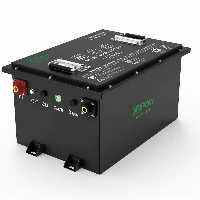
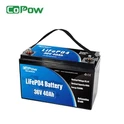
The service life of forklift batteries ranges from 3 to 10 years, depending on the type of battery.
Lead-acid forklift batteries:
Under ideal conditions, lead-acid forklift batteries generally last 3–5 years, with a cycle life (number of charge-discharge cycles) of approximately 1,000–1,500 cycles. However, in actual use, without proper maintenance and good operating practices, their power and range performance will decline significantly after about 2–3 years, resulting in shorter runtime, slower charging, and reduced power.
Lithium-ion Batteries (Lithium Iron Phosphate):
This type of battery is much more durable than lead-acid batteries, with a service life of up to 8–10 years and a cycle life of over 6,000 charge-discharge cycles. They remain highly durable even when used in warehouses operating on a three-shift schedule.
| Battery Type | Cycle Life | Physical Service Life |
|---|---|---|
| Lead-Acid Forklift Battery | 1,000–1,500 Cycles | 3–5 Years |
| Lithium-Ion (LiFePO4) Forklift Battery | 4,000–6,000+ Cycles | 8–10 Years |

What Is The Runtime Of A Forklift Battery On One Charge?
After fully charging a forklift battery with a very low charge level, it can operate continuously for 4–8 hours, or even longer. The exact operating time depends on factors such as battery capacity, forklift tonnage, load weight, travel distance, lifting frequency, and workload intensity.
Since the term "forklift battery" here encompasses both lead-acid and lithium-ion batteries, we can only provide a rough estimate. You may need to narrow down the range further.
Lead-acid forklift batteries:
A single full charge of this type of battery provides approximately 5–6 hours of operation, so you may need to purchase a spare battery to rotate between them. Additionally, the battery needs to cool down after charging and cannot be used immediately, which can be inconvenient.
Lithium-ion forklifts:
A single charge of a lithium-ion battery provides 6–8 hours of operation, or even longer. More importantly, lithium-ion batteries can be charged and used at any time, which significantly improves warehouse handling efficiency.
For example:
For example, a typical 48V 525Ah lithium-ion forklift battery has a total energy capacity of approximately:
48V × 525Ah = 25.2 kWh.
If installed on an electric counterbalanced forklift with a load capacity of 2.5 to 3 metric tons and used in a typical warehouse environment for loading, unloading, stacking, and short-distance transport, its average power consumption is usually between 3 and 5 kilowatts.
Based on these operating conditions:
- With an average power consumption of 3 kW, the forklift can operate continuously for more than 8 hours.
- With an average power consumption of 4 kW, it can operate continuously for about 6 hours.
- With an average power consumption of 5 kW, it can operate continuously for about 5 hours.
Here is another example closer to real-world conditions:
A logistics warehouse uses a 3-metric-ton electric forklift equipped with a 48V 525Ah lithium-ion battery to handle 1 to 1.5 metric tons of cargo daily, with a single travel distance of 20 to 50 meters and 20 to 30 loading and unloading cycles per hour.
Under these typical warehouse operating conditions, the battery can support a full 8-hour shift, with 10% to 30% of its charge remaining at the end of the shift. If the warehouse operates on a two-shift system, operators can charge the battery for 1–2 hours during lunch breaks or shift changes, thereby enabling continuous operation throughout the day without needing to replace the battery; in contrast, a 48V 525Ah lead-acid battery typically provides only 5–6 hours of effective operating time.
Forklift Battery Runtime By Battery Size And Forklift Type
| Forklift Battery Specification | Typical Forklift Type | Typical Runtime per Charge |
|---|---|---|
| 24V 200Ah | Electric Pallet Jack / Walkie Stacker | 4–6 Hours |
| 24V 300Ah | Ride-On Pallet Truck / Light Stacker | 6–8 Hours |
| 36V 350Ah | Reach Truck / Narrow Aisle Forklift | 5–8 Hours |
| 48V 300Ah | 1.5–2 Ton Counterbalance Forklift | 5–7 Hours |
| 48V 525Ah | 2.5–3 Ton Counterbalance Forklift | 6–8 Hours |
| 48V 630Ah | 3–3.5 Ton Counterbalance Forklift | 7–9 Hours |
| 80V 420Ah | 3–5 Ton Heavy-Duty Forklift | 6–8 Hours |
| 80V 560Ah | 4–5 Ton Heavy-Duty Forklift | 8–12 Hours |

What Factors Affect Forklift Battery Life?
The service life of a forklift battery primarily depends on five factors: depth of discharge, charging methods and habits, operating temperature, frequency and intensity of use, and the level of daily maintenance.
How it is used daily, how it is charged, the conditions under which it is used, and whether it is properly maintained.
The deeper the battery is discharged each day, the more frequently it is charged, the heavier the forklift's load, and the more frequently it lifts and lowers loads, the faster the battery will degrade. Let's take a closer look:
Battery Types
Due to issues such as sulfation, water loss, and plate corrosion, lead-acid forklift batteries have a service life of approximately 3 to 5 years. In contrast, lithium iron phosphate forklift batteries have a longer cycle life, lasting 5 to 10 years under normal operating conditions.
Depth of Discharge
The greater the depth of discharge of a battery, the greater the chemical and physical stress on its internal materials, which accelerates the battery's aging process.
For lead-acid batteries, over-discharge causes large, coarse lead sulfate crystals to form on the surface of the plates. These crystals gradually cover the active material, reducing the effective reaction area and leading to increased internal resistance and continuous capacity degradation.
For lithium-ion batteries, it is also not advisable to consistently discharge the battery to 0%. Prolonged exposure to extremely low charge levels prevents lithium ions from fully inserting and extracting, thereby increasing the loss of active lithium.
At the same time, the rates of electrolyte decomposition, side reactions, and SEI film thickening all accelerate, ultimately leading to capacity degradation and increased internal resistance.
Charging Habits
Lead-acid batteries require a full charging cycle. Frequent top-ups or disconnecting the battery before it is fully charged can lead to sulfation and a decline in capacity.
Lithium-ion batteries can be charged at any time, but require the use of a charger specifically designed for lithium-ion batteries. If the charging voltage, current, or charging curve is not compatible, the consequences can range from the battery not fully charging and reduced runtime to triggering the battery management system's protective functions, or even damaging the battery cells.
Charger Compatibility
Lead-acid chargers and lithium-ion battery chargers operate on different principles and should not be used interchangeably. For example, a 48V lead-acid charger cannot correctly identify the cut-off voltage and constant-voltage phase of a 48V lithium iron phosphate battery. Prolonged use of such a charger may result in overcharging or undercharging of the battery, or cause the battery management system to frequently trigger its protection mechanisms.
Workload
The longer a forklift operates each day, the heavier its load, and the more frequently it starts and lifts, the faster the battery will drain. If you want to prevent your battery from deteriorating so quickly, consider CoPow lithium-ion forklift batteries. From the BMS and battery cells to the casing and screws, every component is designed to maximize the service life of your forklift battery.

Capacity Mismatch
If the battery capacity is too small, the most immediate problem is that the forklift battery will undergo deep discharge every day. For example, if a forklift actually requires 300Ah to complete a shift but is equipped with only a 200Ah battery, the battery may be discharged to 10% or even lower every day.
Furthermore, insufficient capacity can cause the forklift battery to remain in a state of high-rate discharge for extended periods. For example, for the same working current of 150A, a 200Ah battery corresponds to a discharge current of 0.75C, while a 400Ah battery corresponds to only 0.375C.
A higher discharge rate increases cell polarization and heat generation, accelerates electrolyte aging, and raises internal resistance, thereby shortening the battery's service life.
Ambient Temperature
High temperatures accelerate battery aging; the higher the temperature, the more active the side reactions inside the battery become, leading to faster rates of electrolyte decomposition, plate corrosion, and material structural degradation.
For lead-acid batteries, high temperatures accelerate water evaporation and grid corrosion, resulting in reduced electrolyte levels, decreased battery capacity, and more frequent maintenance.
For lithium-ion batteries, high temperatures accelerate electrolyte degradation and the thickening of the SEI film, leading to increased internal resistance and a decrease in available capacity. In severe cases, this may trigger the battery management system's high-temperature protection function, which limits charging and discharging or even causes the battery to shut down.
The effects of low temperatures are primarily reflected in reduced battery performance: as temperatures drop, the rate of chemical reactions inside the battery slows, the viscosity of the electrolyte increases, and the resistance to ion migration rises, leading to higher internal resistance. Consequently, in low-temperature environments, the capacity that the battery can deliver decreases.
Maintenance Requirements
Lead-acid batteries require regular water top-ups, cleaning of the terminals, checking of the electrolyte level, and equalization charging. If the battery is low on water and the plates are exposed to air, irreversible damage can occur; if acid, dust, or corrosive substances remain on the battery surface for an extended period, the risk of leakage or poor contact increases.
In contrast, lithium-ion batteries require less maintenance, but it is still necessary to periodically inspect the connecting cables, terminals, casing, alarm logs from the battery management system, and the condition of the charging ports.
Long-term disuse
Forklift batteries will degrade even when not in use for extended periods, especially lead-acid batteries, which are prone to sulfation if their charge level is too low during periods of inactivity. Similarly, lithium-ion batteries left in a fully charged or low-charge state for long periods are at increased risk of aging.
Therefore, during long-term storage, you should follow the manufacturer's recommendations to maintain an appropriate State of Charge (SOC) and regularly check the voltage to prevent the battery from entering a protection mode-or even becoming irreparable-due to over-discharge.
BMS Quality
For lithium-ion forklifts, the battery management system directly impacts their safety and service life. A high-quality BMS can monitor battery status in real time, prevent abnormal conditions such as overcharging, over-discharging, overcurrent, short circuits, high temperatures, and low temperatures, and reduce voltage differences between individual cells through its balancing function.
However, if the BMS is of poor quality or employs inappropriate protection strategies, discrepancies will gradually develop between cells, leading to reduced battery capacity, shorter runtime, and an increase in fault alerts.
Cell Consistency
A battery pack is not composed of a single cell, but rather consists of a large number of cells connected in series and in parallel. The higher the consistency of the cells' capacity, internal resistance, and voltage, the longer the overall lifespan of the battery pack.
If low-grade or mixed-batch cells are used, some cells may fail prematurely, causing the overall performance of the battery pack to be limited by the weakest cell.
Vibration and Mechanical Shock
When forklifts operate on warehouse, dock, or factory floors, they are frequently subjected to vibration, shock, and jolts. If the battery lacks sufficient structural strength, is not securely fastened internally, or has loose terminal connections, prolonged use may lead to poor connections, wiring harness wear, case deformation, and even failure of the Battery Management System.
Therefore, when selecting industrial forklift batteries, it is essential to consider not only the quality of the battery cells but also the structure of the battery case, the mounting method, and the vibration-resistant design.
Water, Dust, and Corrosive Environments
Forklift batteries are not used exclusively in dry warehouses; in many real-world scenarios, moisture, dust, salt spray, or corrosive gases are ever-present. If the protective measures for the battery's casing, terminals, wiring harnesses, and seals are inadequate, the battery's service life will be compromised.
Driving Habits
Frequent sudden acceleration, sudden braking, overloading, forcing the vehicle to operate when the battery is low, and roughly plugging in or unplugging the charging cable can all increase wear and tear on the battery and electrical system. Many battery failures do not occur suddenly but are the result of long-term improper use.
Whether to use the original equipment manufacturer's (OEM) solution or a professional aftermarket solution.
When converting from lead-acid to lithium-ion batteries, simply swapping out the batteries without verifying dimensions, weight, communication protocols, chargers, current ratings, mounting and securing methods, and instrument compatibility can easily lead to issues during subsequent use, such as alarms, inaccurate SOC readings, unstable range, and safety risks.
CoPow develops tailored lithium-ion battery solutions for forklifts based on vehicle models and operating conditions, rather than arbitrarily pairing batteries based solely on voltage.
How To Extend The Life Of A Forklift Battery?
By following these methods, you can extend the service life of your forklift battery by 1–2 years. After all, this is a significant investment, so it's important to pay attention to the details.
1. Avoid Deep Discharge
Try to avoid letting the battery charge drop below 20%. For lithium-ion batteries, follow the "20/80" rule; for lithium iron phosphate batteries, follow the "20/90" rule.
2. Charge Properly; Avoid Frequent Top-Off Charging
Lead-acid batteries are not suitable for frequent top-off charging. Each incomplete charge disrupts the normal charging cycle, which can easily lead to sulfation and acid stratification.
A better practice is to wait until the battery's charge level drops to an appropriate range before performing a single, full charge, allowing the charger to complete the entire charging cycle.
Lithium-ion batteries can be charged at any time, provided you use a compatible lithium-ion battery charger and follow the correct charging parameters. Never apply the charging practices used for lead-acid batteries to lithium-ion batteries.
3. Be sure to use a compatible charger.
The charger must be compatible with the battery's voltage, capacity, and chemistry.
Lead-acid batteries, lithium iron phosphate batteries, and sodium-ion batteries each have different charging curves. If the charger is incompatible, it may result in undercharging, overcharging, overheating, capacity loss, or even damage to the battery. It may also frequently trigger the battery management system's charge protection mechanism, preventing the battery from charging properly.
4. Lead-acid batteries require regular water top-ups
It is essential to check the electrolyte level in lead-acid forklift batteries regularly. If the level is too low, the plates will be exposed, causing irreversible damage. When topping up the electrolyte, use distilled or deionized water; never use tap water.
The timing of the top-up is also critical: it should be done after the battery is fully charged, and care must be taken not to overfill it. Otherwise, the acid may overflow during charging, corroding the battery case, terminals, and the forklift's wiring.
5. Perform Equalization Charging Regularly
Equalization charging is a very important yet often overlooked part of lead-acid forklift battery maintenance.
As the battery ages, the state of each individual cell within the battery pack does not always remain completely consistent: some cells may be overcharged, while others may be undercharged.
6. Keep the Battery Clean
Dust, acid, moisture, and metal particles on the battery surface can cause electrical leakage, terminal corrosion, and voltage creep.
For lead-acid batteries, pay special attention to regularly cleaning the top of the battery and the terminals; you can use warm water or a specialized neutralizing cleaner to remove acid residue.
Although lithium-ion batteries are less prone to problems than lead-acid batteries, it is still best to keep the plugs, charging ports, wiring harnesses, and casings clean and dry to prevent poor contact or abnormal overheating.
7. Controlling Operating and Charging Temperatures
Batteries should be used and charged in an environment with temperatures between 15°C and 30°C. Within this temperature range, the battery's chemical reactions are more stable, its internal resistance is lower, charging efficiency is higher, and the rate of aging is relatively controllable.
8. Avoid Overloading and Excessive Strain
When a forklift is overloaded, the drive motor and hydraulic system must consume more energy to move and lift the load. To meet this increased power demand, the battery must deliver a higher current.
However, the higher the current, the more heat is generated inside the battery, causing the cell temperature to rise rapidly and thereby increasing the stress on the internal chemical reactions.
9. Store properly when not in use for extended periods.
If a forklift battery is to be stored for weeks, months, or even longer, proper storage is especially important. Otherwise, the battery's lifespan will continue to degrade even when it is not in use.
For lead-acid batteries, fully charge them before long-term storage and ensure the electrolyte level is normal.
For lithium-ion batteries, maintain a certain charge level before storage; a charge level that is too high or too low is not suitable. We recommend keeping the charge level between 40% and 60%.
Of course, regardless of the battery type, you should periodically check the remaining charge after self-discharge; if it falls below a certain level, recharge the battery.
10. Pay close attention to the BMS data for lithium-ion batteries.
The service life of lithium-ion forklift batteries depends largely on the effectiveness of BMS management. The BMS monitors cell voltage, temperature, current, SOC, fault logs, and balancing status.
If you notice a decrease in runtime, sudden SOC fluctuations, the battery failing to charge fully, or frequent alarms, you should promptly retrieve the BMS data-rather than continuing to use the battery under such conditions-to identify the source of the problem.
11. Choosing the Right Forklift Battery Solution
The most expensive battery isn't necessarily the best fit, but an ill-matched battery will definitely end up costing more-because it leads to issues such as insufficient range, frequent charging, shortened service life, unplanned downtime due to malfunctions, and high replacement costs down the line.
A good forklift battery solution should ensure that the battery's capacity, discharge capability, structural protection, temperature adaptability, and charging method are all well-suited to the actual operating conditions.
Only by choosing the right forklift battery solution from the start can ongoing maintenance truly be effective, and the battery's lifespan be fully guaranteed.
The above are comprehensive methods and precautions for maximizing the service life of your forklift battery. In reality, you don't have to strictly follow every step-that would be exhausting-so just do what you can. Of course, using a high-quality lithium-ion forklift battery will make things much easier for you.
How Can You Tell When A Forklift Battery Needs Replacement?
I'd like to take a moment of your time so we can explore this in more detail together:
Significantly Reduced Run Time
A noticeable reduction in run time is the most direct indication that a forklift battery is nearing the end of its service life, as the core value of a forklift battery is to provide stable operating time.
If a battery that originally supported a full shift now only lasts 4–5 hours, this indicates that the problem is no longer simply a lack of charge, but rather a decline in its actual usable capacity.
Once battery capacity has degraded, even if the charger indicates a full charge, the actual amount of energy the battery can deliver has decreased. Although it may appear to be at 100% charge, it may in fact be down to only 70% or even 60% of its original capacity.
When a battery's usable capacity drops below 70% to 80% of its rated capacity, it warrants close attention. Although the battery can still be used at this stage, it may no longer be able to reliably meet the demands of a full shift.
If battery capacity drops to around 60%, continued use becomes economically unfeasible, as it leads to frequent charging, battery swap wait times, operational interruptions, and rising management costs.
Lack of Power in Forklifts
Specific symptoms include: slow starts, lack of acceleration, difficulty gaining speed, difficulty climbing hills, and weak lifting power.
The voltage drops rapidly.
In a normal forklift battery, the voltage decreases gradually as the charge is consumed during discharge; there are no sudden, drastic fluctuations.
If the battery's voltage is normal at the start of operation but drops rapidly after running for a while-or if the SOC drops directly from 60% to 20%-this indicates that there may be an internal problem with the battery.
Severe Battery Overheating
Battery overheating does not necessarily indicate a malfunction, as heat is generated whenever current flows through the battery-whether during charging or discharging.
However, normal heat generation should be mild and manageable. If the casing becomes too hot to touch, the temperature rises abnormally toward the end of charging, or the battery overheats significantly shortly after being put into use, this often indicates a serious problem with the battery.
Severe sulfation in lead-acid batteries
During the discharge process of a lead-acid battery, lead sulfate forms on the plates; this lead sulfate can be reconverted into active material during normal charging.
However, if the battery remains undercharged for an extended period, is frequently deeply discharged, is not fully charged, or is left idle for a long time without recharging, this lead sulfate will gradually form coarse, hard crystals, leading to irreversible sulfation and making it difficult for the battery to regain its original capacity.
As the amount of material inside the battery that can actually participate in charge-discharge reactions decreases, the battery will struggle to fully recover its capacity even if the charger indicates that charging is in progress.
Cell Mismatch
A forklift battery pack is not a single battery, but rather a system composed of multiple individual cells connected in series or in parallel. If the capacity of even one cell decreases, its internal resistance increases, or its self-discharge rate rises, that cell will deplete faster than the others and be more difficult to fully charge, thereby becoming the weakest link in the entire battery pack.
During discharge, the voltage of the underperforming cell drops first; even if the entire battery pack appears to still have charge, this cell may already be approaching its over-discharge protection threshold.
To prevent cell damage, the Battery Management System or the vehicle's system will limit output early on, causing the forklift to lose power prematurely, experience a drop in power, and have a shorter operating time.
Physical Damage to the Battery
For lead-acid batteries, cracks in the casing or electrolyte leakage can lead to electrolyte loss, which not only reduces battery capacity but may also corrode the vehicle body, cables, and surrounding equipment.
For lithium-ion batteries, watch for bulging and deformation. Under normal conditions, lithium-ion batteries should remain flat and stable. If bulging occurs, it often indicates that an abnormal reaction has taken place inside the cell, producing gas and causing internal pressure to rise.
Unusual Odors
If you detect a distinct smell of sulfur or rotten eggs, it indicates that the lead-acid forklift battery may be overcharged, experiencing severe gas evolution, or have an electrolyte abnormality.
Although lead-acid batteries produce a small amount of gas during the later stages of charging, the odor should not be particularly pungent under normal conditions.
For lithium-ion batteries, a pungent, burnt, or chemical odor is even more dangerous, as normal lithium-ion batteries should not emit any odor during charging or discharging.
If odors resembling burnt plastic, evaporating electrolyte, chemical solvents, or other irritating smells are detected, it indicates a potential problem with the battery cells, the battery management system, cables, connection terminals, or internal insulation materials.
Damaged Terminals and Connectors
Blackened battery posts and scorched plugs are no longer simply a matter of dirt.
Loose contact surfaces, loose screws, oxidized copper busbars, and poorly crimped cable terminals can all lead to increased contact resistance.
The higher the contact resistance, the more heat is generated; the higher the temperature, the faster oxidation occurs; and the more severe the oxidation, the further the contact resistance increases, creating a vicious cycle.
This issue can directly cause abnormal behavior in forklifts.
For example, insufficient power despite a full battery charge, sudden voltage drops during operation, frequent BMS alarms, and excessive heat in the plug and charger connector areas. Performance degradation is only a secondary concern; the risk of fire is what requires the most attention.
Frequent BMS Alarms
If alarms occur frequently-especially if the same type of alarm keeps recurring-it indicates that the battery system has become unstable and should no longer be handled in the same way as ordinary fault codes.
We recommend that you contact a professional forklift battery supplier to determine the cause of the problem.
Reaching the Design Life
If the equipment is nearing the end of its design life, even if it is still functioning normally, you should plan ahead for a forklift battery replacement to avoid disrupting production.
Why Do CoPow Lithium Forklift Batteries Last Longer?
We are a professional manufacturer of lithium iron phosphate batteries, and electric forklifts are our key focus area, where we have over 16 years of extensive experience.
Features LiFePO4 cells for a longer cycle life.
CoPow lithium-ion forklift batteries use high-quality lithium iron phosphate cells from CATL, BYD, and EVE Energy, with over 6,000 charge-discharge cycles and a service life of up to 8–10 years.
High-quality Grade A cells ensure superior consistency
Grade A LiFePO4 cells offer greater stability in terms of capacity, internal resistance, voltage plateau, and cycle performance.
The intelligent BMS provides comprehensive protection for the battery.
The advantage of the CoPow BMS lies not only in protecting the battery but also in managing it.
It monitors the status of each cell in real time, intelligently balances cell voltage differences, and maintains long-term consistency within the battery pack.
It also provides a more accurate remaining charge display through a precise SOC algorithm, preventing sudden changes in charge levels and misjudgments; for specific usage scenarios, it can optimize protection thresholds and supports the CAN communication protocol used in mainstream forklifts.
In addition, it features data logging, fault diagnosis, and remote monitoring capabilities, helping users detect issues early and thereby reduce maintenance costs.
Stable voltage, more consistent power delivery.
LiFePO4 batteries maintain stable voltage, preventing sudden drops in power output.
Low Internal Resistance Design
CoPow forklift lithium-ion batteries reduce the internal resistance of the entire pack through cell screening, copper busbar connections, harness design, and structural optimization, thereby minimizing heat generation during high-current discharge.
Tailor-Made
CoPow forklift lithium-ion batteries utilize an industrial-grade enclosure structure, reliable mounting methods, and durable connectors to minimize issues such as loose wiring harnesses, terminal overheating, and structural deformation.
Low-Temperature Optimization
In environments such as cold storage facilities, outdoor settings, and winter warehouses, our forklift batteries are equipped with a preheating system that allows the battery to quickly return to normal temperature for charging. Additionally, the capacity degradation of lithium-ion batteries at low temperatures is significantly lower than that of lead-acid batteries.
Diverse Customization Options
Whether it's voltage, capacity, dimensions, weight, Battery Management System functionality, communication protocols, low-temperature heating, protection ratings, charging solutions, or remote monitoring systems, all can be optimized for different forklift models and actual operating conditions.
Equipped with Dedicated Lithium-Ion Battery Chargers
All our forklift batteries come with dedicated chargers, eliminating the need for additional purchases. These chargers are perfectly matched to the batteries.
Contact the CoPow team today to get a customized lithium forklift battery solution and a free project evaluation.