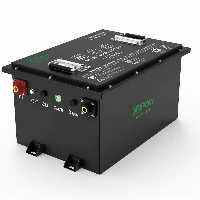
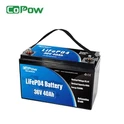
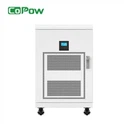
If you're looking to find out which RV battery manufacturers have a good reputation on the market, we've put together this list just for you.
Taking an objective approach, we'll introduce each brand one by one, covering their background, areas of expertise, certifications, technical highlights, safety features, and customization capabilities.
At the end of the article, we'll explain why CoPow is worth your investment. We invite you to keep reading.

What is the core landscape of the RV battery industry?
After years of market reshuffling, the RV battery industry is beginning to take a clearer shape.
Today, global supply is mainly supported by three forces: Chinese manufacturers, European and American brands, and cross-border sales channels. However, the supply chain is still concentrated among a few well-known players. Top-tier brands like CATL, Victron Energy, and Corvus Energy usually have high minimum order requirements. They rarely open specialized production lines for a single custom order.
In such cases, you might consider some second-tier brands, such as CoPow. These manufacturers not only offer flexible production capabilities but also deliver product quality comparable to top-tier brands. This gives customers more options to meet different needs.
It's also important to note that RV batteries serve two main purposes. One type is a starting battery, which powers the RV's engine. The other is a deep-cycle battery that provides stable power for onboard appliances.
List of RV Battery Manufacturers - In no particular order
| Brand | Primary Industry / Sector | Founded | Region / Headquarters |
| CoPow | LiFePO4 Customization (RV, Marine, Industrial) | 2010 | Shenzhen, China |
| Battle Born | Premium Lithium Batteries (RV & Off-grid) | 2012 | Nevada, USA |
| Renogy | Integrated Solar & Off-grid Energy Ecosystems | 2010 | California, USA |
| LiTime | High-Value Retail Lithium Batteries | 2009* | Shenzhen, China |
| Redodo | Affordable & Practical Lithium Solutions | 2022 | Shenzhen, China |
| Trojan | Deep-Cycle Battery Technology (Lead-Acid & Li) | 1925 | USA |
| GS Yuasa | Industrial & Automotive Dual-Chemical Systems | 2004 | Japan |
| CATL | Tier-1 Battery Cell Manufacturing & ESS | 2011 | Ningde, China |
| BYD | Blade Battery Technology & High-Voltage Systems | 1995 | Shenzhen, China |
| EVE Energy | High-Capacity Cells & Fast-Charging Tech | 2001 | Huizhou, China |
CoPow Batteries - Deep Customization

CoPow Battery was founded in 2010 and is based in China. The company focuses on designing, making, and selling LiFePO₄ (lithium iron phosphate) batteries. They provide safe, durable, and affordable lithium battery solutions for RVs, boats, solar systems, golf carts, forklifts, energy storage, and many other devices.
Since day one, CoPow has been pushing the boundaries of battery technology. With years of experience in lithium batteries, the company continues to improve high-performance battery management systems, making its batteries smarter and more efficient. Thanks to continuous R&D, CoPow's RV batteries now match-and sometimes even outperform-top-tier brands in safety, energy efficiency, and lifespan.
Looking forward, CoPow plans to invest even more in lithium RV battery development. The goal is simple: meet the growing demand for high-quality, versatile solutions while continuing to deliver reliable power to customers around the world.
Battery technology: LiFePO4 (lithium iron phosphate) technology - EV Grade-A battery cells - High-rate discharge - Self-heating technology.
Production capacity: CoPow's factory is located in Shenzhen, China, covering approximately 32,000 square meters. It is a medium-to-large lithium battery manufacturing facility that employs around 200 staff members, including more than 30 senior R&D engineers.
In terms of production capacity, CoPow is equipped with five advanced PACK (cell assembly) lines and four fully automated packaging lines. The factory can produce approximately 50,000 LiFePO4 battery packs per month. This setup allows them to handle both small custom orders and large-scale procurement requests with ease.
safety: CoPow RV batteries use Grade A LiFePO4 cells from trusted manufacturers like EVE Energy, BYD, CATL, and Gotion High-Tech. These cells are built for safety and long cycle life.
Qualification Certification:
- CE – meets European safety and performance standards.
- RoHS – free from hazardous substances, environmentally friendly.
- UN38.3 – certified for safe lithium battery transportation.
- MSDS – detailed chemical safety information.
- UL – recognized for U.S. safety compliance.
- IEC 62619 – industrial lithium battery safety standard.
- TÜV-CB – international electrical safety certification.
- ISO system certifications (e.g., ISO 9001) – guarantee consistent quality management.
Customization capabilities:
| Category | Customization Options | Details |
|---|---|---|
| Capacity Customization | 100Ah–600Ah and above | Expandable through series or parallel connections |
| Voltage Customization | 12V / 24V / 36V / 48V / 72V | Set according to customer requirements |
| BMS Customization | In-house development or adjustment per customer requirements | - Temperature sensor positions can be fine-tuned based on cell placement- Charge and discharge parameters can be set according to the RV system- Supports RS485 / CAN / Bluetooth / APP integration for real-time monitoring |
| PACK Structure & Housing Customization | Housing Materials | ABS engineering plastic / Metal aluminum / Reinforced shock- and fire-resistant versions |
| Dimensions & Mounting Options | OEM sizes customizable; side/top terminal positions adjustable per drawings; optional sliding rail interfaces and mounting clips can be added | |
| Modular Solutions & Expansion Capability | Module Combinations | 4×100Ah → total 400Ah system2×200Ah → total 400Ah systemMultiple series and parallel combinations → support higher voltage and capacity |
| Safety Configuration Customization | Protection Measures | Enhanced short-circuit protection, high-rate discharge safeguards, multi-zone thermal protectionBMS temperature control with alarms and automatic shutoffAutomatic cell balancing |

Battle Born Batteries

Founded in 2012 and headquartered in Nevada, USA, Battle Born Batteries was created by a group of engineers and entrepreneurs passionate about renewable energy and energy storage. Since its inception, the company has focused on delivering safe, reliable, and durable lithium battery products to customers worldwide, establishing a leading position in the RV market.
Their 12V LiFePO4 RV batteries are particularly popular for their high safety, long lifespan, and outstanding performance. As a homegrown American brand, Battle Born Batteries specializes in providing high-quality lithium batteries for a wide range of applications, including outdoor activities, RVs, solar systems, and backup power.
However, as a well-known brand, Battle Born Batteries' products have a longer production cycle and a higher price point.
Battery Technology: liFePo4
Security: They use LiFePO4 technology, a safe and reliable battery solution. Each battery also features an intelligent Battery Management System for real-time monitoring.
As a top-tier brand, they follow strict and well-established safety testing protocols to ensure maximum reliability.
Certification: UL, UN38.3 transportation certification, RoHS, and ISO 9001 quality management certification.
Renogy

Founded in 2010, Renogy has grown into a leading brand in the RV conversion and off-grid solar energy sectors.
The company's journey began at Louisiana State University, where Dr. Yi Li and a group of students started a solar panel sales project driven by a passion for research and entrepreneurship. Through deep industry involvement, Renogy has successfully raised multiple rounds of funding, with its valuation surpassing $1 billion by 2026.
Headquartered in Ontario, California, the company has developed a unique business model that combines U.S. R&D with a Chinese supply chain, leveraging China's top-tier lithium and photovoltaic production capabilities to enable efficient manufacturing and global distribution.
Renogy's core competitive edge lies in its shift from pure hardware sales to deep integration. It no longer just provides individual batteries but offers a complete ecosystem that includes controllers, inverters, solar panels, and energy storage batteries.
This full-stack system service addresses the pain points RV users face with compatibility issues and complex installation processes during DIY projects.
For off-grid living enthusiasts who prioritize convenience and system stability, Renogy is not just a brand-it's a mature, one-stop energy solution.
Cell Technology: LiFePO4
Safety Features: Their LiFePO₄ cells are UL1973 certified and come with a built-in Battery Management System. Designed for the unique demands of RV use, the battery's internal and external structure is reinforced for added shock resistance. The housing features an IP67-rated high-strength sealed and flame-retardant design.
One of the most popular features is the integrated RV-C protocol in the BMS, enabling seamless connection with all types of RV electrical devices.
Accredited Qualification: Certified to UL 1973, UL 1642, IEC 62133, UN 38.3, and compliant with MSDS, RoHS, FCC, CE, and UKCA standards.
Also recognized by IC, Frost & Sullivan, and the European Innovation Award, with full compliance support from RVIA.
LiTime

Headquartered in Shenzhen, China, LiTime has become one of the fastest-growing lithium battery brands worldwide.
If Renogy is the leader in the RV industry, LiTime is undoubtedly the king of value in the RV battery sector. LiTime's strategy is clear: offer batteries with the same or even higher capacity and cycle life than other brands, but at more competitive prices.
Originally known as Ampere Time, LiTime rebranded globally to LiTime at the end of 2022, aiming to build a more modern, internationally-oriented brand image.
However, it's important to note that LiTime's business model primarily focuses on retail, not bulk wholesale or deep customization. If you're looking for large-scale purchases or custom RV batteries, LiTime may not fully meet your needs. While they offer standard BMS customization, they may not be as flexible in deep customizations compared to some second-tier brands.
Therefore, LiTime is best suited for consumers who only need a few batteries. Their products are diverse, feature-rich, and highly competitive in price. If you're looking for a few high-value batteries for your RV, LiTime is definitely worth considering. But for users who require larger-scale customization and professional support, other brands might be a better fit.
Energy Storage Technology: LiFePO4
Risk Management: LiTime's RV batteries rely heavily on the multi-level protection mechanisms of their battery management system. This system features more than 20 active protection logic functions.
The system is equipped with two-stage fuse protection, is internally filled with fire-resistant insulation material, and incorporates highly sensitive temperature sensors. If the cell temperature exceeds 65°C, the system will automatically cut off the power supply.
However, it is important to note that these stringent protection mechanisms are not suitable for all scenarios. In hot regions, the standard protection thresholds will be triggered frequently. In such cases, users must contact a professional manufacturer to adjust the BMS protection parameters according to their actual needs.
Accredited Qualification: UL 1973,CE / RoHS,FCC,UN 38.3,IP65,IP67
Redodo

Redodo was founded in 2022 and is a subsidiary of Shenzhen Maicheng Technology Innovation Co., Ltd. In the RV battery sector, Redodo is often compared to LiTime.
LiTime is the market leader in value-for-money products. Redodo is a strong competitor hot on its heels. While their market strategies are similar, Redodo brings unique innovations to product details.
The brand's core philosophy is clear: avoid unnecessary gimmicks and prioritise practicality. The 12V 100Ah Low-Temp series is a prime example of this innovation. When the ambient charging temperature drops below 0°C, the system automatically activates a heating mechanism to prevent damage to the battery cells caused by crystallization.
Redodo's customisation policy is identical to LiTime's. If you require deep customisation, they will not meet your needs. However, if you're after stability and affordability, Redodo is definitely a solid choice.
Power Storage Solutions: EV Grade-A battery cells High-rate discharge Self-heating technology
Safety Standards: Intelligent Battery Management System - Battery housing made of UL 94-V0 flame-retardant ABS plastic - IP65 protection rating.
Approved Certification: UL 1973, IEC 62133, CE, FCC, UKCA, UN 38.3, MSDS, ISO 9001 & ISO 14001
Trojan Battery Company

I'm sure many of you have heard of Trojan Battery. The company has been in business for 100 years and is a leader in deep-cycle battery technology. It has ISO 9001-certified factories worldwide.
Trojan's battery products span the full range, from traditional to cutting-edge, and they know a lot about both lead-acid and lithium-ion battery technologies.
Their batteries are of the best quality, using the best materials from the casing to the cells. If you have a lot of money, Trojan batteries are the best.
But to be honest, for the same price, we have other options that are better value for money.
GS Yuasa

As a benchmark in Japanese industrial manufacturing, GS Yuasa was formed in 2004 through the merger of two century-old giants-Nippon Battery Co., Ltd. and Yuasa Battery-and has long served as an original equipment supplier to top global automakers such as Honda and Toyota.
GS Yuasa's core competitive advantage lies in its proprietary "Dual Chemical Systems" technology, which integrates lithium-ion and lead-acid batteries within a single architecture. The lithium-ion battery provides over 90% of the primary power output, while the lead-acid battery serves as a highly reliable backup power source.
In terms of safety strategy, GS Yuasa shares Trojan's "zero-risk tolerance" principle, with its Battery Management System enabling precise monitoring at the module level. Regarding thermal management, the brand has moved away from traditional cooling fans and instead achieved passive cooling by optimizing the battery's internal thermodynamic structure.
In terms of compliance, this product line has not only obtained UL 1973, UN 38.3, CE, RoHS, and ISO 9001/14001 certifications and meets the requirements of EU Regulation 2022/720, but its lithium-ion battery technology has also passed rigorous aviation-grade testing.
With these technical specifications and safety standards, GS Yuasa has established itself alongside Trojan as a top-tier global brand. However, the high R&D and manufacturing costs mean this is a professional-grade product aimed at the high-end market.
CATL

You may not find RV batteries labeled "CATL" on the market, as CATL does not sell batteries directly. Instead, their batteries are typically installed in RVs as original equipment.
In addition, CATL serves as an upstream supplier, providing high-quality lithium-iron phosphate cells to brands such as CoPow, Renogy, and LiTime. The batteries from these brands typically use 3.2V 280Ah or 302Ah lithium iron phosphate cells manufactured by CATL.
As the world's leading battery supplier, CATL's commitment to safety rivals that of GS Yuasa and Trojan.
First, its cells utilize No Propagation technology, meaning that even if a single cell in the battery pack malfunctions, it will not affect the others, effectively nipping risks in the bud. Second, its in-house-developed BMS not only performs basic functions such as voltage monitoring but can also predict the risk of internal cell short-circuits in advance.
In terms of internal and external battery design, CATL employs the "Taishan Architecture," a "military-grade design" sought after by many customers. The battery's impact resistance is 4 times that of civilian batteries, and its waterproof rating is IP68, meaning it remains functional even when submerged in water.
The certifications CATL has obtained meet the industry's highest standards; whether it's GB 38031-2025, UL 9540A, or UL 1973, they all rank among the top.
Therefore, if ordinary consumers wish to experience CATL's technology, they can consider working with downstream lithium-iron phosphate battery manufacturers like CoPow. This approach not only ensures product quality but also offers greater affordability.
BYD

CATL operates in the background as a supplier, but BYD has a fairly complete supply chain.
Its most famous technology is the Blade Battery, which saves a lot of space in RVs and uses 50% more space than lithium-ion batteries.
However, like CATL, BYD installs its batteries directly into the vehicle as factory-installed RV batteries; as a result, it is rare to see batteries bearing the BYD logo on the market.
What's more, BYD is focusing on high-voltage systems, such as 48V or 400V RV batteries. If you have a 12V to 24V RV battery, you can choose a secondary brand like CoPow. In addition to using CATL cells, these brands also use lithium iron phosphate cells from BYD.
BYD's battery cells have also been certified by numerous well-known organisations, including UL 1973, UN 38.3, CE, IEC 62619, and ISO 26262.
EVE Energy

If you're an RV battery modification enthusiast, you've likely heard of the EVE LF280K-a battery, manufactured by EVE Energy, which is quite popular in the DIY community. Its 280Ah cells have practically set the standard for high-capacity RV batteries.
With the surge in RV power consumption, EVE has introduced higher-capacity cells, enabling RVs to store 10 kWh or even 20 kWh of power within limited space.
Although EVE doesn't match CATL in overall strength, it has demonstrated strong competitiveness in certain areas. For example, its K-series cells boast an impressive cycle life of 6,000 to over 8,000 cycles, along with exceptional ultra-fast charging technology.
To address range anxiety in RVs, its LFP batteries support a charging rate of 3C or higher, allowing users to fully charge their batteries in the time it takes to have a meal.
Additionally, its certifications cover carbon footprint, recycled material content, and long-term performance, making its battery cells highly competitive in the European high-end RV market.
You may not see RV battery packs manufactured by EVE online, as they primarily sell cells directly to DIY battery enthusiasts.
If you wish to purchase a complete RV battery pack, we recommend choosing a professional RV battery manufacturer that has already integrated EVE's cells into its battery packs.
How CoPow Lithium RV Batteries Can Help You Profit in a Competitive Market?
We know that major brands offer high-quality products, while niche brands offer lower prices. So, is there a brand that combines the quality of a major brand with the affordability of a niche brand? The answer is: CoPow.
CoPow is also based in Shenzhen, China, a hub for major manufacturers, and is an experienced manufacturer of RV batteries.
Since its establishment in 2010, CoPow has focused on high-end customization and niche markets, accumulating extensive experience in custom solutions for golf carts, forklifts, RVs, marine applications, and battery energy storage, with a wealth of successful case studies.
Getting back to the main point, what exactly can you gain by choosing CoPow batteries? Specifically, there are several key benefits:
High Profit Margins: CoPow is a manufacturer that produces lithium-ion RV batteries directly. Choosing CoPow means you can avoid brand markups and middleman markups, thereby securing higher profit margins.
Guaranteed Battery Quality: As mentioned earlier, the battery cells used in CoPow's lithium iron phosphate batteries are sourced from renowned manufacturers such as CATL, BYD, and EVE. This means you can obtain cells with over 6,000 charge-discharge cycles, an IP67+ rating, and high safety standards at a lower cost.
Customizable Battery Management System (BMS): Many batteries on the market tout their BMS's multiple layers of protection, but the reality is far more complex than it seems. For example, if you live in a region with year-round cold weather, you may need to customize the BMS protection logic to suit your specific needs-a capability not found in most off-the-shelf battery products.
More Flexible Self-Heating Technology: While many manufacturers' batteries feature self-heating technology, just like with custom BMS parameters, CoPow can tailor this technology to meet your specific needs.
Service and Endorsement: CoPow offers one-on-one consultation services. Whether you have specific requirements for battery dimensions, communication protocols, or capacity, their team can provide a high-quality solution within 48 hours. Additionally, CoPow holds a full suite of certifications, including UL, CE, UN38.3, and IEC. As a distributor, you can leverage these resources directly, thereby saving on costly market-access fees.
What kind of after-sales support does CoPow offer?
CoPow promises lifetime technical support; even if issues arise with non-core components (such as connectors or casings) after 10 years, CoPow will still provide repair solutions or genuine replacement parts.
Regarding warranties, CoPow offers a 5- to 10-year warranty (extendable to 8- to 10-year terms for certain high-end models or specific projects).
During this period, if you have any questions, you can contact their engineering team directly for one-on-one assistance; they will respond within 24 hours.
conclusion
The RV battery market has clearly established a tiered structure: from industry leaders like Trojan and CATL, to companies like LiTime and Redodo that focus on the retail market, and CoPow, which specializes in high-end customization-each has its own niche.
But when it comes to finding the best RV battery for you, CoPow is the obvious choice. Not only does it offer guaranteed quality and affordable prices, but it can also be customized to meet your specific needs.
If you already have an idea in mind, please feel free to contact us at any time-we'll respond within 24 hours. Wishing you all the best!