Why choose a Chinese lithium iron phosphate battery supplier? Because they offer better value for money. China boasts more mature lithium iron phosphate battery technology and stronger custom development capabilities, but not all manufacturers possess these advantages. To find a reliable partner among the many Chinese suppliers, you need to consider a variety of factors.
We've written this article to help you save time. With an objective and impartial approach, we've selected reputable brands and provided an overview of their backgrounds and how they made it onto your "top" list.

CoPow - Intelligent Safety-Driven Custom LiFePO4 Battery Manufacturer

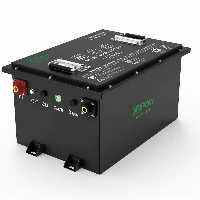
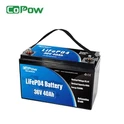
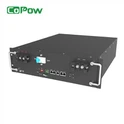
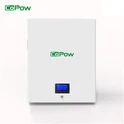
CoPow is a manufacturer specializing in the system integration and deep customization of LiFePO4 batteries. Its parent company is Shenzhen Huandu Technology. CoPow has its own R&D team, battery pack production system, and BMS development capabilities, and primarily serves overseas markets with products such as golf cart batteries, forklift batteries, RV batteries, marine batteries, and energy storage systems.
Compared to standardized manufacturers like CATL and BYD, CoPow offers superior customization capabilities, able to tailor voltage, capacity, dimensions, casings, communication protocols (CAN, RS485), Bluetooth, heating functions, GPS, displays, and various special mounting structures according to customer requirements.
Therefore, CoPow can be defined as an "intelligent, custom-oriented LiFePO4 battery manufacturer."
For overseas customers requiring ODM/OEM battery packs, brand customization, specialized structural designs, and rapid response, CoPow is one of the top-tier pack suppliers worth considering.
What Are CoPow's Key Advantages Over Other Brands?
- Deep Customization Capabilities Far Exceed Those of Most Battery Cell Brands: CoPow can customize battery dimensions, casing structures, battery management system functions, communication protocols, display systems, heating functions, GPS positioning, and brand aesthetics according to customer needs, enabling highly personalized design from the battery cell to the complete battery system.
- Focus on Niche Application Scenarios: CoPow strategically targets niche markets such as golf carts, forklifts, marine vessels, and energy storage. With a deep understanding of battery structure design, installation methods, operating environments, and functional requirements for different application scenarios, CoPow is able to provide solutions that are closely tailored to end-user equipment.
- Top-Tier Cell Resources + Flexible Service Model: CoPow utilizes Grade A battery cells from leading brands such as CATL, EVE, and BYD. The company combines the production capacity of medium-to-large-scale factories with the responsiveness of small and medium-sized enterprises. Compared to large battery conglomerates, which often require minimum order quantities of tens of thousands of units and have lengthy development cycles, CoPow offers greater flexibility in project support, sample development, technical communication, and after-sales service, enabling customers to bring their products to market more quickly.
- Certifications: UN38.3 Transportation Certification, IEC 62619 Safety Certification, ISO 9001 Quality Management System Certification, IATF 16949 Automotive Quality Management System Certification, CE Certification for the European Market, and more.
- Battery Cell Suppliers: CATL, EVE Energy, BYD, and Gotion High-Tech, all recognized as leading Tier 1 battery manufacturers in China.
- Factory Scale: Over 32,000 m² of modern manufacturing facilities with automated production lines and a dedicated R&D team.
- Custom Development Capabilities: CoPow offers comprehensive, one-stop customization services ranging from cell selection and structural design to battery management system development, software communication, and branded packaging, capable of meeting over 90% of project-specific customization requirements.
Project Experience and Case Studies: CoPow has successfully completed hundreds of customized lithium-ion battery projects for clients in over 40 countries worldwide. Our products are widely used in golf carts, forklifts, marine vessels, recreational vehicles, energy storage systems, and industrial equipment.
Service Level: CoPow provides prompt pre-sales and after-sales support, including technical consulting, custom development, project management, and long-term technical support.
Contact Information:
Website: www.copowbattery.com
Email: admin@huanduytech.com
Office Address: Chengtouxin Times Building, No. 2009, Pingshan Avenue, Pingshan District, Shenzhen, Guangdong, China
Business Scope: The company primarily manufactures and sells lithium-ion batteries for golf carts, forklifts, RVs, marine applications, and trolling motors, as well as energy storage systems for residential, commercial, and industrial use. We also provide OEM and ODM customization services.
CATL - A leading supplier in the global lithium-ion battery industry

Contemporary Amperex Technology Co., Ltd. (CATL) is currently recognized globally as the leader in the lithium-ion battery industry and is the world's largest manufacturer of power batteries and energy storage batteries.
Founded in 2011, the company is headquartered in Ningde, Fujian Province, China. Its customers include globally renowned automotive brands such as Tesla, BMW, Mercedes-Benz, Volkswagen, Ford, NIO, Li Auto, and Xpeng. CATL holds a leading position in the industry in terms of production capacity, technological capabilities, and market share.
According to the latest market data for 2026, CATL's global market share in the power battery sector remains at around 40%, while its share in the Chinese market approaches 50%, far outpacing its competitors.
However, for buyers, CATL's greatest strength is also its biggest barrier to entry.
As a global leader, CATL maintains extremely strict supply chain management and prioritizes serving large OEMs, major energy storage integrators, and Fortune 500 companies. Small and medium-sized buyers often face challenges such as high minimum order quantities, limited customization flexibility, and lengthy development cycles. Consequently, many battery pack manufacturers opt to purchase CATL's battery cells and then perform secondary assembly and customized development.
When Should You Choose It?
When project scale is very large and supply chain stability is more important than price: For large-scale energy storage projects, new energy vehicle projects, or long-term bulk procurement projects, CATL is a top priority due to the need for continuous and stable supply over the coming years and the requirement to mitigate supply chain risks.
When clients place a high premium on brand recognition and project endorsement: If end-users, investors, or government projects prefer internationally renowned brands and wish to enhance project competitiveness and market trust by using CATL batteries, choosing CATL typically makes it easier to gain client approval.
When projects demand the highest standards of safety, cycle life, and technological maturity: For applications involving large-scale energy storage systems, high-value equipment, or long-term operational projects, globally market-proven, mature products and leading-edge technology are essential. In such cases, CATL delivers industry-leading product reliability and technical support.
BYD - Globally Leading Vertically Integrated LFP Battery and New Energy Solutions Provider

BYD and CATL are both among the top players in the lithium iron phosphate battery sector.
Founded in 1995 and headquartered in Shenzhen, China, BYD operates in multiple sectors, including new energy vehicles, batteries, energy storage, rail transit, and electronics manufacturing.
The key difference between BYD and CATL is that BYD not only manufactures batteries but also possesses a complete new energy vehicle industrial chain.
In the energy storage market, BYD has extensive project experience, with products covering residential, commercial and industrial, and large-scale grid-level energy storage projects. The company enjoys high brand recognition in Europe, North America, Australia, and the Middle East.
What Makes BYD the Right Choice?
When safety is a top priority: If your application involves energy storage systems, commercial vehicles, construction equipment, or other high-value assets, and you are looking to adopt globally proven, high-safety LFP technology, BYD is a highly reliable choice.
For stable and cost-competitive bulk supply: BYD possesses a complete industrial chain and substantial production capacity.
When end customers prefer leading international new energy brands: The project requires enhanced market trust, competitive bidding strength, or brand image.
EVE Energy - High-Volume Supplier With Excellent Cost-to-Quality Ratio

EVE Energy was founded in 2001, is headquartered in Huizhou, Guangdong, and was listed on the Shenzhen Stock Exchange in 2009.
After more than two decades of development, EVE Energy has established three major business segments: consumer batteries, power batteries, and energy storage batteries. It is one of the few Chinese companies with global competitiveness in both the power battery and energy storage battery sectors.
In the lithium iron phosphate battery sector, EVE Energy offers a product portfolio of high-capacity LFP cells ranging from 100Ah to 628Ah.
Among these, the 314Ah energy storage cell (MB31) has become one of the most mainstream standard products in the global energy storage market and is widely adopted by various energy storage system integrators.
When Should You Choose EVE Energy?
When you want to achieve quality comparable to CATL while keeping procurement costs under control.
When you need to source energy storage cells or develop energy storage projects.
If you are a battery pack manufacturer or an OEM: EVE Energy offers a comprehensive portfolio of standardized cell products and reliable supply capabilities, serving as a key cell supplier to battery pack manufacturers, golf cart battery manufacturers, forklift battery manufacturers, RV battery manufacturers, and marine battery manufacturers.
Gotion High-Tech - Volkswagen-Backed Tier One Battery Supplier

Gotion High-Tech was founded in 2006 and is headquartered in Hefei, Anhui. Since receiving a strategic investment of approximately 24% from the Volkswagen Group in 2020, its international influence has grown significantly.
Currently, Gotion High-Tech's business scope covers power batteries, energy storage batteries, battery materials, battery recycling, and energy solutions. Although its market share has not yet reached the levels of CATL and BYD, Gotion High-Tech has long maintained a position in the top tier of China's power battery and energy storage battery sectors.
The company not only manufactures battery cells but has also established a comprehensive supply chain covering cathode materials, anode materials, electrolytes, separators, and battery recycling systems. It possesses strong competitive advantages in the 280Ah and 314Ah energy storage cells as well as prismatic power battery cells.
In recent years, the company has prioritized the development of the energy storage market, achieving rapid growth in shipments for commercial and industrial energy storage, large-scale energy storage power stations, and overseas energy storage projects.
Three Reasons to Choose Guoxuan High-Tech:
As a global Tier 1 battery cell supplier, Guoxuan High-Tech offers strong long-term supply stability: Guoxuan High-Tech possesses a comprehensive battery cell manufacturing system and a well-established materials supply chain, and has received strategic investment support from the Volkswagen Group.
Automotive-grade quality system with excellent cell consistency: The company has long served the new energy vehicle market, with its production and quality management systems established in accordance with automotive-grade standards. The company excels in cell consistency, cycle life, and batch stability.
Balancing Technical Strength and Cost Competitiveness: Compared to some leading international brands, Guoxuan High-Tech is able to offer more competitive pricing. The company continues to invest in R&D in the fields of LFP and LMFP technologies, achieving a good balance between energy density, safety, and total cost of ownership.
CALB - Tier One Energy Storage And Power Battery Supplier

Headquartered in Changzhou, Jiangsu, CALB traces its origins to China's aviation industry, giving it a strong manufacturing and engineering background within the sector.
CALB has long ranked among the top five in China's power battery market and is a key supplier to the new energy vehicle and energy storage sectors.
In terms of product portfolio, CALB's business scope covers power batteries, energy storage batteries, battery systems, and related materials. Its LFP battery cells are widely used in new energy vehicles, commercial and industrial energy storage, grid energy storage, and certain industrial equipment applications.
In recent years, the company has continued to expand its investment in mainstream energy storage cell markets, such as 280Ah and 314Ah, while steadily increasing production capacity, thereby demonstrating a growing market presence in energy storage projects.
For energy storage system integrators, commercial and industrial energy storage project developers, forklift lithium-ion battery manufacturers, AGV equipment manufacturers, and pack manufacturers requiring large-scale cell procurement, Zhongchuan New Energy is a low-risk, cost-effective Class A cell supplier.
Three Reasons to Choose CALB:
Guaranteed Large-Scale Production Capacity: CALB operates multiple large-scale production facilities and has plans to continuously expand its production capacity.
Stable Performance and High Cost-Effectiveness: Its LiFePo4 battery cells meet industry-leading standards in terms of cycle life, safety, and consistency, while offering more competitive pricing than comparable products.
Extensive Experience in the Energy Storage Market and Strong Project Execution Capabilities: In recent years, CALB has seen rapid growth in shipments for commercial and industrial energy storage as well as large-scale energy storage power plants, and its products have been validated through numerous real-world projects.
SVOLT Energy - Automotive-Grade Power And Energy Storage Battery Manufacturer

SVOLT Energy is an emerging power battery company. While it may not yet rival the top-tier brands, it possesses strong capabilities in technological innovation and automotive-grade manufacturing.
The company originated from Great Wall Motor's battery division and began operating independently in 2018, bringing with it a strong heritage in R&D for new energy vehicle batteries.
Its prismatic LiFePo4 batteries are highly competitive in terms of fast charging, safety, space utilization, and cycle life, and have already achieved large-scale mass production. The new generation of prismatic batteries launched in recent years even supports ultra-fast charging and boasts a cycle life exceeding 5,000 cycles.
In the energy storage sector, CATL has experienced rapid growth in recent years, with a product portfolio spanning cells, modules, battery packs, as well as commercial and industrial (C&I) and large-scale energy storage systems.
Three Reasons to Choose SVOLT Energy:
One of the Key Drivers Behind the Prismatic Battery Approach: The structural design of prismatic batteries effectively reduces internal resistance, improves heat dissipation, and significantly enhances fast-charging capabilities. Its latest-generation products support 6C fast charging, reducing the charging time from 10% to 80% to less than 10 minutes.
Strong Expertise in Stacking Technology: Currently, many battery manufacturers still rely primarily on the winding process, while SVOLT Energy has long adhered to high-speed stacking technology. The stacking process offers advantages in cell consistency, safety, cycle life, and energy density, but it is also more challenging to manufacture.
Stronger automotive heritage than most energy storage brands: SVOLT Energy originated from the battery division of Great Wall Motor, so much of its R&D philosophy centers on new energy vehicles first, rather than simply producing energy storage batteries.
REPT BATTERO - High-Capacity Energy Storage Cell Specialist

Although many overseas customers may be more familiar with CATL, BYD, and EVE, within the energy storage industry, REPU Lanjun has gradually emerged as a leading brand that cannot be overlooked. Founded in 2017, the company is owned by the Fortune 500 firm Qingshan Holding Group.
As one of the world's largest nickel resource companies, Qingshan Holding has provided REPU Lanjun with strong resource and financial backing since its inception.
Unlike many power battery companies, REPT has focused its development efforts more on the energy storage market.
In recent years, its energy storage cell shipments have consistently ranked among the top globally. In the residential energy storage cell sector, its products even held the top global ranking for a time; in terms of overall energy storage cell shipments, its products have also entered the global top five. From a product perspective, REPT's most successful offerings are its 280Ah, 314Ah, and higher-capacity energy storage cell series.
What Makes It Worth Choosing?
Leading technology in high-capacity energy storage cells, resulting in lower system costs: REPT BATTERY was one of the first companies in China to promote 300Ah+ energy storage cells on a large scale, and has established an early presence in the 280Ah, 314Ah, 320Ah, and 345Ah energy storage cell markets.
Its price-performance ratio ranks among the top tier of leading brands: Compared to CATL and BYD, REPT BATTERY offers more competitive pricing; compared to some second-tier brands, its product consistency, automation levels, and project experience are more mature.
Backed by Qingshan Industrial, it enjoys advantages in raw material supply: REPT BATTERY is a subsidiary of Qingshan Industrial Group, one of the world's leading producers of nickel, stainless steel, and new energy materials.
Lishen Battery - State-Backed Comprehensive Battery Manufacturer

Lishen Battery is a true veteran in China's lithium-ion battery industry. Founded in 1997, it was one of the earliest companies in China to engage in the R&D and industrialization of lithium-ion batteries, predating CATL by more than a decade.
In its early days, the company supplied batteries to international brands such as Nokia, Samsung, and Motorola. Headquartered in Tianjin, it is currently majority-owned by a state-backed enterprise and has established a presence in the consumer electronics, electric vehicle, energy storage, and defense sectors.
Lishen Battery has a production capacity exceeding 31 GWh and has established manufacturing bases in Tianjin, Suzhou, Qingdao, Wuxi, and other locations.
Lishen Battery's most distinctive feature is its comprehensive product portfolio, which spans cylindrical cells, prismatic cells, pouch cells, power batteries, energy storage batteries, battery packs, and BMS systems-a strategy that differs from REPT's focus on energy storage or SVOLT's focus on power batteries.
What Situations Make Lishen Battery the Best Choice?
As one of China's earliest lithium-ion battery manufacturers, Lishen has accumulated extensive technical expertise: With nearly 30 years of experience in lithium-ion battery R&D, Lishen is one of the first companies in China to enter the lithium-ion battery industry. The company has long been involved in the development of power batteries and energy storage batteries, with a presence across multiple technology routes, including cylindrical, prismatic, and pouch cells.
State-Owned Background: Lishen is a state-controlled enterprise backed by strong capital and industrial resources.
Excellent Cell Consistency: Many pack manufacturers in the industry, such as CoPow, describe Lishen as follows: "Not as expensive as CATL, but the quality is still quite good." Lishen's lithium iron phosphate prismatic cells cover mainstream capacities including 180Ah, 230Ah, 272Ah, 280Ah, and 314Ah, and are widely used in energy storage systems, forklifts, power storage, and industrial equipment.
Hithium - Energy Storage Focused Battery Manufacturer

Hithium has emerged as a dark horse in China's energy storage industry in recent years and is one of the few emerging companies capable of directly challenging CATL and CATL's dominance in the sector.
Founded in 2019 and headquartered in Xiamen, Hithium specializes in the energy storage battery sector and has grown into a leading global supplier of energy storage cells and systems.
Hithium's growth has been remarkable. According to the 2025 global energy storage battery shipment rankings, Hithium has already secured a spot among the top two energy storage battery companies worldwide and holds a leading position in the large-scale energy storage sector.
Hithium's most renowned products include ultra-high-capacity energy storage cells ranging from 280Ah, 314Ah, and 587Ah to over 1,000Ah. Among these, its 1,175Ah energy storage cell is one of the first thousand-ampere-hour-class cells to achieve commercialization globally and is designed almost exclusively for large-scale energy storage power plants.
Why Choose It?
Focusing on the energy storage sector with a concentrated product and technology strategy: Since its inception, Hithium has prioritized the energy storage market, with its R&D, production capacity, and product roadmap almost entirely centered on energy storage applications.
High market recognition for high-capacity energy storage cells such as the 314Ah: Hithium was one of the first companies in China to promote 280Ah and 314Ah energy storage cells on a large scale, and its cells have been widely adopted by energy storage system integrators.
Rapid growth and extensive experience in implementing energy storage projects: The global energy storage market is growing rapidly, and Hithium's products have been deployed in numerous large-scale energy storage projects across Europe, North America, the Middle East, and Australia.
How to Choose the Right Chinese LiFePO4 Battery Manufacturer for Your Project?
1. Identify the project's application scenario
Different manufacturers specialize in different areas, such as energy storage systems, golf carts, forklifts, recreational vehicles, marine vessels, electric vehicles, or industrial equipment.
2. Evaluate Cell Sourcing and Quality Grades
It is important to understand whether the manufacturer produces its own cells or sources them externally, and whether its key partners include leading cell suppliers such as CATL, BYD, EVE, and Gotion.
3. Evaluate Customization Capabilities
If the project has specific requirements regarding dimensions, voltage, capacity, communication protocols, heating functions, Bluetooth monitoring, IP protection ratings, or exterior design, select a manufacturer with strong R&D and OEM/ODM capabilities.
4. Verify Certifications and Compliance Capabilities
Confirm whether the product holds the certifications required by the target market, such as CE, UL, UN38.3, IEC62619, MSDS, RoHS, etc., to avoid compliance issues during subsequent sales and import processes.
5. Consider Production Scale and Delivery Capabilities
Understand the factory's scale, level of automation, monthly production capacity, and lead times.
6. Evaluate Technical Support and After-Sales Service
A high-quality manufacturer not only supplies products but also assists with system design, parameter tuning, Battery Management System optimization, certification support, and after-sales service, thereby reducing project risks.
7. Compare Total Cost of Ownership Rather Than Unit Price
In addition to battery prices, comprehensively consider factors such as cycle life, warranty periods, transportation costs, after-sales service, and failure rates.
8. Review Actual Project Case Studies
Prioritize manufacturers with a track record of successful projects, particularly those with cases similar to your own in terms of project scale, application environment, and target market; these case studies are typically more valuable than promotional materials.
9. Assess R&D Capabilities
The size of a manufacturer's R&D team, the number of patents held, and its new product development capabilities reflect its ability to continuously optimize products and address complex requirements in the future.
10. Select a Supplier Suited to the Project Scale
Large brands are suitable for projects seeking long-term, stable supply and standardized products; mid-sized manufacturers with strong customization capabilities are better suited for OEM clients and projects with specialized applications.
Conclusion
China has become the world's most comprehensive manufacturing hub for the LiFePo4 battery industry chain, boasting the largest production capacity. Whether for power batteries, energy storage batteries, or niche applications such as golf carts, forklifts, RVs, and marine vessels, there are mature and competitive suppliers available.
However, it is important to note that there is no single "best lithium iron phosphate battery manufacturer" suitable for all projects. CATL and BYD are better suited for projects seeking global brand influence, ultra-large-scale procurement, and long-term supply stability.
Meanwhile, EVE Energy, Gotion, CALB, SVOLT, REPT, Lishen, and Hithium each possess distinct advantages in energy storage, electric vehicles, cost control, technological innovation, or specific application areas.
For customers requiring OEM, ODM, deep customization, and rapid response services, manufacturers with battery system integration capabilities, such as CoPow, often provide more flexible solutions that better meet practical application needs.
We hope this article helps you quickly understand the characteristics of China's leading lithium iron phosphate battery manufacturers and serves as a valuable reference for your procurement decisions.
If you are seeking a battery solution suitable for your project, we recommend engaging in further technical discussions with your target suppliers.
FAQ
Which City Is Best for Buying LiFePO4 Cells: Shenzhen, Huizhou, Ningde, or Dongguan?
If you are seeking world-class quality and long-term supply stability, Ningde is the perfect choice for you; if you are more focused on value for money and the ability to supply large-format battery cells, Huizhou will better meet your needs; if you require flexible customization services and rapid response times, Shenzhen and Dongguan are your ideal choices.
Who Are the Top Global Suppliers of Chemical Materials for LFP Batteries and Energy Storage?
In terms of influence across the entire industry chain, Albemarle, SQM, and Ganfeng Lithium control key lithium resources, while Hunan Yuneng and Dynanonic dominate the LFP cathode material market. For energy storage battery manufacturers, these companies constitute the most critical chemical material supply system in the global LFP industry chain.
which lifepo4 manufacturers are best for volume purchase and long-term supply stability?
The world's leading manufacturers of lithium iron phosphate batteries include CATL, BYD, EVE Energy, Gotion High-Tech, CALB, Hithium, and REPT Battero.
what are the most reliable lifepo4 cells for remote industrial backup?
In industrial backup power applications in remote areas, the most reliable LiFePO4 battery cells must offer high cycle life, low failure rates, long-term storage stability, and excellent consistency. Brands currently recognized within the industry include CATL, EVE Energy, BYD, REPT Battero, and Gotion High-Tech.
For communication base stations, oil and gas facilities, mining equipment, remote monitoring stations, and off-grid industrial energy storage projects, CATL's energy storage cells are generally considered one of the most reliable options. Their consistency and long-term operational stability have been extensively validated in large-scale projects; meanwhile, EVE Energy has achieved an ideal balance between cost and reliability with its mature 280Ah and 314Ah energy storage cell products.
If a project is located in hard-to-maintain areas such as high-temperature regions, deserts, or islands, it is recommended to prioritize automotive-grade or energy storage-specific Grade A cells, paired with mature BMS and remote monitoring systems. In fact, in remote industrial backup power systems, the importance of the BMS is often no less than that of the cells themselves. Even when using top-tier cells, overall reliability will still be compromised if thermal management, balancing strategies, or protection logic are poorly designed.