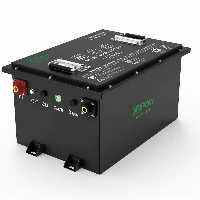
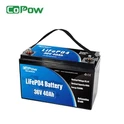
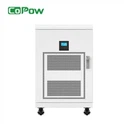
VNA forklifts are so unique that, in many cases, forklift batteries purchased online without careful consideration may not be suitable at all. You may encounter tricky issues such as mismatched battery sizes, insufficient battery weight leading to counterweight imbalance, incompatible CAN communication, incorrect instrument panel codes, and abnormal SOC displays.
This forces users to turn to suitable VNA forklift battery manufacturers, who are often better equipped to address issues such as compatibility, range, low-temperature performance, safety, battery compartment fit, and the lack of effective technical support and after-sales service guarantees.
In this article, we'll objectively recommend six professional VNA forklift battery manufacturers-covering both mainstream brands and lesser-known ones with comprehensive product lines and strong reputations-to help you find the ideal partner as soon as possible.
CoPow - OEM/ODM VNA Forklift Lithium Battery Solution Provider

Founded in 2010, CoPow is a lithium iron phosphate battery manufacturer based in Shenzhen, China. VNA forklift batteries are one of the key application areas for CoPow's lithium batteries.
In addition to researching, developing, manufacturing, and selling proven lithium forklift batteries, CoPow has also accumulated extensive and practical experience in providing customized forklift solutions. The company has provided tailored VNA forklift battery solutions to more than 20 warehouses, thereby building a solid customer base.
CoPow's lithium-ion forklift batteries are available in a variety of voltages, including 24V, 36V, 48V, 72V, and 80V. Furthermore, battery dimensions, capacity, communication protocols, low-temperature performance, and housing structures can be customized to suit different VNA forklift series.
Specifically regarding communication protocols and battery compartment compatibility, CoPow can optimize solutions to meet the CAN bus communication requirements of forklift brands such as Toyota, Linde, Junchi, and Crown. By precisely matching battery dimensions, weight, and balance requirements, CoPow effectively prevents issues such as instrument code errors, abnormal remaining charge displays, and communication failures.
If you are looking for a supplier that can truly resolve VNA forklift compatibility issues, support OEM/ODM customization, ensure compatibility with CAN communication protocols, and provide ongoing technical support, then CoPow is one of the VNA forklift lithium-ion battery solution providers worth considering.
Reasons to Choose CoPow:
Compatibility: Supports VNA forklifts from brands such as Toyota, Linde, Junchi, Crown, His, Yale, Mitsubishi, Komatsu, and Doosan. CAN Bus, RS485, instrument panel display, and controller parameters can be matched according to the specific model.
Dimensional Compatibility: Supports OEM/ODM customization; can be custom-made on a 1:1 basis according to the dimensions of the original battery compartment.
High-Rate Discharge Performance: Utilizes Grade A LiFePO4 cells with a cycle life exceeding 6,000 cycles, capable of sustained discharge at 1C or higher; also supports customization for higher peak discharge currents.
Battery Life: 6000-8000+ cycles (80% DOD), with a minimum service life of 8 years.
Warranty Period: We offer a 5- to 10-year warranty, or a warranty based on operating hours.
Cell Quality: Utilizes high-quality lithium iron phosphate cells from brands such as CATL, BYD, and EVE Energy.
Low-Temperature Performance: Operates normally at -20°C and is equipped with a self-heating system.
BMS Features: Includes protection against overcharge, over-discharge, overcurrent, short circuit, overtemperature, low temperature, and cell balancing; supports SOC calculation, fault diagnosis, data logging, Bluetooth monitoring, CAN Bus, RS485, and IoT remote monitoring.
Safety Certifications: Certification documents available for UN38.3, IEC62619, CE, RoHS, FCC, EMC, CB, UKCA, ISO9001, and IATF16949.
Customization Options: Voltage (24V/36V/48V/72V/80V), capacity, dimensions, weight distribution, communication protocols, display, GPS, 4G remote monitoring, self-heating function, and protection rating (IP65/IP67/IP68).
Contact Information
- Email: admin@huanduytech.com
- Official Website: www.copowbattery.com
- Office Address: Chengtouxin Times Building, No. 2009 Pingshan Avenue, Pingshan Street, Shenzhen, Guangdong, China
EnerSys
Many people have likely heard of the renowned brand EnerSys. As a globally recognized industrial battery company, EnerSys has deep technical expertise and a strong market presence in the forklift battery sector. Its products are widely used in warehousing and logistics, very narrow aisle (VNA) warehouses, automated warehouses, and large distribution centers, serving a broad customer base.
EnerSys was previously known for its lead-acid forklift batteries, but in recent years, its NexSys series of lithium-ion batteries has gradually become a key choice in the high-end electric forklift market.
For VNA forklifts-which place high demands on range stability, space utilization, equipment compatibility, and continuous operation capabilities-EnerSys offers forklift power solutions ranging from 24V to over 80V.
Our impression of EnerSys is that it has a mature product portfolio and an extensive service network; its localized services in Europe and the United States are particularly strong, though its prices are significantly higher than those of Chinese VNA forklift battery manufacturers.
Compatibility: Supports major VNA forklift brands such as Toyota, Linde, Jungheinrich, Crown, Yale, and Hyster. Features proven CAN bus communication integration capabilities and is fully compatible with vehicle controllers, chargers, and on-board instrument panels. However, flexibility is relatively limited when it comes to customization for non-standard models.
Warranty Period: Approximately 5 years (may vary by country and product series). Some NexSys lithium-ion battery products offer extended performance warranty programs.
Cell Quality: Utilizes a world-class international supply chain system to ensure cell consistency.
BMS Features: Includes precise SOC monitoring, cell balancing, overcharge protection, over-discharge protection, overcurrent protection, short-circuit protection, high/low temperature protection, fault diagnosis, data logging, CAN communication, charge management, and remote monitoring, powered by EnerSys' proprietary energy management platform.
Safety Certifications: Complies with international certification standards such as UL, CE, UN38.3, IEC62619, and RoHS, as well as North American and European safety regulations for industrial vehicle batteries.
Flux Power
Flux Power is a U.S.-based lithium-ion battery company founded in 2011 and headquartered in California. Flux Power has established a strong presence in the North American market and maintains long-term partnerships with numerous forklift manufacturers (OEMs) and large logistics companies.
For VNA forklifts, Flux Power's strengths lie primarily in the maturity of its products and its system integration capabilities.
Flux Power places a strong emphasis on data-driven operations. The company has developed the SkyBMS and SkyEMS platforms, which enable remote cloud-based monitoring of battery SOC, charging behavior, usage frequency, fault logs, and even fleet utilization.
For large warehouses with dozens or even hundreds of VNA forklifts, managers can immediately identify which vehicles have low utilization rates and which batteries are exhibiting abnormalities, thereby reducing the risk of downtime.
However, Flux Power primarily serves large enterprise clients such as Delta Air Lines, PepsiCo, and Caterpillar, as well as logistics fleet operators.
Compatibility: Supports major North American forklift brands and OEM projects, with numerous OEM certification cases; compatible with equipment such as counterbalance forklifts, narrow-aisle forklifts, and walkie pallet jacks.
Warranty Period: The official standard warranty period for all models has not been uniformly disclosed; terms vary depending on the project and customer agreement. In actual industry projects, the warranty period is typically around 5 years, with specific terms subject to the sales contract.
Battery cell quality: It utilises LiFePO4 technology. The official battery cell brand used in long-term fixed partnerships has not been disclosed.
BMS Features: The company has independently developed the SkyBMS battery management system and the SkyEMS cloud platform, which support functions such as SOC monitoring, voltage monitoring, temperature monitoring, overcharge protection, over-discharge protection, short-circuit protection, thermal protection, remote diagnostics, cloud-based data management, fleet utilization analysis, charging behavior analysis, and remote troubleshooting. The company is an industry leader in digital management.
Safety Certifications: The company has obtained UL 2271 certification (one of the first global certifications for forklift lithium-ion batteries), UL 2580 certification (for certain heavy-duty forklift products), and UL Listed certification. Utilizing the LiFePO4 chemistry, the company ranks among the top tier in the forklift lithium-ion battery industry in terms of safety certification standards.
BSLBATT
Founded in 2011 and headquartered in Huizhou, China, BSLBATT began by specializing in energy storage batteries before gradually expanding into the industrial vehicle market, including forklifts, AGVs, and aerial work platforms.
To date, the company has supplied more than 40,000 industrial lithium-ion battery systems to over 160 countries worldwide and has established a well-developed sales network in Europe and North America.
According to official data, BSLBATT's batteries are compatible with more than 36 forklift brands, including Toyota, Linde, Jungheinrich, Hyster, Yale, and STILL. In terms of smart technology, while BSLBATT does not focus on the SkyEMS platform like Flux Power does, its proprietary BMS and BSL Cloud systems similarly support functions such as SOC monitoring, temperature management, fault diagnosis, remote monitoring, cycle logging, and fleet management.
In terms of safety, BSLBATT is well-recognized within the industry for having obtained UL 2580 certification early on and publicly claiming to be one of the first companies in China to receive UL 2580 certification for lithium-ion batteries used in industrial forklifts.
ENEROC
ENEROC was founded in 2018 and is headquartered in Zhejiang, China. Its product portfolio includes forklifts, VNA forklifts, AGVs, and aerial work platforms.
Notably, ENEROC has received investment and technical support from CATL, and its U.S. subsidiary even promotes "ENEROC × CATL" as a key selling point.
Public records show that ENEROC has established partnerships with forklift manufacturers such as Linde, Jungheinrich, Hangcha, HELI, Doosan, Clark, and Hyundai, many of which are themselves ENEROC's customers.
Exide Technologies
Founded in 1888, Exide has a history spanning more than 130 years and is one of the oldest companies in the global industrial battery sector.
Its business covers forklifts, electric warehouse equipment, railways, mining, telecommunications, and energy storage markets, and it enjoys a high level of recognition in the industrial battery industry. However, for VNA Forklift, Exide's true strength lies not in lithium-ion batteries, but in its deep expertise in motive power.
Over the past few decades, Exide has been a major global supplier of lead-acid batteries for forklifts, with particularly strong performance in the European market; many long-established warehouses and logistics centers rely on Exide for their forklift lead-acid batteries.
In recent years, Exide has launched the Solition Material Handling lithium-ion battery platform, which utilizes LiFePO4 technology and is specifically designed for the forklift and material handling equipment market.
The platform's key selling points include high brand recognition as a European brand and deep integration with vehicle energy recovery systems. However, Exide is primarily viewed as a supplier of standardized VNA forklift batteries.
What to Consider When Choosing a VNA Forklift Battery Manufacturer?
Each situation must be analyzed on a case-by-case basis. The unique design of VNA forklifts means their batteries also have specific characteristics. Therefore, when selecting a model, we should pay special attention to the following key points:
1. Battery Compatibility
VNA forklifts have far stricter battery compatibility requirements than standard counterbalanced forklifts. VNA forklifts of different brands and models also vary significantly in terms of battery size, voltage platforms, installation methods, and communication protocols.
If the battery cannot communicate properly with the vehicle's control system, it may trigger instrument panel alarms, cause abnormal SOC displays, limit operating speed, or even prevent the vehicle from functioning normally.

2. Battery Weight and Counterweights
Three-way forklifts and narrow-aisle reach trucks have extremely high requirements for the vehicle's center of gravity balance. If the battery weight is insufficient, it will affect the rated load capacity and operational stability, and may even pose safety hazards.
Therefore, manufacturers must not only focus on battery capacity and range but also be able to adjust the battery weight or design counterweight solutions according to the original equipment manufacturer's (OEM) requirements.
3. Cell Quality and Cycle Life
High-quality manufacturers use Grade A LiFePO4 cells from well-known brands such as CATL, BYD, EVE, and Gotion, with a cycle life exceeding 6,000 cycles.

4. BMS Intelligent Management System
A mature BMS not only provides protection against overcharging, over-discharging, overcurrent, short circuits, and extreme temperatures but also monitors SOC, SOH, voltage consistency, and operational status in real time.
Capable suppliers can also offer remote monitoring via Bluetooth, 4G, GPS, CAN, RS485, and cloud platforms, enabling warehouse managers to track battery usage across the entire fleet in real time, detect potential faults early, and thereby reduce unplanned downtime.
5. Safety Performance and Certifications
It is important to verify whether the VNA forklift batteries from the selected manufacturer have obtained international certifications such as UN38.3, IEC 62619, CE, and UL, and to understand their thermal management design, fire protection design, and battery structural strength.

6. Low-Temperature Performance
If the warehouse involves cold-chain logistics or cold storage operations, low-temperature performance is a critical consideration. Standard lithium-ion batteries experience reduced charging efficiency and discharge capacity in cold environments. Professional VNA forklift battery manufacturers provide self-heating functions, thermal insulation designs, and low-temperature BMS protection strategies to ensure stable forklift operation even at temperatures as low as -20°C.
8. Customization Capabilities
Since VNA forklift application scenarios are relatively complex, and different customers have varying requirements regarding battery size, capacity, weight, communication protocols, protection ratings, and low-temperature functionality, a reputable VNA forklift battery manufacturer should be able to provide tailored solutions based on specific vehicle models and operating conditions.

9. Warranty Policy and After-Sales Service
Even high-quality VNA forklift batteries may encounter installation challenges. Therefore, it is equally important that suppliers provide rapid technical support, remote diagnostics, and a long-term supply of spare parts.
It is recommended to prioritize manufacturers that offer a warranty of at least 5 years, clear capacity retention rate commitments, and a global after-sales service network to minimize operational risks.
10. Industry Experience and Success Stories
Finally, don't focus solely on price; instead, pay attention to the manufacturer's industry experience and success stories. Manufacturers with extensive experience in VNA forklift projects will undoubtedly have a better understanding of the practical challenges in narrow-aisle warehouse applications. Reviewing their proven track record, long-term client partnerships, and actual operational data is often more valuable than simply comparing quotes.
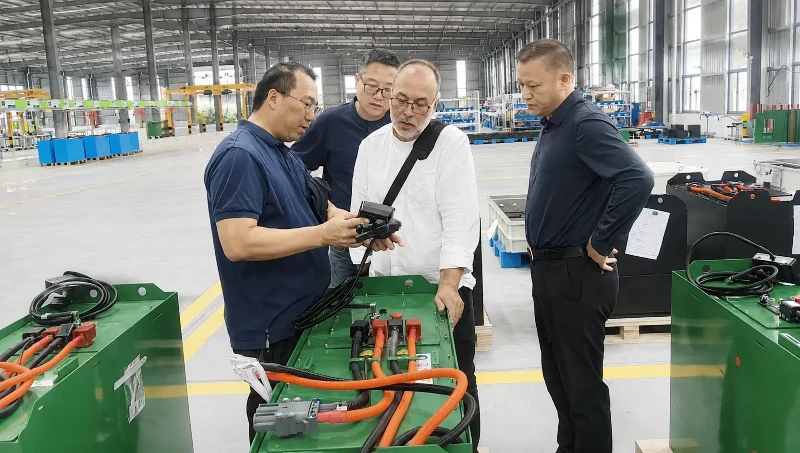
How CoPow Ensures Compatibility With VNA Forklift Systems?
How are CoPow forklift batteries compatible with various types of VNA forklifts? We use the following methods:
1. Custom Battery Compartment Dimensions
Before a project begins, CoPow collects information from the customer regarding the forklift model, battery compartment dimension drawings, and original battery specifications.
Based on the available space, CoPow then designs the battery housing dimensions, mounting hole locations, connector positions, and cable exit directions to ensure that the new battery can be installed directly into the existing battery compartment without requiring any cutting or modification to the vehicle body.
2. Matching Battery Weight with Counterweights
CoPow designs battery weight based on the original manufacturer's weight specifications, taking into account the vehicle model's rated load and stability requirements.
When necessary, CoPow may add steel counterweight modules or optimize the structural design to ensure that the vehicle's center of gravity remains within the range specified by the original manufacturer.
3. CAN Bus Communication Protocol Adaptation
VNA forklifts require real-time communication between the battery BMS and the vehicle controller. CoPow adapts the CAN protocol to meet the communication requirements of different forklift brands.
4. Operating Voltage Range Verification
Although many forklifts are rated as 48V, 72V, or 80V systems, compatibility with the operating voltage range varies among controllers from different brands.
CoPow will verify the rated voltage, maximum charging voltage, minimum cut-off voltage, and peak discharge current based on the specific requirements of the vehicle's controller.
5. Connector and Wiring Harness Compatibility
Different models of VNA forklifts use connectors of various specifications, including Anderson connectors, REMA connectors, DIN connectors, and OEM-specific interfaces.
CoPow can provide corresponding connector and wiring harness solutions based on the customer's original vehicle configuration, thereby reducing the amount of on-site modification work.
6. Customizing BMS Parameters
Operating conditions vary across different warehouses, resulting in different requirements for battery management strategies. VNA forklifts used in cold storage facilities, those used in three-shift warehouses, and those used for high-level stacking all have different protection parameters.
Standardized products often struggle to meet these specific needs.
Therefore, you need to seek out a forklift battery manufacturer like CoPow that offers deep customization capabilities to optimize the protection thresholds of the battery management system, ensuring that the protection features truly serve their purpose rather than becoming a hindrance.
7. On-Vehicle Testing and Remote Debugging
For more complex projects, CoPow will validate the samples prior to mass production. Testing typically includes:
- Communication stability testing
- Lift system operation testing
- Steering system testing
- High-current discharge testing
- Charging compatibility testing
CoPow VNA Forklift Battery Case Studies - Vietnam High-Density Warehousing Center VNA Forklift Battery Project
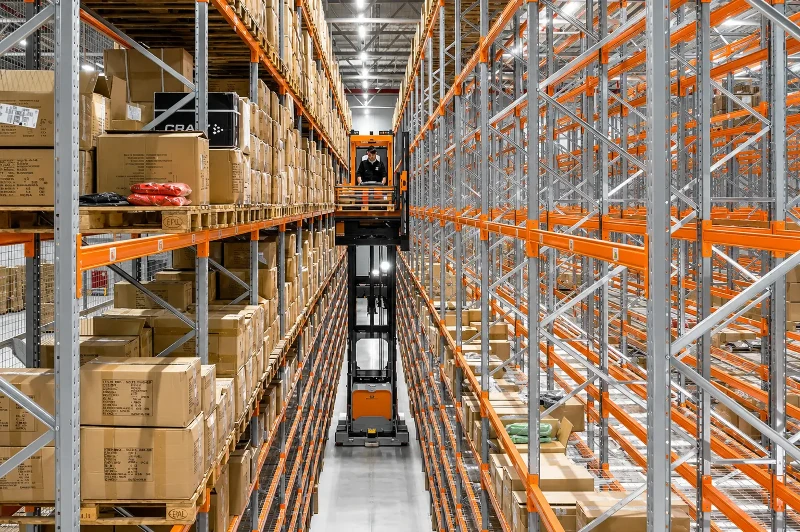
In 2025, a large logistics and warehousing center in Ho Chi Minh City, Vietnam, plans to upgrade the batteries in its VNA three-way forklifts from lead-acid to lithium-ion. The warehouse features racks over 12 meters high and extremely narrow aisles; the forklifts operate for more than 18 hours a day and are primarily used for pallet handling and high-level storage operations.
The customer's primary concern was not battery range, but rather compatibility. Since VNA forklifts have extremely high requirements for battery weight, CAN communication, and system stability, the customer had previously attempted to use generic lithium-ion batteries from local suppliers, but encountered a series of issues such as abnormal SOC readings, vehicle alarms, and unstable operation.
Based on the forklift model, battery compartment dimensions, original battery weight, and control system requirements, the CoPow engineering team custom-designed a 48VLiFePO4 battery for the VNA forklift.
This solution not only matches the dimensions of the original battery compartment but also ensures vehicle stability through a counterweight design. It successfully adapts to the CAN communication protocol, enabling seamless integration between the battery and the forklift's control system.
Since the project was put into operation, the forklifts no longer require frequent battery swaps and can be charged during downtime. The customer reported that the vehicles maintain stable performance during high-level operations and in narrow aisles, and communication-related alarms have not recurred.

Conclusion
We hope you now have a deeper understanding of VNA forklift battery manufacturers.
In fact, many factories are capable of producing forklift batteries. However, when it comes to VNA forklifts, the real issue has never been "whether batteries exist," but rather "whether they can be reliably used in forklifts."
Factors such as whether the battery's dimensions match the forklift, whether its weight meets the load-balancing requirements, whether CAN Bus communication is properly recognized, whether the controller is compatible, and whether it can operate reliably in cold storage environments are often more important than the price itself.
Ready to find the right VNA forklift battery?
Contact us today to get a VNA forklift battery solution and quote tailored specifically to your project!