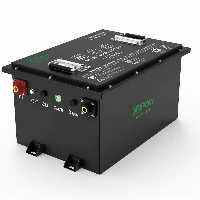
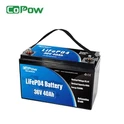
The RV battery is the core power source for every traveler, but do you truly understand it? This guide provides a comprehensive overview of battery types, application scenarios, and selection tips, helping you easily find the perfect power solution for your RV.

The Main Types of Batteries Used in RVs
When people talk about the types of RV batteries, the first things that come to mind are lithium batteries and lead-acid batteries. But what specific types are included in each category? Next, we'll reveal the answer for you.
* Please note that RVs actually use a dual-battery system: one starter battery dedicated solely to engine ignition, and another (or a bank of) deep-cycle house battery specifically for your daily living needs like cooking, lighting, and appliances. Never confuse the two.
1. By battery chemistry type
- Flooded Lead-Acid Battery
- AGM Battery
- Gel Battery
- Lithium-Ion Battery(LlifePo4)
Flooded Lead-Acid Battery
This is your classic lead-acid battery. Its positive and negative plates are submerged in sulfuric acid, so you have to keep an eye on it and regularly top it up with water. In an RV, these function as deep-cycle storage batteries, supplying power for your lights, fridge, TV, and other appliances.
| Category | Pros | Cons |
| Budget | Most affordable; lowest upfront cost for an RV power setup. | Short lifespan; skipping a single water refill can permanently ruin the battery. |
| Maintenance | Transparent status; health can be checked manually with a hydrometer. | High effort; requires regular access to the battery bay to manually top up distilled water. |
| Installation | Broad compatibility; works well with older RV charging systems. | Restricted placement; must be installed in a ventilated area and kept strictly upright. |
| Environment | Voltage tolerant; less sensitive to slight overcharging than sealed types. | Safety risks; releases hydrogen gas during charging and carries a risk of acid spills. |
| Road Conditions | Proven tech; reliable for high-current appliance startups. | Vibration sensitive; internal plates can be damaged during bumpy off-road driving. |
AGM Battery
You can think of an AGM battery as an "enhanced version" of the standard lead-acid battery. Its standout feature is the use of glass fiber mats that absorb electrolyte, just like a sponge. This means the battery won't leak no matter how much it's shaken, and you can completely forget about the hassle of topping it up with water. They are also tougher and handle vibrations much better than regular batteries.
To put it simply, a regular lead-acid battery is like a glass of water-it spills easily when moved and needs constant refilling. An AGM battery, however, is like a fully soaked sponge; it keeps everything locked inside regardless of how bumpy the road gets. In an RV, these are typically used as deep-cycle batteries to provide steady, reliable power for all your onboard appliances.
| Category | Pros | Cons |
| Installation | Highly flexible; leak-proof design allows for sideways or even upside-down mounting. | Heavy weight; just as heavy as flooded batteries, adding to the RV's total load. |
| Maintenance | Completely maintenance-free; no need to top up water, saving time and effort. | Non-repairable; if overcharged to the point of drying out, the battery is ruined. |
| Charging | Faster charging; low internal resistance allows for higher charging efficiency. | Voltage sensitive; requires a charger specifically compatible with AGM settings. |
| Road Conditions | Best vibration resistance; rugged internal structure is perfect for off-road and bumpy trails. | Heat sensitive; must be kept away from the engine bay, as high heat shortens its lifespan. |
| Performance | Very low self-discharge; holds its charge well even after months of RV storage. | Higher price; significantly more expensive upfront than standard flooded batteries. |
| Safety | Virtually no gassing; safe to install under seats or inside the RV living space. | Intolerant of overcharge; high voltage can trigger the pressure relief valve and cause damage. |
Gel Battery
Gel batteries are like a "hassle-free" upgrade to the standard lead-acid battery. The smartest thing about them is how they turn the liquid electrolyte into a jelly-like substance, completely eliminating leaks and saving you the trouble of ever having to refill the water. Since they release very little gas during charging or discharging, you can feel perfectly safe using them even in an RV with limited ventilation.
| Category | Pros | Cons |
| Installation | Extremely safe; fully sealed and leak-proof, allowing for sideways mounting. | Heavy load; adds significant weight to the RV, similar to other lead-acid types. |
| Maintenance | Zero maintenance; no water refills needed and no risk of the electrolyte drying out. | Irreversible damage; overcharging can cause the gel to crack, ruining the battery. |
| Performance | Superior deep-cycling; handles deep discharges well and has the longest lifespan among lead-acid batteries. | Limited discharge rate; not ideal for high-current startups (like heavy-duty air conditioners). |
| Charging | Minimal self-discharge; perfect for RVs that stay in storage for long periods. | Strict requirements; must use a dedicated "Gel" charge profile or it will be damaged easily. |
| Tolerance | Best for extreme temps; shows the least performance drop in freezing cold or sweltering heat. | Slow recharge; charges more slowly than AGM batteries, requiring more patience. |
| Road Conditions | Vibration resistant; the gel-encased plates are highly durable against bumpy roads. | Highest price; the most expensive option among all lead-acid battery types. |
Lithium-Ion Battery(LlifePo4)
Lithium Iron Phosphate (LFP) batteries are the toughest members of the lithium family. You can picture them as a stable honeycomb built from three common elements: phosphorus, iron, and lithium, with lithium ions moving in and out like busy bees. Their standout features are safety and longevity. Unlike ternary lithium batteries found in phones, which tend to overheat, LFP cells are incredibly stable; even if punctured or exposed to high heat, they rarely catch fire or explode.
They are also exceptionally durable. While ordinary batteries might fade after two or three years, the robust internal structure of an LFP battery allows it to withstand thousands of charge cycles, often lasting a decade while maintaining strong capacity. Since they contain no expensive metals like cobalt or nickel, they are very affordable. From Teslas and BYDs on the street to golf carts, RVs, and massive grid storage stations, everyone favors these cost-effective, worry-free "iron batteries."

| Dimension | Advantages (Why choose it?) | Disadvantages (The trade-offs) |
| Safety | Extremely Stable. High thermal stability; highly resistant to fire or explosion even if punctured or overheated. | Cold Sensitivity. Performance, range, and charging speeds drop significantly in freezing or sub-zero temperatures. |
| Lifespan | Ultra-Long Life. Supports 3,000–6,000+ charge cycles; typically lasts over 10 years of daily use. | Voltage Flatness. Hard to estimate remaining power accurately; the battery may drop from 30% to 0% very suddenly. |
| Cost | Budget-Friendly. Contains no expensive Cobalt or Nickel, saving significant costs for large-scale purchases. | Heavier/Bulky. Higher weight and physical volume compared to NCM batteries for the same amount of energy. |
| Eco-Friendly | Green & Non-Toxic. Made from abundant materials; easier and safer to recycle and more environmentally sustainable. | Lower Energy Density. It's "bulky"; not ideal for ultra-lightweight or high-performance compact devices. |
2. By battery application type
- Starting Battery
- Deep Cycle Battery
- Dual-Purpose Battery
Starting Battery
For an RV, the Starting Battery is simply the unit under the hood that powers the ignition, no different from the one in a standard passenger car. Its sole job is to deliver a massive burst of instant current to crank the engine. Once the engine starts, its work is done.
Deep Cycle Battery
For an RV, the deep-cycle battery is your mobile power station. It handles all your living electricity needs after you park: powering the refrigerator, lights, water pump, microwave, and charging your computers.
Dual-Purpose Battery
As the name suggests, a Dual-Purpose battery is a unit that can serve as both a starting battery and a power source for RV appliances.

Best Battery Type for Different RV Users
With so many types of RV batteries available, how do you choose the right one for your needs? Don't worry. Below, we'll categorize them by usage requirements and scenarios, helping you quickly identify the best choice for your setup.
- First, what is your camping style? Are you pursuing extreme off-grid adventures, or do you mostly stay at campsites with power hookups? If you frequently venture into remote areas without electricity, AGM or Lithium batteries are the correct choice. However, if you spend most of your time plugged into campsite power, a standard Flooded Lead-Acid battery is perfectly sufficient.
- Second, how diligent are you? - Can you handle regular battery maintenance? If you don't mind occasionally opening the caps to add water and check levels, choosing the most affordable Flooded Lead-Acid battery can save you a significant amount of money. But if you prefer a "set it and forget it" approach and never want to touch your battery, you should go straight for AGM or Lithium options.
- Third, what is your actual budget? - If your immediate goal is to minimize spending, Flooded Lead-Acid or AGM batteries offer the best value for money. However, if you prioritize long-term stability and peace of mind, investing in Lithium technology upfront is ultimately the most cost-effective solution.
What Size Battery Do You Need for an RV?
You often hear technical terms like "Group 24" or "GC2," which can indeed be quite confusing. To help you make the right choice, we've done the filtering for you. Please read on to find the perfect match.
RV Battery Sizes: Matching Type to Power Consumption
| Group Size | Physical Size | Capacity (Ah) | Recommended RV Type | Typical Appliances |
| Group 24 | Compact | 70–85Ah | Small RVs / Campers | LED lights, phone charging, fans, small 12V fridge |
| Group 27 | Medium | 85–105Ah | Mid-sized RVs | Fridge, microwave, TV, laptop (simultaneous use) |
| Group 31 | Large | 95–125Ah | Large Motorhomes | Air conditioners, heaters, high-wattage appliances |
| 6V GC2 | Extra Large | 180–225Ah | Full-time Living / Heavy Usage | Note: Usually used in pairs to form a 12V system |
Key Decision-Making Guide
You only need to ask yourself three questions to determine the approximate battery size you need:
1. How big is your RV?
- Small RV: Group 24
- Medium RV: Group 27
- Large RV: Group 31 or 6V GC2
2. How many appliances will you be running simultaneously?
- Lights + Small Fridge only: A smaller capacity battery is sufficient.
- Multiple appliances + Air Conditioning: A high-capacity battery is essential.
3. How long will you be relying on battery power?
- Just one night of camping: A small battery will do.
- Several consecutive days without shore power: You will need a large battery or multiple batteries connected in series.
Factors to Consider When Choosing an RV Battery
The factors to consider boil down to: sufficient capacity, cycle life, physical dimensions, weight, charging capabilities, local availability/practicality, and cost. Of course, everyone's situation is unique, so you need to weigh these variables comprehensively. After all, this isn't just a matter of money; more importantly, it determines whether your upcoming journey will be hindered or proceed smoothly.
- Capacity: How much energy the battery can store, and whether it's sufficient to power your RV's lights, refrigerator, fans, TV, and other appliances.
- Cycle Life: The number of charge-discharge cycles the battery can endure before its capacity significantly degrades; a longer life means greater savings over time.
- Size & Weight: RV space is limited, so the battery cannot be too large or too heavy.
- Charging Options: Can it be charged via solar panels, a generator, shore power, or the vehicle's alternator?
- Temperature Performance: Will it operate effectively in both extreme heat and cold?
- Cost: Don't just look at the upfront purchase price; calculate the total cost of ownership, including lifespan and maintenance expenses.
maintain and Charging Tips
For specialized equipment like an RV battery, you need to pay close attention, whether you choose lead-acid or lithium iron phosphate technology. No battery is perfect; even the incredibly powerful LiFePO4 batteries require your care and maintenance.
4 Ways to Charge Your RV Battery
- Shore Power: The most reliable method. Charges via campground electrical pedestals. It is recommended to use a smart charger compatible with your specific battery type.
- Generator: Ideal for emergencies or off-grid (boondocking) situations. Be aware of noise levels and ensure proper voltage conversion.
- Alternator Charging: Utilizes the vehicle's engine generator. Efficiency is typically lower, making it suitable primarily as a "top-up" source rather than a full charge solution.
- Solar Power: An eco-friendly option. A charge controller is mandatory; without one, intense sunlight can overcharge the battery and damage it.
RV Battery Maintenance Tips
During initial installation, you must strictly follow the manufacturer's instructions and secure the battery firmly to prevent connections from loosening or sustaining vibration damage while driving. Regularly clean the terminals to prevent oxides from obstructing the circuit. For traditional flooded lead-acid batteries, periodically check the fluid levels through the caps and top them up with distilled water if low. Routinely inspect the battery's exterior for any unexplained swelling or deformation, and if you find it won't accept a charge, do not force it.
FAQ
What Type of Battery Is Best for an RV?
Considering physical dimensions, safety, lifespan, and long-term cost-effectiveness, Lithium Iron Phosphate (LiFePO4/LFP) batteries are the optimal choice for RVs. They are lighter, offer a longer cycle life, charge faster, and require no maintenance, making them comprehensively superior to traditional AGM lead-acid batteries in mobile living scenarios.
How Many Batteries Do I Need for My RV?
The number of batteries required for an RV depends on your total daily power consumption (in Ah), the battery type (lead-acid or lithium), and the number of days you plan to operate without recharging.
Generally, for typical bloggers or RV users, it is recommended to install 2–4 100Ah lithium batteries (or an equivalent-capacity battery bank). This setup is sufficient to support 1–2 days of basic power use (such as lighting, refrigeration, and fans) without frequent recharging.
How Long Do RV Batteries Last?
Lead-acid batteries typically last 3–6 years (approximately 200–500 cycles), whereas Lithium Iron Phosphate batteries offer a lifespan of 10–15 years (approximately 2,000–4,000 cycles), making them the most durable option currently available.
How Long Will an RV Battery Last on a Single Charge?
For typical RV users, a single fully charged battery supports only about one day of "basic power usage" (such as lighting, water pumps, and control panels). Moreover, its endurance is highly influenced by background power consumption, battery health, and whether a high-power inverter is being used.
Can I Use a Lithium Battery in My RV?
Yes, you can install a lithium battery in your RV, but you must ensure charger compatibility, use a Battery Management System (BMS), and strictly adhere to safety standards such as AS/NZS 3001.2:2022 regarding installation location and vapor sealing.
Can I Connect Multiple RV Batteries Together?
You should connect multiple RV batteries only if they are identical in brand, model, age, size, and chemistry; mixing different batteries in series or parallel can cause uneven charging, damage the batteries, and pose safety hazards.