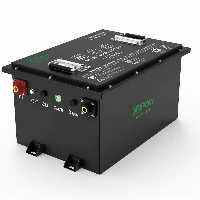
The answer is yes, you can do this, but it is absolutely not a simple "plug-and-play" operation. While upgrading from a 36V system to 48V is one of the most effective ways to increase the torque and top speed of a golf cart, directly connecting a 48V battery to an original 36V system is highly likely to burn out electronic components.
To successfully achieve this upgrade, you must ensure that the motor, controller, solenoid, and forward/reverse switch are all capable of withstanding the increased voltage. Without proper hardware modifications, the excessive voltage will likely damage core components, turning your ambitious DIY upgrade plan into an expensive repair bill.
Can a 48V Battery Work in a 36V Golf Cart?
Forcing a 48V battery into a 36V golf cart is physically and electrically feasible in principle, but this does not imply true compatibility between the two. From a technical perspective, while the traction motor of a golf cart often has a certain voltage tolerance range-and increasing the voltage can indeed make the vehicle run faster and with more torque-the real hidden danger lies in the control system.
The original 36V controller and solenoid are designed according to specific voltage standards. Once connected to a 48V battery, the system is highly likely to trigger a protection mechanism upon detecting the over-voltage, rendering the vehicle completely immobile. In the worst-case scenario, internal capacitors and circuit boards may burn out directly due to their inability to withstand the additional voltage load.
Therefore, although a 48V battery can technically operate within a 36V architecture, it is contingent upon matching or upgrading the core electrical components; otherwise, this "leapfrog" operation is extremely likely to result in equipment failure.

What Happens If You Install 48V on a 36V System?
If you install a 48V battery into an original 36V system without any modifications, you are essentially gambling with your hardware's lifespan. While you might feel an immediate, temporary surge in power, it is usually followed by serious mechanical and electrical failures:
- Fried Controller: The controller is the "brain" of the golf cart, regulating the current flow to the motor. Most 36V controllers have internal capacitors and MOSFETs with strict voltage ceilings. Introducing a 48V battery increases the voltage by 33.3%, which can easily puncture these sensitive components and render the controller useless.
- Solenoid Welding: The solenoid acts as a heavy-duty switch. A 36V solenoid coil isn't designed to handle 48V excitation for long periods. This leads to the coil overheating and snapping, or the internal contacts "welding" together due to excessive arcing, meaning the cart won't stop or won't start at all.
- Motor Overheating: While DC motors often have some voltage tolerance, running them at 48V significantly increases RPM and heat generation. Continuous high-speed operation can accelerate wear on the commutator and brushes or even melt the winding insulation.
- Accessory and Gauge Damage: Many carts use 36V-to-12V voltage reducers for lights, horns, or battery meters. The excessive input voltage can blow these reducers, leading to the failure of all onboard electronics.
- Safety Risks: In the worst-case scenario, overloaded wiring and overheated battery packs present a fire hazard. Since the voltage and current exceed the rated capacity of the factory cables, the wire insulation can soften or catch fire.

Can You Convert a 36V Golf Cart to 48V?
To successfully complete this conversion, you typically need to replace the controller with a programmable 48V unit, which acts as the "brain" to ensure smooth current output and prevent burnout. Simultaneously, it is essential to install a high-performance solenoid rated for 48V to handle the increased starting current.
Although many original 36V motors can operate under 48V pressure for a period, some enthusiasts choose to upgrade to a higher-specification motor to ensure long-term reliability and maximize performance. Furthermore, you will need a matching 48V charger and, if your golf cart is equipped with lights or audio systems, a new voltage converter (DC-DC converter) to step down the voltage from 48V to 12V, thereby protecting auxiliary electronics.
Through this systematic modification, your golf cart will not only achieve a significant boost in torque and a 25%–30% increase in top speed, but it will also attain higher energy efficiency under the same load conditions.

36V vs 48V Golf Cart – Performance Comparison
A 36V system is like an economy sedan-perfectly fine for flat, short-distance commuting. A 48V system, however, is more like an SUV or a performance vehicle, capable of handling rugged terrain, heavier loads, and longer distances.
For owners who have added lift kits, larger tires, or frequently navigate hilly paths, the performance advantages of 48V are absolute.
| Performance Metric | 36V System (Standard) | 48V System (High Performance) |
| Top Speed | Typically limited to 12–14 mph (approx. 19–22 km/h). | Easily reaches 18–25 mph (approx. 29–40 km/h) or more. |
| Torque & Climbing | Adequate on flat ground but noticeably struggles on hills or soft turf. | Significantly enhanced torque; climbs steep grades with ease, even with a full load. |
| Acceleration | Gentle takeoff with a noticeable lag in throttle response. | Much snappier response with a "kick" at takeoff; hits top speed quickly. |
| Efficiency | Based on the power formula P = V * I, it requires more current for the same power, leading to higher heat. | Higher voltage means lower current (amps) is needed for the same power output, resulting in a cooler, more efficient system. |
| Range/Run Time | Sufficient for a standard round of golf but strained by long-distance travel. | With the same Amp-hour (Ah) rating, the total energy capacity is higher, typically offering longer run times than 36V. |
Is Upgrading to 48V Worth It in 2026?
Standing at the vantage point of 2026, upgrading a golf cart to a 48V system is not only worthwhile but is rapidly becoming the industry standard. Particularly with the widespread adoption of Lithium Iron Phosphate technology, the cost-effectiveness of such an upgrade has reached new heights.
Compared to obsolete 36V lead-acid batteries, mainstream 48V lithium solutions can instantly reduce the vehicle's weight by hundreds of pounds, resulting in a noticeably lighter and more agile driving experience. Moreover, with a lifespan exceeding 10 years, the annualized cost is actually lower than that of frequently replacing old lead-acid batteries.
Modern 48V systems typically come equipped with intelligent Battery Management Systems and Bluetooth monitoring, allowing users to check remaining capacity and battery status via smartphone-a significant convenience boost. Furthermore, since most high-performance accessories and fast-charging equipment currently on the market are developed specifically for the 48V architecture, upgrading is about more than just gaining extra torque for hills or achieving higher speeds.
Crucially, it ensures that older carts keep pace with current technological trends, preventing them from being marginalized in terms of future maintenance and parts availability.
Cost Breakdown of Converting 36V to 48V
The cost of upgrading a 36V golf cart to 48V depends primarily on the type of battery selected, the parts that need to be replaced, and the performance requirements.
As of 2026, a basic 48V lead-acid upgrade typically costs between $1,500 and $2,500, while a complete 48V LiFePO4 upgrade costs between $2,500 and $4,500. If you also upgrade to a high-performance controller, motor, and other components, the total cost of the conversion may exceed $5,000.
| Core Component | Estimated Cost (2026 Market) | Description |
|---|---|---|
| 48V Battery Pack | $900 – $3,500 | Lead-acid: $900–$1,400 (6×8V or 8×6V); LiFePO4: $1,800–$3,500 depending on capacity (72Ah–210Ah) and whether it's a complete conversion kit. (golfcarttiresupply.com) |
| 48V Controller | $350 – $900 | Stock replacement controllers start around $350, while high-performance models from brands like Navitas, Alltrax, or Admiral typically cost $600–$900. (Vatrer Power) |
| 48V Solenoid | $60 – $180 | Heavy-duty 48V continuous-duty solenoids generally range from $60–$180 depending on amperage rating (200A–400A+). (Extreme Kartz) |
| 48V Smart Charger | $0 – $450 | Most lithium conversion kits include a compatible charger. If purchased separately, expect $150–$450 depending on charging current and brand. (golfcarttiresupply.com) |
| 48V-to-12V Voltage Reducer | $60 – $150 | Required when retaining 12V accessories such as lights, USB ports, stereos, and horns. Higher-current (20A–30A) reducers cost more. (10L0L) |
| Heavy-Duty Cables & Hardware | $80 – $250 | Includes 4AWG/2AWG battery cables, terminals, fuse, mounting hardware, and wiring upgrades for higher current loads. (epochbatteries.com) |
| Professional Installation (Optional) | $300 – $800 | Labor varies by region and complexity. A full lithium conversion with controller installation typically costs several hundred dollars. (golfcarttiresupply.com) |
Total Estimated Cost
| Conversion Type | Estimated Total Cost |
|---|---|
| Basic 48V Lead-Acid Upgrade | $1,600 – $2,800 |
| Standard 48V Lithium Conversion | $2,500 – $4,200 |
| Premium Lithium + Performance Controller Upgrade | $4,000 – $5,800+ |
Safer Alternative – High-Performance 36V Lithium Battery
Although upgrading from 36V to 48V is a classic route for pursuing extreme performance, for many owners who wish to avoid extensive modifications to controllers, solenoids, and complex wiring, opting for a high-performance 36V lithium battery is a safer and more cost-effective alternative.
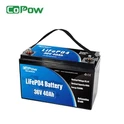
Take the industry-leading CoPow LiFePO4 battery as an example. Designed specifically for 36V systems, it utilizes Grade-A EVE (Eve Energy) automotive-grade cells, delivering significantly higher instantaneous current output than traditional lead-acid batteries. This means you can directly experience the "performance bonus" of lithium technology within your existing 36V architecture without replacing any core electrical components.
The CoPow 36V lithium battery system integrates an intelligent Battery Management System, supporting up to 200A of continuous discharge and instant peak discharge capabilities of 600A. This empowers older 36V golf carts with more direct torque feedback during startup and hill climbing, effectively eliminating acceleration lag.
Conclusion
Although cross-voltage modification is possible, choosing a high-performance 36V lithium battery is typically a safer and more efficient alternative than blindly pursuing a 48V system. For most owners, the expensive hardware costs and potential risks of circuit burnout associated with a 48V upgrade can be daunting.
In contrast, lithium products like those from CoPow, which are specifically optimized for existing 36V architectures, can deliver significant torque improvements and enduring range without requiring the replacement of controllers or motors.
FAQ
How to Tell If a Golf Cart Is 36V or 48V?
The easiest way to determine whether a golf cart is 36V or 48V is to check the battery configuration and system labels. For lead-acid setups, six 6V batteries connected in series indicate a 36V system, while six 8V batteries or four 12V batteries indicate a 48V system.
You can also look at the battery pack, vehicle nameplate, or controller label, as these typically display the system voltage. Another simple method is to measure the total pack voltage with a multimeter: around 38V when fully charged indicates a 36V system, while around 50V indicates a 48V system.
What Happens If You Put 48V to a 36V Motor?
Connecting a 48V power supply to a 36V motor will increase motor speed and may initially deliver higher output. However, it will also lead to higher current draw and increased heat generation. This can result in controller damage from overvoltage, motor overheating or burnout, insulation breakdown, or even complete system failure.
This approach carries significant risks and is not recommended unless the entire system-including the controller and motor-is specifically designed to operate at higher voltages.