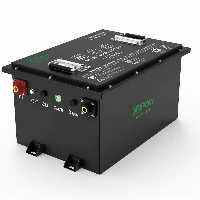
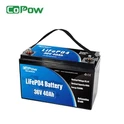
To navigate vast waters with total control over your course, a high-performance Trolling Motor Battery is absolutely your most indispensable behind-the-scenes hero.
This article will deeply dissect every detail, from voltage matching and capacity calculation to the optimal configurations for different boat types. We'll guide you around those costly "purchasing pitfalls" and help you equip your beloved vessel with the most powerful and reliable power core possible.

Which Types of Batteries Are Suitable for a Trolling Motor?
Choosing a battery for a trolling motor shouldn't be taken lightly. If you simply grab a standard automotive starting battery, you'll likely run into trouble. Trolling motors require steady, long-lasting power delivery rather than short bursts of high current, which makes deep-cycle batteries the essential choice.
Currently, several mainstream battery types are available on the market, each with its own characteristics. Understanding their respective advantages and disadvantages will help you select the one that best suits your needs.
1. Flooded Lead-Acid Batteries (Wet Cell)
This is the most traditional and common choice. They are structured similarly to automotive batteries but are designed for deep discharge cycles.
- Pros: The most affordable option and widely available.
- Cons: High Maintenance: Requires regular checking and topping off with distilled water.
- Fragile: Sensitive to vibrations and prone to acid leaks if tilted.
- Short Lifespan: Typically lasts only 200–300 cycles.
- Best For: Entry-level anglers or occasional boaters on a tight budget.
2. AGM Batteries (Absorbed Glass Mat)
AGM is a type of "sealed" lead-acid battery where the electrolyte is absorbed into fiberglass mats between the plates.
- Pros: Maintenance-Free: No need to add water; completely sealed.
- Vibration Resistant: Ideal for choppy waters and rough conditions.
- Faster Charging: Charges more quickly than flooded batteries and has a lower self-discharge rate.
- Cons: Roughly twice the price of traditional lead-acid batteries and still quite heavy.
- Best For: Mid-range users seeking a "set it and forget it" solution with better durability.
3. Gel Batteries
Gel batteries use silica to turn the electrolyte into a thick, jelly-like substance.
- Pros: Exceptional cycle life and performs very well in high-temperature environments. Completely leak-proof.
- Cons: * Strict Charging Needs: Requires a specific gel-compatible charger; they are very sensitive to overcharging.
- Expensive: Often costs as much as lithium but offers less energy density.
- Best For: Specialized professional use in extreme climates, though they are being phased out by lithium technology.
4. Lithium Iron Phosphate (LiFePO4)
The "gold standard" of modern marine power. Lithium has rapidly become the preferred choice for professional anglers.
- Pros: Ultra-Lightweight: Usually 1/3 the weight of lead-acid, significantly improving boat speed and fuel efficiency.
- Incredible Longevity: Can last 3,000 to 5,000+ cycles (10+ years of use).
- Consistent Power: Unlike lead-acid, lithium maintains a steady voltage output even as the battery depletes-your motor won't lose "oomph" at 20% charge.
- Cons: High upfront cost (a significant initial investment).
- Best For: Professional anglers, tournament participants, or anyone who wants the best performance and long-term value.

What Capabilities Should the Best Trolling Motor Battery Have?
Selecting a top-tier trolling motor battery ultimately comes down to whether it offers you complete peace of mind on the water. Its most critical capability is genuine, long-lasting endurance; it must withstand prolonged, continuous discharge, ensuring the motor's thrust remains rock-steady from your early-morning departure until you wrap up fishing at dusk.
- Deep Cycle Performance: Sustains long, steady power and withstands thousands of discharge-recharge cycles.
- High Energy Density: Provides maximum runtime in a lightweight, compact size to improve boat speed and draft.
- Stable Voltage Output: Maintains consistent thrust and motor power even as the battery charge drops.
- Vibration & Leak Resistance: Built rugged to endure heavy waves and remains 100% sealed to prevent acid leaks.
- Fast Charging & Low Self-Discharge: Recharges quickly at the dock and stays charged during weeks of storage.
- Smart BMS Protection: Features a built-in Battery Management System to prevent overcharging, overheating, and short circuits.
Key Factors to Consider When Choosing the Best Trolling Motor Battery
Choosing a battery isn't just about type; it must fit your boat. Prioritize capacity for all-day runtime, weight, and size for efficiency and fit, and durability to withstand vibrations and cycles. Finally, opt for fast-charging, maintenance-free models to minimize hassle and maximize time on the water.
- Voltage Matching: Ensure the battery matches your motor's requirements (typically 12V, 24V, or 36V). For a 24V system, you can either wire two 12V batteries in series or use a single 24V lithium battery.
- Amp-Hour Capacity (Ah): This determines your runtime. A higher Ah rating means more time on the water. A capacity of 100Ah or more is generally recommended for a full day of fishing.
- Depth of Discharge (DoD): This indicates how much energy can be drawn from the battery without damaging it. Lead-acid batteries should only be discharged to 50%, while LiFePO4 can safely reach 80%–100%, providing more usable power.
- Weight and Size: Space and weight capacity on a boat are limited. A lightweight battery prevents the bow from dipping, improving fuel efficiency and overall speed.
- Cycle Life: Consider how many times the battery can be recharged. If you fish frequently, a lithium battery with 3,000+ cycles offers a much lower "cost per trip" compared to cheaper lead-acid options.
- Charging Speed & Compatibility: Ensure your existing charger is compatible with the battery chemistry. Fast-charging capabilities are crucial for back-to-back fishing days.
- Environmental Resilience: If fishing in cold climates, check for low-temperature charging protections. For saltwater use, ensure the terminals have high corrosion resistance.
Understanding Amp Hours (Ah) and Runtime Calculation
When discussing trolling motor runtime, the key metric is Amp-hours (Ah), which you can think of as the battery's "fuel tank." A 100Ah rating means the battery can theoretically deliver 1 amp for 100 hours. Calculating runtime is simple: divide the battery's total Ah by the motor's current draw.
For example, with a 100Ah battery and a motor drawing 20 amps at cruising speed, the theoretical runtime is 5 hours. However, real-world performance varies significantly due to battery chemistry:
- Lead-Acid/AGM: These batteries are sensitive; draining them below 50% damages their lifespan. Thus, a 100Ah lead-acid battery effectively offers only 50Ah of usable capacity.
- Lithium-Ion: These are much more robust, allowing discharge down to 10% or even 0% without harm. Consequently, a lithium battery of the same rating provides nearly twice the usable runtime compared to a lead-acid battery.
Additionally, environmental factors matter. Strong winds, rough waves, or running at high speeds increase current consumption. It's wise to apply an 80% safety factor to your calculations to ensure you have enough power to fight headwinds and return to shore safely.
Weight Considerations and Boat Balance
On small boats or low-power skiffs, battery weight directly impacts handling. A single standard deep-cycle lead-acid battery weighs between 50 and 70 lbs. Connecting several to achieve 24V or 36V systems can easily push the total weight over 200 lbs, creating major balance issues.
Piling this dead weight at the bow causes the boat to plow through waves, increasing drag and fuel consumption. Conversely, stuffing it all in the stern makes the bow rise excessively during acceleration, blocking visibility and reducing speed.
This is why lithium batteries are so popular: they are approximately 70% lighter than lead-acid batteries of the same capacity. This weight savings allows for shallower draft, enabling access to shallow flats where big fish hide, and makes balancing the boat much easier.
For installation, the best practice is to mount batteries low and near the centerline. This lowers the center of gravity and ensures lateral stability, preventing excessive rolling in crosswinds or during sharp turns.
Charging Requirements and Compatible Chargers
The charger's characteristics must match the battery type. Lead-acid batteries require a slow, gentle charge to prevent overheating, while AGM batteries are highly sensitive to voltage fluctuations. Lithium batteries demand the most precision: they require a specific charging profile (Constant Current followed by Constant Voltage) and must be disconnected immediately upon reaching full charge.
Crucially, never use a lead-acid charger for lithium batteries. The pulse desulfation feature common in lead-acid chargers can damage the lithium battery's internal Battery Management System.
Charger power must also match the battery's capacity. Ideally, the charging current should be 10% to 20% of the battery's capacity. This ensures a full recharge within a few hours without risking cell damage from excessive current.
Given the wet marine environment, opting for a marine-grade charger with an IP67 waterproof rating is the safest choice, allowing you to plug in multiple battery banks simultaneously upon returning to shore.
In short, don't cut corners on your charger. Using the correct smart charger guarantees you depart fully charged the next morning, preventing power failures on the water.
How to Choose the Right Voltage (12V, 24V, or 36V)?
Choosing the right system voltage is the most critical step in configuring a trolling motor, as it depends on your boat's size, weight, and the typical water conditions you face. Generally, a 12-volt system is ideal for lightweight skiffs or calm ponds and requires only a single battery.
However, if you operate a larger vessel or frequently navigate strong currents and choppy waters against the wind, you should opt for a 24-volt or even 36-volt motor to ensure sufficient power and efficiency.
1. 12V Systems: The Economical Choice for Small Boats
A 12V system typically requires only one deep-cycle battery. It is the simplest and most cost-effective setup available.
- Best For: Inflatable boats, kayaks, and small aluminum boats (Jon boats) under 14 feet.
- Thrust Range: Usually provides 30-55 lbs of thrust.
- Pros & Cons: The advantage is saving space, weight, and money. The downside is a lack of power reserves in heavy wind, strong currents, or when fully loaded, which can drain the battery quickly.
2. 24V Systems: The Performance Balance for Mid-Sized Boats
A 24V system runs by wiring two 12V batteries in series (or using a single 24V lithium battery).
- Best For: Mid-sized fiberglass or aluminum fishing boats between 16 and 19 feet.
- Thrust Range: Usually provides 70-80 lbs of thrust.
- Pros & Cons: This is the most popular choice for serious anglers. Compared to a 12V system, a 24V system is more efficient, runs the motor cooler, and offers longer runtimes with better resistance against wind and waves.
3. 36V Systems: Ultimate Power for Professional & Large Boats
A 36V system requires three 12V batteries in series (or a single 36V lithium battery) to provide maximum torque.
- Best For: Professional bass boats over 20 feet, large offshore center consoles, or heavy pontoon boats.
- Thrust Range: Usually provides 101 to 112 lbs of thrust or more.
- Pros & Cons: Designed for extreme environments. It maintains precise GPS anchoring and navigation even in rushing rivers or windy coastal waters. The only drawbacks are the extra space required and the highest initial battery cost.
How to Decide Quickly?
You can follow this simple logic:
- Boat Length: Under 16ft → 12V; 16-19ft → 24V; 20ft+ → 36V.
- Environment: If you frequently fish in strong winds, heavy currents, or thick vegetation, it is recommended to upgrade to the next voltage tier (e.g., choose 24V for a 16ft boat instead of 12V).
- Efficiency: Higher-voltage systems draw less current for the same amount of thrust, resulting in less heat and longer overall battery life.
How Much Battery Capacity Is Required to Run a Trolling Motor Effectively?
To ensure your trolling motor performs optimally, the battery's Amp-hour (Ah) rating directly dictates how long you can stay on large bodies of water. Choosing a capacity that's too small risks running out of power mid-trip, ruining the fun when you're in the zone. Conversely, oversizing adds unnecessary weight, wastes fuel, and compromises boat balance.
When determining capacity, consider your typical fishing style: Are you just casting near the shore, or planning full-day trips battling wind across big reservoirs?
- For calm, small ponds, a ~100Ah battery is usually sufficient.
- If you frequently navigate against currents, face strong winds, or carry heavy loads (gear/passengers), opt for 120Ah or higher to guarantee reliable all-day performance.
1. Industry Standard Recommendation
For most anglers, 100Ah is widely considered the "gold standard" for trolling motor batteries.
- 100Ah Battery: Generally supports 4 to 6 hours of intermittent trolling for a mid-sized boat.
- 50Ah - 60Ah Battery: Suitable only for kayaks or small boats requiring short bursts of assisted movement.
2. The "Usable Capacity" Gap (Crucial)
When calculating effective runtime, you must "discount" the capacity based on the battery type:
- Lead-Acid/AGM Batteries: The actual usable capacity is only about 50% of the rated value. If you buy a 100Ah lead-acid battery, you can safely use only 50Ah without shortening its lifespan.
- Lithium (LiFePO4) Batteries: These offer 80%–100% usable capacity. This means a 50Ah lithium battery provides nearly the same real-world runtime as a 100Ah lead-acid battery.
3. Estimating Based on Motor Thrust
The higher the thrust, the higher the current draw (Amps):
- 30–55 lbs Thrust (12V): Draws approx. 30–50 Amps at full speed.
- 70–80 lbs Thrust (24V): Draws approx. 40–55 Amps at full speed.
- 101–112 lbs Thrust (36V): Draws approx. 45–60 Amps at full speed.
Simple Formula:

4. Environmental Factors
You should add a 20%–30% reserve to your capacity needs in the following conditions:
- Strong Wind or Currents: The motor works harder to maintain GPS positioning (Spot-lock).
- Heavy Loads: More passengers or extra gear on board.
- Full-Day Trips: Planning to stay on the water for more than 8 hours.
If you want a worry-free, all-day fishing experience, a 100Ah Lithium (LiFePO4) battery is currently the most efficient and reliable solution.
Best Battery Setup for Different Boat Types
Matching batteries to different boat types requires striking a balance between space, weight, and power.
| Boat Type | Recommended Voltage | Recommended Capacity | Recommended Chemistry |
| Kayak / Canoe | 12V | 50Ah - 60Ah | Lithium (Essential for weight) |
| Jon Boat | 12V | 100Ah | AGM (Budget) / Lithium (Performance) |
| Bass Boat | 24V | 100Ah | Lithium (Speed & Efficiency) |
| Offshore / Deep-V | 36V | 100Ah+ | Lithium (Pure Power) |
1. Kayaks & Canoes
These vessels have extremely limited space and are highly sensitive to weight.
- Best Setup: 12V 50Ah – 60Ah LiFePO4 Battery.
- Why: Lithium batteries are ultra-light (typically 6–8 kg), preventing the kayak from becoming unstable or sitting too low in the water. 50Ah provides ample power for several hours of movement for such light crafts.
- Placement Tip: Position the battery under the seat or in a center-line waterproof hatch to maintain balance.
2. Jon Boats & Small Aluminum Boats
Usually 10–14 feet long, used in calm lakes or small rivers.
- Best Setup: 12V 100Ah Lithium or 12V 100Ah AGM Battery.
- Why: A 12V 100Ah setup is the most cost-effective way to get a full day of fishing. Choosing lithium over AGM significantly reduces bow weight, allowing the boat to plane faster and handle better.
- Placement Tip: If the motor is on the bow, try to place the battery toward the center to prevent the nose from diving.
3. Bass Boats & Mid-Sized Fiberglass Boats
Typically 16–19 feet long, where speed and competitive performance are priorities.
- Best Setup: 24V System (Two 12V 100Ah Lithium batteries in series, or a single 24V 100Ah Lithium battery).
- Why: A 24V system provides the necessary torque to fight wind and current. Using lithium saves significant weight (replacing 60kg of lead with 20kg of lithium), allowing for more fishing gear or better fuel economy.
- Placement Tip: Store in the rear battery compartments, ensuring they are secured with trays and kept away from fuel lines.
4. Large Deep-V & Offshore Center Consoles
20+ feet long, designed for big water or coastal environments with heavy chop.
- Best Setup: 36V System (Three 12V 100Ah Lithium batteries in series, or a dedicated 36V Lithium unit).
- Why: To move a heavy boat against strong tides or ocean winds, you need the 100+ lbs of thrust that only a 36V system provides. High-voltage lithium systems ensure your GPS Spot-lock stays in place all day without sagging.
- Placement Tip: Due to the number of batteries, install a multi-bank waterproof on-board charger for easy "plug-and-play" charging at the dock.
Common Mistakes When Choosing a Trolling Motor Battery
One of the most common pitfalls when choosing a trolling motor battery is opting for a cheap automotive starting battery. With their thin plates, these batteries are designed only for brief, high-current bursts to start an engine and cannot withstand the prolonged discharge demands of a trolling motor; forcing them to do so will lead to failure within months.
Another frequent mistake is upgrading to lithium batteries but refusing to replace the old charger. Using an outdated lead-acid charger not only fails to fully charge the lithium pack but can also damage its internal Battery Management System, creating serious safety hazards.
Novices often miscalculate capacity, focusing solely on the Amp-hour (Ah) rating while forgetting that lead-acid batteries offer usable capacity of only 50%. When facing strong winds or currents, the power drops off sharply, forcing an embarrassing early return.
When building higher-voltage systems, never mix and match batteries of different brands, ages, or capacities. Connecting mismatched units causes the weaker (older) battery to act as a bottleneck, dragging down the performance and lifespan of the entire new bank.
Finally, ignoring weight distribution is dangerous, especially on small boats. Piling heavy lead-acid batteries at one end or on one side causes the boat to list, increases fuel consumption, and significantly raises the risk of capsizing during turns.
In short, selecting a battery requires a holistic approach. Focusing only on the upfront price often leads to far greater costs in the long run.
Final Checklist Before You Buy
Before you finally hit the "Order" button or head to the store to purchase the best trolling motor battery, please run through this final checklist. These few minutes of verification could save you thousands in costly mistakes and prevent embarrassing power failures on the water.
- Voltage Confirmation: Double-check your trolling motor's manual. Is it 12V, 24V, or 36V? Ensure your battery bank's total voltage is precisely matched.
- Space & Weight Distribution: Do you have enough physical space for the number of batteries selected? If opting for lead-acid, will the hull remain balanced under the significant extra weight?
- Charger Compatibility: If you've chosen LiFePO4 (Lithium), confirm your current charger has a dedicated lithium mode. If not, be sure to purchase a compatible smart charger at the same time.
- Real-World Usable Ah Calculation: Remember the "50% Rule"-if you are buying a 100Ah lead-acid battery, plan for only 50Ah of actual runtime. For reliable all-day performance, a 100Ah lithium battery is highly recommended.
- Wiring & Accessories: Do you have high-quality jumper cables ready? For 24V/36V systems, you must use heavy-gauge wiring to handle the current and prevent overheating.
- Warranty & Support: Top-tier batteries often come with extensive warranties (typically 5–10 years for lithium). Confirm the brand offers solid customer support, as the battery is the most critical consumable on your boat.
FAQ
Can I use a dual-purpose marine battery for my trolling motor?
It can be used, but it is merely a compromise balancing starting power and deep-cycle performance. While more durable than a standard automotive starting battery, it still falls far short of dedicated deep-cycle or lithium batteries in terms of long-duration runtime and cycle life.
What is Marine Battery Group Size or GCI Group Size?
BCI Group Size is a standardized specification established by the Battery Council International. It uses specific numerical codes (such as Group 24, 27, 31, etc.) to strictly define a battery's external dimensions (length, width, height), terminal layout, and hold-down configuration. The core purpose of this standardization is to ensure that when replacing a battery, the new unit fits precisely into the boat's pre-existing battery box or mounting bracket.
Recommended Reading: What Size Lithium Battery For 24V Trolling Motor?