So, what capabilities and qualifications should manufacturers have when producing forklift batteries?
First is the ability to adapt to specific vehicle models. Not only do models from different brands have different voltages, but their CAN protocols, BMS communication, connectors, dimensions, and installation methods may also vary significantly. Without this adaptability, even the best-made battery will be unusable.
Second is the ability to design for high current. While a counterbalance forklift may draw only 80–150 A during normal operation, the current can surge to 200–350 A or higher when lifting cargo. Not only must the battery be able to handle such drastic current fluctuations, but the battery management system must also be properly designed; otherwise, the BMS's overcurrent protection will be triggered frequently, and the protective function will actually become a hindrance.
In summary, replacing a forklift's battery requires a systematic understanding and careful assessment; only by selecting the right counterbalance forklift manufacturer can you ensure the battery's compatibility and proper operation.
From the customer's perspective and based on objective realities, we have listed five manufacturers with production advantages in the counterbalance forklift battery segment in this article, and we hope this information proves helpful to you.

CoPow - Counterbalance Forklift Battery Engineering Expert

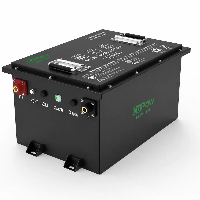
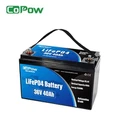
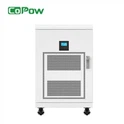
First, let me introduce CoPow. CoPow is a manufacturer of LiFePO4 batteries with its own production facilities; it can also be referred to as a direct supplier. As is well known, lithium iron phosphate battery technology has a very wide range of applications, and counterbalanced forklifts are one of the areas where CoPow is focusing its development efforts.
At the beginning of this article, we mentioned the key capabilities a good forklift battery manufacturer should possess: vehicle compatibility and high-current design capabilities. CoPow possesses both of these capabilities.
Whether your forklift brand is Toyota Material Handling, Linde Material Handling, Jungheinrich, Crown Equipment, Hyster, Yale, Mitsubishi Logisnext, or others, CoPow's lithium-ion batteries are compatible with the CAN protocols of various models.
Of course, vehicle compatibility extends beyond CAN protocols to include wiring harnesses, communication interfaces, controllers, and other aspects. As a mature forklift battery manufacturer, CoPow is capable of meeting all your needs.
To save you time, we've listed their key advantages below for a quick overview.
Extensive Experience in Vehicle Integration
CoPow has extensive experience in vehicle integration and can provide customized services for different brands and models, including dimensions, CAN protocols, BMS parameters, wiring harness interfaces, and installation structures.
CoPow has the capability to develop high-rate forklift battery systems.
Given the high-current demands of counterbalanced forklifts, CoPow's forklift batteries feature built-in low-internal-resistance copper busbars, a battery management system that supports high-current discharge, high-power MOSFETs, and an optimized cooling system.
These features not only enable counterbalanced forklifts to lift loads smoothly but also allow them to operate continuously for an entire day, thereby improving work efficiency and reducing the occurrence of safety incidents.
Counterweight Design
CoPow has a deep understanding of the specific requirements for battery counterweights in counterbalanced forklifts. Based on different models and OEM standards, the company uses steel casings, counterweight steel plates, and center-of-gravity optimization to precisely control the total battery weight within the range of the original lead-acid battery.
Flexible Customization Capabilities
CoPow has a seasoned structural design team that can quickly complete 3D modeling and structural design based on battery compartment dimensions, drawings, or samples provided by customers. We support customization to DIN, BS, and various OEM-specific dimensions, and offer rapid prototyping services.
In-House Intelligent BMS Development Capabilities
CoPow possesses in-house BMS development capabilities, featuring specialized functions such as precise SOC calculation, cell balancing, CAN/RS485 communication, OTA remote updates, and fault diagnosis. In addition, it can integrate GPS, 4G, and cloud platforms, enabling users to access real-time forklift operation data.
Fully Certified and Traceable
CoPow's counterbalanced forklift batteries have obtained numerous international certifications, including UN38.3, IEC62619, CE, MSDS, and RoHS, and its production system complies with the ISO9001 and IATF16949 quality management standards.

EnerSys

EnerSys is an industrial battery manufacturer based in the United States, and I'm sure everyone is familiar with this brand. The company has a strong track record and extensive experience in the industrial power sector.
Its IRONCLAD® series and NexSys® TPPL series of industrial lead-acid forklift batteries were once its best-selling products. As lithium-ion batteries have gradually replaced lead-acid batteries, EnerSys has responded by launching the NexSys® iON series.
It's clear that EnerSys primarily manufactures standardized counterbalanced forklift batteries. If your customization needs aren't particularly high, EnerSys is an excellent choice, as its products have been thoroughly proven in the market, and its global after-sales service network is far more comprehensive than that of other counterbalanced forklift battery manufacturers.
It is worth noting that the brand is a leader in smart technology. For example, its energy management software, Wi-iQ® battery monitoring system, and Xinx™ management platform are all highly advanced. For operators of very large warehouses, this could be a forklift battery solution capable of significantly improving operational efficiency.
Flux Power

There are many successful manufacturers of counterbalanced forklift batteries in the United States, and Flux Power is one of them. It has also been growing at an astonishingly rapid pace in recent years.
Founded in 2011 in California, Flux Power entered the market much later than the long-established industrial battery giant EnerSys. Yet it has managed to stand out in the highly competitive U.S. market. What is the secret to its success? The answer lies in its ability to fully capitalize on the industry-wide shift toward lithium-ion batteries in the forklift sector. We won't delve into the details of Flux Power's rise here; let's get back to the main point.
Flux Power's batteries also utilize LiFePO4 technology and provide lithium-ion battery solutions for Class 1 counterbalance forklifts.
They also offer specialized battery packs for different forklift brands and specific models (primarily standardized counterbalance forklift batteries).
These factors alone are not enough for Flux Power to challenge the industry giants, so what exactly is driving its success?
The answer lies in its intelligent management capabilities. Flux Power has independently developed the SkyBMS™ Battery Management System and the SkyEMS™ Energy Management Platform; this data-driven fleet energy management solution is its core competitive advantage.
BYD

What sets BYD apart in the counterbalanced forklift sector is not only that it manufactures batteries, but also that it directly manufactures the entire counterbalanced forklift-even the battery cells are lithium iron phosphate batteries developed in-house by BYD. It can be said that BYD possesses a complete production system for counterbalanced forklift batteries.
According to BYD's official introduction, its electric counterbalanced forklifts use lithium iron phosphate batteries, with a product range covering the 1.6-metric-ton to 5.0-metric-ton classes.
Therefore, BYD's competitive strategy in this market is not "I can provide you with a high-quality counterbalanced forklift battery," but rather "I can directly supply a counterbalanced forklift equipped with a lithium-ion battery from the factory," since the battery is already installed in the forklift.
In other words, although BYD also manufactures counterbalanced forklift batteries, these batteries are exclusively used in the forklifts it produces and are not sold separately on the open market.
We mention BYD because their batteries are indeed well-made, fully qualifying them for this list, and they offer consumers a more innovative upgrade option. If your existing electric forklift is already very worn out and nearing the end of its service life, and you don't want to go through the hassle of replacing a forklift battery-which comes with its own uncertainties-then BYD's electric counterbalanced forklifts are a hassle-free and effortless alternative.
Exide Technologies

Like EnerSys, Exide Technologies is a long-established industrial battery manufacturer with decades of experience in the forklift battery sector, primarily serving the European market.
Exide offers both lead-acid and lithium-ion battery technologies. While lead-acid batteries currently dominate the market, lithium-ion batteries also hold promising prospects.
Therefore, Exide is not rushing to shift all its resources toward lithium-ion batteries but is instead opting for a smooth transition. European forklift fleet operators are more concerned with whether "my entire fleet can continue to be profitable; maintaining the status quo and helping me make money as before is sufficient-I don't want to rush into using lithium-ion batteries, as who knows what problems might arise."
Exide has capitalized on this mindset among European customers by vigorously promoting its marketing concept of "reducing the customer's total cost of ownership."
It can be said that Exide has a deeper understanding of fleet operations-it's not just about selling batteries. For example, the company helps factories with hundreds of forklifts complete their power system upgrades over the next 10 years.
Exide offers flooded lead-acid forklift batteries, gel forklift batteries, and lithium-ion forklift batteries. Customers don't need to switch entirely to lithium-ion batteries all at once; they can replace 10 units today to test performance, then replace another 30 next year. This approach significantly mitigates the risks associated with lithium-ion batteries.
It is worth noting that Exide's true core competitiveness in the industrial power battery sector does not lie in the "Exide" brand name, but rather in "GNB Industrial Power."
GNB was originally a well-known brand of industrial power batteries in North America; it was later acquired by Exide, which absorbed GNB's comprehensive expertise in industrial power battery production, thereby propelling its own rise.
How to Choose the Right Counterbalance Forklift Battery Manufacturer?
Based on our observations, many buyers who purchase batteries from a certain forklift battery manufacturer commonly report issues such as communication incompatibility, incorrect instrument panel codes, mismatched dimensions, battery life falling short of expectations, and slow after-sales service response times.
As a result, they are ultimately forced to spend a significant amount of time on re-calibration and corrective measures.
To avoid similar problems, we offer the following recommendations:
1. Check whether the manufacturer has extensive experience in vehicle integration, rather than just battery production.
For counterbalanced forklifts, in addition to the battery, there is another very important factor to consider: compatibility.
Forklifts of different brands and models may vary significantly in terms of battery compartment size, counterweight requirements, CAN communication protocols, wiring harness interfaces, and even control logic.
If the manufacturer does not understand the various models of counterbalanced forklifts, even the highest-quality battery will be of no use.
A professional manufacturer should assess the dimensions, weight, communication protocols, and charging system of your forklift early in the project-rather than simply asking for the battery's voltage and capacity, which is a very one-sided approach.
2. Understanding the Operating Conditions of Counterbalanced Forklifts
Many manufacturers of lithium-ion forklift batteries can produce 48V or 80V batteries, but few truly understand the operating conditions of counterbalanced forklifts.
Counterbalanced forklifts frequently lift heavy loads, accelerate, climb slopes, and operate continuously across multiple shifts. This means the battery must withstand high-rate discharge for extended periods and frequently deliver instantaneous high-current output.
If a manufacturer continues to develop products based on the design philosophy of energy storage batteries or standard power batteries-and you happen to use these products-you will face issues such as the battery management system frequently triggering power-off protection, severe overheating, subpar runtime, and a short service life.

3. Don't Judge A Forklift Battery By The Cell Brand Alone
Many buyers believe that as long as they use battery cells from well-known brands such as CATL, EVE, and REPT, the forklift battery will certainly be reliable; however, in reality, the battery cell is only one part of the entire battery system.
Battery reliability depends on the consistency of the battery cells; even when using identical cells, the quality of forklift batteries produced by different manufacturers can vary.
Therefore, buyers should not focus solely on cell brands; rather, they should understand how manufacturers conduct cell screening, cell assembly testing, system integration, and pack-level validation.

4. Do you have the relevant certifications? Are the certifications genuine and reliable?
Some people might ask, "Do you have CE, UN38.3, or IEC62619 certifications?" But for experienced procurement managers, this is just the first step.
What they're really concerned about isn't whether the supplier has presented certificates, but whether those certificates are genuine and valid, whether they match the products they intend to purchase, and whether the manufacturer can provide complete and traceable compliance documentation.

5. Evaluate Customization Capabilities for Forklift Batteries
Many so-called forklift battery suppliers claim to support OEM customization, but in reality, this is limited to replacing logos or adjusting the casing color.
For counterbalanced forklifts, however, meaningful customization capabilities should encompass multiple aspects, including battery dimensions, weight, internal structure, Battery Management System software, Control Area Network (CAN) protocols, charging strategies, and designs tailored to specific operating conditions.

6. Treat the Purchase of Counterbalanced Forklift Batteries as a Long-Term Investment
Many buyers fall into the trap of simply choosing the supplier with the lowest quote. However, for counterbalanced forklifts that operate more than ten hours a day, the battery purchase cost often represents only a small fraction of the total cost of ownership.
Factors affecting return on investment include service life, charging efficiency, energy consumption, maintenance costs, downtime, and replacement frequency.
A battery that is slightly more expensive but can operate reliably for 8–10 years often offers greater economic value than a cheaper product that requires frequent repairs or premature replacement.
7. Assess whether the manufacturer can provide long-term, stable supply and technical support
For operators of large logistics centers, purchasing batteries is not a one-time transaction but a partnership spanning the next five to ten years.
As the fleet expands, there may be a need for ongoing procurement of forklift batteries with the same specifications, as well as software upgrades, spare parts supply, technical training, and after-sales service.
If a manufacturer lacks stable production capacity and an R&D team, this could lead to product discontinuation, difficulties in upgrading the Battery Management System, or even an inability to provide spare parts in the future-all of which increase operational risks.
This is particularly a concern when searching for counterbalanced forklift battery manufacturers located in other countries. Many people worry: "What if this manufacturer suddenly goes out of business or disappears? What will I do then?"
The five manufacturers listed in this article will not face such issues. They all hold valid business licenses, operate their own factories and companies, and have been in business for some time.

8. Assess Whether the Manufacturer Has Genuine Experience with Forklift Battery Replacements
An excellent counterbalanced forklift battery manufacturer should have extensive and verifiable upgrade case studies.
They should have provided viable forklift battery solutions for large-scale logistics centers, ports, manufacturing plants, or cold storage facilities, and have actually installed them. In short, they should have practical application experience rather than treating customers as guinea pigs. Customers should not be made to pay for uncertainty.
Verifiable projects not only demonstrate the batteries' operational reliability but also indicate that the manufacturer has accumulated extensive experience in on-site commissioning, troubleshooting, and system optimization.
Compared to performance parameters listed in product manuals, real-world project experience better reflects a company's ability to solve complex problems and serves as a crucial basis for buyers to assess a supplier's capabilities.


conclusion
Choosing an excellent counterbalanced forklift battery manufacturer is about more than just comparing prices, specifications, or brand recognition. It is even more important to evaluate the supplier's ability to ensure compatibility with your forklift models, their engineering and R&D capabilities, product reliability, and long-term technical support capacity.
Since a forklift battery typically needs to operate reliably for 5 to 10 years, the supplier's level of expertise will directly impact your operational efficiency and total cost of ownership.
If you are looking for lithium-ion battery solutions compatible with counterbalanced forklifts of various brands and models, or if you wish to upgrade your existing lead-acid forklifts to lithium-ion battery systems, please feel free to contact CoPow.
Our engineering team will provide professional selection recommendations and customized solutions based on your specific forklift model and actual operating conditions.