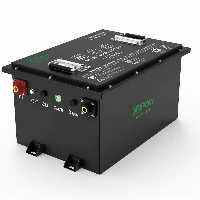
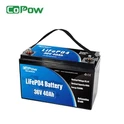
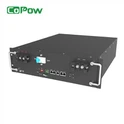
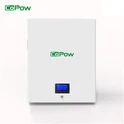
Although they are all 24V, forklift batteries come in a wide range of capacities, ranging from 100Ah to 600Ah.
Not sure whether to choose a lead-acid battery or a lithium-ion battery?
Worried about whether the battery will fit properly in the battery compartment?
In short, everyone is concerned about buying the wrong battery, which could cause project delays.
That's why we've written this article to help you make an informed decision. After reading this article, you'll be able to determine which 24V forklift batteries meet your requirements.

Which Forklifts Use 24V Batteries?
24V forklift batteries are a relatively compact type of battery. Since their output power is lower than that of high-power batteries such as 48V and 72V models, they are only suitable for small forklifts with light workloads. Specifically, the following types of forklifts use 24V batteries:
Electric pallet trucks
These forklifts are widely used in supermarket warehouses, parcel sorting centers, and small logistics warehouses. With a load capacity ranging from 1 to 2.5 tons, they do not require high power, and the 24V battery voltage is sufficient to meet daily handling needs.
Walkie stackers
These forklifts are primarily used to lift goods from low to high positions and do not move frequently, so they do not require high power.
Small stand-up forklifts
This is an upgraded version of the electric pallet truck.
Narrow-aisle warehouse forklifts
Small electric tow tractors
AGV (Automated Guided Vehicle)
For material handling robots, the benefits of 24V lithium-ion batteries include longer runtime, faster charging speeds, and smarter communication methods.

What applications are 24V forklift batteries suitable for?
In terms of application scenarios, 24V forklift batteries are well-suited for the following situations:
- Indoor warehousing
- Retail and supermarket logistics
- Pharmaceutical warehouses
- Cold chain warehousing
- E-commerce sorting centers
- Small factories
- Light-duty pallet handling
The workload in these scenarios is typically not as intense as in large logistics parks or ports, so the high power output of 48V or 80V systems is not required.
In these scenarios, the workload is not as demanding as in ports, where ultra-high-power forklift batteries such as 48V, 72V, or even 80V are needed to complete material handling tasks; 24V is sufficient.

Lead-Acid vs Lithium 24V Forklift Batteries
Currently, the market mainly offers lead-acid batteries and lithium-ion batteries.
After hearing various explanations, I believe everyone has formed their own opinion on the differences between lead-acid and lithium-ion batteries.
However, many people are still torn between whether they should continue using lead-acid batteries or upgrade directly to lithium-ion batteries. In fact, this is quite easy to decide.
You can make this decision based on your budget and shift schedule: If you operate a single shift, have a limited budget, and use the forklift only occasionally for moving goods-serving mostly as a backup tool-then a lead-acid battery is a suitable choice.
However, if you operate two or even three shifts and have a sufficient budget, a lithium-ion forklift is the clear choice; otherwise, you will face high maintenance costs.
For a comparison of the pros and cons of lead-acid and lithium-ion batteries, please read this article: Forklift Battery Types: Which One Is the Best Value?
How Long Does a 24V Forklift Battery Last Per Charge?
We can make a rough estimate of how long a fully charged 24V forklift battery will last.
Under normal conditions, a 24V forklift battery at 100% charge can operate for 4 to 8 hours, but the exact duration depends on your usage intensity and the battery's capacity.
If you'd like a quick calculation, you can use this formula: Total battery energy = Voltage × Capacity. For example, 24V 200Ah ≈ 4.8kWh.
Next, we need to factor in the forklift's average power consumption to estimate its runtime.
Runtime (h) = Average equipment power (kW) × Total battery energy (kWh)
If your forklift's average operating power is approximately 1 kW, then:
4.8 kWh / 1 kW ≈ 4.8 hours
This means that this set of 24V 200Ah batteries can be used for approximately 4–5 hours.
Best 24V Forklift Battery for Different Applications:
| Battery Specification | Total Energy (Approx.) | Light-Duty Operation (0.8–1 kW) | Medium-Duty Operation (1–1.5 kW) | Heavy-Duty Operation (1.5–2 kW) | Typical Applications |
|---|---|---|---|---|---|
| 24V 100Ah | 2.4 kWh | 2.5–3 Hours | 1.5–2 Hours | 1–1.5 Hours | Small pallet trucks, light warehouse handling |
| 24V 150Ah | 3.6 kWh | 3.5–4.5 Hours | 2.5–3 Hours | 1.5–2 Hours | Walkie stackers, low-intensity warehouse work |
| 24V 200Ah | 4.8 kWh | 4.5–6 Hours | 3–4.5 Hours | 2–3 Hours | Electric pallet jacks, medium-duty forklifts |
| 24V 230Ah | 5.5 kWh | 5–6.5 Hours | 3.5–5 Hours | 2.5–3.5 Hours | Ride-on pallet trucks, warehouse logistics |
| 24V 280Ah | 6.7 kWh | 6–8 Hours | 4–5.5 Hours | 3–4 Hours | Multi-shift warehouse handling |
| 24V 300Ah | 7.2 kWh | 6.5–8.5 Hours | 4.5–6 Hours | 3.5–4.5 Hours | Heavy pallet movement, longer operation cycles |
| 24V 400Ah | 9.6 kWh | 8–10 Hours | 6–8 Hours | 4.5–6 Hours | High-frequency logistics centers |
| 24V 460Ah | 11 kWh | 9–11 Hours | 7–9 Hours | 5–7 Hours | Large warehouse fleets, AGV systems |
| 24V 500Ah | 12 kWh | 10–12 Hours | 8–10 Hours | 6–8 Hours | Continuous industrial operation |
| 24V 600Ah | 14.4 kWh | 12–14 Hours | 9–11 Hours | 7–9 Hours | Heavy-duty multi-shift applications |
How Long Does It Take to Charge a 24V Forklift Battery?
The charging times for 24V forklift batteries are approximately as follows:
| Battery Type | Charging Time |
|---|---|
| 24V Lead-Acid Forklift Battery | 8–10 Hours |
| 24V LiFePO4 Lithium Forklift Battery | 1–3 Hours |
One of the most critical factors affecting charging time is battery capacity. The larger the battery capacity, the longer the charging time will naturally be.
| Battery Specification | Battery Energy (Approx.) | Lead-Acid Battery Charging Time | LiFePO4 Lithium Battery Charging Time |
|---|---|---|---|
| 24V 100Ah | ≈ 2.4 kWh | 5–7 Hours | 1–1.5 Hours |
| 24V 150Ah | ≈ 3.6 kWh | 6–8 Hours | 1.5–2 Hours |
| 24V 200Ah | ≈ 4.8 kWh | 8–10 Hours | 2–3 Hours |
| 24V 250Ah | ≈ 6.0 kWh | 9–11 Hours | 2.5–3.5 Hours |
| 24V 300Ah | ≈ 7.2 kWh | 10–12 Hours | 3–4 Hours |
| 24V 350Ah | ≈ 8.4 kWh | 11–13 Hours | 3.5–4.5 Hours |
| 24V 400Ah | ≈ 9.6 kWh | 12+ Hours | 4–5 Hours |
| 24V 500Ah | ≈ 12.0 kWh | 14+ Hours | 5–6 Hours |
| 24V 600Ah | ≈ 14.4 kWh | 16+ Hours | 6–7 Hours |
In addition, the charger's power rating is equally important; the higher the current, the faster the charging speed. A rough estimation formula commonly used in the industry is:
Charging time is approximately equal to battery capacity (in Ah) divided by charging current (in A).
For example, if a 24V 200Ah battery pack is charged using a 50A charger, its theoretical charging time is approximately:
200Ah ÷ 50A ≈ 4 hours.
Can You Upgrade a 24V Lead-Acid Forklift to Lithium?
Generally speaking, yes. The vast majority of 24V lead-acid forklifts can be upgraded to LiFePO4 lithium iron phosphate batteries.
However, just because an upgrade is possible doesn't mean you can simply remove the old battery and replace it with a lithium battery.
You need to carefully verify the following aspects:
- Controller voltage range
- Motor compatibility
- Low-voltage protection threshold
- Charger
- Battery size and installation space
- Vehicle counterweight system
- BMS continuous discharge capacity
- Peak current capacity
- Controller capacity
- Main wiring harness specifications
- Communication protocol compatibility
- Total cost of ownership
How Much Does a 24V Forklift Battery Cost?
As of May 13, 2026, the market prices for 24V forklift batteries are approximately as follows:
| Battery Type | Voltage | Capacity Range | Price Range | Applications | Charging Time |
|---|---|---|---|---|---|
| Small Lead-Acid Pallet Jack Battery | 24V | 30Ah–80Ah | $300–$1,000 | Electric pallet jacks, walkie pallet trucks | 5–8 Hours |
| Standard Lead-Acid Forklift Battery | 24V | 100Ah–300Ah | $1,000–$3,500 | Walkie stackers, warehouse forklifts | 8–10 Hours |
| Large Lead-Acid Industrial Battery | 24V | 400Ah–800Ah | $3,500–$6,500+ | Heavy-duty warehouse forklifts | 8–12 Hours |
| Entry-Level LiFePO4 Forklift Battery | 24V | 30Ah–100Ah | $350–$1,500 | Compact pallet trucks, AGV robots | 1–2 Hours |
| Standard LiFePO4 Forklift Battery | 24V | 100Ah–230Ah | $1,300–$4,000 | Electric pallet jacks, stackers | 1–3 Hours |
| Industrial LiFePO4 Forklift Battery | 24V | 250Ah–400Ah | $4,000–$8,000 | Multi-shift logistics forklifts | 2–4 Hours |
| Heavy-Duty Smart Lithium System | 24V | 400Ah–800Ah+ | $8,000–$15,000+ | AGV fleets, automated warehouses | 2–5 Hours |
| Custom Industrial Lithium Battery | 24V | 600Ah–1200Ah+ | $15,000–$30,000+ | Ports, automated logistics systems | Fast opportunity charging |
Related reading:
How Much Does a Forklift Battery Cost on Average?
What To Know Before Buying A 48V Forklift Battery?
Conclusion
By now, we have covered every aspect of 24V forklift batteries. You now have the knowledge of a professional buyer and can confidently choose the battery that's right for you.
We've covered how to select standard batteries, but if you require extensive customization-such as heating modules or BMS communication features for your 24V forklift battery-you should consult an experienced forklift battery manufacturer like CoPow.
Please feel free to contact CoPow; our engineers will assist you within 24 hours.