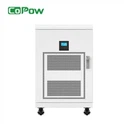
As the world transitions to green energy, solar energy storage systems have become an indispensable choice for homes, factories, and businesses. As the core of the system, batteries directly impact energy efficiency, operational safety, and long-term return on investment. Therefore, selecting the right manufacturer is crucial.
Today, with a well-established industrial chain and robust R&D capabilities, Chinese solar battery manufacturers have taken a leading position in the global market, and CoPow's lithium iron phosphate batteries are a prime example of this exceptional strength.
The decision to choose products made in China is driven not only by their mature manufacturing processes but also by the flexible customization services they offer. This helps ensure users receive a stable power supply while effectively enhancing investment value and the overall user experience.
top 10 solar battery manufacturers in china

Company Overview
CoPow is a well-known lithium-ion battery brand under Shenzhen Huandu Technology Co., Ltd. Founded in 2020, the company is a state-certified high-tech enterprise. CoPow specializes in providing safe and intelligent energy storage solutions. Its founder and core R&D team members come from industry-leading companies such as CATL and BYD, bringing over 20 years of experience in the lithium-ion battery energy storage sector. The company has independently developed a Battery Management System featuring real-time monitoring and overcharge/overdischarge protection, and has demonstrated excellence in high-efficiency battery conversion technology.
CoPow products exclusively use battery cells from top Chinese brands such as CATL and EVE, and have obtained CE, IEC, and UN38.3 international certifications, ensuring outstanding safety and reliability. The company also offers OEM/ODM customization services, allowing for flexible adjustments to parameters such as voltage, capacity, and dimensions to suit various application scenarios, including RVs, residential energy storage, and communication base stations.
With its automated production processes, CoPow maintains a monthly production capacity of 10 MWh and can scale its annual capacity to 2 GWh.
Its products have been exported to over 40 countries worldwide, meeting the energy needs of industries such as solar power, marine applications, and forklift operations.
With robust production capabilities and global market penetration, CoPow has become a widely recognized brand in the lithium-ion battery sector-a brand that perfectly combines strong technical expertise with market-proven acceptance.
Main Products
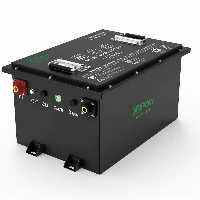
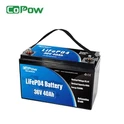
- 12V Lithium-Ion Batteries: 12.8V, with capacities of 100Ah or 200Ah, and up to 6,000 charge/discharge cycles, making them ideal for RVs, boats, trolling motors, and golf carts.
- 24V Lithium-Ion Battery: Operating at 25.6V, it offers a range of capacities and supports high-current charging and discharging, making it suitable for truck parking lots, aerial work platforms, and cleaning equipment.
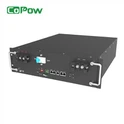
- Energy Storage Battery Packs: Both voltage and capacity are customizable. Equipped with CoPow's proprietary BMS (Battery Management System), these packs monitor battery status in real time and provide protection against overcharge and overdischarge. They are widely used in home energy storage, communication base stations, and solar energy storage systems.
Key Advantages of CoPow LiFePO4 Batteries
High Safety: Made from lithium iron phosphate material, it offers excellent thermal stability with a decomposition temperature as high as 250–350°C. It maintains exceptional resistance to thermal runaway, fire, and explosion even under extreme conditions. Additionally, it is non-toxic and free of cobalt and nickel, meeting environmental standards for use and recycling.
Long Cycle Life: Capable of over 2,000 charge-discharge cycles, with premium models reaching 3,000–6,000 cycles. Maintains capacity over the long term, thereby reducing long-term usage costs.
High Efficiency: Charge and discharge efficiency ranges from 95% to 98%, supporting fast charging. With high energy conversion efficiency and a low self-discharge rate, it maintains charge for extended periods.
Stable Voltage Output: A flat discharge curve ensures minimal voltage fluctuations, providing stable power support to connected devices.
Wide Operating Temperature Range: Operates efficiently between -20°C and 60°C, making it suitable for both cold and high-temperature environments.
Customization Services: Offers OEM/ODM customization options for voltage, capacity, size, terminal type, and communication protocols to meet diverse needs across sectors such as RVs, boats, home energy storage, and golf carts.


Development History
CoPow is a lithium-ion battery brand under Shenzhen Huandu Technology Co., Ltd., a company established on October 13, 2020. Since its inception, the company has focused on the research, development, production, and sales of lithium iron phosphate batteries, which led to the creation of the CoPow brand.
Leveraging the strengths of its core team-whose members hail from industry leaders such as CATL and BYD and possess an average of over 20 years of industry experience-CoPow made significant investments in core technologies during its early development phase.
The company independently developed a battery management system (BMS) featuring real-time monitoring and overcharge/overdischarge protection, laying a solid foundation for the intelligence and safety of its products.
Building on this foundation, CoPow rapidly established a comprehensive product line, successively launching 12V and 24V lithium batteries and energy storage battery packs. The brand consistently utilizes top-tier battery cells from CATL and EVE, and has successfully obtained CE, IEC, and UN38.3 international certifications, quickly establishing a strong market presence.
In terms of production and market expansion, CoPow has established automated production lines with a stable monthly production capacity of 10 MWh and the potential to expand annual capacity to 2 GWh. Thanks to reliable quality and customized solutions, CoPow's products have been exported to over 40 countries worldwide and are widely used in solar energy, marine, and forklift applications. CoPow has rapidly become a highly recognized brand in the lithium-ion energy storage industry.
Contact Information
Email: admin@huanduytech.com
Phone: +86-755-89998295
Office Address: Chengtouxin Times Building, No. 2009 Pingshan Avenue, Pingshan Street, Pingshan District, Shenzhen, Guangdong, China
Factory Address: Wandajie Industrial Park, No. 1-12, Jinlong Avenue, Pingshan District, Shenzhen, Guangdong, China
Website: https://www.copowbattery.com/

5 Benefits of Choosing a Chinese Solar Battery Manufacturer
High Cost-Effectiveness
China possesses the world's largest solar cell production capacity, enabling significant economies of scale. Through large-scale manufacturing and efficient supply chain management, Chinese manufacturers can substantially reduce production costs. For example, Chinese-made solar modules are priced as low as $0.15 per watt-far below prices in European and American markets-allowing customers to purchase high-quality solar cells at more competitive prices and thereby increase profit margins.
Advanced Technology
China's leading solar cell manufacturers invest heavily in R&D and remain at the forefront of high-efficiency energy conversion and smart monitoring technologies. For instance, technologies such as PERC, TOPCon, and HJT have all been mass-produced in China first. These technologies offer high production efficiency and exceptional performance, enabling solar cells to convert more sunlight into electricity while maintaining stable cell performance and improving power generation efficiency.
Complete Industrial Chain
China boasts the world's most comprehensive solar cell industrial chain, covering every stage from silicon materials and wafers to cells and modules, and extending to the construction of solar power plants and related infrastructure. This means that all components and auxiliary materials required for solar cells can be sourced locally. An integrated supply chain facilitates efficient resource allocation, reduces procurement costs, and ensures a stable supply of products.
Strong Customization Capabilities
Many Chinese solar cell brands offer mature OEM/ODM services, enabling them to customize products according to specific customer requirements, including voltage, capacity, dimensions, terminal types, and communication protocols. Whether for large-scale solar power plants or small-scale distributed generation systems, they can provide customized solutions that meet customers' unique needs.
Reliable Quality and Comprehensive Certifications
Reputable Chinese solar cell manufacturers implement rigorous quality control processes. Their products have obtained international certifications, including UL, CE, IEC, and UN38.3, meeting global safety and quality standards. Through rigorous testing and quality management, they ensure that the cells have a long service life and stable performance, while reducing the risk of failure and maintenance costs during operation.
Custom Solar Battery Solutions Provided by Chinese Manufacturers
Key Customization Dimensions
Customizable Voltage and Capacity: Solar batteries manufactured in China can be tailored to specific requirements. Available voltage options include 12V, 24V, and 48V, with capacities ranging from several kilowatt-hours to hundreds of kilowatt-hours, meeting the energy storage needs of residential, commercial, and industrial sectors.
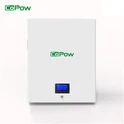
Custom Dimensions and Form Factors: Batteries can be flexibly designed to fit the available installation space. Solutions include wall-mounted designs for residential use, compact modules for portable solar systems, and large containerized configurations for industrial energy storage.
Custom Battery Management Systems: Many manufacturers offer customized Battery Management Systems (BMS) solutions to ensure safe and efficient battery operation. These systems monitor battery status in real time, provide protection against overcharging, over-discharging, and short circuits, and can integrate remote data transmission and intelligent charging/discharging strategies based on customer requirements.
Customization of Cell Types: Customers can select different cell types based on performance, cost, and safety requirements. For example, lithium iron phosphate (LiFePO4) cells offer high safety and long lifespan, while ternary lithium cells provide higher energy density for space-constrained applications.
Customization of Appearance and Branding: Manufacturers can customize the color, material, and surface branding of the battery casing to meet specific needs, thereby strengthening brand identity.
Customization of Communication Protocols: The Battery Management System (BMS) communication protocols can be tailored to meet monitoring and management requirements, ensuring compatibility with various inverters and monitoring systems for seamless data integration and remote control.
Customization of Charging and Discharging Characteristics: The battery's charging and discharging currents, voltage ranges, and curves can be adjusted to suit specific application scenarios. For example, fast-charging scenarios can benefit from optimized charging curves, while applications requiring stable discharge can achieve smoother voltage output.
Customized Protection Ratings: Batteries can be customized to meet IP54, IP65, or other protection ratings based on specific environmental conditions, ensuring reliability and long service life even in harsh outdoor, humid, or dusty environments.
Representative Manufacturer and Solutions
CoPow offers custom 12V and 24V lithium-ion batteries and energy storage systems, utilizing cells from leading Chinese brands such as CATL and EVE. The products are CE and IEC certified and are suitable for RVs, boats, and home energy storage systems.

Pricing and Order Quantity Considerations
Pricing Factors: The primary factors influencing pricing include customization complexity, raw material costs, and order volume.
In terms of customization complexity, high-voltage, high-capacity industrial-grade energy storage batteries, as well as customized battery management systems (BMS) with remote monitoring and smart charging/discharging capabilities, or ternary lithium batteries with higher energy density, typically incur higher costs than small residential batteries, basic BMS, or cost-effective lithium iron phosphate (LFP) batteries.
Regarding raw material costs, while using cells from top-tier brands such as CATL or EVE may increase the unit price, it ensures quality; meanwhile, price fluctuations in key raw materials like lithium may also affect the final quote.
For large-volume orders, it is recommended to negotiate price adjustment clauses with the manufacturer. Additionally, order volume can yield economies of scale, as most manufacturers employ a tiered pricing strategy, meaning that the larger the order volume, the lower the unit cost typically becomes.
Order Quantity Considerations: There are three key dimensions to consider.
Minimum Order Quantity (MOQ): For simple customizations (such as basic voltage adjustments), the MOQ may be as low as a few units; however, for complex customizations (such as custom enclosure designs or proprietary communication protocols), the MOQ may be 50 units or more. Orders below the MOQ may result in higher unit prices or incur additional tooling and setup fees.
Production and Lead Time: Please verify that the manufacturer's production capacity aligns with your order volume, as large custom orders typically require longer lead times. If your project has a tight deadline, communicate with the manufacturer in advance to confirm whether they offer expedited production services and the associated costs.
Warehousing and Logistics Costs: For large orders, factor in subsequent warehousing space and costs; for international orders, compare shipping quotes for different order quantities to avoid losses from logistics costs exceeding the overall budget.

Why Choose Copow as Your Trusted Solar Battery Manufacturing Partner?
Strong R&D Capabilities and Solid Technical Foundation
Copow's founding team and core R&D staff are all veterans from industry-leading companies such as CATL, BYD, and Aote New Energy, with an average of over 20 years of experience in the lithium-ion battery energy storage sector. Leveraging their deep technical expertise, the team continuously drives innovation in high-efficiency battery integration and smart energy management technologies, providing a solid foundation for the performance and safety of solar batteries.
Premium Cells for Quality Assurance from the Source
Copow's products utilize automotive-grade battery cells from top Chinese brands such as CATL and EVE, ensuring high safety, stability, and long cycle life at the material level, thereby minimizing the risk of future failures caused by battery cell quality issues.
Proprietary BMS for Safe and Efficient Operation
Copow batteries are equipped with a proprietary Battery Management System (BMS) that accurately monitors battery status and provides essential protection against short circuits, overcharging, over-discharging, and extreme temperatures (both high and low). In addition, the BMS supports real-time data transmission via RS485 or Bluetooth, enabling remote monitoring of battery performance and enhancing convenience and safety.
Extensive Customization Experience for Diverse Needs
With extensive experience in delivering over 500 customized solutions across more than 40 countries, Copow can flexibly adjust voltage, capacity, cell type, and physical dimensions to meet customer requirements. Whether for residential energy storage, RV power supply, marine applications, or communication base stations, Copow offers tailored solutions for a wide range of scenarios.
Strict Production Management and Consistent Quality Control
Copow has established a comprehensive production management system and developed standard operating procedures (SOPs) for each product. Every stage of the process-from battery selection and assembly to final testing-is subject to strict quality control to ensure that product quality and performance remain consistent throughout mass production.
Comprehensive Certifications for Global Compliance
Copow's products have obtained numerous international certifications, including CE, UN38.3, and MSDS, and comply with safety and quality standards in various countries and regions, ensuring compliance with relevant regulations in both domestic and international markets.
Complete After-Sales Support for Peace of Mind
Depending on the product type, Copow offers warranties of up to 10 years. We have a dedicated after-sales service team that responds promptly to technical inquiries and resolves issues, providing comprehensive support throughout the product lifecycle and eliminating concerns about long-term maintenance.

How Copow's Solar Battery Is Made: From Cells to Complete Energy Systems
Cell Screening and Testing: Ensuring Quality from the Source
First, we use specialized equipment to conduct comprehensive testing on cells from top-tier brands, including measurements of voltage, capacity, internal resistance, cycle life, and safety performance. We select only cells that meet Copow's internal standards and reject any cells with parameter deviations or potential risks, thereby ensuring the stability of the resulting battery systems.
Cell Grouping and Matching: Ensuring Performance Consistency
Qualified cells are grouped based on voltage, internal resistance, and capacity to maintain "three-way consistency" and stability. This prevents uneven charging and discharging caused by cell variations, thereby extending the overall service life of the battery system. The grouping process utilizes automated equipment for precise sorting, strictly controlling parameter deviations within cell groups.
Battery Assembly: Building the Fundamental Energy Unit
The grouped cells are mounted onto custom battery pack frames via laser welding or bolted connections. Positive and negative leads are then soldered, and components such as temperature sensors and insulating pads are installed to ensure electrical safety and enable real-time temperature monitoring. Finally, the assembled battery pack undergoes initial testing to verify that voltage output and insulation performance meet standards.
BMS Integration and Calibration: Implanting the "Smart Brain"
The in-house-developed Battery Management System (BMS) is physically connected to the battery modules and calibrated using dedicated software. Calibration includes setting thresholds for overcharge, over-discharge, short-circuit, and temperature protection; configuring communication modules; verifying that the BMS can accurately collect data, perform remote monitoring, and trigger fault alarms; and testing the BMS's logical stability through multiple charge-discharge cycles.
System Integration: Assembling the Complete Energy Storage Unit
Based on customer requirements, the battery modules, BMS, charge/discharge interfaces, cooling fans, enclosure, and other components are integrated. Wiring is organized according to standards and insulated to prevent interference and mitigate safety risks.
Full-System Performance Testing: Simulating Real-World Conditions
The complete energy storage system undergoes multi-dimensional testing, including:
- Charge/Discharge Efficiency Testing: Evaluating system conversion efficiency under various currents.
- Environmental Adaptability Testing: Simulating extreme temperature and humidity conditions to ensure operational stability.
- Safety Performance Testing: Conducting physical tests such as drop, vibration, and compression, as well as electrical tests like overvoltage and overcurrent, to comply with international certification standards.
Packaging and Shipment: Ensuring Safe Delivery
All approved products are packaged using anti-static and shock-resistant materials, and the package includes relevant documents such as product certificates, user manuals, and test reports. Before shipment, we carefully verify the product model and custom specifications once again to ensure they fully comply with the order requirements. We will then arrange for delivery through our logistics provider.

Conclusion
Selecting the right solar cells is critical to ensuring system performance, controlling long-term costs, and guaranteeing operational safety. Chinese solar cell manufacturers excel at providing solutions that meet these core requirements, offering reliable and efficient solutions to global customers through exceptional value for money, cutting-edge technology, a comprehensive industrial chain, and robust customization capabilities.
Among the many manufacturers, CoPow's lithium iron phosphate (LiFePO4) batteries stand out for their exceptional safety, long cycle life, outstanding energy efficiency, and flexible customization services, earning a trusted reputation in the industry. Whether for residential, commercial, or professional energy storage needs, choosing CoPow or other high-quality Chinese batteries ensures your system operates reliably and maximizes the value of your energy investment.
Ready to upgrade your solar energy storage system with a reliable and cost-effective solution? Contact us today to learn more about CoPow's lithium iron phosphate batteries or to receive a customized quote from a trusted Chinese solar battery manufacturer. Let's work together to turn your energy investment into long-term value.
FAQ
How long does a LiFePO₄ solar battery typically last?
Compared to traditional lead-acid batteries, lithium iron phosphate solar batteries stand out for their longer cycle life. Standard battery packs typically offer 2,000–6,000 charge-discharge cycles, with the exact number depending on battery quality and operating conditions. For residential or commercial energy storage systems, this translates to 8–15 years of reliable service, cementing their position as one of the most durable energy storage solutions available today.
Are Chinese-made solar batteries reliable for long-term energy storage?
Yes, that is correct. Many Chinese solar cell manufacturers rely on well-established industrial supply chains and adhere to strict quality management standards. Leading brands use automotive-grade solar cells and conduct comprehensive safety testing, while also holding international certifications such as CE, IEC, and UN 38.3. These measures ensure stable performance, a long service life, and high safety standards, making them suitable for installation in residential, commercial, and industrial settings.
Can I request customized solar battery solutions for specific applications?
Of course, Chinese manufacturers are renowned for their strong customization capabilities. You can tailor key parameters to your specific needs, including voltage, capacity, physical dimensions, Battery Management System (BMS) functionality, communication protocols, battery type, and even branding. This high degree of flexibility enables you to develop optimal solutions for a wide range of applications, from residential energy storage systems and RV power systems to marine applications and off-grid commercial facilities.
Related: