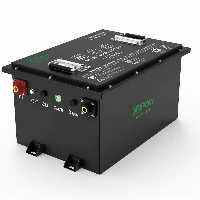
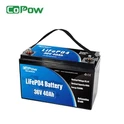
Industrial batteries are a very broad category, including forklift batteries, electric pallet truck batteries, tow tractor batteries, cleaning equipment batteries, commercial and industrial energy storage systems, mining vehicle batteries, marine batteries, telecommunications system batteries, signaling system batteries, robotics batteries, and AGV batteries.
If you haven't found the specific field you're looking for yet, don't worry. In this article, we've listed 10 specialized industrial battery manufacturers, some of which can provide customization and compatibility solutions tailored to your specific needs. Let's take a look!
Note: The following manufacturers are listed without any particular ranking order.
| Brand | Founded | Positioning |
|---|---|---|
| CoPow | 2011 | professional Industrial Battery Manufacturer in China |
| CATL | 2011 | Global battery technology leader |
| BYD | 1995 | Integrated energy solution provider |
| LG Energy Solution | 2020 | Premium lithium battery manufacturer |
| EnerSys | 2000 | Industrial power solutions specialist |
| Exide Technologies | 1888 | Established energy storage provider |
| GS Yuasa | 2004 | Reliable battery technology expert |
| EVE Energy | 2001 | Cost-effective lithium battery supplier |
| Saft Groupe | 1918 | High-performance battery specialist |
| Gotion High-Tech | 2006 | Growing LFP battery supplier |
CoPow Battery - professional Industrial Battery Manufacturer in China

Before introducing other brands, please allow us to introduce ourselves first. We at CoPow are an experienced LiFePo4 battery manufacturer. In the industrial battery sector, our key focus areas include electric forklifts, aerial work platforms, marine vessels, commercial and industrial energy storage systems, robots, drones, mining vehicles, electric pallet trucks, and backup power systems. Among these, forklift batteries are our area of greatest expertise.
CoPow is a battery brand under Shenzhen Huandu Technology Co., Ltd., established in 2010 and headquartered in Shenzhen, China.
The company has long focused on the research, development, design, and manufacturing of lithium-ion battery systems, accumulating extensive experience in battery pack development. The company is able to provide customers with comprehensive industrial battery solutions tailored to the voltage, current, spatial structure, communication protocols, and operating environment requirements of various devices.
Whether you are an individual consumer or a distributor, CoPow can provide you with industry-proven industrial battery products, as well as OEM and ODM services, to help you build your own industrial battery brand. We have a comprehensive supply chain, offering more competitive pricing than leading international brands while ensuring product quality.
Why are CoPow industrial batteries competitively priced?
We are able to maintain low prices because we rely on China's comprehensive and mature lithium-ion battery supply chain. We have R&D teams from CATL and BYD, and we maintain close partnerships with leading Chinese battery cell brands such as CATL, BYD, and EVE Energy.
We have many years of experience in industrial battery manufacturing and a wealth of experience in customizing industrial batteries. In addition, we offer a wide variety of options when it comes to components.
Our Industrial Battery Application Case Studies
In the industrial battery sector, CoPow's products have been deployed across multiple industries and equipment types.
We have developed lithium-ion battery solutions for a wide range of material handling equipment, including the Hyster R1.6HD reach truck, the Jungheinrich ERE 120 electric pallet truck, the Toyota 8HBW23 material handler, and the Crown ESR series of warehouse forklifts.
We have supplied power battery systems for the Genie GS1930 scissor lift and the JLG 1930ES aerial work platform; developed customized battery packs for AGV (Automated Guided Vehicles) and the MiR250 autonomous mobile robot; and provided high-performance Marine LiFePO4 batteries for the Haswing Protruar 4.0 marine propulsion system and the Minn Kota electric trolling system.
In addition, we have developed 36V/48V/72V lithium-ion battery upgrade solutions for the Club Car CRU 72V and EZGO RXV golf carts, and we provide customized energy solutions for floor scrubbers, sweepers, mining vehicles, RVs, and commercial and industrial energy storage systems.
Company Size
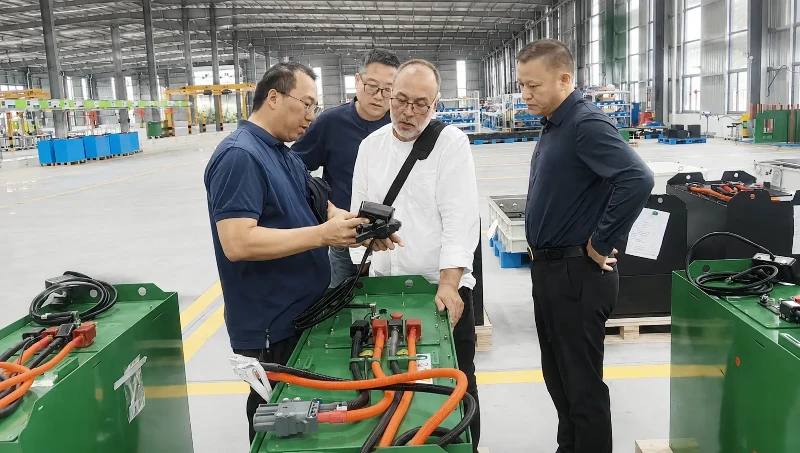
Located in Pingshan, Shenzhen, the company operates a modern production facility covering approximately 32,000 square meters, equipped with multiple battery pack production lines and automated packaging lines, and employs over 400 people.
The company has an experienced R&D and engineering team, and its business scope covers a wide range of areas, including cell applications, structural design, electronic systems, battery management system development, software, and manufacturing processes.

Contact Information
Email: admin@huanduytech.com
Phone: +86-755-89998295
Office Address: Chengtouxin Times Building, No. 2009 Pingshan Avenue, Pingshan Street, Shenzhen, Guangdong, China
CATL

If you're planning to build your own industrial battery pack and are looking for a reliable battery cell manufacturer, CATL is your best choice.
CATL specializes in providing high-quality lithium-ion battery cells. Its product portfolio includes lithium iron phosphate (LFP), ternary lithium, and sodium-ion cells, offering products with varying performance characteristics to meet different application needs.
For large-scale commercial and industrial energy storage systems, CATL offers 3.2V 280Ah, 3.2V 314Ah, and 3.2V 306Ah LFP prismatic aluminum-cased lithium iron phosphate cells.
For power and industrial batteries, CATL offers 271Ah-class LFP cells and 100Ah to 200Ah-class LFP cells, all available in prismatic or pouch formats.
In the industrial battery sector, the most representative product is the CATL 314Ah LFP cell (3.2V 314Ah). This cell is a classic high-capacity option in the energy storage industry and is currently widely used in next-generation energy storage systems, effectively increasing per-cabinet capacity and system integration efficiency.
BYD

The industrial batteries manufactured by BYD are primarily used in forklifts, commercial and industrial energy storage systems, automated guided vehicles (AGVs), cleaning equipment, port equipment, construction machinery, and auxiliary power sources for rail transit.
However, these batteries are more often pre-installed in equipment as original equipment manufacturer (OEM) batteries and are rarely sold separately on the open market. If you purchase a complete set of industrial equipment directly-such as a BYD electric forklift-you are effectively purchasing the battery along with it.
In other cases, BYD-like CATL-primarily supplies high-quality industrial battery cells to industrial battery assemblers.
The battery cells BYD provides to industrial battery assemblers include: BYD 50Ah-class LFP cells (suitable for small-scale power applications, hybrid vehicles, and specialized equipment); BYD 100Ah-class LFP prismatic cells (suitable for industrial equipment and small-scale energy storage); - BYD 135Ah blade cells (power equipment, industrial energy storage) - BYD 150Ah blade cells (electric vehicles, select energy storage applications) - BYD 202Ah blade cells (high-capacity power applications, battery pack integration) - BYD 320Ah thick blade cells (commercial and industrial energy storage, energy storage cabinets/container systems)
Among these, the 135Ah and 150Ah blade cells are BYD's most representative lithium iron phosphate cell products. They feature a long, strip-shaped blade structure that improves space utilization, reduces the need for traditional module structures, and enables higher integration efficiency in battery packs.
Additionally, the BYD 202Ah blade cell was one of the earliest blade cells to be widely publicized. With a rated voltage of approximately 3.2V and a capacity of about 202Ah, it is a typical high-capacity LFP cell. Its high individual cell capacity reduces the number of series and parallel connections required.
Finally, the BYD 320Ah thick blade cell is a high-capacity LFP cell launched by BYD in recent years specifically for energy storage applications. It is primarily targeted at commercial and industrial energy storage and large-scale energy storage systems. Compared to 280Ah and 314Ah prismatic cells, it further increases the capacity per cell, thereby reducing the number of cells required in the system.
LG Energy Solution

LG Energy Solution sells both industrial battery packs and industrial battery cells. Like other major manufacturers, it primarily targets sectors such as industrial energy storage systems, UPS backup power, automation equipment, robotics, electric construction equipment, port equipment, and logistics equipment.
LG Energy Solution does not simply sell batteries; rather, it integrates them into large-scale projects, making it an installation-volume-driven manufacturer. This means the company maintains minimal inventory and produces batteries strictly according to project requirements.
For large-scale buyers who prefer products manufactured in Japan or South Korea, LG Energy Solution may offer greater convenience in terms of collaboration.
For general buyers, however, LG Energy Solution continues to focus primarily on selling battery cells. For example, the LG M50LT 21700 cylindrical cell is an NCM ternary lithium cylindrical cell with a capacity of approximately 5,000 mAh, suitable for robots and AGVs.
The LG MJ1 18650 series consists of NMC cylindrical cells with a capacity of 3,500 mAh, suitable for unmanned devices and small UPS backup power systems.
LG's high-capacity pouch cells are also NCM pouch cells with high energy density, suitable for electric vehicles.
It is evident that LG prioritizes high energy density, with its battery technology centered on ternary lithium. This technology enables the storage of more electrical energy within the smallest possible volume and delivers powerful performance, though it does carry certain safety risks.
EnerSys

When it comes to industrial batteries, EnerSys is a long-established player in the industry with a presence across various sectors.
Founded in 2000 and headquartered in Pennsylvania, USA, EnerSys specializes in manufacturing industrial batteries for energy storage and power applications. Its products are primarily used in forklifts, material handling equipment, UPS backup power systems, telecommunications base stations, data centers, aerospace, rail transportation, defense, and specialized industrial equipment. Like CoPow, their core product line in the industrial battery sector is forklift batteries.
The brand's well-known industrial forklift batteries include IRONCLAD (high-performance lead-acid forklift batteries) and NexSys (AGM and lithium-ion forklift battery series).
The brand enjoys high recognition in Europe and the United States and is one of the top choices for customers in those regions. For example, U.S. food distribution company Team Sledd, a major beverage distributor, and a global coffee supply chain company all use its forklift battery products.
If you are based in Europe or the United States, prioritize localized service, have a sufficient budget, do not require customization, and want to quickly obtain ultra-high-quality industrial batteries, then you will likely consider EnerSys.
What people are saying about EnerSys:
- Power battery expert
- Cycle life: Consistent performance
- Trustworthy brand
- Prices are on the high side
- The pace of its transition to lithium-ion batteries is not as aggressive as that of emerging lithium-ion battery companies
Exide Technologies

Founded in 1888, Exide Technologies has a very long history and can be described as a "living fossil." Similar to EnerSys, it is a long-established global industrial battery manufacturer, but its market positioning differs somewhat from that of EnerSys.
Exide Technologies operates in a broader range of sectors than EnerSys, including automotive, telecommunications, UPS, and other fields-particularly in the area of backup power.
This company is truly a time-honored brand; its enduring presence over the years demonstrates that its products are indeed high-quality and have withstood the long-term test of the market.
Furthermore, it understands the needs and pain points of various industrial battery applications better than other manufacturers. Exide Technologies has been a constant presence throughout the history of battery development-from lead-acid batteries to lithium-ion batteries and on to lithium iron phosphate batteries.
This seamless, interconnected trajectory has yielded significant advantages: products that better meet market demands and a user experience that surpasses that of other manufacturers.
For example, Exide Technologies offers industrial battery solutions such as GNB Industrial Power, Sprinter, Liberator, and Sonnenschein. Exide's Sonnenschein series utilizes Dryfit® gel technology, which enhances the cycle life of industrial batteries through a solid-state gel electrolyte; for forklifts, Exide has introduced TENSOR® Technology, which improves the cycle performance and energy utilization of power batteries by optimizing plate structure and active materials.
These technologies are the result of decades of continuous optimization through industrial applications and are better aligned with the actual operational needs of equipment.
However, against the backdrop of the transition from lead-acid to lithium-ion batteries, Exide Technologies' lithium-ion battery business has not yet fully replicated the industry-leading position it enjoyed during the lead-acid era.
Compared to some emerging companies focused on lithium-ion technology, Exide Technologies does not have a clear advantage in cell R&D and large-scale lithium-ion battery manufacturing. Nevertheless, drawing on its extensive experience in industrial battery applications, Exide Technologies remains highly competitive in lithium-ion battery system design, equipment compatibility, and after-sales service.
GS Yuasa

Founded in 2004 and headquartered in Kyoto, Japan, GS Yuasa was formed through the merger of two Japanese battery companies with a century of history-GS Battery and Yuasa Corporation-whose technological expertise dates back to the early 20th century. Unlike EnerSys and Exide, GS Yuasa's business spans multiple sectors, including automotive, electric mobility, industrial energy storage, UPS backup power, telecommunications, power generation, and aerospace.
The company's sheer size and extensive range of battery products can be a bit overwhelming. Don't worry-we've summarized it for you:
What battery technologies do they use?
GS Yuasa utilizes a combination of lead-acid and lithium-ion battery technologies. Among these, VRLA lead-acid batteries represent GS Yuasa's most mature technology in the industrial backup power sector, including AGM lead-acid batteries and gel lead-acid batteries, which are primarily used in UPS backup power systems, telecommunications base stations, and data centers.
As the industrial battery sector transitions toward lithium-ion technology, GS Yuasa has also expanded into lithium-ion battery technology, focusing primarily on NMC (nickel-manganese-cobalt) lithium-ion batteries while also developing other types of lithium-ion batteries. These lithium-ion batteries offer higher energy density and can be applied in fields such as energy storage systems.
In addition, GS Yuasa possesses advanced specialty battery technologies, such as batteries for aerospace, rail transportation, and deep-sea equipment.
What types of industrial batteries do they primarily manufacture? What are their main target customer groups?
GS Yuasa's main products in the industrial battery sector are UPS backup power batteries, which primarily serve data centers, banks, financial institutions, telecommunications operators, hospitals, power companies, and factory automation systems. In addition, GS Yuasa manufactures battery products for telecommunications base stations, power infrastructure, industrial vehicles, material handling, and the rail and transportation sectors.
EVE Energy

Similar to BYD, EVE Energy supplies both battery cells and original equipment manufacturer (OEM) industrial battery packs. Its main products are high-capacity lithium iron phosphate prismatic cells, including the LF105, LF230, LF280K, LF304, MB31, and 314Ah series.
Among these, the models most closely related to industrial batteries include: EVE LF105 (105Ah), EVE LF280K (280Ah), EVE LF304 (304Ah), and EVE MB31 (314Ah).
Among these, the EVE LF105 (105Ah) is one of EVE's classic industrial power cells, suitable for 24V, 36V, and 48V forklift batteries, AGVs (automated guided vehicles), cleaning equipment, and RVs. Next, the EVE LF280K (280Ah) has a voltage of 3.2V and a capacity of 280Ah, with a cycle life of over 6,000 cycles; it is primarily used in commercial and industrial energy storage cabinets, energy storage containers, and backup power supplies for telecommunications.
Furthermore, although the EVE LF304 (304Ah) has a very high capacity, it is primarily intended for industrial power batteries, such as those used in Hangcha and Heli lithium-ion forklifts.
Many industrial battery manufacturers in China partner with EVE to source battery cells because EVE's cells offer better value for money than those from CATL and BYD; they are more affordable while maintaining comparable quality, and the company focuses exclusively on battery cell production.
Saft Groupe

Founded in 1918 and headquartered in France, Saft is an industrial battery manufacturer with a rich history and is currently a subsidiary of the TotalEnergies Group. Unlike Exide and GS Yuasa, which serve the automotive, UPS, and general industrial markets, Saft is positioned at the high end of the market. It has long served high-tech sectors such as aerospace, rail, defense, industrial automation, and energy infrastructure, focusing on nickel-based and lithium-ion battery technologies.
Among these, nickel-cadmium (Ni-Cd) batteries were once one of Saft's most representative technologies, while its lithium-ion batteries utilize the NMC (nickel-manganese-cobalt) and LCO (lithium cobalt oxide) chemistries.
This differs significantly from the priorities of Chinese industrial battery manufacturers. Chinese manufacturers place greater emphasis on battery durability and safety, whereas manufacturers in Europe, the United States, Japan, and South Korea prioritize high energy density and lighter weight. For some buyers-particularly those based in Europe with large-scale projects-Saft may be a candidate worth considering.
Gotion High-Tech

Gotion is positioned similarly to EVE and BYD, as it is also a company that integrates battery cells, battery packs, and energy storage systems. Guoxuan High-Tech primarily supplies prismatic LFP battery cells, while also manufacturing ternary lithium-ion batteries.
In the industrial battery sector, Gotion offers the IFP81175200-300Ah battery, a 3.2V LFP prismatic aluminum-cased cell with a capacity of approximately 300Ah, suitable for commercial and industrial energy storage cabinets, energy storage containers, and industrial backup power systems.
Additionally, there is the IFP72175207-314Ah, a 3.2V LFP prismatic cell with a capacity of 314Ah and a cycle life of over 10,000 cycles, suitable for large-scale commercial and industrial energy storage systems.
Furthermore, there is the IFP81175200-330Ah, an LFP prismatic aluminum-cased cell with a capacity of up to 330Ah, primarily used in large-scale energy storage projects.
It can be said that Gotion primarily focuses on serving large-scale energy storage system projects in the industrial battery sector, while also supplying high-quality battery cells.
Their energy storage systems have also received high international acclaim, such as the Sheaf Energy Park energy storage project in the UK (450 MWh), an energy storage power plant project in Japan (collaboration on 1 GWh of energy storage cells), a 72 MWh energy storage frequency regulation project in North America, and the NV Gotion battery project in Thailand.
Customers unanimously agree that their technology is advanced and has come very close to the industry-leading standard.
Why Consider Chinese Industrial Battery Manufacturers?
Experience, resources, technology, R&D capabilities, a strong work ethic, and a well-established supply chain collectively form the competitive advantage of China's industrial battery manufacturers, from product development to large-scale delivery.
Experience in Industrial Battery Production and Manufacturing
We believe this is the greatest advantage Chinese manufacturers have. Suppose you are a buyer; you may have your own factory, workers, production equipment, and raw material supply chain, but your team of engineers and technicians may not have worked on large-scale projects or experienced a truly custom industrial battery project built from the ground up.
An experienced team can quickly identify and resolve issues. For example, a customer previously reported that the battery voltage was 0V, rendering the battery inoperable. Our engineers quickly determined the cause to be excessive self-discharge.

Various Resources
The resources here include not only basic raw materials such as lithium, iron, and phosphorus, but also a comprehensive range of industrial resources, including cell supply, battery management systems, structural components, connectors, wiring harnesses, molds, production equipment, testing facilities, and supporting capabilities across the upstream and downstream industrial chains.
Thanks to these comprehensive industrial resources, Chinese industrial battery manufacturers are able to rapidly complete the entire process-from solution design and prototype development to mass production-based on the voltage, current, spatial configuration, communication protocols, and environmental requirements of different devices.

Advanced Technology
The reason China's lithium-ion battery products have rapidly gained a foothold in the global market in recent years is that we have made significant breakthroughs in lithium-ion battery technology. Issues such as short battery life, safety concerns, and limited service life have been effectively resolved.
Leading Chinese lithium-ion battery companies-including CATL, BYD, EVE Energy, and Guoxuan High-Tech-have not only secured a prominent position in the international market through their advanced technology and large-scale production capacity but have also driven the development of China's entire lithium-ion battery industry chain.
Through mature cell supply, technology sharing, and industrial collaboration, these leading companies provide high-quality battery cells and technical support to numerous industrial battery manufacturers, enabling downstream battery companies to further optimize battery system designs and enhance product performance.
On the other hand, many industrial battery manufacturers have worked diligently to serve global customers and have spared no effort in ensuring product quality. Although they have not been in business as long as established industrial battery manufacturers in Europe and the United States, they continue to improve and meet customer needs.

Professional R&D Team
CoPow has a research and development team of more than 30 people, each with their own areas of expertise spanning battery cell application engineering, battery management system development, structural design, electronic hardware, software control, thermal management, and production process optimization.
Team members come from well-known companies such as CATL and BYD and are graduates of top universities including South China University of Technology, East China University of Science and Technology, and University of Electronic Science and Technology of China, bringing with them solid industry experience and theoretical knowledge.

What kind of after-sales support does CoPow offer?
After product delivery, CoPow provides professional technical support, including battery installation guidance, Battery Management System parameter configuration, communication protocol matching, charging scheme optimization, and troubleshooting. When customers encounter battery abnormalities, the engineering team quickly analyzes the cause based on information provided by the customer-such as BMS logs, operating environment, and equipment status-and offers targeted solutions.
For customized industrial battery projects, CoPow also provides ongoing engineering support. For example, during actual use, customers may need to adjust battery protection logic, optimize SOC display, modify CAN/RS485 communication parameters, improve low-temperature performance, or optimize the system for specific application environments; CoPow's R&D team is available to provide the necessary support.
In addition, CoPow provides customers with comprehensive technical documentation, including product specifications, test reports, certification documents, user manuals, and maintenance guides, to help equipment manufacturers, distributors, and end users manage and use battery products more effectively.

How does CoPow perform when it comes to customizing different types of industrial batteries?
CoPow can be customized across multiple dimensions to meet different application requirements:
- Electrical Performance Customization: Design voltage platforms, capacitance, continuous discharge current, peak discharge capacity, and charging schemes based on the device's power requirements.
- Structural Design Customization: Optimize battery size, battery casing, terminal placement, mounting methods, and protection rating based on the device's installation space.
- BMS Functionality Customization: Adjust protection logic, SOC calculation methods, sleep/wake-up strategies, temperature management, and fault detection functions based on the application scenario.
- Communication Protocol Customization: Supports communication protocols such as CAN, RS485, Modbus, and Bluetooth, enabling data exchange between the battery and the device's control system.
- Environmental Adaptability Customization: Provides heating systems, waterproof designs, and corresponding battery management strategies for special environments such as low temperatures, high temperatures, high humidity, and outdoor settings.

What certifications can CoPow provide for industrial battery products?
CoPow industrial battery products come with a range of international certifications and test reports, including UN38.3, CE, IEC 62619, MSDS, RoHS, and UKCA. If you have specific certification requirements, please feel free to contact us at any time; we will provide you with professional advice and assistance.

How is CoPow's delivery capacity for industrial batteries?
CoPow maintains long-term partnerships with several leading battery cell suppliers, enabling it to select the most suitable battery cell solutions based on the specific requirements of each project. The company can quickly adapt its production processes to manufacture industrial batteries of various specifications, thereby shortening the delivery time for custom projects.

Conclusion
By now, we believe you have gained a deeper understanding of industrial batteries and a basic overview of industrial battery manufacturers. Whether you're looking to manufacture industrial batteries yourself, establish your own brand, use them for your own needs, or customize them based on your specific requirements, this article lists the leading suppliers.
Finally, we'd like to take this opportunity to introduce CoPow. We not only offer a wide range of proven industrial battery products but can also develop and customize solutions based on your specific needs. If you're interested, please feel free to contact us at any time.