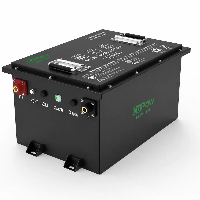
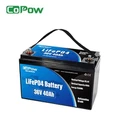
First, it is important to understand that battery management systems come in various types, each designed for specific applications. The BMS used in golf cart lithium batteries is a specialized solution tailored to this particular field.
Next, let's take a look at what exactly a lithium-ion battery management system for golf carts is.
A Golf Cart Battery Management System is an intelligent electronic control system installed inside a lithium battery. It is designed to monitor, manage, and protect the battery's operating status in real time, ensuring safe, stable, and efficient performance during charging, discharging, and vehicle operation.
For golf carts powered by LiFePO4 batteries, the BMS acts as the battery's brain, a comparison that many people are already familiar with.
It continuously monitors the voltage, temperature, and current of each battery cell, as well as the overall state of charge.
If the battery experiences overcharging, over-discharging, overcurrent, short circuits, or abnormal temperatures, the BMS immediately activates the appropriate protection mechanisms, such as limiting the charging or discharging current or disconnecting the circuit. This effectively prevents battery damage and helps ensure safe operation.
In addition, a BMS specifically designed for golf cart lithium batteries features cell balancing capabilities. This function helps regulate voltage differences between individual cells, minimizing capacity loss caused by cell imbalances and significantly improving the overall performance and cycle life of the battery pack.

Why Golf Cart Lithium Batteries Need a High-Quality BMS?
For golf carts, lithium batteries must not only deliver stable power output but also withstand complex operating conditions, including frequent starts, acceleration, hill climbing, extended driving periods, and repeated charge and discharge cycles. Therefore, a high-quality Battery Management System is essential for ensuring safe and reliable battery operation while extending its service life.
It provides comprehensive support in the following areas:
- Provides Multiple Safety Protections to Reduce Battery Operating Risks
- Balances Individual Cells to Improve Battery Pack Consistency
- Precisely Monitors Battery Status to Enhance Power Management
- Enables Smart Communication for Remote Monitoring and Fault Diagnosis
- Extends Battery Service Life and Reduces Long-Term Operating Costs
What Happens Without a BMS in a Lithium Golf Cart Battery?
Some of these issues may already be familiar to you from using lead-acid batteries. A lithium golf cart battery without a Battery Management System may work normally at first, but over time, various problems will gradually begin to emerge.
Without a BMS, a lithium-ion golf cart battery can experience a series of serious problems, including the following:
Cell Damage Caused by Overcharging: If charging continues after an individual cell reaches its upper voltage limit of 4.2V, electrolyte decomposition may occur, causing battery swelling and a sharp increase in internal resistance. Once one cell is damaged, the resulting instability may also affect neighboring cells.
Irreversible Damage Caused by Over-Discharging: When the voltage of an individual cell drops below 2.5V–3.0V toward the end of discharge, irreversible structural damage can occur within the cell, resulting in a loss of active capacity and creating potential safety risks during subsequent charging.
Rapid Expansion of Cell Voltage Differences: Without cell balancing, differences in capacity and internal resistance between individual cells can continue to increase with repeated charge and discharge cycles. As a result, the actual usable capacity may fall below 60% of the rated capacity, significantly reducing the golf cart's driving range.
Overheating Caused by Excessive Current: When a golf cart climbs steep slopes or carries heavy loads, it may require extremely high instantaneous current. Without BMS current-limiting protection, excessive current can cause overheating. Arcing caused by aging wiring or loose connectors can rapidly burn through cable insulation, generating more heat than the system can dissipate.
Short Circuits Directly Triggering Thermal Runaway: Without a BMS short-circuit protection mechanism, extremely high fault currents cannot be interrupted within milliseconds. This can easily trigger thermal runaway inside the battery cells, potentially resulting in serious safety incidents such as fires or explosions.
Uncontrolled Temperature Without Protection: During prolonged outdoor exposure to direct sunlight or continuous high-power discharge, cell temperatures may rise abnormally without being detected. As heat continues to accumulate, exceeding safe temperature limits can accelerate internal exothermic reactions and potentially trigger thermal runaway.
Unexpected Golf Cart Shutdown During Operation: Without BMS monitoring and control, the battery may display a falsely high state of charge before suddenly running out of power and shutting down. The golf cart may also unexpectedly lose power when operating under heavy loads or climbing slopes.
Significantly Shortened Battery Service Life: When cells operate in an imbalanced state over extended periods, the battery pack's cycle life may be reduced to approximately half that of a comparable battery pack equipped with a properly functioning BMS. A battery pack originally designed to last 5–10 years may become unusable much sooner.
Increased Maintenance and Troubleshooting Difficulties: Without real-time voltage and temperature monitoring for individual cells, identifying damaged cells becomes extremely difficult when a fault occurs. This makes it harder to detect hidden problems in advance, allowing potential safety risks to remain unnoticed for extended periods.

How Does a Golf Cart Battery Management System Work?
The battery management system used in golf carts features a multi-layer architecture designed to provide comprehensive monitoring, intelligent control, and safety management throughout the entire battery operation process.
At the cell level, the BMU (Battery Management Unit) continuously monitors the voltage, current, and temperature of each individual cell, collecting real-time data to ensure accurate battery monitoring.
At the module level, the MBMS (Master Battery Management System) collects and processes operating data from individual battery modules, providing an integrated overview of their performance and operating conditions.
At the system level, the BAMS (Battery Array Management System) centrally manages the entire battery pack, continuously monitoring its operating parameters and dynamically adjusting charging and discharging strategies based on real-time battery conditions.
During charging, the BMS performs cell balancing to maintain consistent voltage levels across individual cells and prevent overcharging or undercharging. During discharging, it communicates with the vehicle control unit (VCU) to coordinate power delivery and regulate motor torque according to driving demands.
When the golf cart encounters frequent stop-and-go driving, acceleration, or uphill climbing, the system intelligently manages power distribution to maintain stable performance. It can also work with the regenerative braking system to capture braking energy and feed it back into the battery, helping improve overall energy efficiency and maximize driving range.
Safety is another critical function of the BMS. Multiple layers of protection are built into the system to guard against overcharging, over-discharging, overcurrent, short circuits, and abnormal temperatures. When a potential hazard is detected, the BMS immediately triggers the appropriate protective response, including limiting current or disconnecting the circuit when necessary, helping prevent battery damage and reduce safety risks.
Beyond real-time monitoring and protection, the system continuously evaluates the battery's State of Health (SOH) and estimates its remaining service life, helping users better understand battery condition and plan maintenance.
For added convenience, the BMS also supports Bluetooth and RS485 communication, allowing users to connect external devices to access battery operating data, monitor performance, and facilitate troubleshooting.

What Are the Key Functions of a Golf Cart Battery Management System?
Many people only know that the battery management system provides basic protection, but in fact, it offers many other valuable functions. Some of its key capabilities include the following:
Real-Time Battery Status Monitoring: Continuously collects critical operating data, including individual cell voltages, total pack voltage, charge and discharge currents, and multi-point temperature readings, providing accurate data for battery management and control.
Accurate Battery State Estimation: Uses dedicated algorithms to calculate the State of Charge (SOC), State of Health (SOH), and peak discharge power, providing essential data to support vehicle power output.
Safety Protection: Adopts a high-power relay-based physical disconnection system to effectively handle high-current surges during hill climbing. Compared with conventional MOSFET-based solutions, it helps prevent false overcurrent protection and unexpected power cutoffs on slopes, thereby significantly reducing the risk of thermal runaway.
Fault Diagnosis and Early Warning: Continuously monitors and identifies potential faults, including overcharging, over-discharging, overtemperature, short circuits, and insulation abnormalities. When a fault is detected, the system immediately activates audible and visual alarms and can disconnect the main circuit when necessary.
Cell Balancing Management: Continuously monitors voltage differences between individual cells within the battery pack and uses active or passive balancing technology to minimize cell-to-cell voltage and charge discrepancies.
Wide-Temperature Thermal Management: Automatically activates cooling or auxiliary heating functions in response to outdoor high- and low-temperature conditions, keeping the battery within its optimal operating temperature range.
Communication and Remote Monitoring: Supports CAN, RS485, Bluetooth, and other communication interfaces. It can integrate with the original vehicle control systems and instrument panels of mainstream golf cart brands, including Club Car and EZ-GO, and even supports remote OTA (Over-the-Air) firmware updates.
Full Lifecycle Data Storage: Records operating logs and fault history for subsequent maintenance and troubleshooting, while also helping assess the battery's remaining service life.
International Compliance and Certification Compatibility: Supports compliance with international safety and environmental requirements, including CE, UN38.3, and RoHS.
Strong Electromagnetic Compatibility (EMC): Designed to operate reliably in the complex electromagnetic environments of golf courses without interfering with the normal operation of other vehicle electronic components.
Intelligent Charge and Discharge Management: Dynamically adjusts charging and discharging strategies according to the battery's real-time condition, optimizing charging current and discharge power.
Regenerative Energy Management: During deceleration or braking, the BMS works with the vehicle controller and regenerative braking system to manage recovered electrical energy. Within the battery's charging limits, it converts part of the vehicle's kinetic energy into electrical energy and stores it in the battery.

Key Features of BMS for Lithium Golf Cart Batteries
A battery management system is a general battery management system, while a golf cart lithium battery management system is specifically designed for golf cart lithium batteries. The two should not be confused or treated as interchangeable.
A dedicated BMS for golf cart lithium batteries offers the following features:
1. Dedicated Protection Architecture
Instead of relying solely on MOSFET-based switching solutions, it adopts high-power relays to physically disconnect the main circuit. This helps prevent false overcurrent protection trips and unexpected power interruptions when the golf cart is climbing hills under heavy loads, while significantly reducing the risk of thermal runaway.
2. Precise Adaptation to Low-Voltage Platforms
Specifically designed for mainstream golf cart voltage platforms, including 36V, 48V, and 72V systems. It is compatible with the series-cell configurations of LiFePO4 batteries and supports stable operation in low- and medium-voltage systems with up to 16 cells in series.
3. Wide Operating Temperature Range for Outdoor Environments
Designed to operate within a temperature range of -20°C to +60°C, with optional PTC auxiliary heating. It is suitable for outdoor golf course environments, including prolonged exposure to sunlight in summer and low temperatures during winter.
4. High-Level Hardware Protection
The corresponding battery system can achieve IP65–IP67 protection ratings, providing effective resistance against water and dust. This makes it suitable for outdoor operating conditions, including rainy weather and muddy terrain on golf courses.
5. Seamless Compatibility with Mainstream Golf Cart Models
Communication protocols are adapted to the original vehicle controllers and instrument panels of major imported golf cart brands, including Club Car, EZ-GO, and YAMAHA. The system supports plug-and-play replacement of lead-acid batteries without requiring modifications to the original vehicle wiring harness.
6. Optimized Long Cycle Life
The balancing and charge/discharge management strategies are optimized for the frequent starts and stops, as well as the shallow charge and discharge cycles typical of golf cart applications. This helps the battery pack achieve a cycle life of 3,000–6,000 cycles or more.
7. Multi-Protocol Communication and Connectivity
Standard communication interfaces include CAN, RS485, and Bluetooth. Users can monitor battery operating data in real time through a mobile app, while the system can also integrate with fleet GPS and remote maintenance platforms to support centralized management of multiple golf carts.
8. Comprehensive Export Compliance and Certifications
The complete battery solution can be supplied with relevant certifications and compliance documentation, including CE, UN38.3, and RoHS, supporting international transportation and market access requirements.
9. Strong Electromagnetic Compatibility and Interference Resistance
The hardware is optimized to withstand complex electromagnetic environments around golf courses, helping prevent signal interference with other onboard electronic components and ensuring more stable operation than conventional consumer-grade BMS solutions.
10. Maintenance-Free Operation
The system automatically performs cell balancing and battery status calibration, eliminating the need for routine manual maintenance associated with traditional lead-acid battery systems, such as water replenishment. This significantly reduces the labor and maintenance costs involved in managing golf cart fleets.

Advanced BMS for CoPow Lithium Golf Cart Batteries
We have already introduced the Battery Management System used in CoPow golf cart lithium batteries earlier. From its refined hardware craftsmanship to its powerful performance, every detail reflects our commitment to battery quality. To help you gain a deeper understanding of this BMS, including its design features, key functions, and technical advantages, let's take a closer look!
The key specifications of the Battery Management System used in CoPow golf cart lithium batteries are listed below, covering different current ratings and their corresponding dimensions.
|
Specifications |
Performance |
|---|---|
|
Application |
Electric Low-Speed Vehicles, AGVs, Utility Carts, etc. |
|
Battery Chemistry |
NMC / LiFePO4 / Sodium-Ion |
|
Cell Configuration |
Standard 8S LiFePO4; compatible with 6S–24S (automatic cell count identification) |
|
Main Control Architecture |
AFE + MCU |
|
Charging/Discharging Port |
Common Port, MOSFET-Based Design |
|
Charging Current |
20–200A |
|
Discharging Current |
20–200A |
|
Balancing Current |
150mA |
|
Measurement Accuracy |
Voltage: ±5mV at 25°C; Current: ±1% FS; Temperature: ±2°C FS; SOC: ±3% |
|
Standard Features |
UART, 2 Temperature Sensors |
|
Optional Features |
RS485/CAN, Low-Voltage Switch, Bluetooth |
|
Sleep Current |
≤1mA |
|
Deep Sleep Current |
≤5μA |
|
Operating Temperature |
-20°C to +70°C |
|
Dimensions |
20A/40A: 120 × 85 × 15mm; 60A: 145 × 85 × 15mm; 80A: 130 × 85 × 15mm; 100A: 165 × 85 × 15mm; 120A: 199.5 × 85 × 20mm; 150A/200A: 218.5 × 85 × 20mm |
Our BMS for golf cart batteries is compatible not only with lithium iron phosphate battery systems but also with sodium-ion battery systems. It offers a variety of current ranges and provides highly accurate monitoring capabilities.
The charge level displayed on the gauge represents the battery's most accurate remaining charge. In addition, we offer a variety of interface options, including CAN communication and Bluetooth, which you can choose from as needed.
* It is important to note that CoPow does not offer BMS units separately; instead, it provides lithium-ion golf cart batteries equipped with dedicated BMS units.

How to Choose a High-Quality BMS for Lithium Golf Cart Batteries?
Therefore, there are many important factors to consider when it comes to golf cart battery management systems. When purchasing a lithium battery for your golf cart, you should not focus solely on the battery itself.
It is equally important to carefully evaluate the specifications and performance of its Battery Management System, as these can significantly affect your overall experience and the battery's long-term reliability.
We recommend asking your supplier about the following key aspects:
Verify the main circuit safety architecture: Avoid low-end solutions that rely solely on the switching of inexpensive MOSFETs. Instead, opt for models equipped with a physical disconnection mechanism using high-power relays, which physically isolate the main circuit in the event of overcurrent, short circuits, or overheating, thereby reducing the risk of power loss on inclines and thermal runaway.
Practical Current Specifications: If the golf cart frequently needs to climb or descend slopes, it is recommended to select a BMS with a continuous discharge current of 150A to 200A and a peak discharge current of 350A to 600A. It is also best to configure a high-current delay protection function of 3 to 10 seconds to prevent false protection triggers during rapid acceleration.
High-Precision Sampling and State-of-Charge Estimation Capabilities: The BMS should ideally be equipped with a 12- to 16-bit ADC sampling chip to limit cell measurement error to between ±2 mV and ±5 mV, with a cumulative SOC estimation error not exceeding 10%. Additionally, it should be configured with at least four NTC temperature sensors to cover both the cells and the busbars, enabling precise identification of hotspots within the battery pack.
Compliance with Balancing Requirements: For passive balancing solutions, the balancing current must be no less than 50 mA; it is recommended to select a bidirectional active balancing model with a current of 1 A to 2 A to prevent the voltage difference between cells from continuing to widen after prolonged use.
Communication and Vehicle Compatibility Verification: For models such as Club Car, EZ-GO, and Yamaha, it is recommended to select a BMS that supports CAN 2.0B or isolated RS485 hardwired communication, rather than versions that rely solely on Bluetooth wireless communication. Ensure seamless protocol integration with the original vehicle controller and instrument panel to prevent voltage spikes during regenerative braking from causing the controller to fail.
Basic Protection and Low-Power Requirements: The BMS must have a protection rating of at least IP67, making it suitable for use in outdoor, high-humidity, and dusty environments on golf courses. In low-power sleep mode, the operating current should ideally not exceed 500 μA to prevent battery discharge during prolonged vehicle inactivity.
Compliance Certification and After-Sales Service: It is recommended to require suppliers to provide a full set of valid certifications, including CE, RoHS, and UN38.3. Additionally, confirm whether the BMS supports online firmware updates, millisecond-level fault data freezing, and historical log storage functions to enable rapid troubleshooting and minimize fleet downtime.
related article: How To Choose The Right BMS For A Golf Cart Lithium Battery Upgrade?

Conclusion
If you don't want to spend valuable time searching for a reliable Battery Management System supplier, CoPow offers a more convenient, one-stop solution.
Our golf cart lithium battery packs are already equipped with high-performance BMS units, which can also be customized to meet your specific requirements, including charging and discharging current, safety protection mechanisms, communication protocols, and intelligent monitoring functions.
Simply share your target golf cart models, application scenarios, and technical requirements with us. CoPow's professional engineering team will develop a tailor-made BMS solution to meet your needs and seamlessly integrate it into your golf cart battery packs.
This helps shorten product development cycles, reduce technical compatibility risks, and accelerate your time to market.
Whether you are a golf cart manufacturer, distributor, or brand owner looking for an OEM/ODM battery solution, CoPow is ready to become your trusted partner, helping you enter the market faster and achieve sustainable business growth.
Contact us today to get a customized technical solution and a competitive quotation!
FAQ
Can You Replace the BMS in a Golf Cart Battery at Any Time?
The BMS in a golf cart battery cannot be replaced at any time; before replacement, the power must be disconnected and appropriate safety precautions must be taken.
In addition, the new BMS must be fully compatible with the original battery's model and communication protocol. After replacement, parameter configuration and system debugging must be completed before the system can be used normally.
Is a BMS Only Used in Lithium Golf Cart Batteries?
No, BMS is not only suitable for lithium-ion batteries in golf carts but also for sodium-ion battery packs used in golf cart applications. High-end, custom-built lead-acid golf carts are equipped with a BMS to control charging and discharging and extend battery life.
However, standard lead-acid golf carts are typically not equipped with a BMS due to cost and chemical properties.
How Does a BMS Improve Lithium Golf Cart Battery Performance?
The BMS dynamically controls charging and discharging limits by collecting real-time voltage, temperature, and current data from each cell in the lithium-ion battery pack of a golf cart, using precise SOC/SOH/SOP algorithms.
Combined with cell balancing functionality, it evens out capacity differences between individual cells, preventing overall pack performance degradation caused by premature overcharging or over-discharging of specific cells.
To address special operating conditions such as uphill and downhill driving in golf carts, the system employs a physical disconnection solution using high-power relays instead of standard MOSFETs. This reduces false protection trips and power interruptions under high-current conditions, ensuring the battery delivers stable output within the optimal temperature range of 20–40°C.
This not only extends the cycle life to over 6,000 cycles but also ensures stable power output, significantly improving driving range stability.
In addition, the BMS can interface with the vehicle's electronic control system via Bluetooth or CAN communication to enable fleet-level remote status monitoring, thereby further reducing long-term maintenance costs.
How to Identify BMS Problems in Golf Cart Batteries?
1. Check the BMS Status Indicator: First, check the BMS status indicator inside the battery compartment. If the red light is illuminated, it indicates that a protection function has been activated. If the indicator remains constantly lit without changing its status or does not illuminate at all, the BMS may have a hardware power supply failure or a malfunctioning main control chip.
2. Monitor Abnormal Charging Behavior: If the charging current fluctuates significantly and irregularly or charging repeatedly starts and stops before the battery reaches its constant-voltage charging stage, this may indicate abnormal BMS control logic. Similarly, if the voltage difference between cells is minimal when the battery is at rest but increases rapidly during charging, and the problem persists even after replacing the charger with a properly functioning one, the BMS charging and discharging management logic may be faulty.
3. Check SOC Estimation Accuracy: If the battery's driving range drops sharply after a full charge, or the displayed SOC fluctuates by significantly more than ±3%, the problem may lie in the BMS SOC estimation algorithm, provided that cell aging has been ruled out.
4. Inspect Cell Balancing and Voltage Monitoring: Use a multimeter or professional diagnostic equipment to read the BMS real-time data. If an individual cell voltage deviates from the average by more than ±0.1V, the temperature difference across the battery pack remains above 5°C, cell balancing fails to activate for an extended period after a full charge, or the balancing current is abnormally low, these are strong indications of a fault in the BMS cell balancing or voltage monitoring functions.
5. Look for False Overcurrent Protection: If the golf cart frequently experiences sudden power limitations or unexpected power cutoffs when climbing hills under heavy loads, while the cells themselves remain within acceptable internal resistance and capacity ranges, the BMS overcurrent protection logic may be malfunctioning. In this case, the protection mechanism is being triggered unnecessarily, cutting off power when it should not.
What Are the Different Types of Battery Management Systems?
Based on application scenarios, battery management systems (BMS) can be broadly categorized into AGV BMS, low-speed vehicle (golf cart) BMS, forklift BMS, RV BMS, emergency power BMS, electric motorcycle BMS, scooter BMS, drone BMS, surfboard BMS, personal watercraft BMS, portable energy storage BMS, outdoor energy storage BMS, and commercial and industrial energy storage BMS, among others.