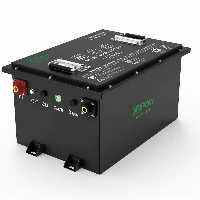
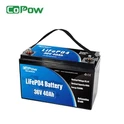
If purchased from major retail stores, the cost of replacing or upgrading an EZGO golf cart battery ranges from approximately $800 to $3,500. Lead-acid batteries cost about $800 to $1,800, while lithium-ion golf cart batteries cost about $1,500 to $3,500. These retail prices are significantly higher than factory prices, as they include hidden costs such as dealer markups, installation services, shipping, and after-sales service.
If you purchase directly from EZGO golf cart battery manufacturers (OEM/ODM factories), the prices will be much lower, especially for bulk purchases. The price range is approximately as follows:
| Type | End-User Retail Price | Factory Wholesale Price (FOB China, Reference) |
|---|---|---|
| 36V Lead-Acid Battery Pack (6×6V) | $600–900 | $350–550 |
| 48V Lead-Acid Battery Pack (6×8V) | $800–1,500 | $500–900 |
| 36V LiFePO4 Lithium Battery (60–100Ah) | $1,200–2,500 | $600–1,200 |
| 48V 100Ah LiFePO4 Battery (Common E-Z-GO Upgrade Solution) | $1,500–3,000 | $700–1,300 |
| 48V 105Ah High-Performance Version (Grade A Cells + BMS) | $1,800–3,500 | $900–1,500 |
| 72V Lithium Battery System | $2,500–4,500 | $1,500–2,500 |
Currently, the retail prices of common EZGO lithium-ion battery upgrade kits on the market (such as the 48V 105Ah LiFePO4 kit, designed to replace 6×8V lead-acid batteries) range from approximately $1,000 to $2,700, with significant price variations depending on the brand and configuration.
In some retail channels, a 48V 105Ah lithium-ion golf cart conversion kit is priced at around $1,100, while top-tier brands like EcoBattery may charge over $2,700 for their lithium-ion upgrade kits.


E-Z-GO Golf Cart Battery Replacement Cost by Model
Common E-Z-GO models include the TXT, RXV, Marathon, S4, and ELiTE, among others, and each model has different battery requirements for golf carts. Even for 48V batteries, prices can vary significantly depending on the configuration. The following is a reference table:
| E-Z-GO Model | Voltage | Original Battery Configuration | Lead-Acid Replacement (Retail) | Lithium Upgrade (Retail) | Factory Wholesale Price (FOB China, Reference) |
|---|---|---|---|---|---|
| E-Z-GO Marathon Electric | 36V | 6×6V Lead-Acid Batteries | $600–900 | $1,200–2,500 | $500–1,100 |
| E-Z-GO Medalist | 36V | 6×6V Lead-Acid Batteries | $600–900 | $1,200–2,500 | $500–1,100 |
| E-Z-GO TXT 36V | 36V | 6×6V Lead-Acid Batteries | $600–900 | $1,200–2,500 | $600–1,200 |
| E-Z-GO TXT 48V | 48V | 6×8V Lead-Acid Batteries | $800–1,500 | $1,500–3,000 | $700–1,300 |
| E-Z-GO RXV 48V | 48V | 6×8V Lead-Acid Batteries / Lithium Pack | $800–1,500 | $1,500–3,500 | $800–1,500 |
| E-Z-GO Freedom TXT 36V | 36V | 6×6V Lead-Acid Batteries | $600–900 | $1,200–2,500 | $600–1,200 |
| E-Z-GO Freedom TXT 48V | 48V | 6×8V Lead-Acid Batteries | $800–1,500 | $1,500–3,000 | $700–1,300 |
| E-Z-GO Freedom RXV | 48V | 6×8V Lead-Acid Batteries | $800–1,500 | $1,500–3,500 | $800–1,500 |
| E-Z-GO S4 Electric | 48V | 6×8V Lead-Acid Batteries | $900–1,500 | $1,800–3,500 | $900–1,600 |
| E-Z-GO S6 Electric | 48V | 6×8V Lead-Acid Batteries | $900–1,500 | $1,800–3,500 | $900–1,600 |
| E-Z-GO ST Sport Electric | 48V | 6×8V Lead-Acid Batteries | $800–1,500 | $1,500–3,500 | $800–1,500 |
| E-Z-GO ST 4x4 Electric | 48V | 6×8V Lead-Acid Batteries | $900–1,600 | $1,800–3,500 | $900–1,700 |
| E-Z-GO Workhorse Electric | 36V/48V | 6×6V or 6×8V Batteries | $700–1,500 | $1,500–3,500 | $700–1,500 |
| E-Z-GO ELiTE RXV | 48V | Integrated Lithium Battery Pack | - | $2,000–4,000+ | $1,200–2,500 |
| E-Z-GO ELiTE TXT | 48V | Integrated Lithium Battery Pack | - | $2,000–4,000+ | $1,200–2,500 |

What are we actually paying for?
For golf cart battery manufacturers, the cost of a 48V 105Ah LiFePO4 golf cart battery pack primarily includes the battery cells, the battery management system, structural design, manufacturing, testing and certification, and after-sales service. Among these, the cost of battery cells accounts for the largest share of the total battery cost-approximately 40% to 60%-followed by the battery management system, structural components, and manufacturing costs.
That's the manufacturer's cost, but what about the retail price? From the manufacturer's cost (FOB price) to the final retail price, the process also includes costs such as distributor margins, import shipping (depending on the situation), warehousing, marketing, installation services, and after-sales service. Therefore, the retail price of a 48V 105Ah EZGO golf cart lithium-ion battery on the market is typically 50% to 150% higher than the manufacturer's quoted price-or even more.
Manufacturer's Cost
1. Cell Cost
The battery cells are the most expensive component in a golf cart lithium-ion battery pack; they determine the battery's performance, service life, and safety.
Take a 48V 105Ah golf cart battery as an example: it uses 16 LFP cells connected in series. These cells are more expensive than other types, and their cost also depends on the brand, capacity specifications, and cell grade. LFP cells from leading brands such as CATL, BYD, EVE, and Gotion offer higher consistency and a longer cycle life, which can exceed 6,000 cycles.
In addition, professional golf cart battery manufacturers conduct a series of rigorous quality inspections on the cells before assembly, including tests for capacity, internal resistance, and voltage. The costs of these inspections are factored into the total cost of the battery.
2. BMS Cost
The BMS is primarily responsible for battery monitoring, protection, and data management. Golf carts generate significant instantaneous currents during startup, acceleration, and when climbing hills, so the BMS must have a high discharge capacity.
A basic BMS primarily includes overcharge protection, over-discharge protection, overcurrent protection, short-circuit protection, temperature protection, and cell balancing functions. More advanced lithium-ion battery systems for golf carts may also feature CAN communication, RS485 communication, Bluetooth connectivity, LCD displays, SOC/SOH calculation, fault logging, and remote monitoring.
Overall, the more advanced the BMS configuration, the higher its cost. A standard protection board may cost only a few dozen dollars, while an industrial-grade BMS with communication capabilities, high-current protection, and intelligent management functions may cost over $100.
3. Customization Costs
The reason why golf cart batteries from certain major brands perform so well is that they are deeply customized based on user usage data-essentially, they are tailor-made for the user.
Take the EZGO TXT and EZGO RXV as examples: these two models have different battery compartments and connection methods. Therefore, manufacturers must design corresponding battery enclosures, mounting brackets, battery trays, wiring harnesses, terminal locations, and waterproofing structures for each model.
Increasing the IP65/IP67 protection rating, adjusting battery dimensions, adding mounting brackets, or changing the interface layout will all correspondingly increase production costs.
4. Battery Pack Manufacturing Costs
Assembling cell packs into complete battery packs involves multiple production processes, including cell testing, cell grouping, welding, battery management system installation, wiring harness assembly, structural assembly, insulation treatment, and charge-discharge testing.
Reputable battery manufacturers must also conduct factory acceptance testing, including capacity testing, cycle testing, high- and low-temperature testing, and protection function testing, to ensure the batteries meet operational requirements. In addition, the final manufacturing cost of a battery includes expenses related to automation equipment, production personnel, quality control, and factory management.
5. Certification and After-Sales Service Costs
Lithium-ion batteries for golf carts must meet relevant export certification requirements, such as UN38.3, MSDS, CE, IEC 62619, and RoHS; the costs of these certifications and tests are factored into the product cost.
In addition, the manufacturer's warranty period also affects the quoted price. For example, batteries that come with a 5-year or even 10-year warranty require consideration of long-term after-sales service, spare parts inventory, technical support, and potential repair costs; therefore, their price will be higher than that of batteries with only a short-term warranty.
Overall, the cost structure for a 48V 105Ah EZGO golf cart lithium-ion battery pack is roughly as follows:
| Cost Component | Percentage |
|---|---|
| LiFePO4 Battery Cells | 40%–60% |
| BMS (Battery Management System) | 5%–15% |
| Enclosure and Structural Components | 5%–15% |
| Wiring Harnesses, Connectors & Accessories | 3%–8% |
| Battery PACK Assembly & Testing | 5%–10% |
| Certifications, After-sales Service & Management Costs | 5%–10% |
Retail Cost
1. Brand and Channel Profits
When manufacturers sell products directly to overseas customers, they provide only the FOB price. However, consumers typically purchase through brand websites, e-commerce platforms, distributors, or service centers. For example, a battery manufacturer might quote a price of $900, but after markups by importers, regional agents, and retailers, the final selling price could reach $1,800 to $2,500.
2. Installation Costs
Many consumers do not purchase bare batteries directly but instead opt for complete replacement kits. Retailers offer one-stop services ranging from removing the old battery to commissioning the new system, including removing the existing lead-acid battery, installing the lithium-ion battery,
adjusting the wiring, replacing it with a compatible lithium-ion battery charger, and commissioning the battery management system. Therefore, in addition to the price of the battery itself, consumers must also bear additional installation and related costs. Labor costs range from $100 to $400, a new lithium-ion battery charger costs between $100 and $300, and wiring and other accessories cost between $20 and $100.
If consumers choose to have the replacement performed by a professional golf cart repair shop, the total cost-including the battery, accessories, and labor-can reach as high as $2,500 to $3,500.
3. After-Sales Service and Warranty Costs
Manufacturers' FOB quotes cover only the battery products themselves (including battery cells, battery management systems, structural components, and basic production testing costs), while end-user retail brands must also bear the additional costs associated with long-term after-sales service.
To enhance their market competitiveness, many brands offer warranties ranging from 5 to 10 years, which means companies need to set aside funds to cover future costs associated with repairs, replacements, and technical support.
In addition, overseas brands must establish local warehouses to maintain inventory and reduce customer wait times; costs related to returns and exchanges, logistics, customer inquiries, fault diagnosis, and the operation of after-sales service teams are all factored into the final product price.
This is the cost chain behind golf cart batteries: from manufacturers to dealers, distributors, and retailers. Why can some people buy batteries at a low price, while others have to pay a high price? The reason lies right here.
How to Save Money on Your E-Z-GO Golf Cart Battery Upgrade?
When selecting a battery, there is no need to blindly pursue the highest specifications; instead, choose the appropriate battery capacity and configuration based on actual needs. For most E-Z-GO TXT and RXV models used in daily operations, a 48V 100Ah–105Ah LiFePO4 battery is sufficient to meet the majority of range requirements.
Purchasing directly from lithium-ion battery manufacturers or OEM suppliers can reduce costs associated with intermediaries. Retail prices for lithium-ion batteries on the market range from $1,500 to $3,500, which includes brand markups, warehousing, marketing, installation, and after-sales service costs. In contrast, 48V 105Ah lithium-ion batteries for golf carts supplied directly from the factory cost only $700–$1,500 (FOB China). Costs can be further reduced with larger purchase volumes.
In addition, carefully selecting the right Battery Management System configuration can also reduce costs. For golf cart batteries, more BMS features do not necessarily equate to better performance; rather, the system should be tailored to the vehicle's actual needs.
For standard commuter models, a continuous discharge current of 100A to 150A is sufficient to meet requirements; however, high-power controllers require a BMS with a higher current rating. Although features such as CAN communication, RS485, Bluetooth, LCD displays, and GPS can enhance the battery's intelligence, they also increase costs accordingly. Therefore, we recommend selecting options based on your actual needs.
Choosing a standardized replacement solution can further reduce costs. For common models such as the EZGO TXT and RXV, mature 48V lithium-ion battery replacement solutions are already available on the market, including size compatibility, battery brackets, wiring harnesses, and installation methods. Compared to a fully custom design, selecting a ready-made standard model can reduce costs associated with tooling, structural development, and testing.
CoPow Lithium Golf Cart Batteries: Factory-Direct Quality with Better Cost Performance
CoPow's lithium-ion golf cart batteries ensure product performance while reducing intermediary costs through a direct-from-manufacturer model, offering customers better value for money.
As a lithium-ion battery manufacturer, CoPow is directly involved in battery design, production, and quality control, thereby reducing unnecessary distribution costs. Leveraging its R&D and manufacturing capabilities in battery packs, CoPow provides customized solutions for various golf cart models, including the EZGO TXT, EZGO RXV, Club Car, and Yamaha. These solutions are optimized in terms of size, current, connection methods, and Battery Management System functionality.
In terms of product configuration, CoPow's lithium-ion golf cart batteries utilize high-quality Grade A LiFePO4 cells combined with a proprietary Battery Management System, achieving a balance between safety, cycle life, and user experience. Depending on specific application requirements, the batteries support a variety of smart features, including CAN, RS485, Bluetooth, LCD displays, and remote monitoring.
As a manufacturer, CoPow possesses OEM/ODM customization capabilities and can select different configurations based on a customer's market positioning. For example, for dealers seeking price competitiveness, CoPow can provide standardized 48V 105Ah replacement solutions; for customers in the high-end market, CoPow can offer customized products with higher protection ratings, smarter BMS, and longer warranty periods.
Through direct factory supply, an optimized supply chain, professional pack design, and flexible customization capabilities, CoPow enables customers to obtain product performance comparable to high-end brands at more reasonable prices-a key factor in the competitiveness of CoPow's lithium-ion golf cart batteries in overseas markets.
If you are interested in our products, please feel free to contact us at any time. Our team will respond to your message within 24 hours.