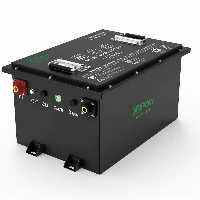
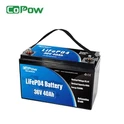
The battery capacity of electric forklifts ranges from 180 Ah to over 1,550 Ah. Among these, low-power forklifts such as small pallet trucks and stackers require only about 180 Ah of battery capacity, while medium- and large-sized 80-volt forklifts require 1,000 Ah or even over 1,500 Ah of battery capacity.
The most widely used forklifts in our daily operations are 48V electric counterbalanced forklifts-specifically, those in the 2.0- to 3.5-metric-ton class-which typically have battery capacities ranging from 280Ah to 600Ah.
Next, we'll take you on an in-depth exploration of this topic. Please continue reading.

First, we need to understand how many voltage options are available for forklifts.
Voltage determines the power rating and range of application for a battery system, while Ah capacity determines the amount of electrical energy the battery can store and the duration it can power the forklift. Before determining the Ah capacity of a forklift battery, it is necessary to first understand the voltage options available for the forklift, as voltage cannot be configured arbitrarily.
Electric forklifts on the market primarily use voltage platforms of 24V, 36V, 48V, 72V, and 80V. Furthermore, while other voltage options can be customized, you may find it difficult to source compatible controllers, chargers, and spare parts. This is because these components are primarily designed around the five mainstream voltage platforms mentioned earlier.
Of course, if you choose to customize your forklift battery, the manufacturer can provide you with these matching kits and offer replacement services when needed. For example, we have customized 60V and 96V batteries for customers in the past, but these are considered special cases.
How Many Capacity Options Are Available for 24V Forklifts?
The capacity of 24V forklift batteries ranges from 150Ah to 625Ah. CoPow not only offers the 150Ah, 200Ah, 230Ah, and 300Ah forklift batteries that are frequently chosen by customers, but can also customize other capacities based on customer needs. Our engineers are skilled at connecting batteries in series to assemble high-performance battery packs.
Overall, the most commonly used amp-hour capacities for 24V forklift batteries include 180Ah, 200Ah, 210Ah, 230Ah, 280Ah, 300Ah, 400Ah, 500Ah, and even capacities around 600Ah.
| 24V Forklift Type | Battery Capacity Options (Ah) | Working Conditions | Models / Equipment |
|---|---|---|---|
| Electric Pallet Truck | 180Ah–230Ah | Short-distance material handling inside warehouses, low-intensity operation, typically one shift per day | Toyota Industries Corporation BT Series, Jungheinrich AG ERE Series, Crown Equipment Corporation WP Series |
| Electric Stacker | 200Ah–280Ah | Pallet stacking and warehouse storage operations with medium workload intensity | Jungheinrich AG EJC Series, STILL GmbH EXD Series |
| Ride-on Pallet Truck | 280Ah–400Ah | Warehouse distribution and logistics handling, typically operating 4–8 hours per day | Crown Equipment Corporation RT Series, Toyota Industries Corporation BT Levio Series |
| Reach Truck | 300Ah–500Ah | High-rack warehousing requiring longer runtime and frequent lifting operations | Raymond Corporation Reach Truck, Crown Equipment Corporation ESR Series |
| Light-duty Electric Counterbalance Forklift | 400Ah–625Ah | Light material handling, indoor logistics, and continuous operation applications | 1.5-ton class 24V electric forklifts, small 3-wheel electric forklifts |
| Multi-shift Warehouse Equipment | 500Ah–625Ah+ | Two-shift or three-shift operations requiring longer runtime and reduced battery swapping downtime | High-intensity logistics warehouses, e-commerce distribution centers |


How Many Capacity Options Are Available for 36V Forklifts?
The capacity range of 36V forklift batteries is 100Ah to 500Ah, and they are primarily used in 0.8- to 2.0-metric-ton electric stackers, reach trucks, and electric counterbalanced forklifts.
Common capacities for 36V forklift batteries include 100Ah, 150Ah, 180Ah, 200Ah, 230Ah, 280Ah, 300Ah, 400Ah, and 500Ah. Different capacities correspond to different levels of operational intensity, as detailed below:
| 36V Forklift Type | Common Battery Capacity Options (Ah) | Typical Applications | Typical Models / Equipment |
|---|---|---|---|
| Walkie Stacker | 100Ah–150Ah | Low-intensity warehouse handling, short-distance operations, limited daily working hours | Small electric stackers, warehouse replenishment equipment |
| Ride-on Stacker | 150Ah–230Ah | Medium-intensity warehouse operations requiring longer runtime | Jungheinrich EJC Series, some STILL EXD Series models |
| Reach Truck | 200Ah–350Ah | High-rack storage, frequent lifting operations, 4–8 hours of daily operation | Raymond Reach Trucks, some Crown ESR Series models |
| 3-Wheel Electric Counterbalance Forklift | 230Ah–400Ah | Indoor logistics, production line material handling, medium-load applications | Around 1.5-ton 36V electric counterbalance forklifts |
| High-Intensity Continuous Operation Equipment | 400Ah–500Ah | Multi-shift operations, long-distance transportation, reduced charging frequency | Large warehouses, distribution centers, logistics hubs |

How Many Capacity Options Are Available for 48V Forklifts?
The capacity range for 48V forklift batteries is 200Ah to 1000Ah. Due to their greater versatility, they offer a wider range of available capacities than other forklift batteries, including 00Ah, 230Ah, 280Ah, 300Ah, 315Ah, 350Ah, 400Ah, 500Ah, 560Ah, 600Ah, 700Ah, 800Ah, and 1000Ah. These batteries are primarily used in 1.5- to 3.5-metric-ton electric forklifts.
| 48V Forklift Type | Battery Capacity Options (Ah) | Applications | Typical Models / Equipment |
|---|---|---|---|
| Electric Pallet Truck / Tow Tractor | 200Ah–300Ah | Internal warehouse transportation, airport logistics, and production line material handling | Crown Equipment Corporation WP Series, electric tow tractors |
| Reach Truck | 300Ah–500Ah | High-bay warehouse storage, frequent lifting operations, 4–8 hours of daily operation | Raymond Reach Truck, Crown Equipment Corporation ESR Series |
| 3-Wheel Electric Counterbalance Forklift | 300Ah–500Ah | Indoor logistics, manufacturing plants, and space-constrained environments | Toyota 3-wheel electric forklift series, STILL RX Series |
| 4-Wheel Electric Counterbalance Forklift | 400Ah–700Ah | Medium-duty warehousing, factory material handling, and loading/unloading operations | 1.8–3.5 ton class 48V electric forklifts |
| Multi-Shift Heavy-Duty Electric Forklift | 700Ah–1000Ah+ | Continuous operation, high-frequency material handling, and large logistics centers | Large warehouses, e-commerce distribution centers |


How Many Capacity Options Are Available for 72V Forklifts?
The capacity of 72V forklift batteries typically ranges from 200Ah to 1000Ah. Common mainstream options include 200Ah, 230Ah, 280Ah, 300Ah, 314Ah, 400Ah, 500Ah, 560Ah, 600Ah, 700Ah, 800Ah, and 1000Ah. Next, let's take a look at what battery capacity you should choose.
| 72V Forklift Type | Battery Capacity Options (Ah) | Applications | Typical Models / Specific Examples |
|---|---|---|---|
| Medium-Duty Electric Counterbalance Forklift | 200Ah–400Ah | Factory internal material handling, warehouse logistics, and medium-load operations, typically 1–2 shifts per day | Toyota 8FB Series (some 72V models), Nissan TX Series, selected Komatsu FB Series models |
| Heavy-Duty Electric Counterbalance Forklift | 400Ah–600Ah | Heavy load handling, manufacturing plants, logistics centers, and frequent loading/unloading operations | Kalmar ECG Series, selected Hyster J Series electric forklifts, selected Yale ERP Series models |
| Reach Truck | 300Ah–500Ah | High-bay warehouse storage, high-frequency picking operations, and 4–8 hours of daily operation | Selected high-voltage Jungheinrich ETV Series models, STILL FM Series models |
| Electric Tow Tractor | 300Ah–600Ah | Airport logistics, automotive manufacturing plants, and logistics centers requiring long-duration continuous towing operations | Linde Material Handling P Series tow tractors, Taylor-Dunn tow tractor series |
| Heavy-Duty Electric Forklift | 600Ah–1000Ah+ | Multi-shift operations, high-load material handling, and long-distance transportation | 5-ton+ electric forklifts, port equipment, and large-scale logistics vehicles |

How Many Capacity Options Are Available for 80V Forklifts?
The capacity range for 80V forklift batteries is 400Ah to 1,550Ah. This is currently the highest voltage rating available for electric forklifts and is suitable for electric forklifts with a capacity of 3.5 metric tons or more, including 8-metric-ton forklifts.
Capacities for 80V forklift batteries include: 280Ah, 314Ah, 400Ah, 500Ah, 560Ah, 600Ah, 700Ah, 800Ah, 900Ah, 1000Ah, 1200Ah, and 1500Ah.
Although the capacity range is quite broad, the most commonly used capacities are actually in the 400Ah to 700Ah range, particularly 560Ah and 630Ah.
| 80V Forklift Type | Battery Capacity Options (Ah) | Applications | Typical Models / Specific Examples |
|---|---|---|---|
| Medium-Duty Electric Counterbalance Forklift | 280Ah–500Ah | Factory and warehouse material handling, medium loads, typically operating 1–2 shifts per day | Toyota 8FB Series (selected 80V models), Linde Material Handling E Series 80V electric forklifts, selected STILL RX Series models |
| 3.5–5 Ton Heavy-Duty Electric Counterbalance Forklift | 400Ah–800Ah | Heavy load handling, manufacturing, warehouse logistics centers, and frequent loading/unloading operations | Hyster J Series 80V electric forklifts, selected Yale ERP Series models, selected Crown Equipment Corporation C-5 Series models |
| 5–8 Ton Heavy Electric Forklift | 600Ah–1200Ah | Steel handling, timber handling, automotive manufacturing, and large-scale industrial operations requiring high torque output | Kalmar ECG Series, heavy-duty electric counterbalance forklifts |
| Multi-Shift Continuous Operation Forklift | 1000Ah–1550Ah+ | Three-shift production, large logistics centers, and long-duration continuous operations | Large manufacturing plants, warehouse logistics hubs, and high-load industrial vehicles |


Can I Replace My Existing Forklift Battery With a Different Ah Capacity?
Yes, it is possible, but you need to pay attention to the battery's size and capacity. Otherwise, if too many cells are connected in series, the battery will become too large to fit into the original battery compartment.
If you were previously using a 48V 600Ah lead-acid forklift battery, you should choose a 48V 300Ah to 400Ah lithium-ion battery when replacing it, because the actual usable capacity of lithium-ion batteries is 80% to 90% of the depth of discharge (DoD), which is much higher than the 50% DoD of lead-acid batteries.
If you are concerned that the lithium battery is too light, you can also increase the number of cells connected in series based on your budget. In fact, lithium forklift batteries come equipped with metal ballast. Simply provide the lithium forklift battery manufacturer with the weight of the original battery, and they will provide you with a suitable ballast solution.
Recommended Approaches for Upgrading Lithium-Ion Batteries in Forklift Batteries of Different Capacities
Recommended Lithium Battery Replacement Options for 24V Lead-Acid Forklift Batteries
| Original Lead-Acid Forklift Battery Specification | Recommended Lithium Forklift Battery Specification | Replacement Explanation |
|---|---|---|
| 24V 180Ah Lead-Acid Battery | 24V 150Ah–200Ah LFP Lithium Battery | For light-duty equipment, the capacity can be slightly reduced; for standard replacement, choosing a capacity close to the original is recommended |
| 24V 210Ah Lead-Acid Battery | 24V 180Ah–230Ah LFP Lithium Battery | A common direct replacement option; 230Ah provides longer operating time |
| 24V 230Ah Lead-Acid Battery | 24V 200Ah–230Ah LFP Lithium Battery | Maintaining a similar capacity is sufficient for most applications |
| 24V 280Ah Lead-Acid Battery | 24V 230Ah–280Ah LFP Lithium Battery | Lithium batteries can use a slightly lower Ah rating while maintaining similar usable energy |
| 24V 300Ah Lead-Acid Battery | 24V 280Ah–314Ah LFP Lithium Battery | A similar capacity replacement is recommended |
| 24V 400Ah Lead-Acid Battery | 24V 314Ah–400Ah LFP Lithium Battery | Select according to operating hours; 400Ah is recommended for long-duration operation |
| 24V 500Ah Lead-Acid Battery | 24V 400Ah–500Ah LFP Lithium Battery | Lithium batteries can reduce Ah capacity while maintaining similar runtime performance |
| 24V 600Ah Lead-Acid Battery | 24V 500Ah–600Ah LFP Lithium Battery | High-intensity applications should maintain a larger capacity option |
Recommended Lithium Battery Replacement Options for 36V Lead-Acid Forklift Batteries
| Original Lead-Acid Forklift Battery Specification | Recommended Lithium Forklift Battery Specification | Replacement Explanation |
|---|---|---|
| 36V 200Ah Lead-Acid Battery | 36V 150Ah–200Ah LFP Lithium Battery | Suitable for light- to medium-duty forklift replacement |
| 36V 230Ah Lead-Acid Battery | 36V 200Ah–230Ah LFP Lithium Battery | A common replacement capacity range |
| 36V 280Ah Lead-Acid Battery | 36V 230Ah–280Ah LFP Lithium Battery | Capacity can be selected based on runtime requirements |
| 36V 300Ah Lead-Acid Battery | 36V 280Ah–314Ah LFP Lithium Battery | A similar capacity replacement is recommended |
| 36V 400Ah Lead-Acid Battery | 36V 314Ah–400Ah LFP Lithium Battery | 314Ah lithium batteries can meet some applications, while 400Ah is recommended for longer operating hours |
| 36V 500Ah Lead-Acid Battery | 36V 400Ah–500Ah LFP Lithium Battery | 500Ah is recommended for high-utilization applications |
Recommended Lithium Battery Replacement Options for 48V Lead-Acid Forklift Batteries
| Original Lead-Acid Forklift Battery Specification | Recommended Lithium Forklift Battery Specification | Replacement Explanation |
|---|---|---|
| 48V 300Ah Lead-Acid Battery | 48V 230Ah–300Ah LFP Lithium Battery | Capacity can be reduced depending on operating hours and energy requirements |
| 48V 400Ah Lead-Acid Battery | 48V 315Ah–400Ah LFP Lithium Battery | A common lithium upgrade solution |
| 48V 500Ah Lead-Acid Battery | 48V 400Ah–500Ah LFP Lithium Battery | Balances cost and runtime performance |
| 48V 600Ah Lead-Acid Battery | 48V 500Ah–560Ah LFP Lithium Battery | The most common upgrade option, providing similar or improved runtime with a reasonable capacity match |
| 48V 700Ah Lead-Acid Battery | 48V 560Ah–700Ah LFP Lithium Battery | Suitable for applications requiring longer operating time |
| 48V 800Ah Lead-Acid Battery | 48V 700Ah–800Ah LFP Lithium Battery | Recommended for long-duration continuous operation |
| 48V 1000Ah Lead-Acid Battery | 48V 800Ah–1000Ah LFP Lithium Battery | Designed for ultra-long runtime applications |
Recommended Lithium Battery Replacement Options for 72V Lead-Acid Forklift Batteries
| Original Lead-Acid Forklift Battery Specification | Recommended Lithium Forklift Battery Specification | Replacement Explanation |
|---|---|---|
| 72V 300Ah Lead-Acid Battery | 72V 230Ah–300Ah LFP Lithium Battery | Suitable for medium runtime requirements |
| 72V 400Ah Lead-Acid Battery | 72V 314Ah–400Ah LFP Lithium Battery | A common capacity matching option |
| 72V 500Ah Lead-Acid Battery | 72V 400Ah–500Ah LFP Lithium Battery | Capacity can be adjusted based on workload intensity |
| 72V 600Ah Lead-Acid Battery | 72V 500Ah–600Ah LFP Lithium Battery | Maintaining a similar capacity is recommended |
| 72V 700Ah Lead-Acid Battery | 72V 560Ah–700Ah LFP Lithium Battery | A high-runtime upgrade solution |
| 72V 800Ah Lead-Acid Battery | 72V 700Ah–800Ah LFP Lithium Battery | Suitable for long-duration operation requirements |
| 72V 1000Ah Lead-Acid Battery | 72V 800Ah–1000Ah LFP Lithium Battery | A large-capacity replacement solution |
Recommended Lithium Battery Replacement Options for 80V Lead-Acid Forklift Batteries
| Original Lead-Acid Forklift Battery Specification | Recommended Lithium Forklift Battery Specification | Replacement Explanation |
|---|---|---|
| 80V 400Ah Lead-Acid Battery | 80V 314Ah–400Ah LFP Lithium Battery | Suitable for medium-capacity replacement |
| 80V 500Ah Lead-Acid Battery | 80V 400Ah–500Ah LFP Lithium Battery | A standard lithium upgrade solution |
| 80V 600Ah Lead-Acid Battery | 80V 500Ah–600Ah LFP Lithium Battery | A common capacity range for industrial applications |
| 80V 700Ah Lead-Acid Battery | 80V 560Ah–700Ah LFP Lithium Battery | A typical heavy-duty forklift upgrade solution |
| 80V 800Ah Lead-Acid Battery | 80V 700Ah–800Ah LFP Lithium Battery | Designed for high-intensity operation |
| 80V 1000Ah Lead-Acid Battery | 80V 800Ah–1000Ah LFP Lithium Battery | Suitable for long-duration continuous operation |
| 80V 1200Ah Lead-Acid Battery | 80V 1000Ah–1200Ah LFP Lithium Battery | A very large-capacity replacement solution |
| 80V 1500Ah Lead-Acid Battery | 80V 1200Ah–1500Ah+ LFP Lithium Battery | Designed for extremely long runtime requirements |
What Factors Affect the Ah Requirement of a Forklift Battery?
When selecting the capacity of a forklift battery, your first thought might be operating range. While this is certainly an important consideration, professional buyers take a comprehensive approach, evaluating multiple factors, including operating range, workload intensity, voltage rating, operating temperature, battery compartment size, and battery weight. None of these factors can be overlooked.
Battery Runtime
You can calculate the runtime based on the daily operating hours of your forklift or fleet, factoring in unexpected situations as needed. This will give you a rough idea of how many hours of power are required each day. Based on this usage time, you can make a preliminary determination of the required battery capacity.
Workload
Operating time is only one aspect of workload; what matters more is the weight of the cargo you're handling with the forklift. If you use a 48V 200Ah forklift battery to move a 2-metric-ton load, especially over long periods of operation, it will certainly not be sufficient. Every time an operator accelerates, raises or lowers the forks, or climbs a slope, more current is required.
Voltage Ratings for Forklifts
For 48V forklift batteries, capacity cannot be increased indefinitely. The maximum configurable capacity for a 48V forklift battery is 1,000 Ah, which already corresponds to a configuration of 64 cells. Since capacity cannot be increased further, the only option is to raise the voltage.
Operating Environment
Some forklifts are specifically designed for low-temperature environments such as cold storage facilities. Regardless of whether they use lithium-ion or lead-acid batteries, both types will experience a loss of usable capacity when operating at temperatures below zero degrees Celsius. Therefore, you should take this capacity reduction into account before purchasing a battery.
Battery Compartment Size and Weight Limits
The more cells connected in series, the greater the battery capacity; however, this also increases the weight and volume of the forklift battery pack. Therefore, you need to identify a threshold to determine the maximum battery capacity.
Get a Customized Forklift Battery Capacity Solution from a Professional Battery Manufacturer.
In summary, selecting the capacity of a forklift battery requires comprehensive consideration of multiple factors, including the forklift's voltage, rated load capacity, operating time, workload intensity, battery compartment size, and charging method; the decision cannot be based solely on capacity.
Although there is an upper limit to capacity, within a certain range it is not fixed as listed for products online, but can be customized according to specific needs-this is a major advantage of lithium-ion forklift batteries.
As a manufacturer of lithium-ion forklift batteries, CoPow offers customized solutions tailored to different forklift models and application requirements. Battery voltages include 24V, 36V, 48V, 72V, and 80V. Our services cover battery capacity design, cell selection, Battery Management System configuration, structural dimensions, and communication protocol matching, all aimed at providing customers with tailor-made forklift battery solutions.
If you are interested in our products, please feel free to contact us at any time. Our customer service team will respond to your inquiry within 24 hours.