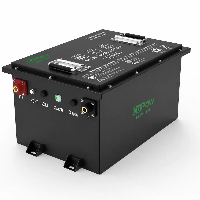
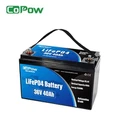
First, we need to understand that there are currently three main types of forklift batteries on the market: the first is lead-acid forklift batteries; the second is lithium iron phosphate forklift batteries; and the third is ternary lithium forklift batteries.
So, what are these three types of batteries made of? Let's start with a brief overview:
Lead-acid forklift batteries: They consist primarily of lead plates and sulfuric acid electrolyte, and store and release electrical energy through a chemical reaction between lead and lead dioxide.
* LiFePO4 Forklift Batteries: This is currently the primary direction for forklift battery upgrades and represents a type of lithium-ion battery that offers a longer service life and greater safety. It consists of lithium iron phosphate battery cells, a battery management system, a battery enclosure, an electrical connection system, protective components, a thermal management system, and communication interfaces.
Ternary lithium forklift batteries: This is also a type of lithium-ion battery, but it is smaller in size and is suitable for material-handling equipment with limited battery compartment space that requires a large amount of power. Its main components include ternary lithium battery cells, a battery management system, a battery enclosure, an electrical connection system, protective components, a thermal management system, and a communication system-similar to lithium iron phosphate batteries.
We will go into more detail on the specifics below.

What are lithium iron phosphate forklift batteries made of?
As the latest trend-setter in the forklift battery industry, its components share similarities with those of lead-acid batteries, yet also have distinct differences. The key distinction lies in the battery management system -an intelligent component not found in lead-acid batteries, and the core of the forklift battery's transition toward smart technology.
Forklift batteries primarily consist of the BMS, modules (cells), electrical control components, charge/discharge connectors, and the housing. Let's take a closer look at each of these components.

1. Battery Cell Module
This module consists of components such as battery cells, connectors, end plates, insulating covers, and steel strips. We will now describe each of these components in turn.
Battery Cell
The cathode material in a lithium iron phosphate forklift battery is lithium iron phosphate, which is durable and safe. The anode is composed of graphite. During charging, lithium ions are released from the cathode and embedded in the graphite anode; during discharge, the lithium ions return to the cathode. It is through this reversible process that lithium iron phosphate batteries store and release electrical energy.
Battery Cell Electrolyte
Lithium iron phosphate batteries also contain an electrolyte, but it is a non-corrosive liquid. The electrolyte in lithium-ion batteries consists of an organic solvent and lithium salts, which are used to transport lithium ions, allowing them to move between the positive and negative electrodes.
Unlike the sulfuric acid electrolyte in lead-acid batteries, it does not need to be replenished regularly; therefore, lithium-ion forklift batteries do not require daily water top-ups, and maintenance is focused on other aspects.
Specifications for Lithium Iron Phosphate Forklift Battery Cells
| Parameter | Typical Specification |
|---|---|
| Battery Chemistry | Lithium Iron Phosphate (LiFePO₄ / LFP) |
| Cell Type | Prismatic Aluminum Case Cell |
| Nominal Voltage | 3.2V |
| Capacity Range | 100Ah – 314Ah (Common for Forklift Applications) |
| Operating Voltage Range | 2.5V – 3.65V |
| Energy Density | 140–170 Wh/kg |
| Cycle Life | ≥3,000–6,000 cycles (80% DOD) |
| Continuous Discharge Current | 1C (depending on cell model) |
| Peak Discharge Current | 2C–3C (short duration) |
| Charging Method | CC/CV (Constant Current / Constant Voltage) |
| Standard Charging Temperature | 0°C to 55°C |
| Discharging Temperature | -20°C to 60°C |
| Storage Temperature | -20°C to 45°C |
| Internal Resistance | ≤0.3–0.5 mΩ (depending on capacity) |
| Safety Features | Overcharge, Over-discharge, Over-temperature Protection |
| Certification | UN38.3, IEC 62619, UL 1973 (depending on supplier) |

Common LFP Cells Used In Forklift Batteries
| Cell Capacity | Nominal Voltage | Application |
|---|---|---|
| 100Ah / 105Ah | 3.2V | Small electric forklifts, pallet trucks, stackers |
| 200Ah | 3.2V | 24V/36V/48V forklift batteries |
| 230Ah | 3.2V | Medium-duty forklifts and warehouse equipment |
| 280Ah | 3.2V | Mainstream 48V/72V/80V forklift batteries |
| 314Ah | 3.2V | Heavy-duty forklifts and multi-shift operations |
Separator
Lead-acid batteries use separators, while lithium-ion batteries use separators. This microporous plastic film, made of polyethylene (PE) or polypropylene (PP), is located between the positive and negative electrodes. It also prevents short circuits caused by contact between the positive and negative electrodes.

Connecting Plate(Connection Piece)
The connectors in forklift lithium-ion batteries are used to connect multiple cells, forming a complete lithium-ion battery pack. Since the rated voltage of a single lithium iron phosphate cell is only 3.2V, while forklifts require higher voltages such as 24V, 36V, 48V, 72V, or 80V, multiple cells must be connected in series or in parallel using these connectors.
Connecting strips are typically made of pure copper, nickel-plated copper, aluminum, or aluminum-copper composite materials. Among these, copper is the most widely used material because of its excellent electrical conductivity, which helps reduce energy loss during current transmission.
For example, a 48V forklift lithium-ion battery consists of 16 3.2V lithium iron phosphate cells connected in series. The positive and negative terminals of the cells must be connected sequentially via bus bars to achieve a total voltage of 51.2V.
During manufacturing, methods such as laser welding, ultrasonic welding, or bolted fastening can be used to connect the bus bars to the cell terminals. After welding, the connectors not only transmit current but also must withstand high current surges during forklift operation.
When the forklift starts, accelerates, or lifts cargo, the battery instantly delivers a large current, so the connectors must possess sufficient electrical conductivity.
In addition, the connectors secure each cell, preventing poor contact caused by cell loosening due to vibration.

Terminal Plate(End Plate)
The terminal plates on forklift lithium-ion batteries are primarily used to secure and protect the internally arranged battery cells, as well as to withstand the pressure generated when the cells expand.
As shown in the figure, the terminal plates are located on both sides of the cell pack and, together with the side plates and steel straps, form the cell retention structure.
Simply put, the terminal plates are located on the outermost layer of the cell pack and serve to constrain and support the entire cell array. You may not be very familiar with this concept yet, so let's explain it using a real-world example.
During the operation of a forklift lithium-ion battery, the cells undergo slight volume changes during charge-discharge cycles. In particular, square LFP cells generate a certain amount of expansion force after multiple cycles.
Without end plates to secure them, the cells could become loose. End plates protect the cells and provide electrical insulation, reducing the impact and vibration experienced by the forklift during operation.
End plates are made from high-strength, lightweight materials such as aluminum alloy, stainless steel, or high-strength composite materials.
Insulated Cover Plate(PC Cover)
The insulating cover is located on top of the battery cell and serves as an insulating protective component that covers the cell terminals, connection tabs, and high-voltage connection areas. It isolates live parts to prevent electric shock to personnel or short circuits caused by contact with metallic foreign objects. In addition, it provides enhanced protection for battery cells that have been connected in series and parallel.
Furthermore, in cold storage environments, the insulating cover plate effectively prevents moisture intrusion. Insulating cover plates are typically made of materials with good insulating properties, such as PC (polycarbonate), PP (polypropylene), PVC, or epoxy boards.
Steel Strip
Steel straps are mechanical fasteners used to secure battery cell modules. They are installed around the perimeter of the cell pack and firmly connect multiple cells together by tightening.
As shown in the figure, the steel straps are located on the outer side of the battery cell module, encircling the entire cell pack, and, together with the end plates and side plates, form the structure that secures the cells.
There are various types of steel straps available, including cold-rolled steel straps, stainless steel straps, and corrosion-resistant carbon steel straps. These straps are typically treated to prevent rust, so there is no need to worry about rusting.
2. Various Components
In addition to the battery module itself, a forklift battery can be considered a system that consists of several other small components. Don't underestimate these small components-they are crucial to the safe operation of the battery.
Connectors(Battery Connector)
Please note that this is not a battery controller, but a connector. The connector serves as the interface for power transmission and signal communication between the forklift's lithium-ion battery and its electrical system-that is, the battery connector-which acts as the interface through which the battery outputs electrical energy.
Through this connector, the electrical energy stored inside the battery can be safely and quickly transmitted to the forklift's drive motor, controller, and other electrical devices, while also connecting the charger to the battery.
As shown in the image, this connector consists of a positive terminal, a negative terminal, an insulated housing, and a mechanical locking mechanism.
Inside the forklift's lithium-ion battery, the electrical energy generated by the battery cells is collected via busbars and wiring harnesses and routed to the connector, which then connects to the forklift's main power circuit.
Since forklifts require high-current power transmission, the connector must possess sufficient current-carrying capacity to withstand outputs ranging from tens to hundreds of amperes, thereby preventing instantaneous burnout.
Additionally, the connector is designed with a foolproof feature that prevents the positive and negative terminals from being reversed, thus avoiding damage to the battery or the vehicle's control system caused by incorrect connection.
Furthermore, some lithium-ion battery connectors for industrial forklifts are equipped with mechanical latches to prevent the plug from becoming loose due to vibrations while the vehicle is in operation.
In some smart forklift lithium-ion battery systems, signal interfaces-such as CAN communication, RS485 communication, or temperature sensing lines-may also be integrated into the connector.
Through these communication lines, the battery BMS can exchange data with the forklift controller, providing feedback on battery voltage, current, SOC (State of Charge), and fault conditions, thereby enabling the forklift to manage the battery intelligently based on its status.
The Anderson plugs, REMA plugs, and Molex industrial connectors we commonly refer to are exactly these small components.

fuse
A fuse is an overcurrent protection device installed in the battery's main circuit. Its primary function is to automatically cut off the circuit when an abnormally high current flows through the battery, thereby protecting the battery and preventing safety incidents.
As shown in the image, this type of fuse is typically installed on the positive output wire of a forklift's lithium-ion battery, connecting the cell module to the external connector.
During normal battery operation, current flows through the fuse to the forklift's controller and motor. However, in the event of an abnormal condition-such as an internal battery short circuit-the fuse element inside the fuse will rapidly heat up and melt due to the current exceeding its rated value, thereby breaking the circuit and preventing dangerous currents from continuing to flow.
Fuses used in forklift batteries are typically high-voltage, high-current DC fuses. For example, the notation "400A 150VDC" shown in the image indicates that this fuse has a rated operating current of 400 amperes and is suitable for use in DC systems with a maximum voltage of 150 volts.
For 48V, 72V, or 80V forklift lithium-ion batteries, the fuse's rated current must be selected based on the battery capacity, motor power, and maximum discharge current.
Fuses not only protect the battery itself but also safeguard the forklift's entire electrical system. In the event of a severe short circuit, although the BMS can shut down MOSFETs or send an alarm signal by detecting abnormal currents, electronic protection may still carry risks related to response time or component failure. As a purely hardware-based protection mechanism, a fuse serves as the final line of defense in extreme situations; even if the BMS fails, it can still mitigate risks by physically disconnecting the circuit.

shunt (Current Shunt Resistor)
A shunt is a high-precision current sensing component installed in the main circuit of a forklift battery. Its primary function is to measure the current during the battery's charging and discharging processes and transmit the detected data to the battery management system to enable accurate calculation of the battery's charge level and ensure safe management.
As shown in the image, the shunt primarily consists of two high-current connection terminals and a low-resistance metal resistor located in the middle; it is typically installed in the battery's negative circuit. All current output by the battery flows through the shunt. When current passes through the shunt, a tiny voltage difference proportional to the current magnitude is generated due to its internal fixed resistance; this is commonly referred to as the "millivolt signal."
By detecting this voltage change, the Battery Management System can calculate the current currently flowing through the battery. Shunt resistors are particularly important for forklift lithium-ion batteries because the current varies significantly during forklift operation. Every time the forklift starts, accelerates, or lifts a load, a large amount of current is drawn.
In addition, connecting a charger generates a large charging current. Without accurate current detection, the BMS cannot accurately determine the battery's current state of use, nor can it calculate the State of Charge, State of Health, or cycle count.
One of the shunt's primary functions is to assist the BMS in precise energy management, as lithium-ion batteries-unlike lead-acid batteries-cannot have their remaining capacity simply determined by voltage.
This is particularly true in high-capacity, high-power applications such as forklifts, where voltage changes do not fully reflect the battery's remaining charge. Therefore, the BMS typically employs "coulomb counting," using a shunt to record incoming and outgoing currents in real time and accumulate the charge and discharge energy, thereby providing a more accurate indication of the battery's remaining capacity.
For example, the 80%, 50%, and 20% charge levels displayed on a forklift's instrument panel are often calculated based on data collected by the shunt.
In addition, shunt resistors play a role in the battery's safety protection functions.
The BMS uses shunt resistors to monitor current in real time. If the discharge current exceeds a preset threshold (e.g., due to a high-current surge caused by a stalled forklift motor, a short circuit, or an abnormal load), the BMS will immediately trigger overcurrent protection, shutting off the contactor or limiting the output to prevent cell damage. During the charging process, if the charging current becomes abnormal, the shunt also provides monitoring and protection functions.
Shunts used in forklift lithium-ion batteries are typically selected based on the battery's maximum operating current, with ratings including 100A, 200A, 300A, 400A, 500A, and even higher.
The shunt shown in the figure is a high-current shunt commonly used in industrial batteries. It is suitable for forklift battery systems with different voltages, such as 48V, 72V, and 80V. It does not have energy storage capabilities and does not participate in power conversion; rather, it functions as a high-precision current sensor.

Relay (Contactor)
A relay is an electrically controlled switching device installed in the battery's main circuit. Its primary function is to control the flow of high current between the battery and the forklift's load under the control of the battery management system.
It can be regarded as an intelligent power switch in a forklift's lithium-ion battery, responsible for controlling when the battery supplies power to the forklift and when it cuts off the output.
As shown in the image, this type of contactor is typically installed inside the battery box and connected to the positive or negative main circuit of the battery cell modules. Inside the contactor is an electromagnetic coil and high-current contacts. When the battery management system detects that the battery is in normal condition, it sends a control signal to the contactor coil, causing the internal contacts to close and allowing current to flow from the battery to the forklift controller.
However, once an anomaly is detected (such as overcurrent, short circuit, overheating, a collision signal, or a battery fault), the BMS cuts off the control signal, causing the contactor contacts to open and thereby cutting off the battery output to protect the entire system.
So, why do forklift lithium-ion batteries require a contactor instead of connecting the output directly to the battery cells? This is because, sometimes, even after the forklift has been turned off, residual current may still remain in the circuit and must be completely eliminated.
In addition, the contactor also serves to prevent inrush current.
Electronic devices such as forklift controllers and motor control modules all contain a capacitor. When the battery is first connected, a large inrush current is generated; if connected directly, this could damage electronic components.
Therefore, many forklift lithium-ion battery systems are designed with a pre-charge circuit that slowly charges the system via a pre-charge relay and pre-charge resistor. Once the voltage stabilizes, the main contactor is closed to allow the high current to flow properly, thereby protecting the controller and the battery.
The contactors used in forklift lithium-ion batteries are high-voltage DC contactors. You need to select a contactor based on the system voltage and maximum operating current. Common 48V, 72V, and 80V forklift batteries use contactors with rated currents of 100A, 200A, 300A, 400A, or even higher, while more advanced lithium-ion forklift batteries use contactors with auxiliary contacts, double-pole disconnection, or arc-suppression mechanisms to significantly enhance safety.

DC/DC Converter
A DC/DC converter is a power supply module used for DC voltage conversion. Its primary function is to convert the high-voltage DC output from a lithium-ion battery into the voltage required by the forklift's other low-voltage electrical systems, thereby providing a stable power supply for the vehicle's control systems, instruments, lights, displays, sensors, communication modules, and other equipment.
Although forklifts use 24V, 36V, 48V, 72V, or 80V batteries, some of the electrical equipment on forklifts is not designed to operate at such high voltages.
Equipment such as the forklift's control circuits, instruments, headlights, alarms, and GPS modules still operate on 12V or 24V. Connecting a 48V or 80V battery directly to these low-voltage devices would cause damage; therefore, a DC/DC converter is required to step down the battery's high voltage to a level suitable for these devices.
As shown in the image, this type of DC/DC converter is typically equipped with a large heat sink. This is because during the voltage conversion process, internal electronic components (such as MOSFETs, inductors, and capacitors) generate heat, and the heat sink helps dissipate this heat quickly.
In a forklift lithium-ion battery pack, the DC/DC converter is connected to the battery's main output terminal, and power delivery is controlled via a contactor. After the BMS confirms that the battery is in normal condition, the contactor closes. One branch of the battery's electrical energy is supplied directly to the forklift's drive system, while another branch is converted by the DC/DC converter into low-voltage power to supply the forklift's auxiliary circuits.
In addition, smart lithium-ion forklift batteries, such as those from CoPow, use the DC/DC converter to provide a continuous and stable power supply to devices such as the BMS, display, and remote communication modules.
Common specifications for DC/DC converters in forklift lithium-ion battery packs include 48V to 12V, 72V to 24V, and 80V to 12V. Depending on the vehicle's specific requirements, the output power generally ranges from tens of watts to hundreds of watts.

Low-Voltage Connectors
Low-voltage connectors are primarily used to connect the low-voltage control circuits inside the battery to external devices, enabling signal transmission, control communication, and auxiliary power connections.
They differ from the battery's main connector mentioned earlier: while the main connector is primarily used to transmit high-power currents ranging from tens to hundreds of amperes, low-voltage connectors are mainly used to transmit low-current control signals and communication data.
In a forklift lithium-ion battery system, in addition to the high-voltage power circuits output by the battery cells, there are many other circuits that require control and monitoring, such as the battery management system, CAN communication, RS485 communication, temperature sensors, SOC display, remote monitoring modules, charging communication signals, and contactor control signals.
These circuits cannot be connected directly via the main power connector; therefore, dedicated low-voltage connectors are required to serve as signal interfaces.
As shown in the image, these low-voltage connectors feature multiple pins, each with a distinct function.
Some pins are used to connect the Battery Management System to the forklift controller to facilitate the exchange of battery status information; others are used to control the engagement and disengagement of contactors; and still others are used to collect sensor signals such as temperature and voltage, enabling the forklift to monitor the battery's operating status in real time.
Forklift-grade low-voltage connectors must feature robust mechanical locking mechanisms and protection capabilities; otherwise, signal interruptions may occur. Furthermore, lithium-ion batteries used in cold storage facilities require connectors with an IP65 protection rating or higher.

3. Battery Management System
This represents a major step toward the intelligent evolution of forklift batteries. The battery management systems used for forklift lithium-ion batteries are far more advanced than those in other fields. Not only do they transmit practical data-such as battery voltage, temperature, remaining charge, and state of health-in real time, but they also nip potential risks in the bud. The protections they provide include: charge protection, over-discharge protection, overcurrent protection, temperature protection, and active and passive battery balancing.
In particular, the balancing function maintains consistency among battery cells in terms of capacity, voltage, and discharge rate, thereby effectively extending the battery's service life. For forklift batteries, the preheating function allows forklifts to operate freely in cold storage while preventing damage to the lithium-ion batteries.

4. Battery Enclosure (Housing)
The battery enclosure consists of a top panel, front panel, side panels, and an electrical mounting panel, among other components, and is used to secure the aforementioned electrical components.
The top panel is primarily used to enclose the top of the battery, protecting the internal cell terminals, busbars, and electrical wiring, while also providing dustproof, waterproof, and impact-resistant protection.
The front panel and side panels are primarily used to form the enclosure's overall structure, enhance its strength, and mount external components such as displays, charging ports, and low-voltage connectors.
The electrical mounting panel is primarily used to secure electrical components such as the Battery Management System, contactors, fuses, shunts, and DC/DC converters, thereby ensuring a rational layout of the high-voltage circuits and control lines.
Battery enclosures are typically made of steel plate or aluminum alloy. The housings for high-capacity forklift lithium-ion batteries are often made of cold-rolled steel plate, galvanized steel plate, or carbon steel plate-such as the commonly used Q235 steel plate. These materials offer high strength, excellent impact resistance, and relatively low cost, making them suitable for medium- and large-sized forklifts.
However, some customers find these steel plates too heavy, so we also offer aluminum alloy enclosures, such as 6061 aluminum alloy and 5052 aluminum sheets, which are significantly lighter.
Of course, that's not all. As a professional forklift battery manufacturer, CoPow is also capable of applying corrosion-resistant treatments to battery enclosures. We are proficient in techniques such as powder coating, electrophoretic coating, spray painting, and galvanizing. Many customers request that we perform these treatments when customizing lithium-ion forklift batteries, particularly those operating in low-temperature environments, where the requirements for corrosion resistance are even higher.

*Finally, while we know there are many other parts and components in the image, we'll start by introducing the more important ones here. If you'd like to learn more about lithium-ion forklift batteries, please feel free to contact us at any time-we look forward to partnering with you. Our service team will respond to your inquiry within 24 hours.
What Are Lead-Acid Forklift Batteries Made Of?
We've been using lead-acid forklift batteries for many years, but there are still many users who don't know what they're made of. Today, we'd like to provide some background information and explain why some users continue to use lead-acid batteries, while others choose to upgrade to lithium-ion forklifts. Let's take a look at what lead-acid batteries are made of:
1. Lead Plates
Lead plates are a core component of lead-acid forklift batteries and include positive and negative plates. The positive plate uses lead dioxide as its active material; it is dark brown in color and is responsible for accepting electrons and participating in chemical reactions during discharge.
The negative plates use spongy lead as the active material; they release electrons during discharge, providing the power for current output. Manufacturers arrange multiple sets of positive and negative plates in an alternating pattern to form lead-acid cells, which are then connected in series to create a complete lead-acid forklift battery pack.
2. Electrolyte
Electrolyte is a liquid composed of sulfuric acid (H₂SO₄) and water, which fills the interior of a lead-acid battery. The electrolyte's function is to transport ions between the positive and negative plates, enabling the chemical reaction to continue and facilitating the conversion of electrical energy into chemical energy. This is also one of the more complex aspects of maintaining lead-acid forklift batteries; users must periodically top off the electrolyte to ensure the battery operates properly.
3. Separator
The separator is located between the positive and negative plates and is made of porous plastic (such as polyethylene, PE) or rubber. It prevents direct contact between the positive and negative plates, which could cause a short circuit, while allowing ions in the electrolyte to pass through normally, ensuring that the battery can charge and discharge properly.
4. Battery Case
The cases of lead-acid forklift batteries are made of polypropylene, ABS plastic, or a metal frame. Among these, polypropylene is the most commonly used material for lead-acid forklift batteries. It offers a certain degree of corrosion resistance and is relatively lightweight. Therefore, the battery trays and lids of many lead-acid forklift batteries are made of PP.
If the weight of this material does not meet the ballast requirements, a metal frame can be selected. Metal frames are equipped with carbon steel frames, galvanized steel trays, and stainless steel brackets, which can increase the battery's weight. However, it is important to note that the parts that actually come into contact with the electrolyte are still the plastic battery cells.
As for ABS plastic casings, they are rarely used by forklift battery manufacturers. Although ABS is stronger than PP, it is susceptible to corrosion by the electrolyte and is therefore not recommended.
5. Connectors and Terminals
The connectors and terminals referred to here include lead bus bars, posts, positive and negative terminals, and battery plugs.
Inside a lead-acid forklift battery, multiple 2V cells are connected in series via bus bars to meet the system voltage requirements of the forklift. These bus bars are typically made of a lead-antimony alloy or a lead-calcium alloy.
The posts at the top of the cells are made of a lead alloy and are used to connect the internal plates to the external circuit.
The positive and negative output terminals of the entire battery pack are typically made of lead alloy, copper, or tin-plated copper, which minimizes resistance and improves current-carrying capacity.