If you're preparing to unlock more performance from your golf cart by upgrading the battery pack-or simply planning to replace an aging set of old batteries-understanding the logic behind a 48V golf cart battery configuration should be your first priority.
In the golf cart world, the 48V system has become the widely accepted industry standard, mainly because it delivers stronger hill-climbing power and better energy efficiency than 36V systems. That said, there are several ways to achieve a total of 48 volts. The best setup often depends on your expectations for driving range, your modification budget, and how much time and effort you're willing to invest in ongoing maintenance.
In the sections that follow, Copow will break down the pros and cons of different battery voltage combinations, compare the real-world differences between lead-acid and lithium batteries, and help you identify the power solution that best fits your golf cart.

How Many Batteries Do You Need for a 48V Golf Cart?
When configuring a 48V battery system for a golf cart, the most critical task is ensuring that the final total voltage is exactly 48V.
Because single batteries on the market come in different voltage ratings, you usually need to connect them in series based on the rated voltage of the batteries you choose to achieve this target.
1. Common Configuration Options
Golf cart batteries are usually connected in series. When connected in series, the voltages add up while the capacity (Ah) remains the same.
| Battery Voltage | Quantity Needed | Calculation | Notes |
|---|---|---|---|
| 8V Battery | 6 Batteries | 48V ÷ 8V = 6 | The most common standard configuration for 48V systems. |
| 6V Battery | 8 Batteries | 48V ÷ 6V = 8 | Provides longer runtime, as 6V batteries typically offer higher amp-hour capacity and better discharge characteristics. |
| 12V Battery | 4 Batteries | 48V ÷ 12V = 4 | Saves space and reduces wiring, but usually offers shorter range compared to 6V or 8V setups. |
2. The Lithium Battery Trend
If you are planning to switch to Lithium batteries, the situation is slightly different:
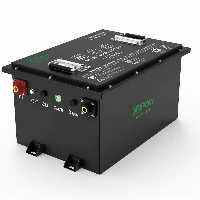
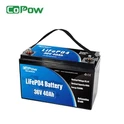
Single 48V Lithium Unit: Many golf cart battery manufacturers now offer a single large 48V lithium battery pack designed to replace the entire set of old lead-acid batteries.
Parallel Combination: You can also use 2 to 3 smaller 48V lithium batteries connected in parallel to increase your driving range (the voltage remains 48V).
3. How to Confirm What Your Cart Needs?
If you aren't sure which setup you currently have, you can check using these two methods:
Count the Water Fill Caps: For lead-acid batteries, each cap represents 2V.
- 3 caps = 6V battery
- 4 caps = 8V battery
- 6 caps = 12V battery
Check the Battery Tray: Look at the space under your seat. If there are 6 battery slots, it usually uses 8V batteries; if there are 8 slots, it uses 6V batteries.
Why Most 48V Golf Carts Use 6V or 8V Batteries?
Most 48V golf carts tend to use 6V or 8V battery packs rather than simply relying on four 12V batteries, mainly due to the following three practical considerations:
1. Longer Driving Range
The physical size of a battery usually determines its energy capacity. Within the same battery compartment, 8 units of 6V batteries or 6 units of 8V batteries typically contain more lead plates than 4 units of 12V batteries. This means they store more power and allow the cart to travel further on a single charge.
2. Better Durability
Low-voltage batteries generally feature thicker internal plates, which makes them more resilient to deep discharge cycles. During frequent charging and discharging, 6V and 8V batteries tend to wear out slower than 12V batteries. Choosing this configuration often extends the overall lifespan of the system and reduces the frequency of replacements.
3. Lower Maintenance Costs
While there are more batteries to manage, if one unit fails, you only need to replace that specific battery. Since a single 6V or 8V battery is usually cheaper than a high-capacity 12V unit, this setup offers better flexibility and is more economical for long-term repairs.
| Battery Setup | Pros | Cons |
| 8 x 6V | Longest range and longest overall lifespan. | Heaviest weight; more maintenance (watering). |
| 6 x 8V | Best balance of performance; industry standard. | Moderate price; heavier than 12V setups. |
| 4 x 12V | Saves space; easy installation; fewer cables. | Shortest range; usually the shortest lifespan. |

Series vs Parallel Connections in a 48V Battery System
n a 48V golf cart system, series and parallel are two fundamental wiring methods. They directly determine the final voltage and energy capacity of the battery bank.
Series Connection: Increasing Voltage
This is the most common wiring method for golf carts. By connecting the positive terminal of one battery to the negative terminal of another, the voltage of multiple low-voltage batteries is added together.
- Result: If you connect six 8V batteries in series, you get a total of 48V, but the capacity (Amp-hours) remains the same as a single battery.
- Purpose: This is primarily used to reach the 48V required to run the motor.

Parallel Connection: Increasing Capacity
Parallel wiring involves connecting all positive terminals together and all negative terminals together. This method does not change the voltage, but it increases the total stored energy.
- Result: If you take two separate 48V battery sets and connect them in parallel, the total voltage remains 48V, but the driving range will double.
- Purpose: This is mainly used to extend the cart's runtime once the required voltage has been met.
| Wiring Method | Voltage | Capacity | Primary Goal |
| Series | Increases | Stays the same | Meet device voltage requirements |
| Parallel | Stays the same | Increases | Extend driving range |

Can You Mix Different Battery Voltages in a 48V Golf Cart?
Absolutely not. You cannot mix batteries of different voltages in a 48V golf cart system.
While it might seem mathematically logical to patch together a 12V battery with several 6V or 8V batteries to reach 48V, it is disastrous in practice. Batteries with different voltages have entirely different internal resistances, charge capacities, and charging/discharging characteristics.
When connected in series, the battery with the lower voltage or smaller capacity will drain much faster and may even begin to be reverse-charged, while the stronger batteries in the pack become overcharged.
This imbalance will not only ruin the entire battery set in a very short time but can also lead to severe overheating, acid leakage, or even a fire/explosion.
To ensure safety and performance, every single battery in the pack must be the same brand, same voltage, same capacity (Ah), and the same age (ideally from the same new production batch).
How Battery Type Affects Quantity and Performance?
Different types of batteries directly affect the performance of a 48V golf cart in terms of weight, discharge efficiency, and service life. At present, the main choices are primarily between lead-acid batteries and lithium batteries.
1. Quantity and Weight
- Lead-Acid Batteries: Typically require 6 (8V) or 8 (6V) units connected in series. These are extremely heavy, with a full set often weighing between 330–450 lbs (150–200 kg). This massive weight puts significant pressure on the chassis and reduces the vehicle's acceleration and agility.
- Lithium Batteries: Usually require only 1 integrated 48V unit or 2–3 smaller units connected in parallel. They weigh about 1/4 to 1/3 of a lead-acid setup. This reduction in weight leads to less wear and tear on tires and suspension, and a much more nimble driving experience.
2. Discharge Performance
- Lead-Acid Batteries: Suffer from a noticeable voltage drop. As the battery drains, the voltage decreases. This means when your battery is at 30%, you will feel the cart slowing down and struggling on hills.
- Lithium Batteries: Feature a flat discharge curve. They provide nearly constant power output whether the battery is at 90% or 10%, maintaining full speed and torque until the battery is depleted.
3. Lifespan and Cycles
- Lead-Acid Batteries: Generally last 2–5 years (approx. 500–800 charge cycles) and are highly dependent on strict maintenance, such as regular watering.
- Lithium Batteries: Can last over 10 years (approx. 3,000–5,000 cycles). They are completely maintenance-free, requiring no water refilling or cleaning of acid corrosion.
4. Charging Efficiency
- Lead-Acid Batteries: Charge slowly, typically taking 8–10 hours for a full charge. They do not support "opportunity charging" (plugging in for short bursts), as frequent partial charges can shorten their lifespan.
- Lithium Batteries: Support fast charging, often reaching 100% in just 2–3 hours. They can be charged at any time for any duration without damaging the battery health.
| Feature | Lead-Acid (Flooded/AGM) | Lithium (LiFePO4) |
| Typical Quantity | 6 - 8 units | 1 - 3 units |
| Power Feel | Weakens as battery drains | Stays strong until empty |
| Maintenance | High (Watering/Cleaning) | Zero (Plug and Play) |
| Initial Cost | Lower | Higher |
| Long-term Value | Lower (Frequent replacement) | Higher (Extremely long life) |
How to Check If Your Golf Cart Is Truly a 48V System?
To confirm if your golf cart is a 48V system, the most direct method is to lift the seat and inspect the battery pack. You can determine the voltage in the following ways:
Check Battery Labels
This is the simplest method. Check the voltage rating on each battery and add them together. For example, if you see six 8V batteries or four 12V batteries, you have a 48V system.
Count the Fill Caps
If the labels are worn or unreadable, you can count the plastic fill caps on top of the batteries. In a lead-acid battery, each cap represents 2V. If the total number of caps across all batteries adds up to 24, it is a 48V system.
Inspect the Motor Plate
You can look for a metal identification plate on the motor. Manufacturers usually clearly stamp the rated voltage, such as 48V, directly on this plate.
Use a Multimeter
If you have a multimeter, you can measure the total positive and negative terminals of the entire battery pack. When the batteries are fully charged, the reading will typically fall between 48V and 51V.
Common Mistakes When Replacing Batteries in a 48V Golf Cart
When replacing 48V golf cart batteries, improper handling can damage your investment and create serious safety risks. Here are the most common mistakes to avoid:
1. Mixing New and Old Batteries or Different Brands
This is the most frequent error. Batteries of different ages or brands have different internal resistance. This causes the new batteries to overwork to compensate for the older ones, leading to premature failure and a significantly shorter overall lifespan for the entire set.
2. Loose Connections or Incorrect Wiring Sequence
Loose wiring creates high resistance, which generates enough heat to melt battery terminals. Additionally, if the series wiring sequence is incorrect, the system will fail to output 48V, and the cart will not start.
3. Reusing Corroded Cables
Many owners overlook the condition of the cables during a battery swap. Cables corroded by battery acid have poor conductivity and severely restrict power output. It is best to inspect and replace damaged cables at the same time you install new batteries.
4. Mismatched Chargers
If you upgrade from lead-acid to lithium batteries, you must switch to a dedicated lithium charger. Using an old charger can lead to incorrect charging voltages and potential overcharging risks.
5. Lack of Documentation and Safety Precautions
Failing to take a photo of the original wiring before disassembly often leads to confusion during reinstallation. Furthermore, using non-insulated tools is dangerous; accidentally touching the positive and negative terminals simultaneously can cause an immediate short circuit, sparks, or even a battery explosion.
Conclusion
When choosing a battery solution for your 48V golf cart, you're essentially looking for the right balance between upfront investment, day-to-day maintenance, and overall service life. Some owners prefer lead-acid batteries-using 6V or 8V units connected in series to achieve solid capacity and longer cycle life-while others choose to upgrade straight to a lithium system in exchange for lighter vehicle weight, faster charging, and the convenience of truly maintenance-free operation.
Regardless of which technology you choose, one core rule must always be followed: the entire battery pack must remain highly consistent. This means you should never mix batteries of different brands, different voltages, or even different ages, as doing so can lead to premature failure within the battery system.
A well-designed battery configuration not only gives your golf cart stronger performance but also helps you avoid unnecessary repair costs. Before starting the replacement process, it's a good idea to take photos of the existing wiring as a reference and carefully inspect the cables for corrosion or damage.
If you're unsure about your cart's motor voltage or current requirements, the safest approach is to check the specifications on the motor nameplate or consult a professional LiFePO4 golf cart battery supplier to ensure the new battery system is perfectly matched to your vehicle.
related article: How Many Batteries Does A Golf Cart Take?